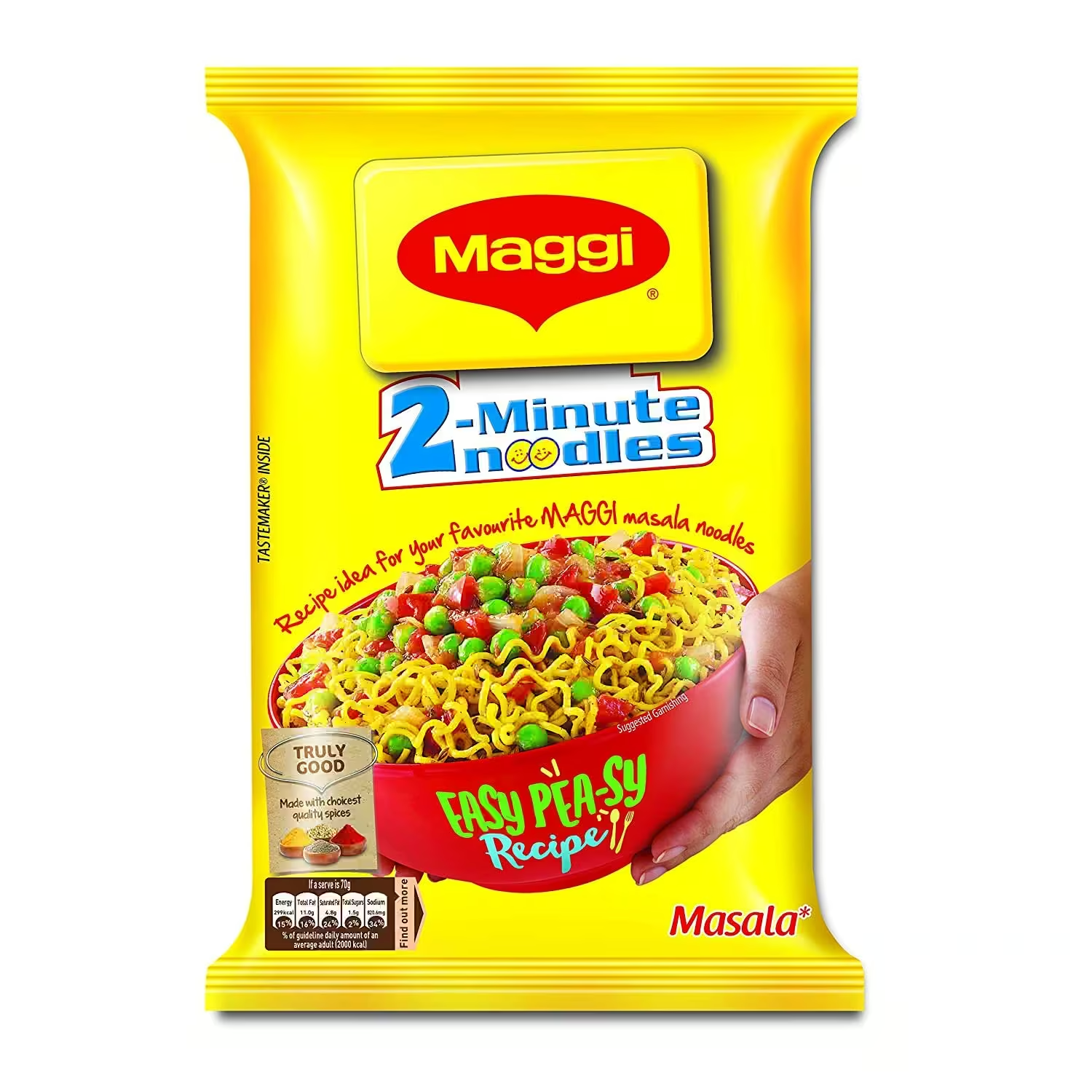
Few packaged foods are as woven into Indian life as Maggi. The two minute promise, the hostel late night meal, the first thing many of us ever learned to cook. That familiarity is exactly why the label rewards a closer read, because the thing that made Maggi convenient is not the same as the thing that would make it nourishing.
On the CleanPlate score it lands at D · C · 3, which places it in the occasional treat tier rather than an everyday food. Below is what that score is built on, where the pack is honest and where it is not, and how to enjoy a bowl without pretending it is something it is not.
[ Scorecard block goes here. Delete this line after inserting it. ]
The short version
Good. Quick, affordable, and satisfying. A single occasional bowl will not harm a healthy adult.
Watch. Built on refined flour with little fibre, fried in palm oil, and carrying a high sodium load in the tastemaker.
Bottom line. A treat to build on with vegetables and protein, not an everyday meal on its own.
What’s actually in it
The noodle cake is made mostly from refined wheat flour, what we usually call maida. Refining strips away the bran and germ, which removes most of the fibre and a large share of the natural micronutrients. What remains is fast digesting starch, which is part of why a bowl of Maggi can leave you hungry again within a couple of hours.
The cake is fried in palm oil before packaging, which is how it cooks in two minutes. Palm oil is stable and cheap, but it is high in saturated fat, and that frying step is the main reason the saturated fat figure is higher than people expect from a noodle. An antioxidant is usually added to stop that oil going rancid on the shelf. Confirm the specific one from your pack, since formulations change.
The flavour lives in the tastemaker sachet, which is mostly salt, spices, and flavour enhancers. This is where most of the sodium comes from, and sodium is the risk nutrient that matters most in this product. The taste is engineered to be moreish, and it succeeds, but that engineering is the reason the salt level is as high as it is.
Ingredients to watch
Refined wheat flour (maida)
The base of the noodle. Stripped of bran and germ, it gives fast starch with almost no fibre and a high glycaemic response. The main reason the product scores low on nutritional value.
Salt and sodium
Concentrated in the tastemaker sachet. A single prepared serving can deliver a large share of the daily sodium reference. The most important number to watch on this pack, especially for anyone managing blood pressure.
Palm oil
Used to fry the cake for shelf stability and speed. High in saturated fat. A cold pressed or expeller pressed oil would be preferable, but frying at scale makes palm oil the cheap default across the whole instant noodle category.
Flavour enhancers
The tastemaker uses enhancers that amplify savoury taste and work together with the salt. Safe at regulated levels, but a marker of an engineered flavour rather than real spice depth. Verify the exact additive codes on your pack.
Does the label add up?
This is the internal honesty test. Do the ingredients on the back match the numbers in the nutrition panel? For Maggi, the answer is largely yes. The high carbohydrate figure fits a maida base, the fat figure fits a palm oil fried cake, and the high sodium fits a salt heavy tastemaker. The “0g trans fat” line holds up too, since palm oil is not hydrogenated. There is no hidden mismatch here, which is worth saying plainly.
The one place to read carefully is how the numbers are presented.
What the pack says
Nutrition values shown per 100g.
Needs care
The reality
A pack is around 70g, and most people eat the whole pack in one sitting. So the figure that matters to your day is the per pack amount, not the per 100g amount, which can make the sodium look smaller than what you actually consume. Always check whether the values are listed for the dry cake or the prepared dish, since the two differ. Multiply up to one full pack to see your real intake.
Claims vs reality
This is the external honesty test. Does the front of pack and the advertising match what is in the bag? Two claims are worth holding up to the light. Verify the exact wording against your current pack, since marketing language is updated often.
What the pack says
No added MSG.
Misleading framing
The reality
It is true in the narrow sense that added monosodium glutamate is not on the list. But the tastemaker still relies on other flavour enhancers that do very similar work, plus a high level of salt. The claim suggests a purity the flavour system does not really have. It is accurate by the letter and misleading by the impression it creates.
What the marketing suggests
A wholesome, taste plus health, quick family meal.
Misleading
The reality
This is a refined flour product, fried in palm oil, with a high sodium tastemaker and very little fibre. It is enjoyable and convenient, and there is nothing wrong with that, but health is not its strength. The wholesome framing asks the product to carry a meaning its formulation does not support. Treat it as a tasty shortcut, not a nourishing meal.
Clearing up the myths
- “Maggi is poisonous or causes cancer.” In 2015, India’s food regulator ordered Maggi off shelves citing lead above the permitted limit and a labelling concern about MSG. The product was later cleared by court ordered laboratory testing and returned to the market. The lasting issue is not contamination, which was addressed, but the everyday nutritional profile, which is what this score reflects.
- “No added MSG means no flavour enhancers.” The claim refers to one specific additive. The tastemaker still uses other enhancers that do comparable work alongside the salt. The savoury hit is engineered, not incidental.
- “Atta Maggi is the healthy version.” The atta variant adds some whole wheat, which helps the fibre a little. But it is still palm oil fried, still high in sodium, and still an instant noodle. Better on one axis, not a health food.
- “Two minutes means it is barely processed.” The speed is the product of heavy processing, not the absence of it. Pre frying and refining are exactly what make two minute cooking possible.
How to eat this well
None of this means you can never enjoy a bowl. It means treating it as a base to build on rather than a finished meal. Who you are changes how often it makes sense.
Healthy adults
Fine as an occasional quick meal, not a daily habit. Keep the rest of the day rich in fibre and fresh food.
Children
Acceptable occasionally, not a reliable everyday tiffin. The low fibre and high sodium suit daily growth poorly. Always bulk it up.
Managing blood pressure
Approach with caution. The sodium in one serving is high. If you eat it, use only half the tastemaker and add no extra salt.
Better ways to eat it
Add vegetables and an egg
Throw in peas, carrot, beans, or spinach while it cooks, and crack an egg into the pot. You add fibre, vitamins, and complete protein, which slows the glycaemic response and turns a snack into something closer to a meal.
Use half the tastemaker
The sachet is the main source of sodium. Use half, then finish with your own pepper, a squeeze of lemon, or fresh coriander. You keep the taste you like with a fraction of the salt.
Pair it, do not rely on it
Serve a smaller portion alongside dal, curd, or a vegetable rather than a large bowl on its own. The pairing covers the fibre and protein the noodle lacks.
Recipes to try
Vegetable and egg Maggi bowl
The simplest upgrade. Same two minute spirit, but it eats like a proper light meal.
You need
- 1 cake of Maggi, half the tastemaker
- 1 handful chopped vegetables (peas, carrot, capsicum, spinach)
- 1 egg
- Pepper, lemon, fresh coriander to finish
Method
- Boil the vegetables in the water for a minute before adding the noodle cake.
- Add the cake and half the tastemaker, cook for two minutes.
- Push the noodles aside and crack in the egg, stir gently until just set.
- Finish with pepper, a squeeze of lemon, and coriander.
Leftover sabzi Maggi
A clever way to use yesterday’s vegetable dish and skip most of the tastemaker entirely.
You need
- 1 cake of Maggi
- 1 small bowl leftover dry sabzi (aloo gobi, bhindi, mixed veg)
- A quarter of the tastemaker, or just salt and your own masala
- Roasted peanuts or grated paneer for protein
Method
- Cook the noodle cake in minimal water with a quarter of the tastemaker.
- Warm the leftover sabzi separately and fold it through the drained noodles.
- Top with peanuts or paneer and serve hot.
What Nestle could do next
- Reduce the sodium in the tastemaker. Sodium is the single biggest risk nutrient here. A meaningful cut would improve the score more than any other change.
- Move away from palm oil. Switching the frying oil to a less saturated option would lower the saturated fat load and strengthen the ingredient quality.
- Offer a genuine whole grain version. The atta variant is a start, but a noodle with a real majority of whole grain and visible fibre would fix the weakest part of the profile.
- Show sodium per serving on the front of pack. Clear front of pack sodium information would let buyers make the trade honestly, which suits a brand this trusted.