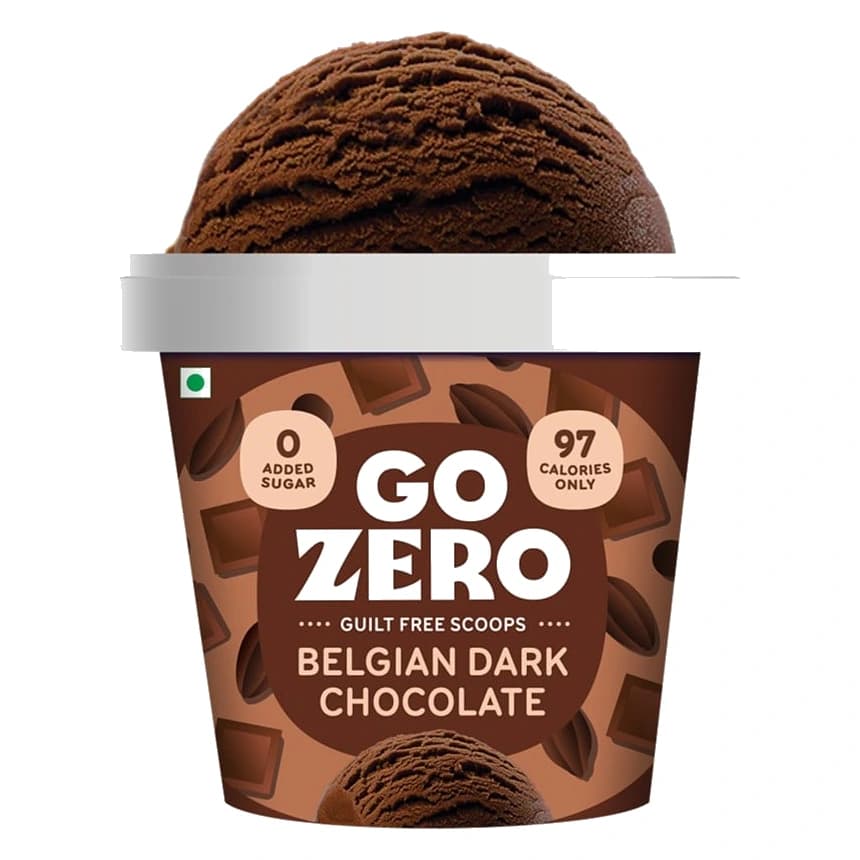
Go Zero Belgian Dark Chocolate Guilt Free Ice Cream Cup
Red flags
No major red flags on the label.
Green flags
- +Green flag: Source of fibre
- +Green flag: No added sugar
- +Green flag: Low sodium
Ingredients, decoded
8 listed- Milk & Milk Solids (Cream, Skimmed Milk Powder)
- Maltitol
- Oligofructose
- Cocoa Solids
- Cocoa Mass
- Permitted Emulsifier (471, 433)
- Stabilizer (412, 407, 461)
- Stevia
Our take
CleanPlate reviewSugar-free dark chocolate ice cream, 97 kcal
Go Zero Belgian Dark Chocolate is a 100 ml frozen cup made with milk and milk solids, cocoa solids and cocoa mass, sweetened with maltitol, oligofructose and stevia instead of sugar, with an emulsifier and stabiliser blend.
CleanPlate scores it EC1. The E for nutrition is low: almost no credited protein, fibre or micronutrients per 100 ml. The C for ingredients reflects mostly refined or industrial ingredients (led by milk & milk solids, oligofructose and cocoa solids), with additives that cost points: carrageenan, polysorbate 80, guar gum and methylcellulose. The 1 for risk is low: sodium, free sugar and saturated fat are all modest (sodium 32 mg, free sugar 0 g, saturated fat 3.4 g per 100 ml).
Claims vs reality
What the pack says, checked against the ingredient list and nutrition panel.
- On the packHolds
“0 Added Sugar”
No sugar, syrup or juice is listed; 3 g total sugar is from milk.
- On the packHolds
“97 Calories”
Declared energy per 100 ml cup.
How EC1 breaks down
Each grade is scored on its own. Here are the label numbers behind each one, per 100 g.
Very low nutrient density
- Protein
- 2.7 g
- Fibre
- 3 g
- Vitamins and minerals
- None declared
- Energy
- 97 kcal
Scored on protein, fibre and twelve vitamins and minerals, against the Codex and FSSAI "source" and "high" levels, per 100 g and per 100 kcal.
Mixed processing and additives
- Base
- Milk & Milk Solids
- Sweeteners
- 3 types
- Additives
- 6
- Flagged
- None
Scored on how processed the ingredients are, which additives are used and why, and whether the label keeps its promises.
Clean
- Added sugar
- 0 g
- Sodium
- 32 mg
- Saturated fat
- 3.4 g
- Trans fat
- 0 g
Scored on free sugar, sodium, saturated fat and trans fat, each weighed by how strong the evidence of harm is.
A closer look
Does the label add up?
Milk and milk solids (cream, skimmed milk powder), maltitol, oligofructose, cocoa solids, cocoa mass, emulsifier (471, 433), stabilizer (412, 407, 461) and stevia.
Per 100 ml: 97 kcal, 5.3 g fat of which 3.4 g saturated, 3 g sugar of which 0 g added, 3 g fibre, 2.7 g protein, 32 mg sodium. Declared energy is kept; the Atwater sum is 120 kcal because maltitol and oligofructose give far less than 4 kcal per g. Shares of oligofructose (4.5%) and cocoa are hand estimates.
Ingredients to watch
- Polysorbate 80 and carrageenanWorth watching
Heavier emulsifier and stabiliser deductions.
- Sweetener blendWorth watching
Maltitol and stevia; polyols may have a laxative effect.
- No added sugarFine
Free sugar is 0 g.
- FibreFine
3 g per 100 ml.
Common misconceptions
Myth: "Sugar free means additive free"
Maltitol, stevia and four gums and emulsifiers are added.
Myth: "Belgian chocolate means a lot of chocolate"
Cocoa solids and mass are listed without a percentage.
How often, and how
- Healthy adultsOccasionally
- ChildrenRarely
- Diabetes or prediabetesLimit
Smarter ways to eat it
Pair with berries
Fresh fruit adds sweetness without sugar.
Watch the polyols
A large helping of maltitol can upset the stomach.
Common questions
Is Go Zero Belgian Dark Chocolate Guilt Free Ice Cream Cup healthy?
Go Zero Belgian Dark Chocolate Guilt Free Ice Cream Cup scores EC1 (Poor) on CleanPlate, which makes it best kept as a rare treat rather than a regular buy. We found no major red flags on its label. On the plus side: Source of fibre; No added sugar; Low sodium.
What does the EC1 score mean?
The first letter (E) grades nutritional value: very low nutrient density. The second letter (C) grades ingredient and label integrity: mixed processing and additives. The number (1) grades risk nutrients (sugar, sodium, saturated fat): clean.
Last reviewed October 19, 2026. Scored with the CleanPlate method from the published label.
Better Frozen Desserts
All 100 →- Go Zero Chocolate Ice Cream Pastry
- −Red flag: Refined flour (maida) base
- +Green flag: High protein (13.2g per 100g)
- Minus Thirty Vanilla Mini Ice Cream Stick (Vegan & Sugar Free)
- +Green flag: No added sugar
- Frozen Fun Sicilian Pistachio Gelato
- −Red flag: High added sugar (10.6g per 100g)
- +Green flag: Low sodium
- Minus Thirty Mini Hazelnut Ice Cream Stick (Vegan & Sugar Free)
- +Green flag: No added sugar