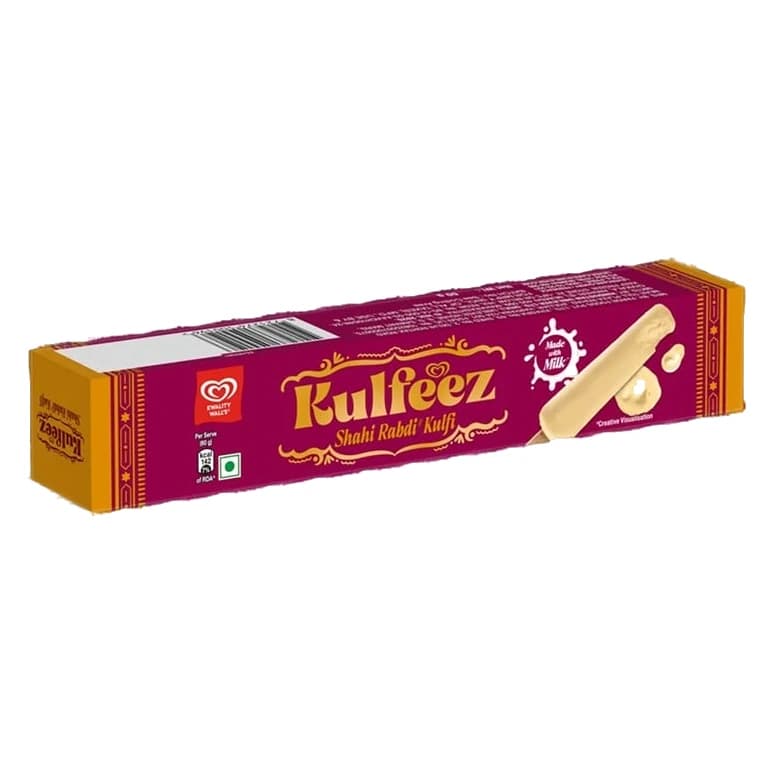
Kwality Wall's Kulfeez Shahi Rabdi Kulfi Stick
Red flags
- −Red flag: High added sugar (16.2g per 100g)
- −Red flag: High saturated fat (9.3g)
- −Red flag: Contains trans fat (0.7g)
Green flags
- +Green flag: Low sodium
Ingredients, decoded
7 listed- Water
- Milk Solids
- Sugar
- Emulsifiers (471, 435)
- Stabilizers (412, 410, 407, 466)
- Nature Identical (Rabdi) Flavouring Substance
- Food Colours (110, 102, 122, 132)
Our take
CleanPlate reviewRabdi kulfi: four dyes and two gums
Kwality Wall's Kulfeez Shahi Rabdi Kulfi is a 60 g frozen kulfi stick made from water, milk solids and sugar, with two emulsifiers, four stabilisers, a nature-identical rabdi flavouring and four synthetic food colours. The panel is printed per 60 g serve and converted here to per 100 g.
CleanPlate scores it [R]ED3. The E for nutrition is low: almost no credited protein, fibre or micronutrients per 100 g. The D for ingredients reflects a mix of whole and refined ingredients (led by milk solids and sugar), with additives that cost points: carrageenan, carboxymethyl cellulose, flavouring and tartrazine. A red flag (Southampton Six x3+) cuts the score by 40%. The 3 for risk comes mainly from saturated fat (9.33 g per 100 g) and free sugar (16.2 g per 100 g).
Claims vs reality
What the pack says, checked against the ingredient list and nutrition panel.
- On the packHolds
“Made with Milk”
Milk solids are the second ingredient.
- Product nameBe careful
“Shahi Rabdi Kulfi”
The pack footnote says the rabdi is an added flavour, not rabdi.
How ED3 breaks down
Each grade is scored on its own. Here are the label numbers behind each one, per 100 g.
Very low nutrient density
- Protein
- 4.5 g
- Fibre
- 0 g
- Vitamins and minerals
- None declared
- Energy
- 237 kcal
Scored on protein, fibre and twelve vitamins and minerals, against the Codex and FSSAI "source" and "high" levels, per 100 g and per 100 kcal.
Heavily processed or flagged substances
- Base
- Water
- Sweeteners
- Sugar
- Additives
- 7
- Flagged
- None
Scored on how processed the ingredients are, which additives are used and why, and whether the label keeps its promises.
Moderate risk
- Added sugar
- 16.2 g
- Sodium
- 65 mg
- Saturated fat
- 9.3 g
- Trans fat
- 0.67 g
Scored on free sugar, sodium, saturated fat and trans fat, each weighed by how strong the evidence of harm is.
[R] Contains an ingredient on our red-flag list (such as a partially hydrogenated oil or a flagged synthetic dye), which cuts the ingredient grade.
A closer look
Does the label add up?
Water, milk solids, sugar, emulsifiers (471, 435), stabilizers (412, 410, 407, 466), nature identical (rabdi) flavouring substance and food colours (110, 102, 122, 132).
Per 100 g: 237 kcal, 14 g fat of which 9.33 g saturated, 23 g sugar of which 16.2 g added, 0 g fibre, 4.5 g protein, 65 mg sodium. The pack footnote reads '#Added Rabdi flavour' and '*This represents Milk Solids in ingredient list', so the flavour name is honest. Net weight 60 g is read from small print. The panel prints 0.67 g trans fat, counted as natural dairy trans fat.
Ingredients to watch
- Four synthetic dyesConcern
Sunset yellow, tartrazine, carmoisine and indigo carmine; three are Southampton Six.
- Gums and emulsifiersWorth watching
Carrageenan and carboxymethyl cellulose cost the most points.
- Saturated fatWorth watching
9.33 g per 100 g.
- Added sugarWorth watching
16.2 g per 100 g.
Common misconceptions
Myth: "Kulfi is made by boiling milk down"
This one starts with water and milk solids, with gums to hold the texture.
Myth: "The orange colour comes from saffron"
No saffron is listed; four synthetic dyes give the colour.
How often, and how
- Healthy adultsOccasionally
- ChildrenRarely
- Diabetes or prediabetesLimit
Smarter ways to eat it
Choose plain kulfi
A stick with milk, sugar and a spice has no dyes or gums.
Keep it occasional
A 60 g stick is about 140 kcal.
Common questions
Is Kwality Wall's Kulfeez Shahi Rabdi Kulfi Stick healthy?
Kwality Wall's Kulfeez Shahi Rabdi Kulfi Stick scores ED3 (Poor) on CleanPlate, which makes it best kept as a rare treat rather than a regular buy. The main concerns are: High added sugar (16.2g per 100g); High saturated fat (9.3g); Contains trans fat (0.7g). On the plus side: Low sodium.
What does the ED3 score mean?
The first letter (E) grades nutritional value: very low nutrient density. The second letter (D) grades ingredient and label integrity: heavily processed or flagged substances. The number (3) grades risk nutrients (sugar, sodium, saturated fat): moderate risk.
Last reviewed October 19, 2026. Scored with the CleanPlate method from the published label.
Better Frozen Desserts
All 100 →- Go Zero Chocolate Ice Cream Pastry
- −Red flag: Refined flour (maida) base
- +Green flag: High protein (13.2g per 100g)
- Minus Thirty Vanilla Mini Ice Cream Stick (Vegan & Sugar Free)
- +Green flag: No added sugar
- Frozen Fun Sicilian Pistachio Gelato
- −Red flag: High added sugar (10.6g per 100g)
- +Green flag: Low sodium
- Minus Thirty Mini Hazelnut Ice Cream Stick (Vegan & Sugar Free)
- +Green flag: No added sugar