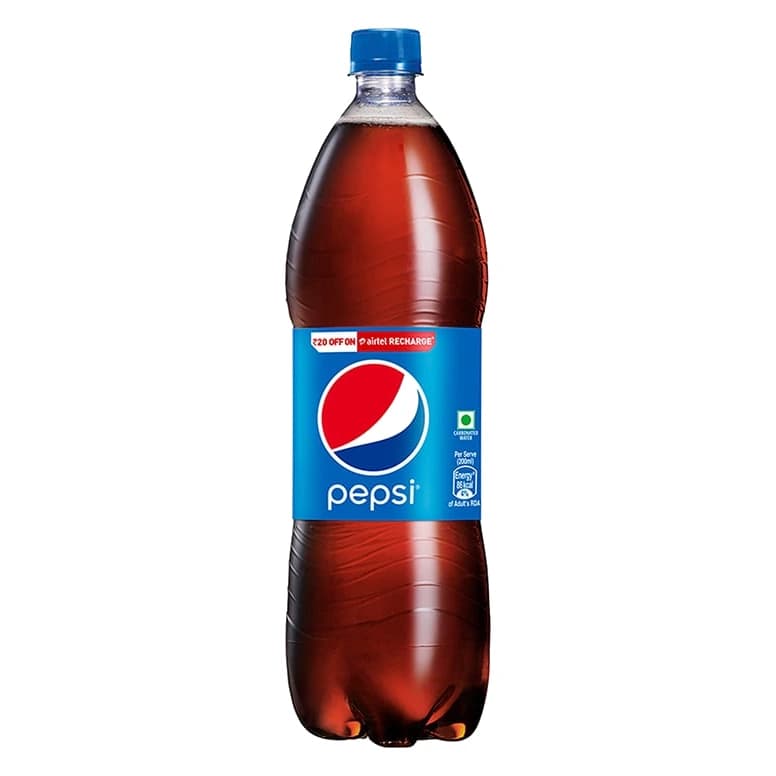
Pepsi Cola Soft Drink
Red flags
- −Red flag: Contains Caramel Colour (Class IV)
Green flags
- +Green flag: Low sodium
Ingredients, decoded
6 listed- Carbonated Water
- Sugar
- Acidity Regulator (338)
- Caffeine
- Permitted Natural Colour (150d)
- Added Flavour (Natural Flavouring Substances)
Our take
CleanPlate reviewSugar-sweetened cola: 10.9 g sugar per 100 ml
Pepsi Cola is a 1.25 L bottle of carbonated water, sugar, phosphoric acid, caffeine, caramel colour and flavour. The panel is printed per 100 ml.
CleanPlate scores it EC4. The E for nutrition is low: almost no credited protein, fibre or micronutrients per 100 ml. The C for ingredients reflects mostly refined or industrial ingredients (led by sugar), with additives that cost points: caramel colour and phosphoric acid. The 4 for risk comes mainly from free sugar (10.9 g per 100 ml).
Claims vs reality
What the pack says, checked against the ingredient list and nutrition panel.
- On the packHolds
“Contains caffeine”
Caffeine is listed; the panel does not print the amount.
- On the packBe careful
“Contains permitted natural colour (150d) and added flavour”
Caramel colour 150d is a processing colour made with sulphite and ammonia, and it costs 4 points on ingredients.
How EC4 breaks down
Each grade is scored on its own. Here are the label numbers behind each one, per 100 ml.
Very low nutrient density
- Protein
- 0 g
- Fibre
- Not declared
- Vitamins and minerals
- None declared
- Energy
- 43 kcal
Scored on protein, fibre and twelve vitamins and minerals, against the Codex and FSSAI "source" and "high" levels, per 100 g and per 100 kcal.
Mixed processing and additives
- Base
- Carbonated Water
- Sweeteners
- Sugar
- Additives
- 1
- Flagged
- Caramel Colour (Class IV)
Scored on how processed the ingredients are, which additives are used and why, and whether the label keeps its promises.
High risk
- Total sugar
- 10.9 g
- Sodium
- 11 mg
- Saturated fat
- 0 g
- Trans fat
- 0 g
Scored on free sugar, sodium, saturated fat and trans fat, each weighed by how strong the evidence of harm is.
A closer look
Does the label add up?
Carbonated water, sugar, acidity regulator (phosphoric acid, 338), caffeine, caramel colour (150d) and natural flavouring substances.
Per 100 ml: 43 kcal, 0 g fat of which 0 g saturated, 10.9 g sugar, 0 g protein, 11 mg sodium. The panel prints no added sugar line, so all 10.9 g of sugar is counted as free sugar and the score is provisional (MISSING_ADDED_LINE). Sodium is 11 mg per 100 ml.
Ingredients to watch
- Free sugarConcern
10.9 g per 100 ml, about 33 g in a 300 ml serve.
- Caramel colour 150dWorth watching
Costs 4 points on ingredients.
- CaffeineWorth watching
Sets the risk floor at 4.
- Simple listFine
Only four ingredients and two additive classes.
Common misconceptions
Myth: "Cola is just sugar water"
It also carries caffeine, phosphoric acid and a processing colour.
Myth: "A small bottle is fine daily"
A 300 ml bottle carries about 33 g of free sugar.
How often, and how
- Healthy adultsOccasionally
- ChildrenRarely
- Diabetes or prediabetesLimit
Smarter ways to eat it
Share a bottle
Half a glass keeps the sugar down.
Try sparkling water with lime
Same fizz, no sugar.
Common questions
Is Pepsi Cola Soft Drink healthy?
Pepsi Cola Soft Drink scores EC4 (Poor) on CleanPlate, which makes it best kept as a rare treat rather than a regular buy. The main concerns are: Contains Caramel Colour (Class IV). On the plus side: Low sodium.
What does the EC4 score mean?
The first letter (E) grades nutritional value: very low nutrient density. The second letter (C) grades ingredient and label integrity: mixed processing and additives. The number (4) grades risk nutrients (sugar, sodium, saturated fat): high risk.
Which ingredients in Pepsi Cola Soft Drink should I watch?
Permitted Natural Colour (150d) (Caramel Colour (Class IV)).
Last reviewed October 19, 2026. Scored with the CleanPlate method from the published label.