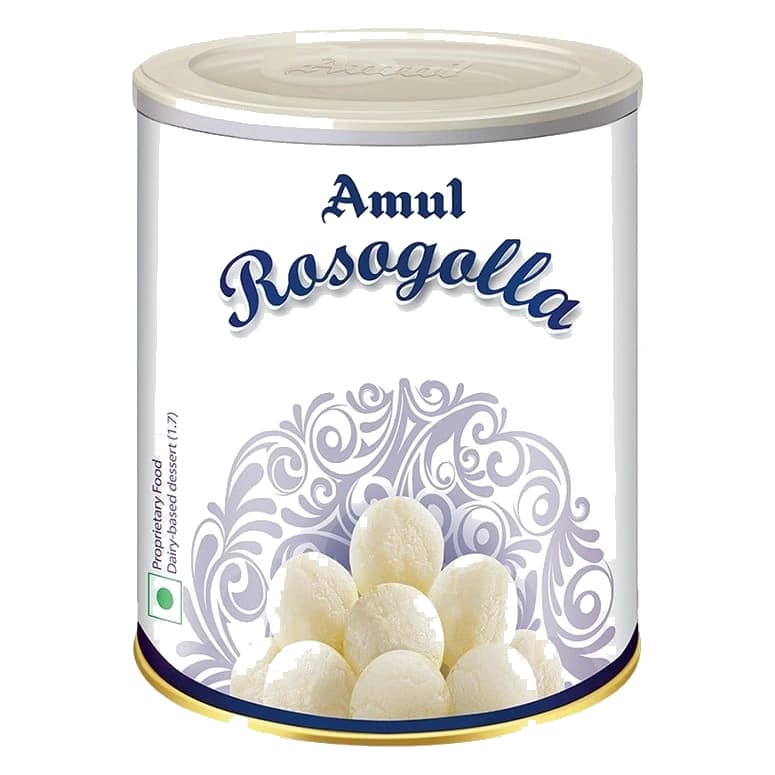
Rasgulla by Amul
Red flags
- −Red flag: High added sugar (44g per 100g)
Green flags
- +Green flag: Source of protein (7.9g)
- +Green flag: Low sodium
Ingredients, decoded
3 listed- Sugar syrup (sugar, water)
- chhana (milk, lactic acid)
- nature identical flavouring substances
Our take
CleanPlate reviewRasgulla in sugar syrup: 44 g sugar per 100 g
Amul Rasgulla is a 1 kg tin of chhana balls in sugar syrup with nature-identical flavouring. The panel is printed per 100 g of the drained and syrup mix as sold.
CleanPlate scores it DB4. The D for nutrition is low: only 7.9 g protein per 100 g and little else credited. The B for ingredients reflects mostly refined or industrial ingredients (led by sugar syrup and chhana), with additives that cost points: flavouring. The 4 for risk comes mainly from free sugar (44 g per 100 g) and saturated fat (3 g per 100 g).
Claims vs reality
What the pack says, checked against the ingredient list and nutrition panel.
- Product nameHolds
“Amul Rosogolla”
Chhana (milk, lactic acid) and sugar syrup are the two ingredients, as the name says.
How DB4 breaks down
Each grade is scored on its own. Here are the label numbers behind each one, per 100 g.
Low nutrient density
- Protein
- 7.9 g
- Fibre
- Not declared
- Vitamins and minerals
- None declared
- Energy
- 260 kcal
Scored on protein, fibre and twelve vitamins and minerals, against the Codex and FSSAI "source" and "high" levels, per 100 g and per 100 kcal.
Good, few concerning additives
- Base
- Sugar syrup
- Sweeteners
- Sugar syrup
- Additives
- 1
- Flagged
- None
Scored on how processed the ingredients are, which additives are used and why, and whether the label keeps its promises.
High risk
- Added sugar
- 44 g
- Sodium
- 8 mg
- Saturated fat
- 3 g
- Trans fat
- 0 g
Scored on free sugar, sodium, saturated fat and trans fat, each weighed by how strong the evidence of harm is.
A closer look
Does the label add up?
Sugar syrup (sugar, water), chhana (milk, lactic acid) and nature-identical flavouring substances.
Per 100 g: 260 kcal, 5 g fat of which 3 g saturated, 44 g sugar of which 44 g added, 7.9 g protein, 8 mg sodium. Added sugar is declared 44 g, equal to total sugar. Atwater energy matches the declared 260 kcal. No veg mark was seen on the images read.
Ingredients to watch
- Free sugarConcern
44 g per 100 g, mostly the syrup.
- FlavouringWorth watching
Nature-identical flavouring costs 2 points.
- Saturated fatWorth watching
3 g per 100 g from the milk fat.
- ProteinFine
7.9 g per 100 g from chhana.
Common misconceptions
Myth: "Rasgulla is a light sweet"
The syrup carries 44 g sugar per 100 g.
Myth: "Squeezing out the syrup removes the sugar"
The balls soak up syrup, so a lot of the sugar stays in them.
How often, and how
- Healthy adultsA few times a week
- ChildrenOccasionally
- Diabetes or prediabetesOccasionally, watch the sugar
Smarter ways to eat it
Drain well
Take the pieces with little syrup.
Share one piece
A single ball is a typical portion.
Common questions
Is Rasgulla by Amul healthy?
Rasgulla by Amul scores DB4 (Fair) on CleanPlate, which makes it an occasional-use product, where the concerns start to outweigh the positives. The main concerns are: High added sugar (44g per 100g). On the plus side: Source of protein (7.9g); Low sodium.
What does the DB4 score mean?
The first letter (D) grades nutritional value: low nutrient density. The second letter (B) grades ingredient and label integrity: good, few concerning additives. The number (4) grades risk nutrients (sugar, sodium, saturated fat): high risk.
Last reviewed October 19, 2026. Scored with the CleanPlate method from the published label.
Better Indian Sweets
All 16 →- Sweet Karam Coffee Peanut Chikki
- −Red flag: High added sugar (28.2g per 100g)
- +Green flag: High protein (14.1g per 100g)
- Sweet Karam Coffee Sesame Chikki Bites
- −Red flag: High added sugar (29g per 100g)
- +Green flag: Source of protein (8.7g)
- Chheda's Peanut Chikki
- −Red flag: High sugar (40g per 100g)
- +Green flag: High protein (20g per 100g)