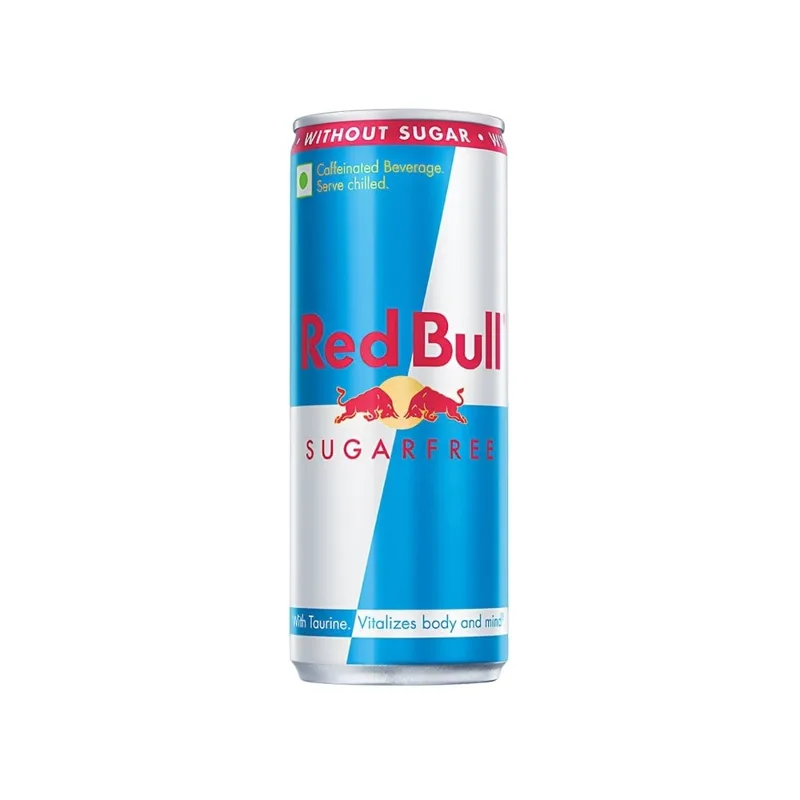
Red Bull Energy Drink Sugar Free 250 ml
Red flags
No major red flags on the label.
Green flags
- +Green flag: Low sodium
Ingredients, decoded
11 listed- Water
- Acidulant (Citric Acid)
- Carbon Dioxide
- Taurine (0.4%)
- Acidity Regulators (Sodium Bicarbonate, Magnesium Carbonate)
- Flavours (Natural and Artificial [Mixed Fruits flavour])
- Natural Colour (Caramel)
- Caffeine (30 mg/100 ml)
- Sweeteners (Sucralose, Acesulfame K)
- Thickener (Xanthan Gum)
- Vitamins (Niacin, B6, B2, B12)
ED4
Our take
CleanPlate reviewSugar-free energy drink built on two sweeteners
Red Bull Sugarfree is a carbonated energy drink of water, citric acid, taurine (0.4%), caffeine (30 mg per 100 ml), sucralose and acesulfame K, with natural and artificial fruit flavour, caramel colour, xanthan gum and added B vitamins (niacin, B6, B2 and B12). The can is 250 ml.
CleanPlate scores it ED4. The E for nutrition is low: almost no credited protein, fibre or micronutrients per 100 ml. Added vitamins earn no credit in this product type. The D for ingredients reflects mostly refined or industrial ingredients, with additives that cost points: sucralose, acesulfame potassium, flavouring and xanthan gum. The 4 for risk comes mainly from the combined load of sodium, sugar and fat. The caffeine statement sets a floor of 4 on this axis.
Claims vs reality
What the pack says, checked against the ingredient list and nutrition panel.
- Product nameBe careful
“SUGARFREE”
Sugar is 0 g, but the drink is sweetened with sucralose and acesulfame K.
- On the packHolds
“With Taurine”
Taurine is listed at 0.4%, or 400 mg per 100 ml.
- On the packBe careful
“Vitalizes body and mind”
The pack gives no figure for this; the drink has 30 mg of caffeine per 100 ml and added B vitamins.
How ED4 breaks down
Each grade is scored on its own. Here are the label numbers behind each one, per 100 ml.
Very low nutrient density
- Protein
- 0 g
- Fibre
- Not declared
- Vitamins and minerals
- 4 declared
- Energy
- 3 kcal
Scored on protein, fibre and twelve vitamins and minerals, against the Codex and FSSAI "source" and "high" levels, per 100 g and per 100 kcal.
Heavily processed or flagged substances
- Base
- Water
- Sweeteners
- Sweeteners
- Additives
- 2
- Flagged
- None
- Artificial flavour or colour
- Yes
Scored on how processed the ingredients are, which additives are used and why, and whether the label keeps its promises.
High risk
- Total sugar
- 0 g
- Sodium
- 42 mg
Scored on free sugar, sodium, saturated fat and trans fat, each weighed by how strong the evidence of harm is.
A closer look
Does the label add up?
Water, citric acid, carbon dioxide, taurine (0.4%), acidity regulators (sodium bicarbonate, magnesium carbonate), natural and artificial mixed-fruit flavour, caramel colour, caffeine (30 mg per 100 ml), sucralose, acesulfame K, xanthan gum and vitamins (niacin, B6, B2, B12).
Per 100 ml: 3 kcal, 0 g fat, 0 g sugar, 0 g protein, 42 mg sodium. The energy unit prints blurred on the pack card and is read as kcal. The panel has no added-sugar line, so the score is provisional.
Ingredients to watch
- Two artificial sweetenersWorth watching
Sucralose and acesulfame K together cost 7 points on the additive scale.
- CaffeineWorth watching
30 mg per 100 ml, 75 mg in a 250 ml can.
- Missing panel lineWorth watching
No added-sugar line, which FSSAI requires.
- EnergyFine
3 kcal per 100 ml and no sugar, fat or protein.
Common misconceptions
Myth: "Sugar-free means healthy"
It removes sugar and calories, but the drink adds sweeteners and caffeine and gives no nutrition.
Myth: "Taurine is what wakes you up"
The 75 mg of caffeine in a can does that; taurine is 400 mg per 100 ml of the drink.
How often, and how
- Healthy adultsRarely
- ChildrenRarely
- Diabetes or prediabetesLimit strictly
Smarter ways to eat it
Not every day
Keep it as an occasional pick-me-up, not a daily drink.
Plain alternatives
Black coffee or cold tea give caffeine with fewer additives.
Common questions
Is Red Bull Energy Drink Sugar Free 250 ml healthy?
Red Bull Energy Drink Sugar Free 250 ml scores ED4 (Very Poor) on CleanPlate, which makes it one of the weakest products we've rated and worth swapping out. We found no major red flags on its label. On the plus side: Low sodium.
What does the ED4 score mean?
The first letter (E) grades nutritional value: very low nutrient density. The second letter (D) grades ingredient and label integrity: heavily processed or flagged substances. The number (4) grades risk nutrients (sugar, sodium, saturated fat): high risk.
Last reviewed October 11, 2026. Scored with the CleanPlate method from the published label.
Better Energy & Sports Drinks
All 7 →- ED1Gatorade Blue Bolt Zero Sugar
- −Red flag: Contains Potassium Sorbate
- +Green flag: No added sugar
Poor - ED2Glucon-D Recharge Orange Hydration & Drink Mix
- −Red flag: Contains Potassium Sorbate
- +Green flag: Low sodium
Poor - EC4Hell Classic Energy Drink
- −Red flag: High added sugar (10.8g per 100ml)
- +Green flag: Low sodium
Poor - EC4Red Bull Energy Drink
- +Green flag: Low sodium
Poor