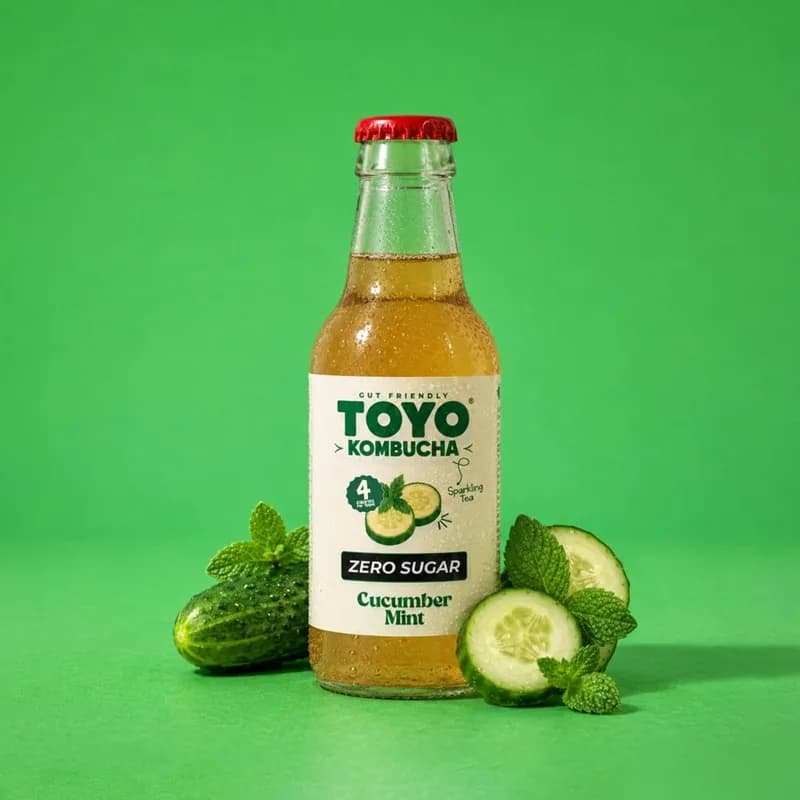
Toyo Kombucha Cucumber Mint Kombucha
Red flags
No major red flags on the label.
Green flags
- +Green flag: No added sugar
- +Green flag: Low sodium
Ingredients, decoded
9 listed- Filtered Water
- Kombucha Culture
- Erythritol (INS 968)
- Prebiotic Fiber
- Black Tea
- Green Tea
- Himalayan Pink Salt
- Monkfruit Extract
- Stevia Glycosides (INS 960)
EC1
Our take
CleanPlate reviewZero sugar, but no cucumber or mint
Toyo Kombucha Cucumber Mint is a sparkling tea drink of filtered water, kombucha culture, erythritol, prebiotic fibre, black and green tea, pink salt, monkfruit and stevia, with natural and nature-identical flavours. The bottle is 200 ml.
CleanPlate scores it [L]EC1. The E for nutrition is low: almost no credited protein, fibre or micronutrients per 100 ml. The C for ingredients reflects mostly refined or industrial ingredients (led by prebiotic fiber, black tea and green tea), with additives that cost points: erythritol and steviol glycosides. The [L] marks a hollow label promise: "Cucumber Mint" is the flavour in the name and on the front, but neither cucumber nor mint is listed; only "Natural and Nature Identical Flavours", and the name does not say flavour. The 1 for risk is low: sodium, free sugar and saturated fat are all modest (sodium 21.7 mg, free sugar 0 g, saturated fat 0 g per 100 ml).
Claims vs reality
What the pack says, checked against the ingredient list and nutrition panel.
- Product nameMisleading
“Cucumber Mint”
Cucumber and mint are the flavour in the name and on the front, but only unnamed natural and nature-identical flavours are listed.
- On the packBe careful
“ZERO SUGAR”
Sugar is 0 g, but the drink is sweetened with erythritol, monkfruit and stevia.
- On the packHolds
“ONLY 2 calories”
The panel declares 1 kcal per 100 ml, so 2 kcal for the 200 ml bottle.
- On the packPartly true
“GUT FRIENDLY”
Kombucha culture and prebiotic fibre are listed; no live-culture count or fibre amount is printed.
How EC1 breaks down
Each grade is scored on its own. Here are the label numbers behind each one, per 100 ml.
Very low nutrient density
- Protein
- 0.23 g
- Fibre
- Not declared
- Vitamins and minerals
- None declared
- Energy
- 1 kcal
Scored on protein, fibre and twelve vitamins and minerals, against the Codex and FSSAI "source" and "high" levels, per 100 g and per 100 kcal.
Mixed processing and additives
- Base
- Filtered Water
- Sweeteners
- Stevia Glycosides
- Additives
- 1
- Flagged
- None
Scored on how processed the ingredients are, which additives are used and why, and whether the label keeps its promises.
Clean
- Added sugar
- 0 g
- Sodium
- 21.7 mg
Scored on free sugar, sodium, saturated fat and trans fat, each weighed by how strong the evidence of harm is.
[L] The name or pack claims promise more than the ingredient list delivers. See Claims vs reality.
A closer look
Does the label add up?
Filtered water, kombucha culture, erythritol (968), prebiotic fibre, black tea, green tea, Himalayan pink salt, monkfruit extract and steviol glycosides (960), with natural and nature-identical flavours; no shares are declared.
Per 100 ml: 1 kcal, 0 g fat, 0 g sugar of which 0 g added, 0.23 g protein, 21.7 mg sodium. Carbohydrate is 5.4 g per 100 ml with 0 g sugar and 0 g fibre declared, so it is erythritol and prebiotic fibre.
Ingredients to watch
- Named flavour absentConcern
No cucumber or mint is listed; this sets the label-integrity mark.
- Three sweetenersWorth watching
Erythritol (968), monkfruit and steviol glycosides (960) stand in for sugar.
- Fibre amount not declaredWorth watching
"Prebiotic fibre" is listed with no amount and no fibre line on the panel.
- Almost no energyFine
1 kcal per 100 ml and 21.7 mg of sodium.
Common misconceptions
Myth: "Kombucha is a probiotic drink"
The pack lists a kombucha culture but prints no live-culture count, so the amount you get is unknown.
Myth: "Zero sugar means no sweetener"
Erythritol, monkfruit and stevia are all sweeteners that replace the sugar.
How often, and how
- Healthy adultsOccasionally
- ChildrenRarely
- Diabetes or prediabetesLimit
Smarter ways to eat it
Add real mint
Muddle fresh cucumber and mint into plain sparkling water for the flavour the name promises.
Slow sipper
Treat it as a flavoured tea, not a source of fibre or probiotics.
Common questions
Is Toyo Kombucha Cucumber Mint Kombucha healthy?
Toyo Kombucha Cucumber Mint Kombucha scores EC1 (Poor) on CleanPlate, which makes it best kept as a rare treat rather than a regular buy. We found no major red flags on its label. On the plus side: No added sugar; Low sodium.
What does the EC1 score mean?
The first letter (E) grades nutritional value: very low nutrient density. The second letter (C) grades ingredient and label integrity: mixed processing and additives. The number (1) grades risk nutrients (sugar, sodium, saturated fat): clean.
Last reviewed October 11, 2026. Scored with the CleanPlate method from the published label.