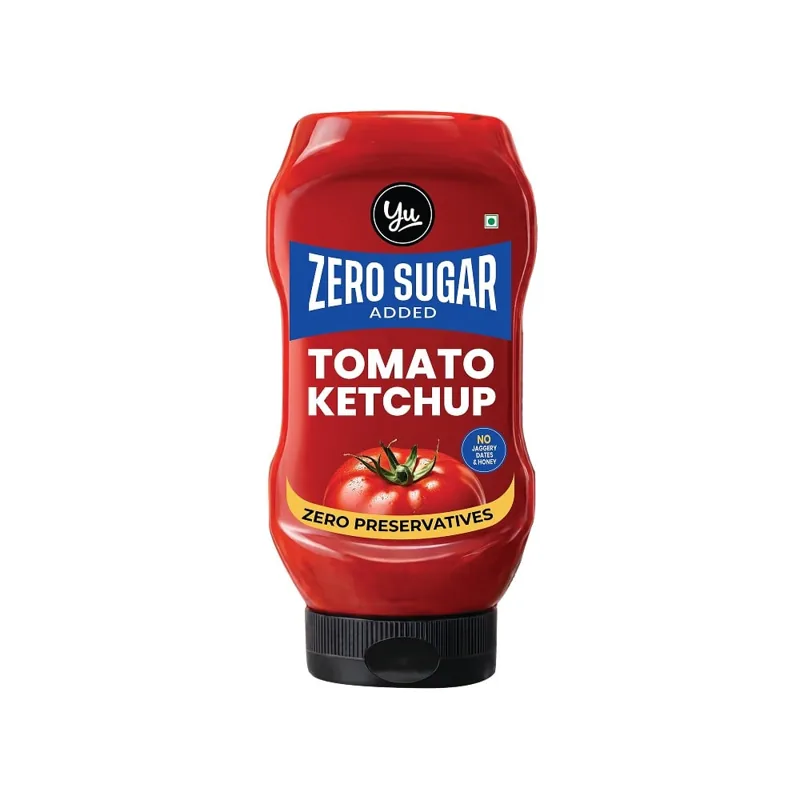
Yu Zero Sugar Tomato Ketchup
Red flags
- −Red flag: High sodium (784mg per 100g)
Green flags
- +Green flag: High fibre (26.9g)
- +Green flag: No added sugar
Ingredients, decoded
10 listed- Tomatoes (55%)
- Natural Plant Based Prebiotic (FOS)
- Vinegar
- Tapioca Starch
- Salt
- Xanthan Gum
- Garlic Powder
- Onion Powder
- Spices
- Zero Calorie Natural Sweetener (0.015% Stevia)
Our take
CleanPlate reviewKetchup sweetened with prebiotic fibre and stevia
Yu Zero Sugar Tomato Ketchup lists tomatoes (55%), natural plant-based prebiotic (FOS), vinegar, tapioca starch, salt, xanthan gum, garlic powder, onion powder, spices and zero-calorie natural sweetener (0.015% stevia). The pack is 270 g and the panel is printed per 100 g, with a 15 g serve.
CleanPlate scores it CB3. The C for nutrition is middling: 7.5 g natural fibre per 100 g (about 19 g of the 26.9 g declared is added FOS, credited at half value). The B for ingredients reflects a mix of whole and refined ingredients (led by tomatoes, fructooligosaccharide and vinegar), with additives that cost points: xanthan gum and steviol glycosides. The 3 for risk comes mainly from sodium (784 mg per 100 g).
Claims vs reality
What the pack says, checked against the ingredient list and nutrition panel.
- On the packHolds
“ZERO SUGAR ADDED”
Added sugar is 0 g and total sugar is 2.4 g per 100 g.
- On the packHolds
“ZERO PRESERVATIVES”
No preservative is listed.
- On the packHolds
“HIGH FIBRE”
26.9 g per 100 g is declared, of which about 19 g is added FOS and about 7.5 g is natural fibre.
- On the packBe careful
“LOW GI”
No tested glycaemic index value is printed on the pack.
How CB3 breaks down
Each grade is scored on its own. Here are the label numbers behind each one, per 100 g.
Adequate nutrient density
- Protein
- 0.9 g
- Fibre
- 26.9 g
- Vitamins and minerals
- None declared
- Energy
- 78 kcal
Scored on protein, fibre and twelve vitamins and minerals, against the Codex and FSSAI "source" and "high" levels, per 100 g and per 100 kcal.
Good, few concerning additives
- Base
- Tomatoes
- Sweeteners
- Zero Calorie Natu...
- Additives
- 2
- Flagged
- None
Scored on how processed the ingredients are, which additives are used and why, and whether the label keeps its promises.
Moderate risk
- Added sugar
- 0 g
- Sodium
- 784 mg
- Saturated fat
- 0 g
- Trans fat
- 0 g
Scored on free sugar, sodium, saturated fat and trans fat, each weighed by how strong the evidence of harm is.
A closer look
Does the label add up?
Tomatoes (55%), FOS prebiotic, vinegar, tapioca starch, salt, xanthan gum, garlic and onion powder, spices and stevia (0.015%).
Per 100 g: 78 kcal, 0 g fat of which 0 g saturated, 2.4 g sugar of which 0 g added, 26.9 g fibre, 0.9 g protein, 784 mg sodium. Declared energy of 78 kcal matches the Atwater sum when the fibre is counted at 2 kcal/g. The 'Low GI' claim has no tested value on the pack, which costs 2 label points.
Ingredients to watch
- SodiumConcern
784 mg per 100 g, above the 600 mg high line; 118 mg in a 15 g serve.
- Gum and sweetenerWorth watching
Xanthan gum and steviol glycosides cost 2 additive points each.
- Added sugarFine
0 g added; total sugar is 2.4 g per 100 g.
- FibreFine
26.9 g per 100 g declared, about 19 g of it added FOS.
Common misconceptions
Myth: "Zero sugar ketchup is healthier by default"
Sodium is 784 mg per 100 g, and the sweetness comes from FOS and stevia.
Myth: "High fibre means a high-fibre food"
The fibre is added FOS, not from vegetables.
How often, and how
- Healthy adultsA few times a week
- ChildrenA few times a week
- Diabetes or prediabetesFine in moderation
Smarter ways to eat it
Check the serve
A 15 g serve has 118 mg of sodium; three tablespoons add about 350 mg.
Try plain tomato puree
Pureed tomato with a pinch of salt has no added fibre or sweetener.
Common questions
Is Yu Zero Sugar Tomato Ketchup healthy?
Yu Zero Sugar Tomato Ketchup scores CB3 (Good) on CleanPlate, which makes it a reasonable choice with a trade-off or two worth knowing about. The main concerns are: High sodium (784mg per 100g). On the plus side: High fibre (26.9g); No added sugar.
What does the CB3 score mean?
The first letter (C) grades nutritional value: adequate nutrient density. The second letter (B) grades ingredient and label integrity: good, few concerning additives. The number (3) grades risk nutrients (sugar, sodium, saturated fat): moderate risk.
Last reviewed October 13, 2026. Scored with the CleanPlate method from the published label.