Bambino Pep Macaroni
Published · Updated
Bambino Pep Macaroni is plain elbow pasta made from a single ingredient, durum wheat semolina. It scores DA2: low on nutrition because protein and fibre are modest and no vitamins are added, top on ingredients because the list is one plain item, and low on risk because sugar, fat and salt are minimal. A staple to pair with vegetables or a protein.
Ingredients, decoded
1 listed- Durum Wheat Semolina (Suji / Rawa)

½ teaspoon of sugar in every 100 g · 2 g total sugar, 5 g a teaspoon
| Energy | 357 kcal |
|---|---|
| Protein | 12 g |
| Carbohydrates | 75 g |
| Total sugars | 2 g |
| Dietary fibre | 3 g |
| Total fat | 1 g |
| Trans fat | 0 g |
| Cholesterol | 0 mg |
| Sodium | 0 mg |
| Iron | 3 mg |
| Calcium | 3 mg |
Think this score is wrong?
What to know about Bambino Pep Macaroni
A one-ingredient pasta with modest protein and fibre
Bambino Pep Macaroni is dry elbow pasta whose only listed ingredient is durum wheat semolina (suji / rawa). It is bought as a pantry staple for quick family meals, with sauces, cheese or sautéed vegetables, and the pack carries cooking directions for a cheese and tomato version and a vegetable chatpat version.
Per 100 g of dry pasta you get 357 kcal, 12 g protein, 75 g carbohydrate, 3 g fibre, 2 g sugar and 1 g fat. Sodium is printed as 0 mg, so the pasta carries no salt of its own. In a typical 80 g dry serve that is about 286 kcal, 9.6 g protein and 2.4 g fibre.
The pack says made with 100% wheat and no artificial colours, and the list backs both. The front also says enriched with zinc and iron, yet no added vitamin or mineral appears in the ingredient list and no zinc is declared. CleanPlate scores it DA2.
Why Bambino Pep Macaroni scores DA2
Nutrition is a D because 12 g protein and 3 g fibre per 100 g are modest and no vitamins are added. Ingredients are an A for one plain ingredient. Risk is a 2, set by 357 kcal per 100 g.
Low nutrient density
- Protein
- 12 g
- Fibre
- 3 g
- Vitamins and minerals
- Iron, Calcium
- Energy
- 357 kcal
01 Nutrition density: why D
Protein is 12 g per 100 g, about 13% of the calories, and fibre is 3 g. Almost all the protein comes from the durum wheat semolina itself. That is a modest return for a food with 357 kcal per 100 g.
Iron is 3 mg and calcium 3 mg per 100 g, and no other vitamins or minerals are declared, so nothing adds to the grade.
Scored on protein, fibre and twelve vitamins and minerals, against the Codex and FSSAI "source" and "high" levels, per 100 g and per 100 kcal. Protein also has to supply at least 12.5% of the calories to count, and 25% for full credit.
Clean, minimally processed
- Base
- Durum Wheat Semolina
- Sweeteners
- None added
- Additives
- 0
- Flagged
- None
02 Ingredient integrity: why A
The list is one ingredient, durum wheat semolina, with no additives, no added sugar, no oil and no flavouring. Nothing costs ingredient points, and no label promise is hollow.
The pack gives no percentage for the semolina, which is the only gap, and since it is the single ingredient the list is easy to read.
Scored on how processed the ingredients are, which additives are used and why, and whether the label keeps its promises.
Low risk
- Total sugar
- 2 g
- Sodium
- 0 mg
- Trans fat
- 0 g
03 Load risk: why 2
Sugar, saturated fat, sodium and trans fat all come to zero in the score: free sugar is 0 g, sodium is printed as 0 mg and trans fat is 0 g.
Energy is the only driver. At 357 kcal per 100 g dry, the risk grade lands on a 2 through the energy floor, with about 286 kcal in an 80 g dry serve.
Scored on free sugar, sodium, saturated fat and trans fat, each weighed by how strong the evidence of harm is.
Red flags
No major red flags on the label.
Green flags
- +Green flag: Source of protein (12g)
- +Green flag: Source of fibre
- +Green flag: Low sodium
Does Bambino Pep Macaroni live up to its claims?
Made with 100% wheat and no artificial colours both hold, since the list is only durum wheat semolina. The zinc and iron promise is thin: no added mineral is listed and only 3 mg iron is declared.
- On the packHolds
“Made with 100% wheat”
The only ingredient is durum wheat semolina. It is refined semolina, not whole wheat, which is why fibre is 3 g per 100 g.
- On the packBe careful
“Enriched with Immunity Boosting Vitamins Zinc & Iron”
No added zinc or iron appears in the ingredient list. The panel declares 3 mg iron per 100 g and no zinc, so the enrichment is not visible on the label.
- On the packHolds
“No Artificial Colours”
The list has only durum wheat semolina, so no colour of any kind is added.
- Retail listingHolds
“Made from 100% durum wheat semolina”
This matches the pack, where durum wheat semolina is the single listed ingredient.
What's in Bambino Pep Macaroni?
The list is a single ingredient, durum wheat semolina, so there are no additives, sweeteners or fats to watch. What matters is the refined base and the energy per serve.
The ingredient list, read for you
The list has one item, durum wheat semolina (suji / rawa), which is the whole product. It supplies the carbohydrate and the 12 g of protein per 100 g, and it is the only ingredient, so there are no added fats, sugars, colours or flavours.
Ingredients to watch
- Refined wheat baseWorth watching
Fibre is 3 g per 100 g and protein 12 g, which is why nutrition grades a D. Pair it with vegetables and a protein food.
- Energy per serveWorth watching
357 kcal per 100 g dry, about 286 kcal in an 80 g typical dry serve, before any sauce, cheese or oil.
- Zinc and iron promiseWorth watching
The front says enriched, but no added mineral is listed and only 3 mg iron per 100 g is declared.
- One plain ingredientFine
Durum wheat semolina only: no additives, colours, flavours or added fat.
- Sugar and saltFine
2 g sugar per 100 g, no free sugar listed, and sodium printed as 0 mg.
What it doesn’t have
- No zinc is declared on the panel, although the front mentions it.
- No serve size or net weight is printed, so portions here are a typical estimate.
Who should eat Bambino Pep Macaroni?
An everyday staple for most adults and children when paired with vegetables and protein. Anyone watching blood sugar should keep the portion modest and add fibre.
- Most adultsEveryday
One plain ingredient, with 286 kcal in an 80 g dry serve.
- ChildrenEveryday
No sweetener, colour or hydrogenated fat, and only 2 g sugar per 100 g.
- Diabetes or prediabetesA few times a week
About 60 g carbohydrate in an 80 g dry serve with only 3 g fibre per 100 g.
- Active peopleEveryday
75 g carbohydrate and 12 g protein per 100 g make a useful base for a training day meal.
Recipes with Bambino Pep Macaroni
The pack suggests cheese and tomato or vegetable chatpat. Both work best with plenty of vegetables, since the pasta supplies only 3 g fibre per 100 g.
Macaroni with cheese and tomatoes
The pack's own direction. The pasta has 1 g fat per 100 g, so the cheese sets the saturated fat; keep it modest and add tomatoes.
Vegetable chatpat macaroni
Another pack direction. Loading it with sautéed vegetables lifts the 3 g fibre per 100 g that the pasta provides.
Macaroni with sautéed veggies and sauce
A tomato-based sauce with vegetables keeps the plate light around 286 kcal of pasta in an 80 g dry serve.
Bambino Pep Macaroni: common questions
What is the CleanPlate score of Bambino Pep Macaroni?
Bambino Pep Macaroni is plain elbow pasta made from a single ingredient, durum wheat semolina. It scores DA2: low on nutrition because protein and fibre are modest and no vitamins are added, top on ingredients because the list is one plain item, and low on risk because sugar, fat and salt are minimal. A staple to pair with vegetables or a protein. Nutrition D, ingredients A, load risk 2; nutrition and ingredients run A to E, risk runs 1 to 5, and A and 1 are best.
How many calories and how much protein are in Bambino Pep Macaroni?
Per 100 g, Bambino Pep Macaroni has 357 kcal, 12 g protein, 75 g carbohydrate, 1 g fat and 2 g sugar. One serve (80 g dry, typical serve) has 286 kcal and 9.6 g protein.
What are the ingredients in Bambino Pep Macaroni?
1 ingredient, in label order: Durum Wheat Semolina (Suji / Rawa).
Does Bambino Pep Macaroni live up to its claims?
4 claims checked: 3 hold, 1 needs care. "Enriched with Immunity Boosting Vitamins Zinc & Iron" needs care: No added zinc or iron appears in the ingredient list. The panel declares 3 mg iron per 100 g and no zinc, so the enrichment is not visible on the label.
Who should limit Bambino Pep Macaroni?
Most adults: everyday. One plain ingredient, with 286 kcal in an 80 g dry serve. Children: everyday. No sweetener, colour or hydrogenated fat, and only 2 g sugar per 100 g. Diabetes or prediabetes: a few times a week. About 60 g carbohydrate in an 80 g dry serve with only 3 g fibre per 100 g.
How much sugar, salt and saturated fat does Bambino Pep Macaroni have?
Per 100 g, Bambino Pep Macaroni has 2 g sugar and 0 mg sodium (about 0 g salt). The FSSAI and UK FSA "high" lines are 10 g added sugar, 600 mg sodium and 5 g saturated fat per 100 g. It is under all three lines.
Last reviewed October 29, 2026. Scored with the CleanPlate method from the published label. Spotted a mistake? .
Better Pasta
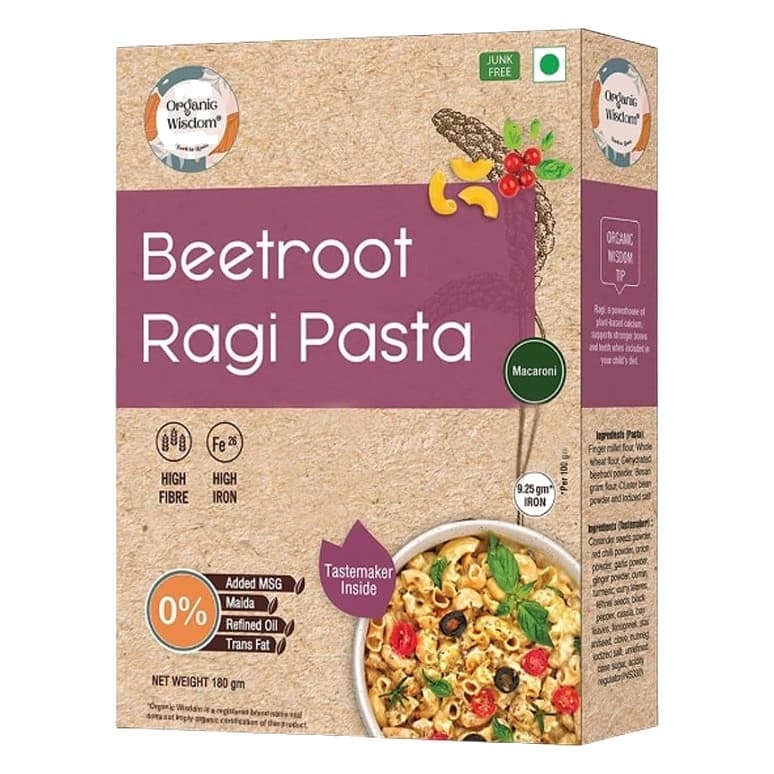
All Pasta →- Organic Wisdom Beetroot Ragi Macaroni Pasta
- +Green flag: Source of protein (11.8g)
- +Green flag: High fibre (12.4g)
- Bambino Roasted VermicelliFortified
- +Green flag: Low sodium
- +Green flag: No additives
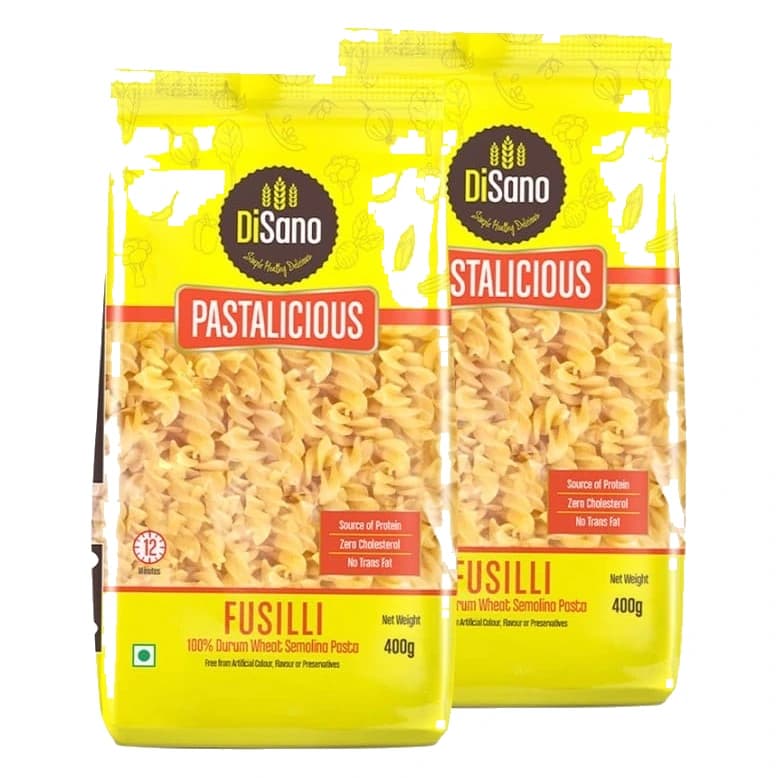
- Disano Fusilli Pasta
- +Green flag: Source of protein (11.5g)
- +Green flag: High fibre (7g)
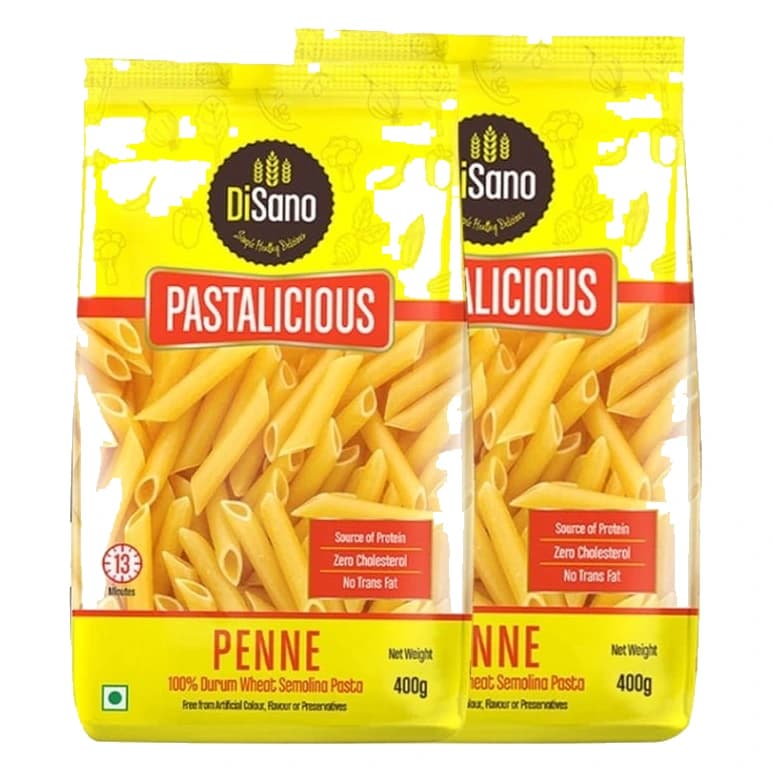
- Disano Penne Pasta
- +Green flag: Source of protein (11.5g)
- +Green flag: High fibre (7g)