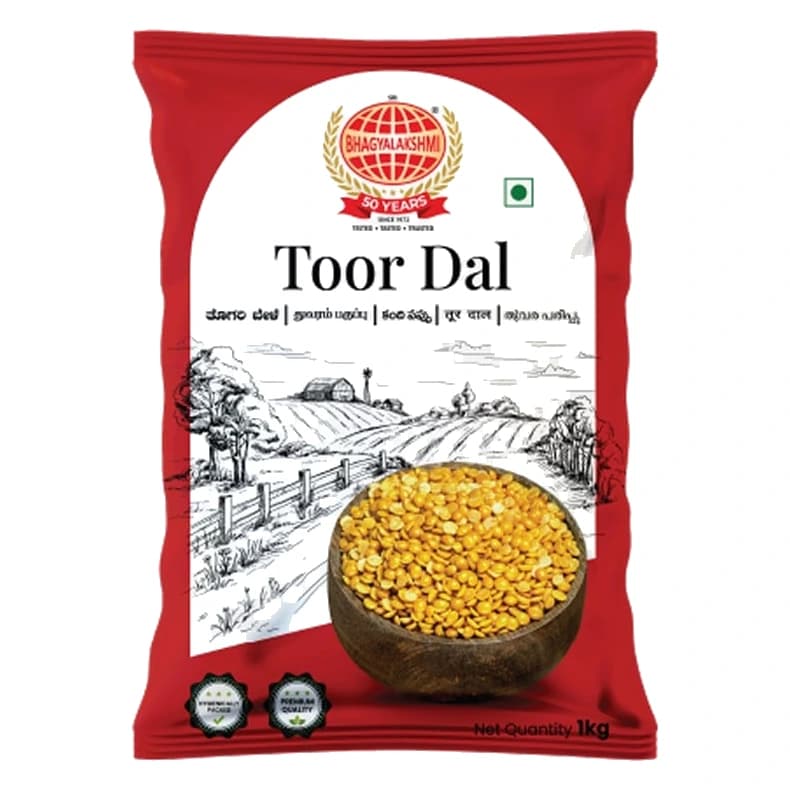
Bhagyalakshmi Toor Dal
Red flags
No major red flags on the label.
Green flags
- +Green flag: High protein (22.4g per 100g)
- +Green flag: High fibre (15.8g)
- +Green flag: Low sodium
Ingredients, decoded
1 listed- Toor Dal
Our take
CleanPlate reviewToor dal: 22 g protein, 15.8 g fibre
Bhagyalakshmi Toor Dal is a 1 kg pack of split pigeon peas. The pack prints no ingredient list, so it is scored as a single ingredient. The panel is approximate, printed per 100 g with a 25 g serve column.
CleanPlate scores it CA1. The C for nutrition is middling: 22.4 g protein and 15.8 g fibre per 100 g. The A for ingredients reflects whole or lightly processed ingredients (led by toor dal), and almost no additives. The 1 for risk is low: sodium, free sugar and saturated fat are all modest (sodium 2.26 mg, free sugar 0 g, saturated fat 0.59 g per 100 g).
Claims vs reality
What the pack says, checked against the ingredient list and nutrition panel.
- Product nameHolds
“Toor Dal”
The pack is plain toor dal.
- On the packBe careful
“Premium Quality”
A quality claim with nothing measurable behind it.
How CA1 breaks down
Each grade is scored on its own. Here are the label numbers behind each one, per 100 g.
Adequate nutrient density
- Protein
- 22.4 g
- Fibre
- 15.8 g
- Vitamins and minerals
- None declared
- Energy
- 350 kcal
Scored on protein, fibre and twelve vitamins and minerals, against the Codex and FSSAI "source" and "high" levels, per 100 g and per 100 kcal.
Clean, minimally processed
- Base
- Toor Dal
- Sweeteners
- None added
- Additives
- 0
- Flagged
- None
Scored on how processed the ingredients are, which additives are used and why, and whether the label keeps its promises.
Clean
- Total sugar
- 4.7 g
- Sodium
- 2.3 mg
- Saturated fat
- 0.59 g
Scored on free sugar, sodium, saturated fat and trans fat, each weighed by how strong the evidence of harm is.
A closer look
Does the label add up?
Toor dal (no ingredient list is printed on the pack; the product name is used).
Per 100 g: 350 kcal, 1.61 g fat of which 0.59 g saturated, 4.7 g sugar, 15.8 g fibre, 22.4 g protein, 2.26 mg sodium. The panel is headed approximate. The Blinkit listing shows protein 17 g, energy 332 kcal and fat 0.2 g; the pack reads 22.4 g, 350.3 kcal and 1.61 g and is used. Added sugar, trans fat and cholesterol are printed as dashes and are not counted. The allergen line says may contain traces of groundnut, wheat and soya.
Ingredients to watch
- MicronutrientsWorth watching
No iron, calcium or vitamins are printed.
- Protein and fibreFine
22.4 g protein and 15.8 g fibre per 100 g.
- Risk nutrientsFine
Sodium 2.3 mg and saturated fat 0.6 g.
Common misconceptions
Myth: "Premium dal is better dal"
The panel is the same kind of plain pulse as the cheaper packs.
Myth: "Dal is a complete protein"
Pulse protein needs a grain beside it.
How often, and how
- Healthy adultsDaily
- ChildrenDaily
- Diabetes or prediabetesA good choice
Smarter ways to eat it
Pair with a grain
Dal with rice or roti completes the protein.
Wash before use
As with any loose pulse.
Common questions
Is Bhagyalakshmi Toor Dal healthy?
Bhagyalakshmi Toor Dal scores CA1 (Very Good) on CleanPlate, which makes it a strong choice that holds up on nutrition and ingredients. We found no major red flags on its label. On the plus side: High protein (22.4g per 100g); High fibre (15.8g); Low sodium.
What does the CA1 score mean?
The first letter (C) grades nutritional value: adequate nutrient density. The second letter (A) grades ingredient and label integrity: clean, minimally processed. The number (1) grades risk nutrients (sugar, sodium, saturated fat): clean.
Last reviewed October 19, 2026. Scored with the CleanPlate method from the published label.