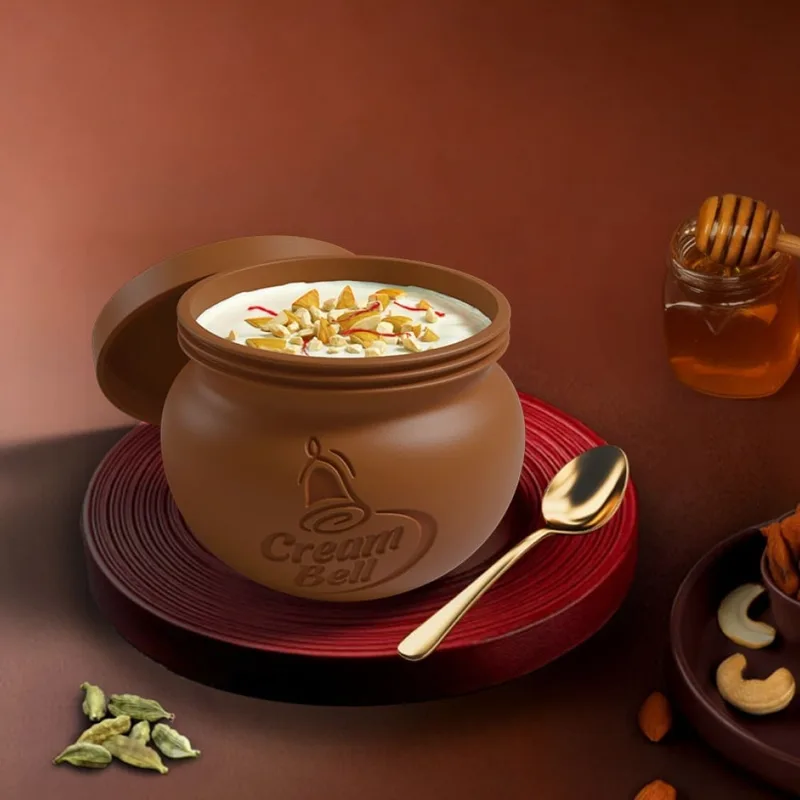
Cream Bell Matka Kulfi
Red flags
- −Red flag: High added sugar (14.9g per 100g)
- −Red flag: High saturated fat (6.2g)
- −Red flag: Contains Maltodextrin
- −Red flag: Contains Caramel Colour (Class IV)
Green flags
- +Green flag: Source of protein (5.6g)
- +Green flag: Low sodium
Ingredients, decoded
13 listed- Potable Water
- Milk Solids
- Sugar
- Almond (3%)
- Cashew Nut (3%)
- Maltodextrin
- Honey
- Emulsifying Agents (INS 433, 471)
- Stabilizing Agents (INS 401, 407, 412)
- Cardamom Powder (0.07%)
- Saffron (0.002%)
- Food Colours (INS 150d, 102, 110)
- Flavour {Nature-Identical & Artificial Substances (Mawa Malai, Condensed Milk, Kulfi)}
ED3
Our take
CleanPlate reviewA kulfi coloured by dyes, not saffron
Cream Bell Matka Kulfi is a frozen dessert in a 110 ml cup, built on milk solids, sugar, maltodextrin, honey, almond (3%) and cashew (3%), with three colours (150d, 102, 110) and two emulsifiers and three stabilisers. The back of the pack calls it "kulfi flavoured ice cream".
CleanPlate scores it [R]ED3. The E for nutrition is low: almost no credited protein, fibre or micronutrients per 100 g; its 5.62 g of protein earns no credit because it is under 2.75 g per 100 kcal. The D for ingredients reflects mostly refined or industrial ingredients (led by milk solids, sugar and almond), with additives that cost points: carrageenan, polysorbate 80, caramel colour and flavouring. A red flag (Southampton Six x2) cuts the score by 30%. The 3 for risk comes mainly from free sugar (16.9 g per 100 g) and saturated fat (6.16 g per 100 g).
Claims vs reality
What the pack says, checked against the ingredient list and nutrition panel.
- On the packPartly true
“Kulfi flavoured ice cream”
The back says it is an ice cream with kulfi flavour; the base is milk solids, sugar and maltodextrin rather than reduced milk.
How ED3 breaks down
Each grade is scored on its own. Here are the label numbers behind each one, per 100 g.
Very low nutrient density
- Protein
- 5.6 g
- Fibre
- Not declared
- Vitamins and minerals
- None declared
- Energy
- 249 kcal
Scored on protein, fibre and twelve vitamins and minerals, against the Codex and FSSAI "source" and "high" levels, per 100 g and per 100 kcal.
Heavily processed or flagged substances
- Base
- Potable Water
- Sweeteners
- 3 types
- Additives
- 5
- Flagged
- Maltodextrin, Caramel Colour (Class IV)
- Artificial flavour or colour
- Yes
Scored on how processed the ingredients are, which additives are used and why, and whether the label keeps its promises.
Moderate risk
- Added sugar
- 14.9 g
- Sodium
- 64.7 mg
- Saturated fat
- 6.2 g
- Trans fat
- 0 g
Scored on free sugar, sodium, saturated fat and trans fat, each weighed by how strong the evidence of harm is.
[R] Contains an ingredient on our red-flag list (such as a partially hydrogenated oil or a flagged synthetic dye), which cuts the ingredient grade.
A closer look
Does the label add up?
Water, milk solids, sugar, almond 3%, cashew 3%, maltodextrin, honey, emulsifiers (433, 471), stabilisers (401, 407, 412), cardamom 0.07%, saffron 0.002%, colours (150d, 102, 110) and nature-identical and artificial flavours (mawa malai, condensed milk, kulfi).
Per 100 g: 249 kcal, 13.3 g fat of which 6.16 g saturated, 23.6 g sugar of which 14.9 g added, 5.62 g protein, 64.7 mg sodium. No fibre line. The pack panel is per 110 ml (73 g) serving; the veg mark is not visible on the images.
Ingredients to watch
- Two Southampton Six dyesConcern
Tartrazine (102) and sunset yellow FCF (110) set the red flag and cut the ingredient score by 30%.
- Heavy additive loadConcern
Polysorbate 80, carrageenan, mono-diglycerides, alginate, guar, caramel colour and flavour blends.
- Free sugarWorth watching
16.9 g per 100 g counting honey, with added sugar declared at 14.9 g.
- Saturated fatWorth watching
6.16 g per 100 g.
Common misconceptions
Myth: "Kulfi is just frozen milk"
Traditional kulfi is reduced milk; this one adds maltodextrin, honey, two emulsifiers and three stabilisers.
Myth: "Saffron colours it"
Saffron is 0.002%; the colour is from tartrazine, sunset yellow and caramel.
How often, and how
- Healthy adultsOccasionally
- ChildrenRarely
- Diabetes or prediabetesLimit
Smarter ways to eat it
Share a cup
A 110 ml cup is about 180 kcal; half is enough for a sweet bite.
Plain kulfi at home
Boil milk with cardamom, a little sugar and chopped nuts, then freeze in a small cup.
Common questions
Is Cream Bell Matka Kulfi healthy?
Cream Bell Matka Kulfi scores ED3 (Poor) on CleanPlate, which makes it best kept as a rare treat rather than a regular buy. The main concerns are: High added sugar (14.9g per 100g); High saturated fat (6.2g); Contains Maltodextrin; Contains Caramel Colour (Class IV). On the plus side: Source of protein (5.6g); Low sodium.
What does the ED3 score mean?
The first letter (E) grades nutritional value: very low nutrient density. The second letter (D) grades ingredient and label integrity: heavily processed or flagged substances. The number (3) grades risk nutrients (sugar, sodium, saturated fat): moderate risk.
Which ingredients in Cream Bell Matka Kulfi should I watch?
Maltodextrin (Maltodextrin), Food Colours (INS 150d, 102, 110) (Caramel Colour (Class IV)).
Last reviewed October 11, 2026. Scored with the CleanPlate method from the published label.
Better Frozen Desserts
All 9 →- EB3Call Me Chunky Berry Cheesy Dream Ice Cream Cup
- −Red flag: High added sugar (18.1g per 100g)
- −Red flag: High saturated fat (7.8g)
Poor - CD3Mother Dairy Go-Low Kesar Pista Kulfi Stick
- −Red flag: High saturated fat (8.3g)
- +Green flag: High fibre (9g)
Fair - EB4Amul Gold Chocochips Gold Ice Cream Cup
- −Red flag: High added sugar (19.4g per 100g)
- −Red flag: High saturated fat (8.4g)
Poor