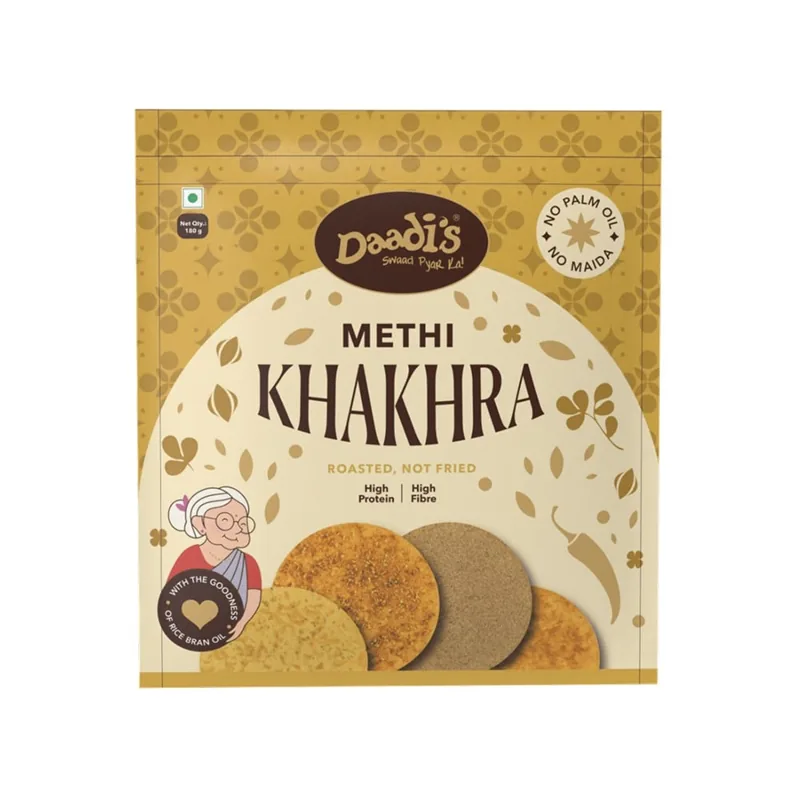
Daadi's Methi Khakhra
Red flags
- −Red flag: High sodium (761mg per 100g)
Green flags
- +Green flag: Source of protein (10.5g)
- +Green flag: High fibre (10.6g)
- +Green flag: No added sugar
Ingredients, decoded
6 listed- Whole Wheat Flour (Atta) (74.32%)
- Edible Vegetable Oil (Rice Bran Oil)
- Green Chilli Paste
- Iodized Salt
- Fenugreek Leaves (0.8%)
- Turmeric Powder
Our take
CleanPlate reviewRoasted wheat khakhra that misses its protein claim
Daadi's Methi Khakhra lists whole wheat flour (74.32%), rice bran oil, green chilli paste, iodised salt, fenugreek leaves (0.8%) and turmeric powder. The pack is 180 g and the panel is printed per 100 g, with a 20 g serve (one piece).
CleanPlate scores it [L]CA4. The C for nutrition is middling: 10.6 g fibre per 100 g; its 10.5 g of protein earns no credit because it is under 2.75 g per 100 kcal. The A for ingredients reflects whole or lightly processed ingredients (led by whole wheat flour, edible vegetable oil and green chilli paste), and almost no additives. The [L] marks a hollow label promise: the claim "High Protein" does not hold: protein 10.53 g per 100 g is under 11 g (5.5 for drinks) and 2.23 g per 100 kcal is under 5.5. The 4 for risk comes mainly from sodium (761 mg per 100 g) and calories (473 kcal per 100 g).
Claims vs reality
What the pack says, checked against the ingredient list and nutrition panel.
- On the packMisleading
“High Protein”
Protein is 10.53 g per 100 g, under the 11 g line, and 2.2 g per 100 kcal is under 5.5.
- On the packHolds
“High Fibre”
10.6 g of fibre per 100 g is above the 6 g line.
- On the packHolds
“No Maida”
Whole wheat flour is the first ingredient and no refined wheat flour is listed.
- On the packBe careful
“Roasted, Not Fried”
The pieces are roasted, but oil is in the dough: fat is 18.9 g per 100 g.
How CA4 breaks down
Each grade is scored on its own. Here are the label numbers behind each one, per 100 g.
Adequate nutrient density
- Protein
- 10.5 g
- Fibre
- 10.6 g
- Vitamins and minerals
- None declared
- Energy
- 473 kcal
Scored on protein, fibre and twelve vitamins and minerals, against the Codex and FSSAI "source" and "high" levels, per 100 g and per 100 kcal.
Clean, minimally processed
- Base
- Whole Wheat Flour
- Main fat
- Edible Vegetable Oil
- Sweeteners
- None added
- Additives
- 0
- Flagged
- None
Scored on how processed the ingredients are, which additives are used and why, and whether the label keeps its promises.
High risk
- Added sugar
- 0 g
- Sodium
- 761 mg
- Saturated fat
- 4.6 g
- Trans fat
- 0 g
Scored on free sugar, sodium, saturated fat and trans fat, each weighed by how strong the evidence of harm is.
[L] The name or pack claims promise more than the ingredient list delivers. See Claims vs reality.
A closer look
Does the label add up?
Whole wheat flour (74.32%), rice bran oil, green chilli paste, iodised salt, fenugreek leaves (0.8%) and turmeric; the only percentages are for wheat and fenugreek.
Per 100 g: 473 kcal, 18.9 g fat of which 4.61 g saturated, 7.42 g sugar of which 0 g added, 10.6 g fibre, 10.5 g protein, 761 mg sodium. Protein, carbohydrate and fat add to 94.6 g. The pack says it contains wheat and may contain milk and tree nuts.
Ingredients to watch
- SodiumConcern
761 mg per 100 g, above the 600 mg high line; about 152 mg in one 20 g piece.
- CaloriesWorth watching
473 kcal per 100 g, about 95 kcal in a piece.
- FatWorth watching
18.9 g per 100 g, 4.6 g of it saturated, even though the pieces are roasted.
- Fibre and ingredientsFine
10.6 g of fibre per 100 g from whole wheat, with no added sugar, palm oil or additive.
Common misconceptions
Myth: "Roasted means low fat"
It has 18.9 g of fat per 100 g, because oil is mixed into the dough.
Myth: "High Protein" on the front means a protein snack
The panel gives 10.5 g per 100 g, 0.5 g under the 11 g line, so the claim does not hold.
How often, and how
- Healthy adultsA few times a week
- ChildrenOccasionally
- Diabetes or prediabetesOccasionally
Smarter ways to eat it
Count the pieces
A 20 g piece is about 95 kcal and 152 mg of sodium, so two pieces make a snack, not a side.
Add protein on top
Spread hung curd or hummus on a piece to add protein the khakhra itself lacks.
Common questions
Is Daadi's Methi Khakhra healthy?
Daadi's Methi Khakhra scores CA4 (Fair) on CleanPlate, which makes it an occasional-use product, where the concerns start to outweigh the positives. The main concerns are: High sodium (761mg per 100g). On the plus side: Source of protein (10.5g); High fibre (10.6g); No added sugar.
What does the CA4 score mean?
The first letter (C) grades nutritional value: adequate nutrient density. The second letter (A) grades ingredient and label integrity: clean, minimally processed. The number (4) grades risk nutrients (sugar, sodium, saturated fat): high risk.
Last reviewed October 13, 2026. Scored with the CleanPlate method from the published label.