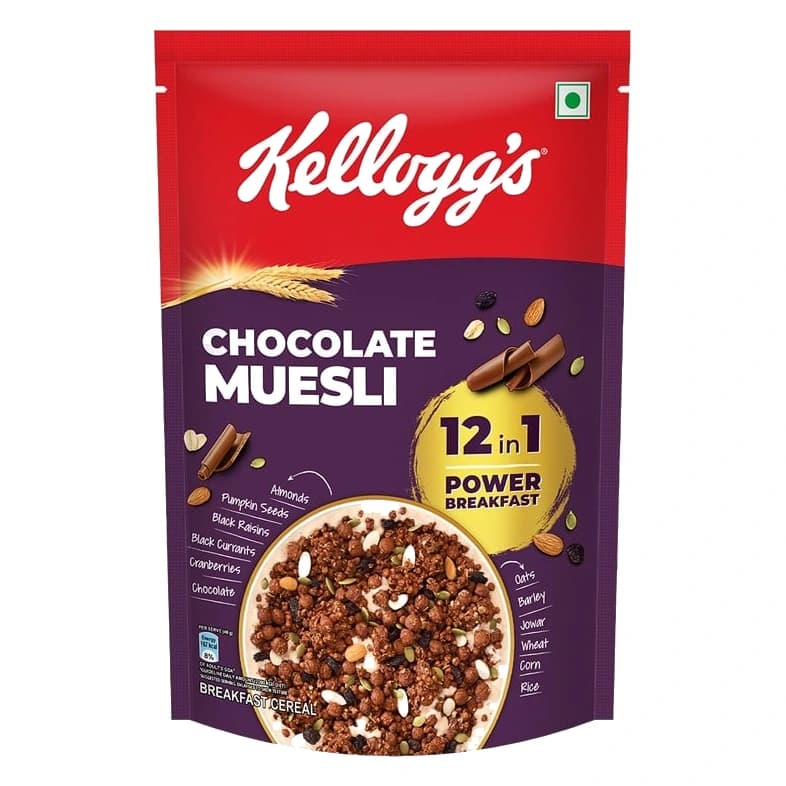
Kellogg's Chocolate Muesli
Red flags
- −Red flag: High added sugar (18.9g per 100g)
- −Red flag: Contains Caramel Colour (Class IV)
Green flags
- +Green flag: High protein (11g per 100g)
- +Green flag: High fibre (7.2g)
Ingredients, decoded
25 listed- Rolled Oats (23.8%)
- Sugar
- Dark Chocolate Powder (9.5%) (Sugar, Cocoa Solids & Cocoa Butter)
- Edible Vegetable Oil (Sunflower Oil)
- Rice Flour (6.2%)
- Corn Meal (6.1%)
- Raisins (6%) (Black Raisins (3%), Black Currants (3%))
- Almonds (4.5%)
- Rolled Barley (4%)
- Wheat Flour (Atta) (3.7%)
- Cereal Extract
- Sorghum (Jowar) Flour (3.2%)
- Pumpkin Seeds (3%)
- Candied Cranberry (3%)
- Cocoa Solids (1.8%)
- Liquid Glucose
- Iodized Salt
- Ragi Flour
- Minerals
- Flavours (Nature Identical and Artificial (Cream))
- Antioxidant (INS 307b)
- Raising Agent (INS 500(ii))
- Humectant (INS 452(i))
- Colour (INS 150d)
- Vitamins
Our take
CleanPlate reviewOat muesli with chocolate, raisins and almonds
Kellogg's Chocolate Muesli is a 450 g muesli of rolled oats (23.8%) with sugar, dark chocolate powder (9.5%), rice flour, corn meal, raisins, almonds (4.5%), rolled barley, wheat flour and seeds. The pack calls it a 12 in 1 power breakfast.
CleanPlate scores it CB3. The C for nutrition is middling: 7.2 g fibre per 100 g; its 11 g of protein earns no credit because it is under 2.75 g per 100 kcal. The B for ingredients reflects a mix of whole and refined ingredients (led by rolled oats, sugar and sugar), with additives that cost points: caramel colour, polyphosphates and flavouring. The 3 for risk comes mainly from free sugar (22.2 g per 100 g) and calories (417 kcal per 100 g).
Claims vs reality
What the pack says, checked against the ingredient list and nutrition panel.
- On the packHolds
“High in Protein”
The panel prints 11 g of protein per 100 g, which meets the high-protein test; it is cereal protein, so it earns no credit in the score.
- On the packHolds
“High in Fibre”
The panel prints 7.2 g of fibre per 100 g.
- On the packHolds
“No Added Preservatives”
No preservative is listed; INS 307b is an antioxidant and INS 452(i) a humectant.
How CB3 breaks down
Each grade is scored on its own. Here are the label numbers behind each one, per 100 g.
Adequate nutrient density
- Protein
- 11 g
- Fibre
- 7.2 g
- Vitamins and minerals
- None declared
- Energy
- 417 kcal
Scored on protein, fibre and twelve vitamins and minerals, against the Codex and FSSAI "source" and "high" levels, per 100 g and per 100 kcal.
Good, few concerning additives
- Base
- Rolled Oats
- Main fat
- Dark Chocolate Powder
- Sweeteners
- 3 types
- Additives
- 3
- Flagged
- Caramel Colour (Class IV)
- Artificial flavour or colour
- Yes
Scored on how processed the ingredients are, which additives are used and why, and whether the label keeps its promises.
Moderate risk
- Added sugar
- 18.9 g
- Sodium
- 135 mg
- Saturated fat
- 2.1 g
- Trans fat
- 0 g
Scored on free sugar, sodium, saturated fat and trans fat, each weighed by how strong the evidence of harm is.
A closer look
Does the label add up?
Rolled oats (23.8%), sugar, dark chocolate powder (9.5%) (sugar, cocoa solids and cocoa butter), sunflower oil, rice flour (6.2%), corn meal (6.1%), raisins (6%), almonds (4.5%), rolled barley (4%), wheat flour (3.7%), cereal extract, sorghum flour (3.2%), pumpkin seeds (3%), candied cranberry (3%), cocoa solids (1.8%), liquid glucose, iodised salt, ragi flour, minerals, flavours (nature-identical and artificial), antioxidant (INS 307b), raising agent (INS 500(ii)), humectant (INS 452(i)), colour (INS 150d) and vitamins.
Per 100 g: 417 kcal, 13.3 g fat of which 2.1 g saturated, 26.9 g sugar of which 18.9 g added, 7.2 g fibre, 11 g protein, 135 mg sodium. The panel does not tick its per 100 g column; 417 kcal fits the printed 8% RDA for a 40 g serve, so the values are read as per 100 g and the score is provisional. Cereal extract adds sugar that the printed added-sugar line (18.9 g) does not count, so free sugar is 22.2 g. The photos show only the panel and the ingredients; the back-of-pack claims come from the earlier record. Net 450 g.
Ingredients to watch
- Free sugarConcern
22.2 g per 100 g; sugar is the second ingredient and cereal extract and liquid glucose add more.
- AdditivesWorth watching
Caramel colour (INS 150d) and the polyphosphate humectant (INS 452(i)) cost 8 label points.
- CaloriesWorth watching
417 kcal per 100 g.
- FibreFine
7.2 g per 100 g from oats, barley, bran and seeds.
Common misconceptions
Myth: "Muesli is a low-sugar breakfast"
The panel prints 18.9 g of added sugar per 100 g, and sugar is listed second.
Myth: "12 in 1 means mostly grains, fruits and nuts"
Oats are 23.8%, but sugar and chocolate powder are large shares, and the fruits, nuts and seeds are small ones.
How often, and how
- Healthy adultsMost days
- ChildrenMost days
- Diabetes or prediabetesFine in moderation
Smarter ways to eat it
Mix it half and half with plain oats
That roughly halves the sugar in each bowl.
Add curd and fresh fruit
Protein and fibre from fresh food, with less sugar from the bag.
Common questions
Is Kellogg's Chocolate Muesli healthy?
Kellogg's Chocolate Muesli scores CB3 (Good) on CleanPlate, which makes it a reasonable choice with a trade-off or two worth knowing about. The main concerns are: High added sugar (18.9g per 100g); Contains Caramel Colour (Class IV). On the plus side: High protein (11g per 100g); High fibre (7.2g).
What does the CB3 score mean?
The first letter (C) grades nutritional value: adequate nutrient density. The second letter (B) grades ingredient and label integrity: good, few concerning additives. The number (3) grades risk nutrients (sugar, sodium, saturated fat): moderate risk.
Which ingredients in Kellogg's Chocolate Muesli should I watch?
Colour (INS 150d) (Caramel Colour (Class IV)).
Last reviewed October 19, 2026. Scored with the CleanPlate method from the published label.
Better Breakfast Cereals
All 103 →- Yoga Bar 0% Added Sugar Super Muesli
- +Green flag: High protein (15g per 100g)
- +Green flag: High fibre (14g)
- GOAT Life High Protein Overnight Oats Tiramisu
- +Green flag: High protein (26.7g per 100g)
- +Green flag: High fibre (8g)
- Kellogg's Muesli 0% Added SugarFortified
- +Green flag: Source of protein (9.3g)
- +Green flag: High fibre (6.4g)
- GOAT Life High Protein Overnight Oats Almond Kulfi
- +Green flag: High protein (26.7g per 100g)
- +Green flag: High fibre (6.7g)