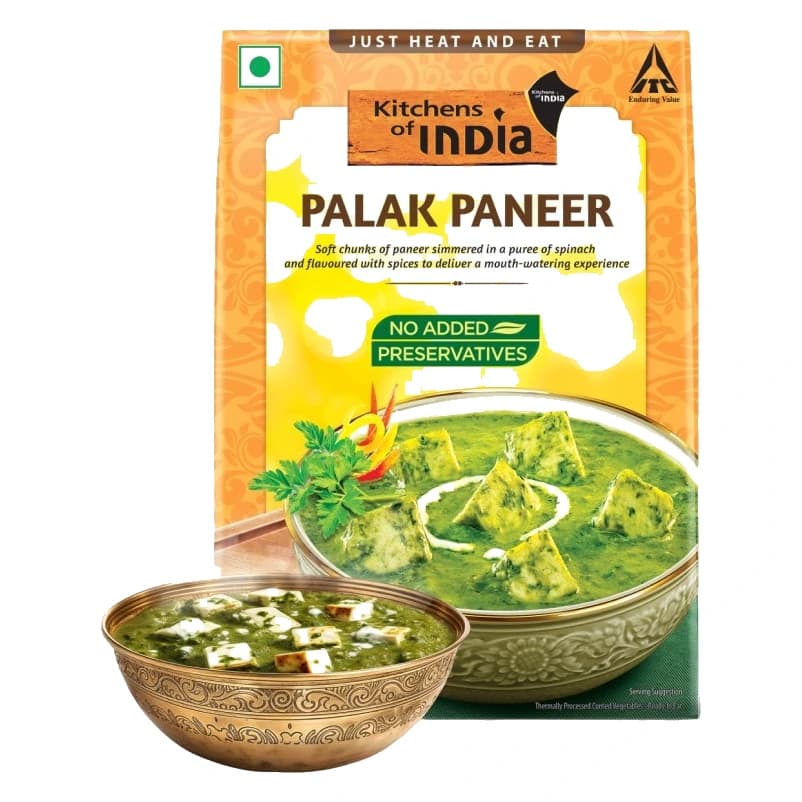
Kitchens of India Palak Paneer Ready to Eat
Published · Updated
Kitchens of India Palak Paneer Ready to Eat is a heat-and-eat pouch of spinach gravy with paneer cubes. It scores DA1: nutrition is low because the gravy is light on protein and has no declared fibre, ingredients are strong with a short list and no additives, and risk is low on saturated fat. Handy as a quick meal base with roti or rice.
Ingredients, decoded
19 listed- Spinach Paste (61.1%)
- Paneer (13.9%)
- Curd
- Onion
- Refined Sunflower Oil
- Garlic
- Water
- White Butter
- Tomato Paste
- Ginger
- Besan
- Milk
- Iodised Salt
- Spices and Condiments (0.5%)
- Green Chilli
- Cashewnuts
- Lemon Juice
- Coriander Leaves (0.2%)
- Dehydrated Fenugreek Leaves
<½ teaspoon of sugar in every 100 g · 0.1 g total sugar, 5 g a teaspoon
| Energy | 131 kcal |
|---|---|
| Protein | 5.5 g |
| Carbohydrates | 7.5 g |
| Total sugars | 0.1 g |
| Total fat | 8.8 g |
| Saturated fat | 2.3 g |
| Trans fat | 0.12 g |
Think this score is wrong?
What to know about Kitchens of India Palak Paneer Ready to Eat
Spinach-led gravy, but only 5.5 g protein per 100 g
A 285 g retort pouch of palak paneer: spinach paste (61.1%), paneer (13.9%), curd, onion, refined sunflower oil, garlic, water and white butter, with tomato paste, ginger, besan, milk, salt, spices, green chilli, cashewnuts, lemon juice and fenugreek leaves further down. It is bought by people who want a restaurant-style curry in minutes, with no cooking.
Per 100 g you get 131 kcal, 5.5 g protein, 7.5 g carbohydrate, 0.1 g sugar and 8.8 g fat, of which 2.3 g is saturated. The whole pouch comes to about 373 kcal, 15.7 g protein and 6.6 g saturated fat. The panel does not print sodium or fibre.
The name is honest: spinach is the main ingredient and the paneer is a real, declared share. The pack says no added preservatives, and none is listed. What holds the nutrition grade back is the thin protein for the calories and the missing fibre figure. CleanPlate scores it DA1.
Why Kitchens of India Palak Paneer Ready to Eat scores DA1
Nutrition is a D because protein is only 5.5 g per 100 g and no fibre is declared. Ingredients are an A on a short, additive-free list, and risk is a 1 with 2.3 g saturated fat per 100 g.
Low nutrient density
- Protein
- 5.5 g
- Fibre
- Not declared
- Vitamins and minerals
- None declared
- Energy
- 131 kcal
01 Nutrition density: why D
Protein is 5.5 g per 100 g, with paneer at 13.9% giving about 3.1 g of it. At 131 kcal per 100 g that is a thin return, so the grade stays low.
No fibre is declared and no vitamins or minerals are printed, so nothing else lifts it. The spinach is likely to add some, but the pack does not say how much.
Scored on protein, fibre and twelve vitamins and minerals, against the Codex and FSSAI "source" and "high" levels, per 100 g and per 100 kcal. Protein also has to supply at least 12.5% of the calories to count, and 25% for full credit.
Clean, minimally processed
- Base
- Spinach Paste
- Main fat
- Refined Sunflower Oil
- Sweeteners
- None added
- Additives
- 0
- Flagged
- None
02 Ingredient integrity: why A
Spinach paste and paneer lead, followed by curd, onion and sunflower oil. No additive, sweetener, colour or flavour enhancer is listed, and no hydrogenated fat is in the list.
The pack claims no added preservatives and the list agrees, so there are no label-integrity penalties and nothing costs ingredient points. Both declared percentages for the main ingredients help the grade.
Scored on how processed the ingredients are, which additives are used and why, and whether the label keeps its promises.
Clean
- Total sugar
- 0.1 g
- Saturated fat
- 2.3 g
- Trans fat
- 0.12 g
03 Load risk: why 1
Saturated fat is 2.3 g per 100 g, the main driver of a risk grade of 1, and about 6.6 g in the whole pouch. Sugar is 0.1 g per 100 g and no free sugar is listed.
Trans fat is declared at 0.12 g per 100 g and is accepted because no hydrogenated fat is listed. Sodium is not printed on the panel, so it could not be counted, although iodised salt is in the list.
Scored on free sugar, sodium, saturated fat and trans fat, each weighed by how strong the evidence of harm is.
Red flags
No major red flags on the label.
Green flags
- +Green flag: Source of protein (5.5g)
- +Green flag: No additives
Does Kitchens of India Palak Paneer Ready to Eat live up to its claims?
The name, the no-preservatives claim and the heat-and-eat promise all hold. Spinach paste is 61.1% and paneer 13.9%, and no preservative appears in the list.
- Product nameHolds
“Palak Paneer”
Spinach paste is 61.1% and paneer 13.9%, both declared, so the two named ingredients are the bulk of the dish.
- On the packHolds
“No Added Preservatives”
No preservative or other additive is listed. The pack credits high-pressure, high-temperature processing instead.
- On the packHolds
“Just Heat and Eat”
The pack gives three methods: pan for 3 to 5 minutes, microwave for 1 to 2 minutes, or the pouch in boiling water for 3 to 5 minutes.
What's in Kitchens of India Palak Paneer Ready to Eat?
Spinach paste and paneer lead a short list with no additives. The things to watch are the added fats and a sodium figure the pack does not print.
The ingredient list, read for you
Spinach paste (61.1%) and paneer (13.9%) lead, so this is mostly spinach gravy with paneer cubes. Curd, onion, refined sunflower oil, garlic, water and white butter make the base and richness, with tomato paste, ginger and besan to thicken. Salt, spices (0.5%), green chilli, cashewnuts, lemon juice, coriander leaves (0.2%) and fenugreek leaves finish the flavour.
Ingredients to watch
- Protein for the caloriesConcern
5.5 g protein per 100 g at 131 kcal. Paneer gives about 3.1 g of it, and no fibre is declared, which keeps nutrition low.
- Saturated fatWorth watching
2.3 g per 100 g from paneer, butter and curd, about 6.6 g in the whole pouch. Refined sunflower oil adds to the total fat of 8.8 g.
- Sodium not printedWorth watching
The panel gives no sodium figure, although iodised salt is listed. Treat it as a ready meal with unknown salt.
- Spinach and paneer leadFine
Spinach paste 61.1% and paneer 13.9%, both declared on the label.
- No additivesFine
No preservative, colour, sweetener or flavour enhancer in the list, and sugar is 0.1 g per 100 g.
What it doesn’t have
- No sodium or fibre figure is printed on the panel.
- No allergen statement is printed, though milk and cashewnuts are in the list.
Who should eat Kitchens of India Palak Paneer Ready to Eat?
A few times a week for most adults and children. Anyone watching blood pressure should go lighter, because the pack prints no sodium figure.
- Most adultsA few times a week
About 373 kcal and 6.6 g saturated fat per pouch, with no additives.
- ChildrenA few times a week
No sweetener, dye or hydrogenated fat, and 0.1 g sugar per 100 g.
- High blood pressureOccasionally
Sodium is not printed, and iodised salt is in the list.
- Weight managementA few times a week
131 kcal per 100 g, but protein is only 5.5 g.
Recipes with Kitchens of India Palak Paneer Ready to Eat
Serve it with roti or rice, add extra paneer cubes, or fold it into a paratha filling to turn a 285 g pouch into a fuller meal.
Palak paneer with roti
Pair the pouch with roti to add fibre and carbohydrate to a gravy that has 7.5 g carbohydrate per 100 g.
Extra paneer bowl
Stir in more paneer cubes while heating to lift protein above the 5.5 g per 100 g in the pouch.
Palak paneer rice plate
Serve over plain rice with a side of curd, so one 285 g pouch stretches across two plates.
Kitchens of India Palak Paneer Ready to Eat: common questions
What is the CleanPlate score of Kitchens of India Palak Paneer Ready to Eat?
Kitchens of India Palak Paneer Ready to Eat is a heat-and-eat pouch of spinach gravy with paneer cubes. It scores DA1: nutrition is low because the gravy is light on protein and has no declared fibre, ingredients are strong with a short list and no additives, and risk is low on saturated fat. Handy as a quick meal base with roti or rice. Nutrition D, ingredients A, load risk 1; nutrition and ingredients run A to E, risk runs 1 to 5, and A and 1 are best.
How many calories and how much protein are in Kitchens of India Palak Paneer Ready to Eat?
Per 100 g, Kitchens of India Palak Paneer Ready to Eat has 131 kcal, 5.5 g protein, 7.5 g carbohydrate, 8.8 g fat and 2.3 g saturated fat. One serve (1 pouch, 285 g) has 373 kcal and 15.7 g protein.
What are the ingredients in Kitchens of India Palak Paneer Ready to Eat?
19 ingredients, in label order: Spinach Paste (61.1%), Paneer (13.9%), Curd, Onion, Refined Sunflower Oil, Garlic, Water, White Butter, Tomato Paste, Ginger, Besan, Milk, Iodised Salt, Spices and Condiments (0.5%), Green Chilli, Cashewnuts, Lemon Juice, Coriander Leaves (0.2%), Dehydrated Fenugreek Leaves.
Does Kitchens of India Palak Paneer Ready to Eat live up to its claims?
3 claims checked: 3 hold.
Who should limit Kitchens of India Palak Paneer Ready to Eat?
Most adults: a few times a week. About 373 kcal and 6.6 g saturated fat per pouch, with no additives. Children: a few times a week. No sweetener, dye or hydrogenated fat, and 0.1 g sugar per 100 g. High blood pressure: occasionally. Sodium is not printed, and iodised salt is in the list.
How much sugar, salt and saturated fat does Kitchens of India Palak Paneer Ready to Eat have?
Per 100 g, Kitchens of India Palak Paneer Ready to Eat has 0.1 g sugar and 2.3 g saturated fat. The FSSAI and UK FSA "high" lines are 10 g added sugar, 600 mg sodium and 5 g saturated fat per 100 g. It is under all three lines.
Last reviewed October 23, 2026. Scored with the CleanPlate method from the published label. Spotted a mistake? .
More Ready-to-Eat Meals
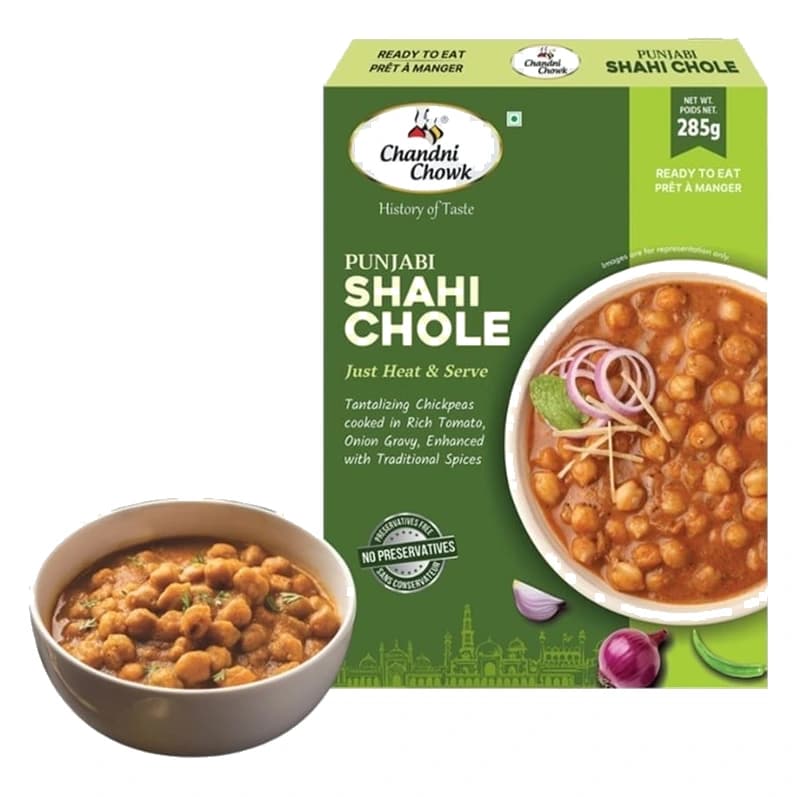
All Ready-to-Eat Meals →- Chandni Chowk Punjabi Shahi Chole Ready to Eat
- +Green flag: High fibre (8g)
- +Green flag: No additives
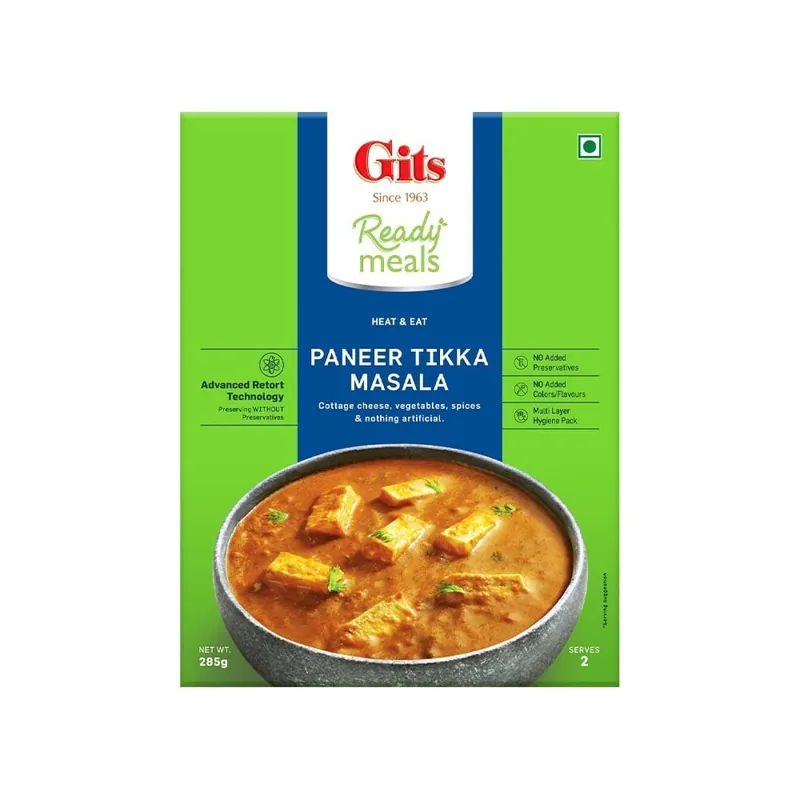
- Gits Paneer Tikka Masala Ready to Eat
- −Red flag: High saturated fat (6.2g)
- +Green flag: Source of protein (8g)
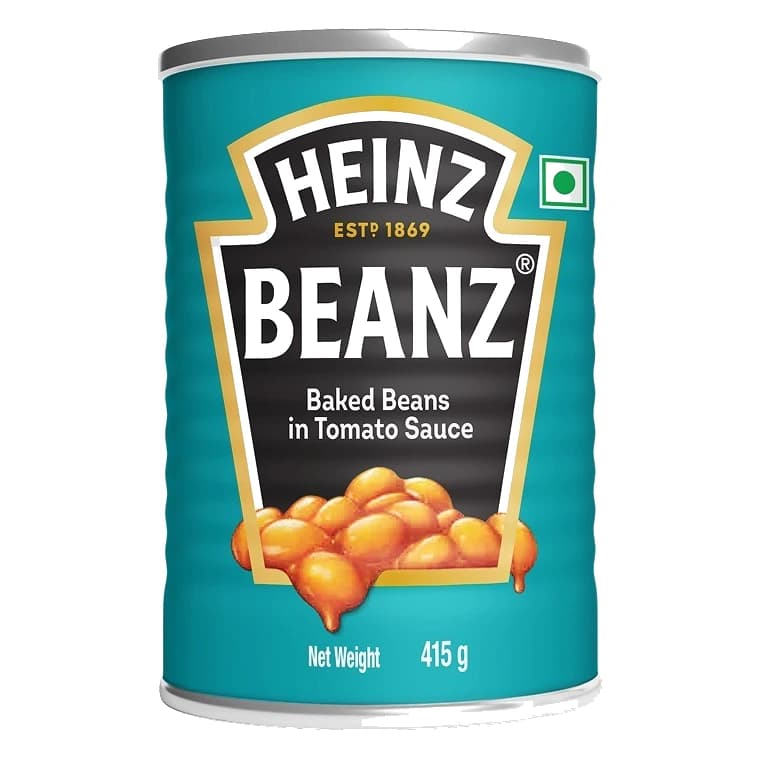
- Heinz Baked Beans in Tomato Sauce
- +Green flag: Source of fibre
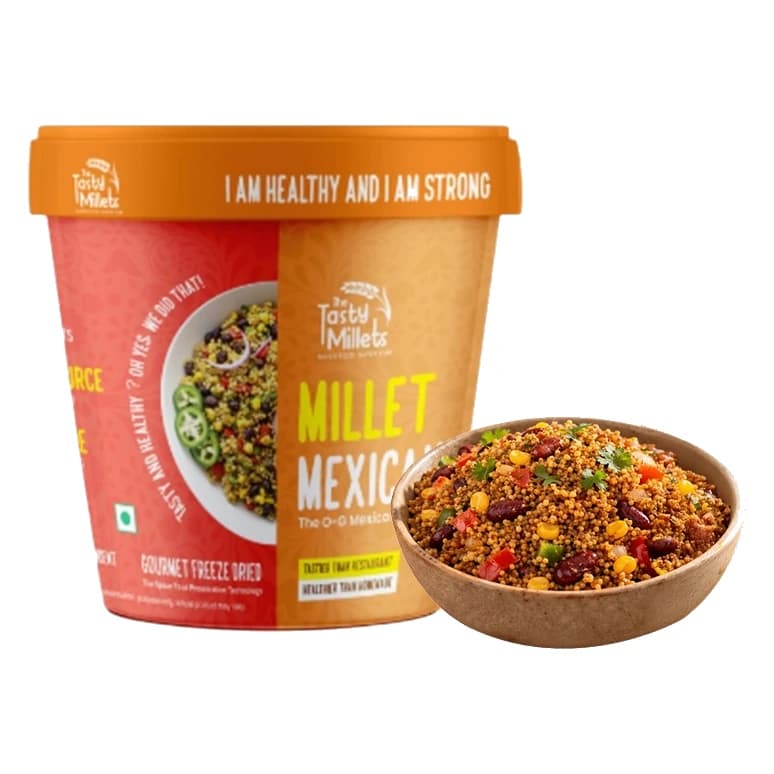
- The Tasty Millets Ready to Eat Millet Mexicana
- +Green flag: Source of protein (14g)
- +Green flag: High fibre (10g)