Let's Try Salted Jeera Papad
Published · Updated
Let's Try Salted Jeera Papad is a ready-to-eat fried papad made from rice flour and tapioca starch, seasoned with salt and cumin. It scores EB4: nutrition is low because it is mostly starch and oil, ingredients are short and clean, and risk is high because of the calories and salt. Fine as an occasional crunchy side, not an everyday snack.
Ingredients, decoded
6 listed- Rice Flour
- Edible Vegetable Oil (Refined Groundnut Oil)
- Tapioca Starch
- Iodised Salt
- Cumin (Jeera)
- Raising Agent (INS 500(ii))

0 teaspoon of sugar in every 100 g · 0 g total sugar, 5 g a teaspoon
| Energy | 490 kcal |
|---|---|
| Protein | 5.4 g |
| Carbohydrates | 69.6 g |
| Total sugars | 0 g |
| Added sugars | 0 g |
| Total fat | 24.1 g |
| Saturated fat | 3.9 g |
| Trans fat | 0 g |
| Cholesterol | 0 mg |
| Sodium | 510 mg |
Think this score is wrong?
What to know about Let's Try Salted Jeera Papad
A short, clean list on a fried, starchy base
Let's Try Salted Jeera Papad is a fried, ready-to-eat papad built from rice flour, refined groundnut oil and tapioca starch, with iodised salt, cumin and a raising agent (INS 500(ii)). It is sold in a 50 g pack as a crunchy side or tea-time snack, and no ingredient percentages are declared.
A 10 g serve has 49 kcal, 0.5 g protein, 2.4 g fat and 51 mg sodium, so the 50 g pack is five serves. Per 100 g the numbers are 490 kcal, 5.4 g protein, 24.1 g fat, 3.9 g saturated fat and 510 mg sodium, with no sugar at all. The cost is calories and salt, not sugar.
The pack promises groundnut oil only, no oil mixing, no cholesterol and no trans fat, and the ingredient list backs the oil and trans fat claims. Cumin is listed but sits low in the list, behind the flour, oil, starch and salt. CleanPlate scores it EB4.
Why Let's Try Salted Jeera Papad scores EB4
Nutrition is an E because the papad is mostly starch and oil with little protein. Ingredients are a B on a short, additive-light list. Risk is a 4 on 510 mg sodium and 490 kcal per 100 g.
Very low nutrient density
- Protein
- 5.4 g
- Fibre
- Not declared
- Vitamins and minerals
- None declared
- Energy
- 490 kcal
01 Nutrition density: why E
Protein is 5.4 g per 100 g, and the largest share comes from rice flour, a low-quality protein source, so the protein earns little credit. The rest of the energy comes from starch and 24.1 g of fat per 100 g.
No vitamins, minerals or fibre are declared, so nothing lifts the grade. A 10 g serve gives 49 kcal and 0.5 g protein.
Scored on protein, fibre and twelve vitamins and minerals, against the Codex and FSSAI "source" and "high" levels, per 100 g and per 100 kcal. Protein also has to supply at least 12.5% of the calories to count, and 25% for full credit.
Good, few concerning additives
- Base
- Rice Flour
- Main fat
- Edible Vegetable Oil
- Sweeteners
- None added
- Additives
- 1
- Flagged
- None
02 Ingredient integrity: why B
The list is short and plain: rice flour, refined groundnut oil, tapioca starch, iodised salt, cumin and a raising agent. The only additive is sodium carbonate (INS 500(ii)), which costs no ingredient points.
No hydrogenated fat is listed, so the declared 0 g trans fat is accepted. Ingredient percentages are not declared, which is the main thing holding the grade below the top.
Scored on how processed the ingredients are, which additives are used and why, and whether the label keeps its promises.
High risk
- Added sugar
- 0 g
- Sodium
- 510 mg
- Saturated fat
- 3.9 g
- Trans fat
- 0 g
03 Load risk: why 4
Sodium is the biggest driver at 510 mg per 100 g, followed by energy at 490 kcal per 100 g. Saturated fat is 3.9 g per 100 g, under the 5 g high line, so it adds less.
Sugar is 0 g, so it plays no part. In a 10 g serve the figures are small (51 mg sodium, 0.4 g saturated fat), but the risk grade is set per 100 g.
Scored on free sugar, sodium, saturated fat and trans fat, each weighed by how strong the evidence of harm is.
Red flags
No major red flags on the label.
Green flags
- +Green flag: No added sugar
Does Let's Try Salted Jeera Papad live up to its claims?
The groundnut oil, no oil mixing and no trans fat claims hold against the list. No cholesterol is true but framed, and cumin is real but listed low with no percentage.
- On the packHolds
“Made with Only Groundnut Oil”
The only oil listed is refined groundnut oil, with no other oil in the ingredients.
- On the packHolds
“No Oil Mixing”
A single oil, refined groundnut oil, appears on the list.
- On the packHolds
“No Trans Fat”
Trans fat is declared as 0 g per 100 g, and no hydrogenated fat is listed.
- On the packBe careful
“No Cholesterol”
True at 0 mg, but a papad from rice flour and plant oil would not have cholesterol anyway. It says nothing about the 24.1 g fat per 100 g.
- Product namePartly true
“Jeera Papad”
Cumin is a real ingredient, but it is listed fourth from last with no percentage. Rice flour, oil and starch make up most of the papad.
What's in Let's Try Salted Jeera Papad?
Rice flour, refined groundnut oil and tapioca starch lead the list, then salt and cumin. The oil and the salt are what to watch.
The ingredient list, read for you
Rice flour leads, then refined groundnut oil and tapioca starch, so the papad is a starchy base fried in a single oil. Iodised salt and cumin season it, and the raising agent (INS 500(ii)) is a sodium carbonate that helps it puff. No percentages are declared for any ingredient.
Ingredients to watch
- SodiumConcern
510 mg per 100 g, the biggest driver of the risk grade. A 10 g serve has 51 mg, but the whole 50 g pack has about 255 mg.
- Energy from fried fatConcern
490 kcal per 100 g, with 24.1 g fat. A 10 g serve is 49 kcal, and the full pack is about 245 kcal.
- Saturated fatWorth watching
3.9 g per 100 g, under the 5 g high line, and 0.4 g in a 10 g serve.
- Peanut allergenWorth watching
Contains groundnuts (peanuts), and the pack says it is handled in a facility that also handles wheat, milk, tree nuts, soy and sesame.
- Raising agent (INS 500(ii))Fine
A sodium carbonate, the only additive, and it costs no ingredient points.
- Sugar and trans fatFine
Sugar is 0 g and trans fat is 0 g per 100 g, with no hydrogenated fat on the list.
What it doesn’t have
- No vitamins or minerals are declared on the panel, and no ingredient percentages are given.
Who should eat Let's Try Salted Jeera Papad?
An occasional crunchy side for most adults. Children, anyone watching blood pressure and anyone managing weight should keep to a papad or two.
- Most adultsOccasionally
490 kcal and 510 mg sodium per 100 g, about 245 kcal in the full pack.
- ChildrenOccasionally
Little protein and 51 mg sodium per 10 g serve, so a papad or two is enough.
- High blood pressureRarely
510 mg sodium per 100 g, about 255 mg in the full pack.
- Weight managementOccasionally
49 kcal per 10 g serve is light, but the pack is easy to finish.
Let's Try Salted Jeera Papad: common questions
What is the CleanPlate score of Let's Try Salted Jeera Papad?
Let's Try Salted Jeera Papad is a ready-to-eat fried papad made from rice flour and tapioca starch, seasoned with salt and cumin. It scores EB4: nutrition is low because it is mostly starch and oil, ingredients are short and clean, and risk is high because of the calories and salt. Fine as an occasional crunchy side, not an everyday snack. Nutrition E, ingredients B, load risk 4; nutrition and ingredients run A to E, risk runs 1 to 5, and A and 1 are best.
How many calories and how much protein are in Let's Try Salted Jeera Papad?
Per 100 g, Let's Try Salted Jeera Papad has 490 kcal, 5.4 g protein, 69.6 g carbohydrate, 24.1 g fat and 3.9 g saturated fat. One serve (1 serve, 10 g (as printed on the pack)) has 49 kcal and 0.5 g protein.
What are the ingredients in Let's Try Salted Jeera Papad?
6 ingredients, in label order: Rice Flour, Edible Vegetable Oil (Refined Groundnut Oil), Tapioca Starch, Iodised Salt, Cumin (Jeera), Raising Agent (INS 500(ii)).
Does Let's Try Salted Jeera Papad live up to its claims?
5 claims checked: 3 hold, 1 is partly true, 1 needs care. "No Cholesterol" needs care: True at 0 mg, but a papad from rice flour and plant oil would not have cholesterol anyway. It says nothing about the 24.1 g fat per 100 g. "Jeera Papad" is partly true: Cumin is a real ingredient, but it is listed fourth from last with no percentage. Rice flour, oil and starch make up most of the papad.
Who should limit Let's Try Salted Jeera Papad?
Most adults: occasionally. 490 kcal and 510 mg sodium per 100 g, about 245 kcal in the full pack. Children: occasionally. Little protein and 51 mg sodium per 10 g serve, so a papad or two is enough. High blood pressure: rarely. 510 mg sodium per 100 g, about 255 mg in the full pack.
How much sugar, salt and saturated fat does Let's Try Salted Jeera Papad have?
Per 100 g, Let's Try Salted Jeera Papad has 0 g added sugar, 510 mg sodium (about 1.3 g salt) and 3.9 g saturated fat. The FSSAI and UK FSA "high" lines are 10 g added sugar, 600 mg sodium and 5 g saturated fat per 100 g. It is under all three lines.
Last reviewed October 29, 2026. Scored with the CleanPlate method from the published label. Spotted a mistake? .
Better Khakhra & Papad
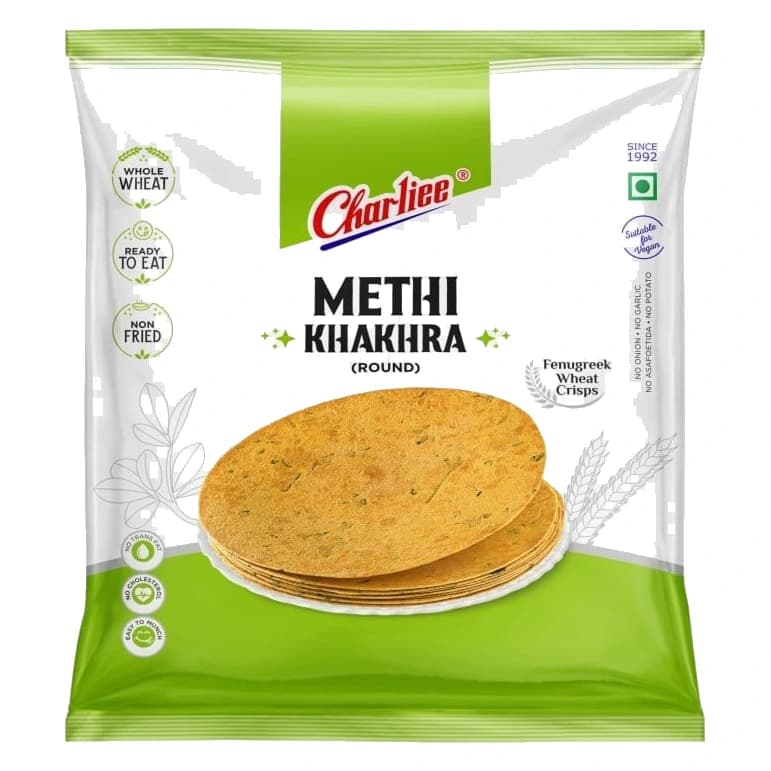
All Khakhra & Papad →- Charliee Methi Khakhra
- −Red flag: High sodium (803.5mg per 100g)
- −Red flag: High saturated fat (9.5g)
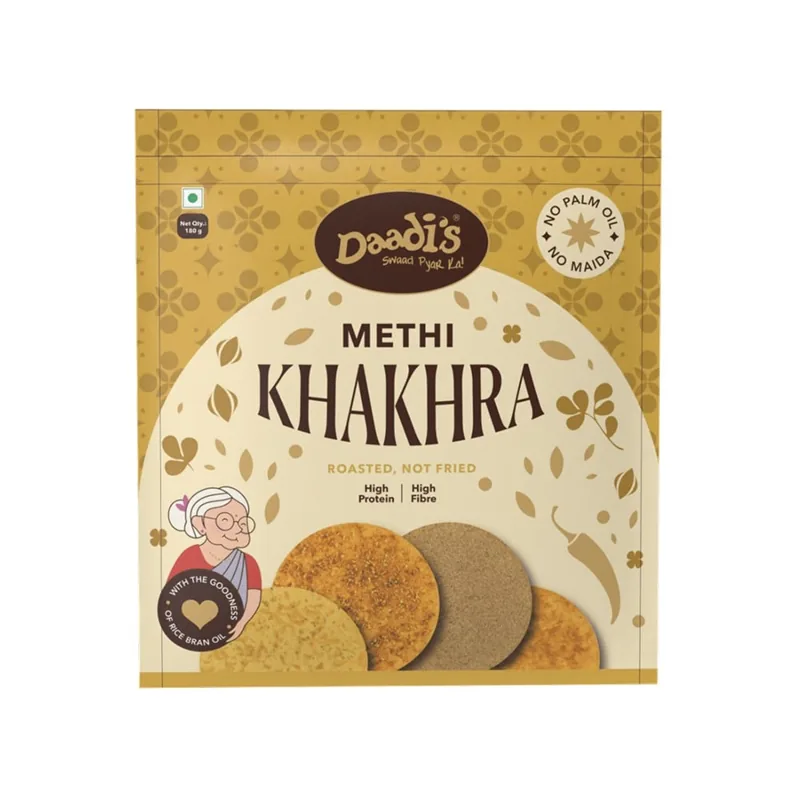
- Daadi's Methi Khakhra
- −Red flag: High sodium (761mg per 100g)
- +Green flag: High fibre (10.6g)
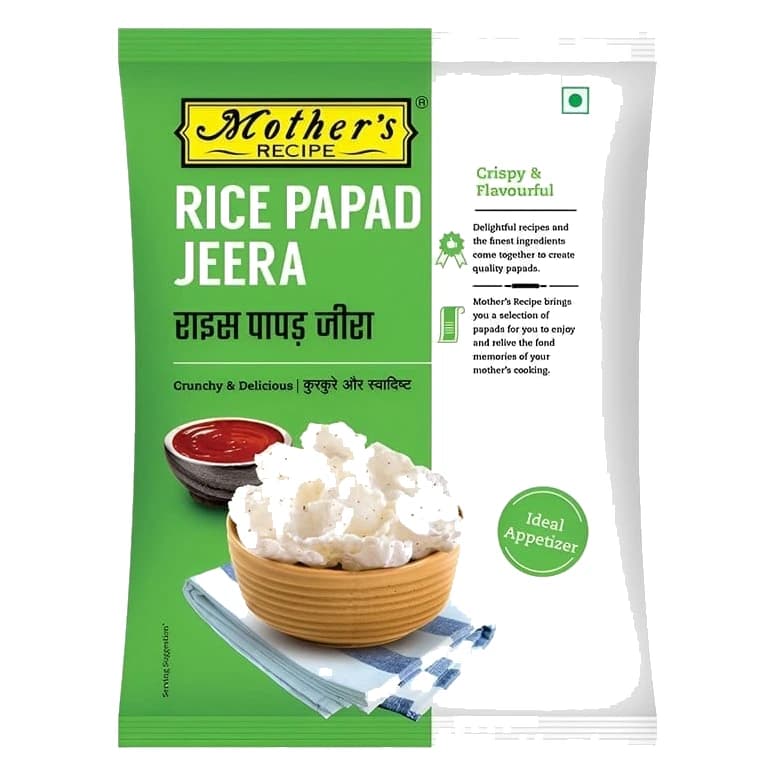
- Mother's Recipe Rice Papad - Jeera
- −Red flag: Refined flour (maida) base
- Flavours Of Calicut Kerala Papad
- −Red flag: High sodium (3580mg per 100g)
- +Green flag: High protein (18g per 100g)