Morde Dark Compound Chocolate Bar
Published · Updated
Morde Dark Compound Chocolate Bar is a baking block of chocolate substitute, made mostly of sugar and hydrogenated vegetable fat. It scores DC5: low on nutrition with little protein, middling on ingredients because of the hydrogenated fat and several emulsifiers, and top risk on saturated fat and sugar. Use sparingly as a melting ingredient in baking, not as a snack.
Ingredients, decoded
6 listed- Sugar
- Edible Vegetable Fat (Hydrogenated)
- Cocoa Solids
- Emulsifiers [INS492, INS322(i), INS476]
- Iodised Salt
- Nature Identical (Vanilla) Flavouring Substances

10 teaspoons of sugar in every 100 g · 50 g total sugar, 5 g a teaspoon
| Energy | 558 kcal |
|---|---|
| Protein | 3.3 g |
| Carbohydrates | 58 g |
| Total sugars | 50 g |
| Added sugars | 50 g |
| Dietary fibre | 5.4 g |
| Total fat | 36 g |
| Saturated fat | 34 g |
| Trans fat | 0.1 g |
| Cholesterol | 0 mg |
| Sodium | 22 mg |
Think this score is wrong?
What to know about Morde Dark Compound Chocolate Bar
A baking block that is mostly sugar and hydrogenated fat
A 400 g block of dark compound, a chocolate substitute made for melting. It is built from sugar, hydrogenated vegetable fat and cocoa solids, with three emulsifiers, iodised salt and nature-identical vanilla flavouring. It is sold to bakers and home cooks for frosting, ganache, brownies, mousse, ice cream and mithai. No ingredient percentages are declared.
A 20 g serve, 20 to a pack, gives 112 kcal, 0.7 g protein, 1.1 g fibre, 10 g added sugar and 6.8 g saturated fat. Per 100 g that is 558 kcal, 50 g added sugar and 34 g saturated fat. Sodium is low at 22 mg per 100 g. Trans fat is declared at 0.1 g per 100 g.
The pack is straightforward about what it is: it says Dark Compound and Chocolate Substitute, not chocolate. The hydrogenated fat carries no partly or fully qualifier, so it is scored as a partially hydrogenated oil. CleanPlate scores it DC5.
Why Morde Dark Compound Chocolate Bar scores DC5
Nutrition is a D with 3.3 g protein per 100 g. Ingredients are a C because of hydrogenated fat, flavouring and three emulsifiers. Risk is a 5 on 34 g saturated fat and 50 g sugar per 100 g.
Low nutrient density
- Protein
- 3.3 g
- Fibre
- 5.4 g
- Vitamins and minerals
- None declared
- Energy
- 558 kcal
01 Nutrition density: why D
Protein is 3.3 g per 100 g, and the protein factor is halved because most of it comes from cocoa solids, a low-quality source. Fibre is 5.38 g per 100 g, which is about 1.1 g in a 20 g serve.
No vitamins or minerals are declared, so nothing lifts the grade. Energy is 558 kcal per 100 g, nearly all from sugar and fat.
Scored on protein, fibre and twelve vitamins and minerals, against the Codex and FSSAI "source" and "high" levels, per 100 g and per 100 kcal. Protein also has to supply at least 12.5% of the calories to count, and 25% for full credit.
Mixed processing and additives
- Base
- Sugar
- Main fat
- Edible Vegetable Fat
- Sweeteners
- Sugar
- Additives
- 3
- Flagged
- None
02 Ingredient integrity: why C
Sugar and hydrogenated vegetable fat come first, with cocoa solids third and no percentages declared. The fat has no partly or fully qualifier, so it is scored as a partially hydrogenated oil, which costs ingredient points until the maker confirms.
The nature-identical vanilla flavouring, lecithin (322), PGPR (476) and sorbitan tristearate (492) each cost ingredient points as well. No label promise is hollow, so nothing more is lost there.
Scored on how processed the ingredients are, which additives are used and why, and whether the label keeps its promises.
Very high risk
- Added sugar
- 50 g
- Sodium
- 22 mg
- Saturated fat
- 34 g
- Trans fat
- 0.1 g
03 Load risk: why 5
Saturated fat is the largest driver: 34 g per 100 g, almost seven times the 5 g high line. One 20 g serve has 6.8 g.
Sugar is next at 50 g per 100 g, all of it added, so 10 g per serve. Energy adds a smaller share, and sodium at 22 mg per 100 g barely registers. Trans fat is declared at 0.1 g, but is not accepted because the hydrogenation is not stated.
Scored on free sugar, sodium, saturated fat and trans fat, each weighed by how strong the evidence of harm is.
Red flags
- −Red flag: High added sugar (50g per 100g)
- −Red flag: High saturated fat (34g)
Green flags
- +Green flag: Source of fibre
- +Green flag: Low sodium
Does Morde Dark Compound Chocolate Bar live up to its claims?
The pack names itself honestly as a chocolate substitute. The word dark is true but unmeasured, since no cocoa percentage is given and sugar leads the list.
- Product nameHolds
“Dark Compound / Chocolate Substitute”
The pack says plainly that this is a compound, a chocolate substitute. The list shows hydrogenated vegetable fat, not cocoa butter.
- Product nameBe careful
“Dark”
Cocoa solids are third on the list, after sugar and hydrogenated fat, and no cocoa percentage is declared. Sugar is 50 g per 100 g.
- On the packHolds
“Compound Bar for baking”
The back lists frosting, ganache, cakes, brownies, ice cream and mithai. The directions say to melt it in a double boiler or microwave, which suits the product.
What's in Morde Dark Compound Chocolate Bar?
Sugar, hydrogenated vegetable fat and cocoa solids lead the list, in that order. The fat and the sugar are what to watch.
The ingredient list, read for you
Sugar leads the list, then edible vegetable fat (hydrogenated), then cocoa solids, so this is mainly sugar and fat with cocoa for colour and flavour. No percentages are declared. Three emulsifiers (INS 492, 322(i), 476) keep the fat and sugar smooth and help it melt and set, iodised salt seasons it, and nature-identical vanilla gives the flavour.
Ingredients to watch
- Hydrogenated vegetable fat (type not stated)Concern
No partly or fully qualifier is given, so it is scored as a partially hydrogenated oil, which costs ingredient points. Trans fat is declared at 0.1 g per 100 g.
- Saturated fatConcern
34 g per 100 g, almost seven times the 5 g high line. A 20 g serve has 6.8 g.
- Added sugarWorth watching
50 g per 100 g, and sugar is the first ingredient. A 20 g serve has 10 g.
- Emulsifiers and flavouringWorth watching
PGPR (476), sorbitan tristearate (492), lecithin (322) and nature-identical vanilla flavouring each cost ingredient points.
- SodiumFine
22 mg per 100 g, which is 4.4 mg in a 20 g serve.
What it doesn’t have
- No cocoa percentage is declared.
- No vitamins or minerals are declared on the panel.
Who should eat Morde Dark Compound Chocolate Bar?
Rarely for most adults, and to avoid for children. People managing blood sugar should check with their doctor first.
- Most adultsRarely
A 20 g serve has 6.8 g saturated fat and 10 g added sugar.
- ChildrenAvoid
Hydrogenated fat, flavouring and 10 g added sugar in a small serve.
- Diabetes or prediabetesCheck with your doctor
50 g sugar per 100 g, all added, 10 g per serve.
- Weight managementRarely
112 kcal in 20 g, mostly from sugar and saturated fat.
Recipes with Morde Dark Compound Chocolate Bar
Melt small amounts into ganache, brownies or mousse so each portion carries only a little. One 20 g serve is 112 kcal.
Ganache or truffles
Melt a small amount and keep truffles small, since each 20 g of compound is 112 kcal and 6.8 g saturated fat.
Brownies
Melt it into the batter and cut the tray into many pieces, so each piece carries only a fraction of the 10 g added sugar in a 20 g serve.
Chocolate mousse
Use a little melted compound for flavour and let the rest of the dessert carry the volume. Stir while melting, as the pack directs.
Morde Dark Compound Chocolate Bar: common questions
What is the CleanPlate score of Morde Dark Compound Chocolate Bar?
Morde Dark Compound Chocolate Bar is a baking block of chocolate substitute, made mostly of sugar and hydrogenated vegetable fat. It scores DC5: low on nutrition with little protein, middling on ingredients because of the hydrogenated fat and several emulsifiers, and top risk on saturated fat and sugar. Use sparingly as a melting ingredient in baking, not as a snack. Nutrition D, ingredients C, load risk 5; nutrition and ingredients run A to E, risk runs 1 to 5, and A and 1 are best.
How many calories and how much protein are in Morde Dark Compound Chocolate Bar?
Per 100 g, Morde Dark Compound Chocolate Bar has 558 kcal, 3.3 g protein, 58 g carbohydrate, 36 g fat and 34 g saturated fat. One serve (1 serve, 20 g (20 per pack)) has 112 kcal and 0.7 g protein.
What are the ingredients in Morde Dark Compound Chocolate Bar?
6 ingredients, in label order: Sugar, Edible Vegetable Fat (Hydrogenated), Cocoa Solids, Emulsifiers [INS492, INS322(i), INS476], Iodised Salt, Nature Identical (Vanilla) Flavouring Substances.
Does Morde Dark Compound Chocolate Bar live up to its claims?
3 claims checked: 2 hold, 1 needs care. "Dark" needs care: Cocoa solids are third on the list, after sugar and hydrogenated fat, and no cocoa percentage is declared. Sugar is 50 g per 100 g.
Who should limit Morde Dark Compound Chocolate Bar?
Most adults: rarely. A 20 g serve has 6.8 g saturated fat and 10 g added sugar. Children: avoid. Hydrogenated fat, flavouring and 10 g added sugar in a small serve. Diabetes or prediabetes: check with your doctor. 50 g sugar per 100 g, all added, 10 g per serve.
How much sugar, salt and saturated fat does Morde Dark Compound Chocolate Bar have?
Per 100 g, Morde Dark Compound Chocolate Bar has 50 g added sugar, 22 mg sodium (about 0.1 g salt) and 34 g saturated fat. The FSSAI and UK FSA "high" lines are 10 g added sugar, 600 mg sodium and 5 g saturated fat per 100 g. It is high in sugar and saturated fat.
Last reviewed October 29, 2026. Scored with the CleanPlate method from the published label. Spotted a mistake? .
Better Chocolates
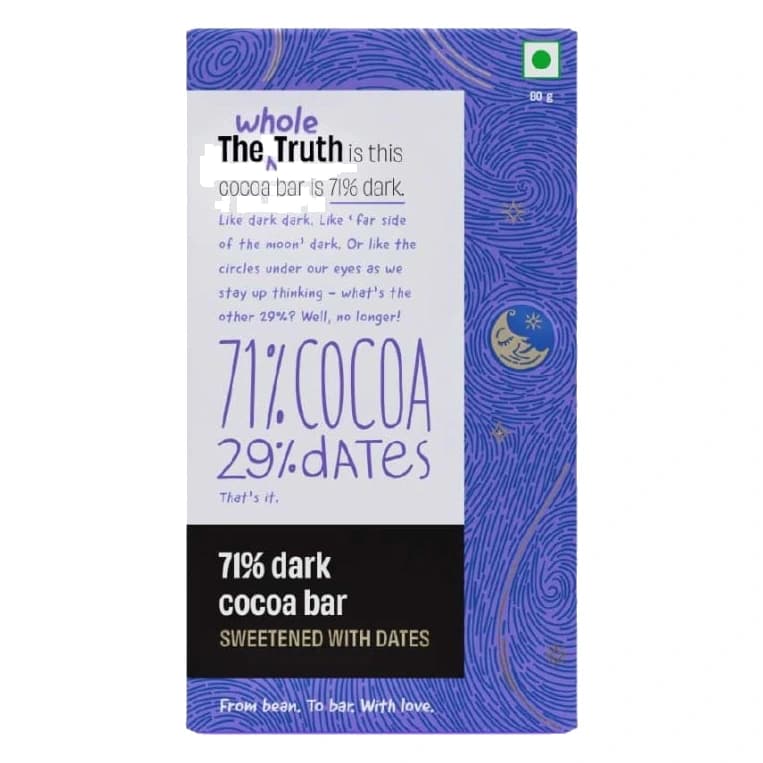
All Chocolates →- The Whole Truth Rich 71% Cocoa Bar
- −Red flag: High added sugar (19.2g per 100g)
- −Red flag: High saturated fat (31.2g)
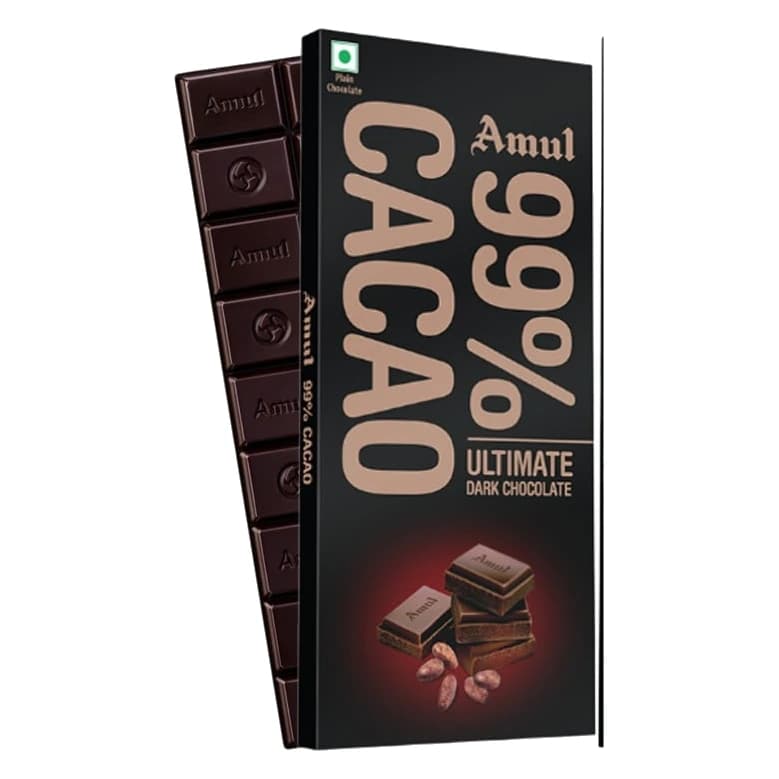
- Amul 99% Cacao Dark Chocolate Bar
- −Red flag: High saturated fat (23.1g)
- +Green flag: No added sugar
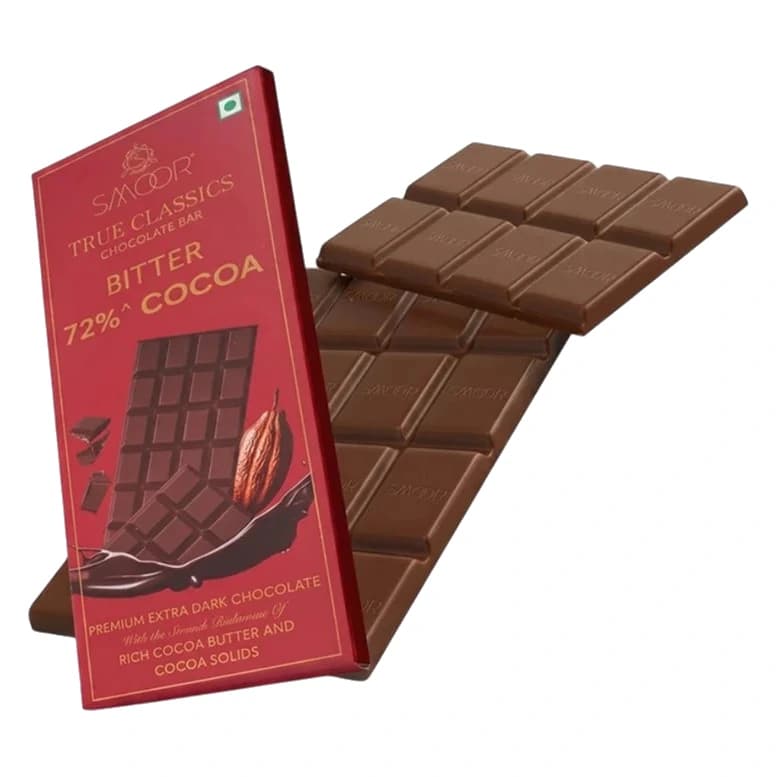
- Smoor True Classic 72% Dark Chocolate Bar
- −Red flag: High added sugar (24.1g per 100g)
- −Red flag: High saturated fat (23.7g)
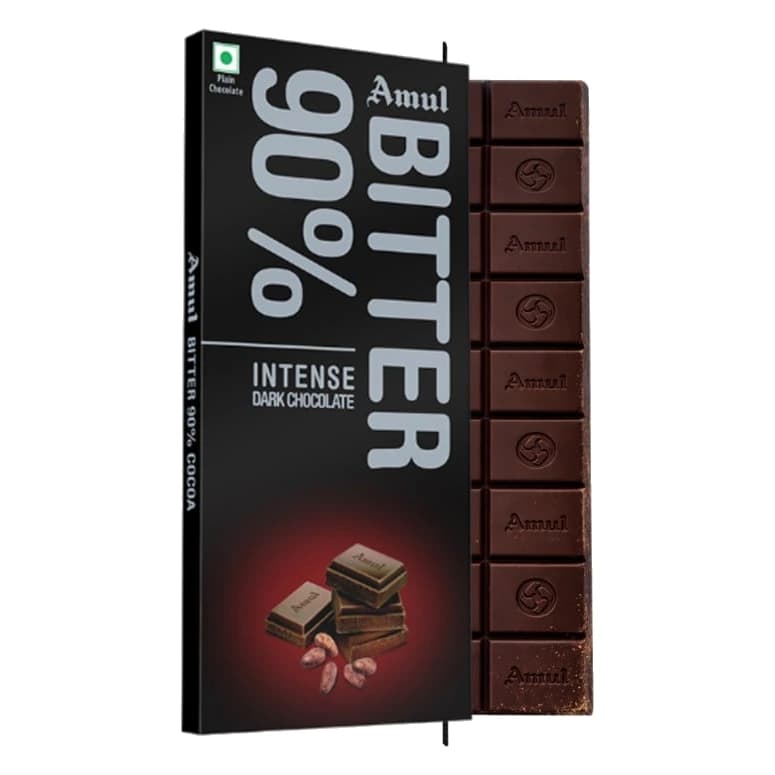
- Amul 90% Bitter Dark Chocolate Bar
- −Red flag: High saturated fat (22.2g)
- +Green flag: Low sodium