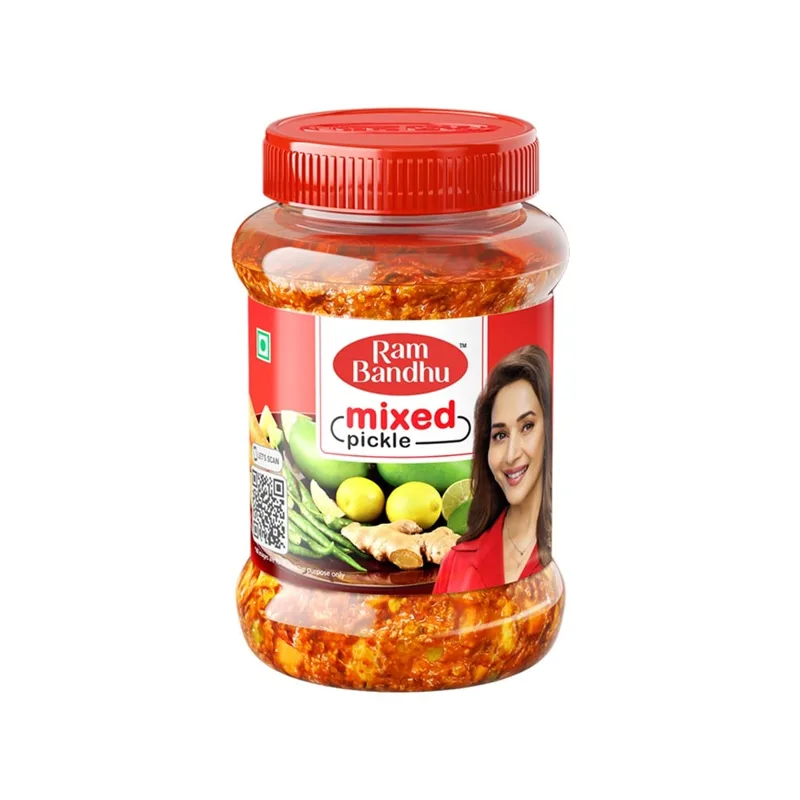
Ram Bandhu Mixed Pickle
Red flags
- −Red flag: High sodium (4088mg per 100g)
- −Red flag: High saturated fat (6.5g)
- −Red flag: Contains Sodium Benzoate
Green flags
- +Green flag: Source of protein (8.7g)
- +Green flag: No added sugar
Ingredients, decoded
14 listed- Green Mango (23.2%)
- Lime (18.2%)
- Carrot (17.8%)
- Edible Common Salt
- Edible Rice Bran Oil
- Green Chilli (7%)
- Mustard
- Chilli Powder
- Fenugreek
- Ginger (1.6%)
- Turmeric Powder
- Acidity Regulator (INS 260)
- Compounded Asafoetida
- Preservative (INS 211)
EA5
Our take
CleanPlate reviewPickle carrying twice the daily sodium limit per 100 g
Ram Bandhu Mixed Pickle is an Indian pickle of green mango (23.2%), lime (18.2%), carrot (17.8%), salt, rice bran oil, green chilli (7%), mustard, chilli powder, fenugreek, ginger, turmeric and asafoetida, with acetic acid and sodium benzoate. The pack is 350 g and the panel is printed per 100 g with a 15 g serving.
CleanPlate scores it EA5. The E for nutrition is low: almost no credited protein, fibre or micronutrients per 100 g. The declared protein figure is not credited because the ingredients cannot supply it. The A for ingredients reflects whole or lightly processed ingredients (led by green mango, lime and carrot), and almost no additives. The 5 for risk comes mainly from sodium (4088 mg per 100 g) and saturated fat (6.54 g per 100 g).
How EA5 breaks down
Each grade is scored on its own. Here are the label numbers behind each one, per 100 g.
Very low nutrient density
- Protein
- 8.7 g
- Fibre
- Not declared
- Vitamins and minerals
- None declared
- Energy
- 249 kcal
Scored on protein, fibre and twelve vitamins and minerals, against the Codex and FSSAI "source" and "high" levels, per 100 g and per 100 kcal.
Clean, minimally processed
- Base
- Green Mango
- Main fat
- Edible Rice Bran Oil
- Sweeteners
- None added
- Additives
- 2
- Flagged
- Sodium Benzoate
Scored on how processed the ingredients are, which additives are used and why, and whether the label keeps its promises.
Very high risk
- Added sugar
- 0 g
- Sodium
- 4088 mg
- Saturated fat
- 6.5 g
- Trans fat
- 0 g
Scored on free sugar, sodium, saturated fat and trans fat, each weighed by how strong the evidence of harm is.
A closer look
Does the label add up?
Green mango (23.2%), lime (18.2%), carrot (17.8%), edible common salt, edible rice bran oil, green chilli (7%), mustard, chilli powder, fenugreek, ginger (1.6%), turmeric, acidity regulator (260), compounded asafoetida and preservative (211).
Per 100 g: 249 kcal, 13.7 g fat of which 6.54 g saturated, 2.75 g sugar of which 0 g added, 8.68 g protein, 4088 mg sodium. The declared protein of 8.68 g per 100 g cannot come from these ingredients (about 4 g at most), so it is not credited and the score is provisional. The panel footer says "500 g pack = 33 serve" though the pack is 350 g. The only legible allergen is mustard.
Ingredients to watch
- SodiumConcern
4088 mg per 100 g, about 613 mg in a 15 g serving.
- PreservativeWorth watching
Sodium benzoate (INS 211), declared as a Class II preservative.
- OilWorth watching
13.7 g of fat per 100 g, from rice bran oil.
- Fruit and vegetables leadFine
Mango, lime, carrot and green chilli have declared shares.
Common misconceptions
Myth: "Pickles are just vegetables"
The salt and oil that preserve them make up the load: 4088 mg of sodium per 100 g.
Myth: "A little pickle does no harm"
A teaspoon is fine, but a 15 g serving is about 30% of the day's sodium.
How often, and how
- Healthy adultsOccasionally
- ChildrenRarely
- Diabetes or prediabetesLimit
Smarter ways to eat it
Use a teaspoon
Five grams gives the flavour for about 200 mg of sodium.
Balance the meal
Pair with unsalted curd or plain rice so the rest of the plate stays low in salt.
Common questions
Is Ram Bandhu Mixed Pickle healthy?
Ram Bandhu Mixed Pickle scores EA5 (Poor) on CleanPlate, which makes it best kept as a rare treat rather than a regular buy. The main concerns are: High sodium (4088mg per 100g); High saturated fat (6.5g); Contains Sodium Benzoate. On the plus side: Source of protein (8.7g); No added sugar.
What does the EA5 score mean?
The first letter (E) grades nutritional value: very low nutrient density. The second letter (A) grades ingredient and label integrity: clean, minimally processed. The number (5) grades risk nutrients (sugar, sodium, saturated fat): very high risk.
Which ingredients in Ram Bandhu Mixed Pickle should I watch?
Preservative (INS 211) (Sodium Benzoate).
Last reviewed October 11, 2026. Scored with the CleanPlate method from the published label.