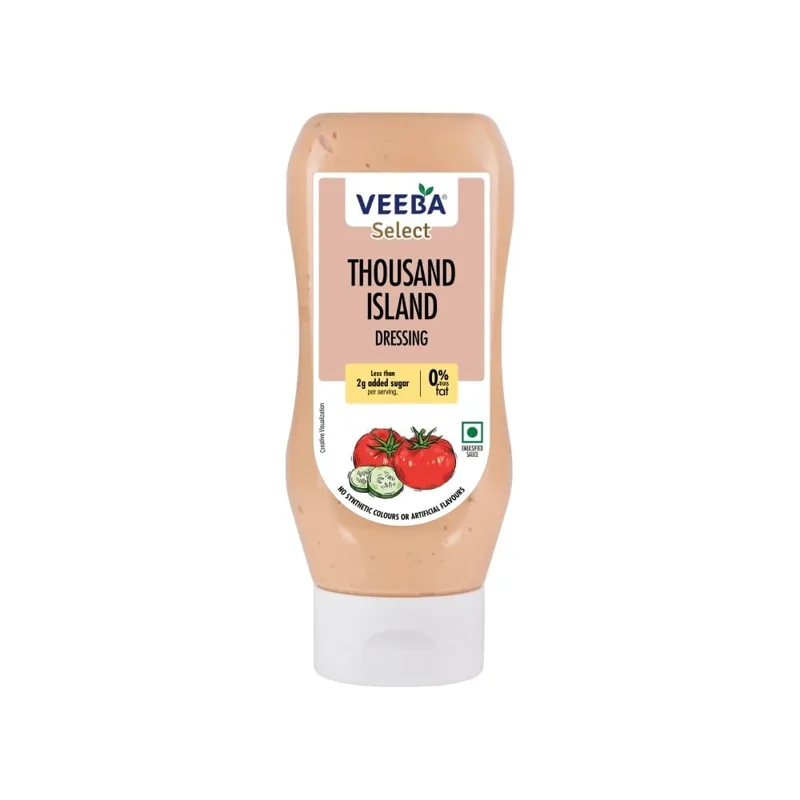
Veeba Thousand Island Dressing
Red flags
- −Red flag: Contains TBHQ
- −Red flag: High added sugar (13.2g per 100g)
- −Red flag: High sodium (1060mg per 100g)
- −Red flag: Contains Potassium Sorbate
Green flags
Nothing stands out in its favour.
Ingredients, decoded
14 listed- Water
- Refined Soyabean Oil
- Synthetic Vinegar [Water, Acetic Acid (INS260)]
- Sugar
- Cucumber (10.0%)
- Milk Solids
- Tomato Paste (5.0%)
- Emulsifiers and Stabilizers (INS1442, INS1450, INS415)
- Iodised Salt
- Spices and Condiments
- Acidity Regulators (INS260, INS330)
- Preservatives (INS211, INS202)
- Antioxidant (INS319)
- Sequestrant (INS385)
EB4
Our take
CleanPlate reviewA creamy dressing carrying salt and added sugar
Veeba Thousand Island Dressing is an emulsified sauce of water, refined soyabean oil, vinegar, sugar, cucumber (10%), milk solids and tomato paste (5%), thickened with modified starches and xanthan, and kept with two preservatives and TBHQ. The pack is 300 g.
CleanPlate scores it EB4. The E for nutrition is low: almost no credited protein, fibre or micronutrients per 100 g. The B for ingredients reflects a mix of whole and refined ingredients (led by refined soyabean oil, sugar and cucumber), with additives that cost points: TBHQ, hydroxypropyl distarch phosphate, starch sodium octenyl succinate and xanthan gum. The 4 for risk comes mainly from sodium (1060 mg per 100 g) and free sugar (13.2 g per 100 g).
Claims vs reality
What the pack says, checked against the ingredient list and nutrition panel.
- On the packHolds
“Less than 2g added sugar per serving”
Added sugar is 13.2 g per 100 g; the pack prints 3.96% of the daily allowance per serve, about 2 g or less.
- On the packHolds
“0% trans fat”
The panel declares 0 g trans fat and no hydrogenated fat is listed.
- On the packHolds
“No synthetic colours or artificial flavours”
No colour or flavouring is listed; the list names "spices and condiments".
How EB4 breaks down
Each grade is scored on its own. Here are the label numbers behind each one, per 100 g.
Very low nutrient density
- Protein
- 2.7 g
- Fibre
- Not declared
- Vitamins and minerals
- None declared
- Energy
- 265 kcal
Scored on protein, fibre and twelve vitamins and minerals, against the Codex and FSSAI "source" and "high" levels, per 100 g and per 100 kcal.
Good, few concerning additives
- Base
- Water
- Main fat
- Refined Soyabean Oil
- Sweeteners
- Sugar
- Additives
- 9
- Flagged
- Potassium Sorbate, TBHQ
Scored on how processed the ingredients are, which additives are used and why, and whether the label keeps its promises.
High risk
- Added sugar
- 13.2 g
- Sodium
- 1060 mg
- Saturated fat
- 2.9 g
- Trans fat
- 0 g
Scored on free sugar, sodium, saturated fat and trans fat, each weighed by how strong the evidence of harm is.
A closer look
Does the label add up?
Water, refined soyabean oil, synthetic vinegar, sugar, cucumber (10%), milk solids, tomato paste (5%), modified starches (1442, 1450), xanthan gum (415), salt, spices, acidity regulators (260, 330), preservatives (211, 202), TBHQ (319) and EDTA (385).
Per 100 g: 265 kcal, 18.1 g fat of which 2.9 g saturated, 14.3 g sugar of which 13.2 g added, 2.72 g protein, 1060 mg sodium. No fibre line; cholesterol is read from the clear nutrition card as 0 (the small back photo is blurred).
Ingredients to watch
- SodiumConcern
1060 mg per 100 g.
- Free sugarConcern
13.2 g per 100 g, from added sugar.
- TBHQ and two preservativesWorth watching
TBHQ (319) costs points, with sodium benzoate and potassium sorbate beside it.
- FatWorth watching
Total fat is 18.15 g per 100 g, mainly refined soyabean oil.
Common misconceptions
Myth: "A dressing is just vegetables and spices"
It is mostly oil and water with 13.2 g of added sugar and 1060 mg of sodium per 100 g.
Myth: "Low added sugar per serving means low sugar"
The serving is small; per 100 g the added sugar is 13.2 g.
How often, and how
- Healthy adultsOccasionally
- ChildrenRarely
- Diabetes or prediabetesLimit
Smarter ways to eat it
Measure it
A tablespoon is plenty for a salad bowl.
Curd and lemon
Whisk curd with lemon and black pepper for a dressing with no added sugar.
Common questions
Is Veeba Thousand Island Dressing healthy?
Veeba Thousand Island Dressing scores EB4 (Poor) on CleanPlate, which makes it best kept as a rare treat rather than a regular buy. The main concerns are: Contains TBHQ; High added sugar (13.2g per 100g); High sodium (1060mg per 100g); Contains Potassium Sorbate.
What does the EB4 score mean?
The first letter (E) grades nutritional value: very low nutrient density. The second letter (B) grades ingredient and label integrity: good, few concerning additives. The number (4) grades risk nutrients (sugar, sodium, saturated fat): high risk.
Which ingredients in Veeba Thousand Island Dressing should I watch?
Preservatives (INS211, INS202) (Potassium Sorbate), Antioxidant (INS319) (TBHQ).
Last reviewed October 11, 2026. Scored with the CleanPlate method from the published label.