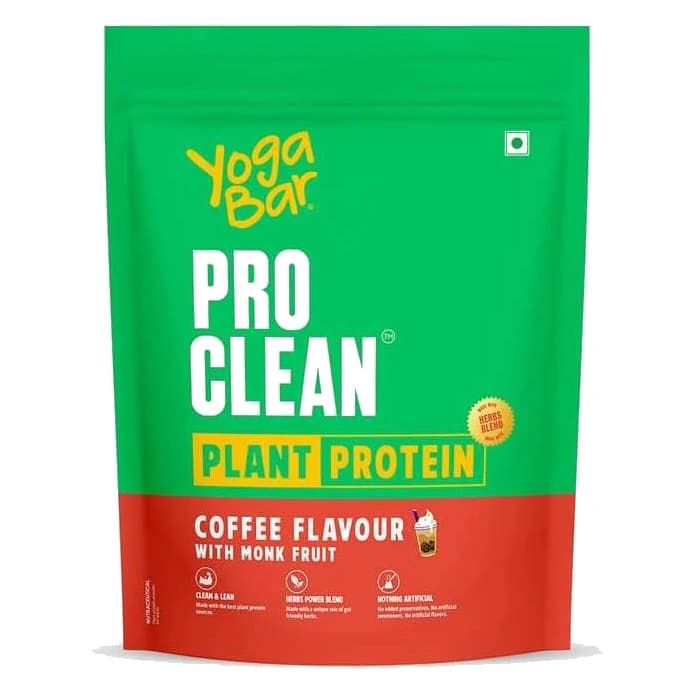
Yoga Bar ProClean Plant Protein Powder (Coffee)
Red flags
- −Red flag: High sodium (698.1mg per 100g)
Green flags
- +Green flag: High protein (66.5g per 100g)
- +Green flag: High fibre (6.2g)
- +Green flag: No added sugar
Ingredients, decoded
8 listed- Protein Isolate Blend (Pea Protein and Rice Protein)
- Coconut Milk Powder
- Coffee Powder 10%
- Natural Flavor & Flavouring Substances
- Monk Fruit < 1%
- Himalayan Pink Salt
- Thickener (Xanthan Gum, Acacia Gum)
- Digestive Herb Blend 0.04% (Ginger, Fennel, Cumin, Fenugreek)
Our take
CleanPlate reviewPea and rice protein with real coffee, 66 g protein
Yoga Bar ProClean Plant Protein (Coffee) is a 500 g pouch with a pea and rice protein isolate blend, coconut milk powder, coffee powder (10%), monk fruit and a gum thickener. One 38 g scoop gives about 25 g of protein. The panel is printed per 100 g.
CleanPlate scores it AC3. The A for nutrition reflects 66.5 g protein, 6.2 g fibre and natural iron and zinc per 100 g. The C for ingredients reflects mostly refined or industrial ingredients (led by protein isolate blend, coconut milk powder and coffee powder), with additives that cost points: gum arabic, xanthan gum and monk fruit extract. The 3 for risk comes mainly from sodium (698 mg per 100 g) and calories (399 kcal per 100 g).
Claims vs reality
What the pack says, checked against the ingredient list and nutrition panel.
- On the packHolds
“25g PROTEIN PER SERVE”
66.5 g per 100 g in a 38 g scoop is 25.3 g of protein.
- On the packHolds
“Coffee Flavour”
Coffee powder is listed at 10%.
- On the packHolds
“No artificial sweeteners”
The sweetener is monk fruit; no sucralose, aspartame or similar is listed.
- On the packBe careful
“Nothing Artificial”
The list says "natural flavor and flavouring substances", without saying which kinds, so it cannot be confirmed from the label.
How AC3 breaks down
Each grade is scored on its own. Here are the label numbers behind each one, per 100 g.
Exceptional nutrient density
- Protein
- 66.5 g
- Fibre
- 6.2 g
- Vitamins and minerals
- 4 declared
- Energy
- 399 kcal
Scored on protein, fibre and twelve vitamins and minerals, against the Codex and FSSAI "source" and "high" levels, per 100 g and per 100 kcal.
Mixed processing and additives
- Base
- Protein Isolate Blend
- Sweeteners
- None added
- Additives
- 3
- Flagged
- None
Scored on how processed the ingredients are, which additives are used and why, and whether the label keeps its promises.
Moderate risk
- Added sugar
- 0 g
- Sodium
- 698.1 mg
- Saturated fat
- 2.2 g
- Trans fat
- 0 g
Scored on free sugar, sodium, saturated fat and trans fat, each weighed by how strong the evidence of harm is.
A closer look
Does the label add up?
Pea and rice protein isolate blend, coconut milk powder, coffee powder (10%), monk fruit, flavouring, Himalayan pink salt, xanthan and acacia gum, and a herb blend (0.04%).
Per 100 g: 399 kcal, 8.4 g fat of which 2.2 g saturated, 5.1 g sugar of which 0 g added, 6.2 g fibre, 66.5 g protein, 698 mg sodium. The share of the protein blend is not printed; it is assumed at 73%, as on the chocolate pack that has the same 66.5 g protein. The printed total salt (0.76 g) is lower than the printed sodium (698 mg) implies; the sodium is kept as the higher value. The Kindlife page text for this product is wrong and was ignored.
Ingredients to watch
- SodiumWorth watching
698 mg per 100 g, about 265 mg a scoop, is the largest part of the risk grade.
- Isolated proteinWorth watching
A pea and rice isolate blend is an industrial extract, which is why the ingredients grade is a C.
- ThickenerWorth watching
Xanthan and acacia gum cost 4 points in the additives score.
- SweetenerFine
Sweetened with monk fruit; no sucralose or sugar is added.
Common misconceptions
Myth: "Coffee flavour means a caffeine kick"
Coffee powder is 10% of the powder, but the pack prints no caffeine figure.
Myth: "Plant protein means low sodium"
Pea protein isolate is often high in sodium; here it is 698 mg per 100 g.
How often, and how
- Healthy adultsA scoop a day at most, if food protein falls short
- ChildrenNot needed
- Diabetes or prediabetesFine in moderation
Smarter ways to eat it
One scoop
A 38 g scoop is about 152 kcal with 25 g of protein and 265 mg of sodium.
Iced coffee
Shake a scoop with 300 ml of chilled water or milk for a quick iced coffee.
Common questions
Is Yoga Bar ProClean Plant Protein Powder (Coffee) healthy?
Yoga Bar ProClean Plant Protein Powder (Coffee) scores AC3 (Good) on CleanPlate, which makes it a reasonable choice with a trade-off or two worth knowing about. The main concerns are: High sodium (698.1mg per 100g). On the plus side: High protein (66.5g per 100g); High fibre (6.2g); No added sugar.
What does the AC3 score mean?
The first letter (A) grades nutritional value: exceptional nutrient density. The second letter (C) grades ingredient and label integrity: mixed processing and additives. The number (3) grades risk nutrients (sugar, sodium, saturated fat): moderate risk.
Last reviewed October 19, 2026. Scored with the CleanPlate method from the published label.