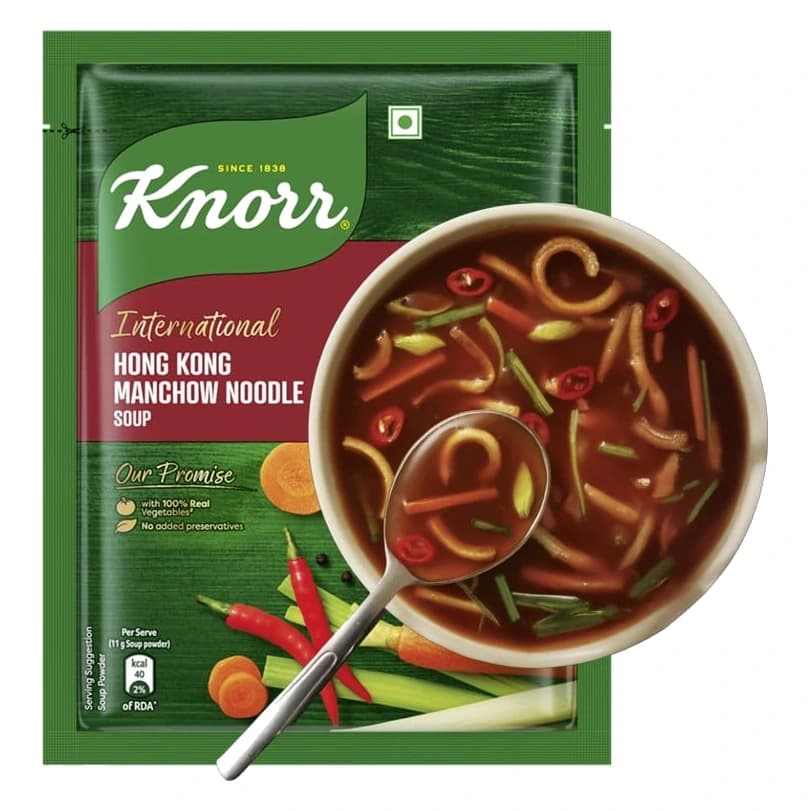
Knorr International Hong Kong Manchow Noodle Soup
Red flags
- −Red flag: High added sugar (13.6g per 100g)
- −Red flag: High sodium (4374mg per 100g)
- −Red flag: Palm oil listed
Green flags
Nothing stands out in its favour.
Ingredients, decoded
14 listed- Maize Starch
- Noodles (Refined Wheat Flour (Maida), Palm Oil/Palmolein, Iodised salt, Wheat Gluten, Acidity Regulator - 500(ii), Texturizer - 451(i), Thickener - 415, Antioxidant - 319)
- Sugar
- Iodised salt
- #Dehydrated Vegetables (Carrot (2.1%), Cabbage (1.7%), Leeks (1.1%))
- Hydrolyzed Vegetable Protein
- Food Colour - Caramel IV
- Hydrogenated Palm Oil
- Thickener- 415
- Flavours - Natural (Garlic) and Nature Identical flavouring substances (Soya Sauce)
- Flavour Enhancer - 627 & 631
- Acidity Regulator- 330
- Spices & Condiments (Chillies (0.2%), Black Pepper (0.2%))
- Oleoresin Chilli
Our take
CleanPlate reviewManchow soup powder: 5% vegetables, hydrogenated fat
Knorr International Hong Kong Manchow Noodle Soup is a 44 g sachet of soup powder made from maize starch, noodles (24.7%), sugar, salt, dehydrated vegetables (carrot, cabbage, leeks), hydrolysed vegetable protein, caramel colour, hydrogenated palm oil, flavourings and enhancers. The pack serves 4, each 11 g of powder in 150 ml water. The panel is per 100 g of powder.
CleanPlate scores it [R]ED2. The E for nutrition is low: almost no credited protein, fibre or micronutrients per 100 g. The D for ingredients reflects mostly refined or industrial ingredients (led by maize starch, noodles and sugar), with additives that cost points: triphosphates, TBHQ, flavouring and xanthan gum. A red flag (hydrogenated fat / vanaspati (unqualified)) cuts the score by 40%. The 2 for risk is low: sodium, free sugar and saturated fat are all modest as made (sodium 299 mg, free sugar 0.929 g, saturated fat 0.205 g per 100 g).
Claims vs reality
What the pack says, checked against the ingredient list and nutrition panel.
- On the packPartly true
“with 100% Real Vegetables*”
The vegetables are real, but carrot, cabbage and leeks together are about 5% of the powder.
- On the packHolds
“No added preservatives”
No preservative is listed.
How ED2 breaks down
Each grade is scored on its own. Here are the label numbers behind each one, per 100 g.
Very low nutrient density
- Protein
- 5.2 g
- Fibre
- 2.8 g
- Vitamins and minerals
- None declared
- Energy
- 360 kcal
Scored on protein, fibre and twelve vitamins and minerals, against the Codex and FSSAI "source" and "high" levels, per 100 g and per 100 kcal.
Heavily processed or flagged substances
- Base
- Maize Starch
- Main fat
- Noodles, Palm Oil/Palmo...
- Sweeteners
- Sugar
- Additives
- 5
- Flagged
- Palm oil
Scored on how processed the ingredients are, which additives are used and why, and whether the label keeps its promises.
Low risk
Per 100 g as made
- Free sugar
- 0.93 g
- Sodium
- 298.8 mg
- Saturated fat
- 0.2 g
- Trans fat
- 0 g
Scored on the soup as made: 11 g in 150 ml of Water, from the pack's directions. As sold, the powder has 4374 mg sodium and 13.6 g added sugar per 100 g.
Scored on free sugar, sodium, saturated fat and trans fat, each weighed by how strong the evidence of harm is.
[R] Contains an ingredient on our red-flag list (such as a partially hydrogenated oil or a flagged synthetic dye), which cuts the ingredient grade.
A closer look
Does the label add up?
Maize starch, noodles (24.7%) (refined wheat flour, palm oil, salt, wheat gluten, acidity regulator, texturiser, thickener, antioxidant), sugar, iodised salt, dehydrated vegetables (carrot 2.1%, cabbage 1.7%, leeks 1.1%), hydrolysed vegetable protein, caramel colour (IV), hydrogenated palm oil, thickener, flavours (natural garlic, nature-identical soya sauce), flavour enhancer (627, 631), acidity regulator, spices and condiments and oleoresin chilli.
Per 100 g: 360 kcal, 6.2 g fat of which 3 g saturated, 14.6 g sugar of which 13.6 g added, 2.8 g fibre, 5.2 g protein, 4374 mg sodium. The risk score is as made up: 11 g of powder in 150 ml water per serve (161 g); the printed panel and the nutrition line above are per 100 g of dry powder, where sodium is 4,374 mg. Hydrogenated palm oil has no partly or fully qualifier, so the declared trans fat (0.02 g) is not accepted and the score is provisional (PHO_DEFAULT). Macros add up to 86 g.
Ingredients to watch
- Hydrogenated palm oilConcern
Unqualified hydrogenation triggers the red flag; the score is provisional until the maker confirms.
- Added sugarWorth watching
13.6 g per 100 g of powder, about 1.5 g a serve.
- AdditivesWorth watching
Triphosphates, TBHQ, flavouring and xanthan gum cost points.
- As madeFine
About 25 kcal per 100 g of made-up soup.
Common misconceptions
Myth: "100% real vegetables means mostly vegetables"
Carrot, cabbage and leeks are about 5% of the powder.
Myth: "A noodle soup is a meal"
A serve has 11 g of powder and 40 kcal.
How often, and how
- Healthy adultsOccasionally
- ChildrenRarely
- Diabetes or prediabetesLimit
Smarter ways to eat it
Add vegetables and egg
Fresh vegetables lift fibre and protein.
Use half a sachet
Halves the sodium.
Common questions
Is Knorr International Hong Kong Manchow Noodle Soup healthy?
Knorr International Hong Kong Manchow Noodle Soup scores ED2 (Poor) on CleanPlate, which makes it best kept as a rare treat rather than a regular buy. The main concerns are: High added sugar (13.6g per 100g); High sodium (4374mg per 100g); Palm oil listed.
What does the ED2 score mean?
The first letter (E) grades nutritional value: very low nutrient density. The second letter (D) grades ingredient and label integrity: heavily processed or flagged substances. The number (2) grades risk nutrients (sugar, sodium, saturated fat): low risk.
Which ingredients in Knorr International Hong Kong Manchow Noodle Soup should I watch?
Noodles (Refined Wheat Flour (Maida), Palm Oil/Palmolein, Iodised salt, Wheat Gluten, Acidity Regulator - 500(ii), Texturizer - 451(i), Thickener - 415, Antioxidant - 319) (Palm oil), Hydrogenated Palm Oil (Palm oil).
Last reviewed October 19, 2026. Scored with the CleanPlate method from the published label.
Better Soups
All 9 →- Yu Sweet Corn Soup with Crispy Noodles
- +Green flag: No additives
- Knorr Classic Mixed Vegetable Soup
- −Red flag: High sodium (3983mg per 100g)
- −Red flag: Refined flour (maida) base
- Moi Soi Mushroom Cup Soup
- −Red flag: High sodium (6144.2mg per 100g)
- +Green flag: Source of protein (6.2g)
- Ching's Secret Tomato Soup
- −Red flag: High added sugar (29.6g per 100g)
- −Red flag: High sodium (4141mg per 100g)