Let's Try Sabudana Falhari Mixture
Red flags
- −Red flag: High added sugar (11.8g per 100g)
- −Red flag: High saturated fat (5.1g)
Green flags
- +Green flag: Source of protein (6g)
Ingredients, decoded
11 listed- Sabudana (38%)
- Peanut (15%)
- Edible Vegetable Oil (Groundnut Oil)
- Sugar
- Potato Flakes (12%)
- Coconut (0.4%)
- Raisins
- Sendha Namak (Rock Salt) (0.85%)
- Mango Powder
- Garam Masala
- Citric Powder
Our take
CleanPlate reviewSago and peanut fasting mix, fried and sweetened
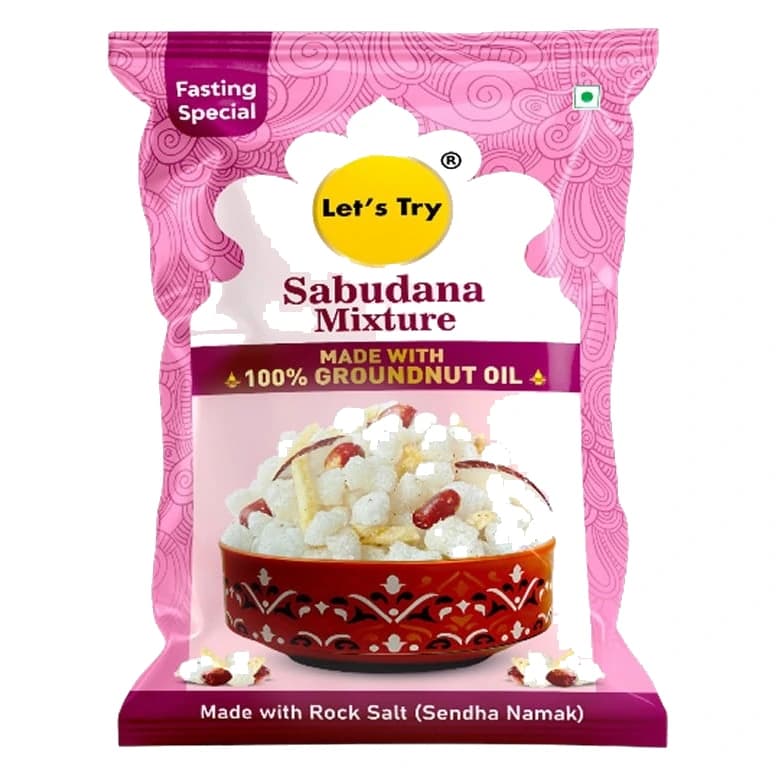
Let's Try Sabudana Falhari Mixture is a fasting snack of sabudana (38%), peanuts (15%), groundnut oil, sugar, potato flakes (12%), coconut, raisins, rock salt and spices. The pack is 192 g (the back may read 214 g) and the panel is printed per 100 g.
CleanPlate scores it EB4. The E for nutrition is low: almost no credited protein, fibre or micronutrients per 100 g; its 5.99 g of protein earns no credit because it is under 2.75 g per 100 kcal. The B for ingredients reflects mostly refined or industrial ingredients (led by sabudana, peanut and edible vegetable oil), and almost no additives. The 4 for risk comes mainly from calories (521 kcal per 100 g) and saturated fat (5.12 g per 100 g).
Claims vs reality
What the pack says, checked against the ingredient list and nutrition panel.
- On the packHolds
“Made with 100% Groundnut Oil”
The list reads edible vegetable oil (groundnut oil); no other oil is listed, though the oil has no percentage.
- On the packBe careful
“Made with Rock Salt (Sendha Namak)”
Rock salt is still sodium chloride: sodium is 234.6 mg per 100 g.
- On the packHolds
“NO Palm Oil”
No palm oil is listed.
- On the packHolds
“Sabudana Mixture”
Sabudana (sago) is 38% and the first ingredient.
How EB4 breaks down
Each grade is scored on its own. Here are the label numbers behind each one, per 100 g.
Very low nutrient density
- Protein
- 6 g
- Fibre
- 2.2 g
- Vitamins and minerals
- None declared
- Energy
- 521 kcal
Scored on protein, fibre and twelve vitamins and minerals, against the Codex and FSSAI "source" and "high" levels, per 100 g and per 100 kcal.
Good, few concerning additives
- Base
- Sabudana
- Main fat
- Edible Vegetable Oil
- Sweeteners
- Sugar
- Additives
- 1
- Flagged
- None
Scored on how processed the ingredients are, which additives are used and why, and whether the label keeps its promises.
High risk
- Added sugar
- 11.8 g
- Sodium
- 234.6 mg
- Saturated fat
- 5.1 g
- Trans fat
- 0 g
Scored on free sugar, sodium, saturated fat and trans fat, each weighed by how strong the evidence of harm is.
A closer look
Does the label add up?
Sabudana (38%), peanut (15%), edible vegetable oil (groundnut oil), sugar, potato flakes (12%), coconut (0.4%), raisins, rock salt (0.85%), mango powder, garam masala and citric acid.
Per 100 g: 521 kcal, 32.6 g fat of which 5.12 g saturated, 12.8 g sugar of which 11.8 g added, 2.21 g fibre, 5.99 g protein, 235 mg sodium. The oil has no percentage, so it is estimated from the 32.6 g of fat.
Ingredients to watch
- CaloriesConcern
521 kcal per 100 g, nearly twice the 275 kcal density line.
- Added sugarWorth watching
11.85 g per 100 g, about half the 22.5 g high line.
- SodiumWorth watching
234.6 mg per 100 g, about 40% of the 600 mg high line.
- Whole ingredientsFine
Sago, peanuts, potato, coconut and raisins are whole or lightly processed, with citric acid the only additive.
Common misconceptions
Myth: "Fasting food means light food"
This mix is 521 kcal per 100 g, mostly fat (32.6 g) and starch.
Myth: "Sabudana is a protein source"
Protein is 5.99 g per 100 g, and much of it comes from the peanuts (15%).
How often, and how
- Healthy adultsOccasionally
- ChildrenRarely
- Diabetes or prediabetesLimit
Smarter ways to eat it
Keep it a topping
Use a spoonful over curd or fruit rather than a bowl.
Roast your own
Dry-roasted peanuts with a pinch of rock salt give protein without the fried sago.
Common questions
Is Let's Try Sabudana Falhari Mixture healthy?
Let's Try Sabudana Falhari Mixture scores EB4 (Poor) on CleanPlate, which makes it best kept as a rare treat rather than a regular buy. The main concerns are: High added sugar (11.8g per 100g); High saturated fat (5.1g). On the plus side: Source of protein (6g).
What does the EB4 score mean?
The first letter (E) grades nutritional value: very low nutrient density. The second letter (B) grades ingredient and label integrity: good, few concerning additives. The number (4) grades risk nutrients (sugar, sodium, saturated fat): high risk.
Last reviewed October 15, 2026. Scored with the CleanPlate method from the published label.
Better Chips & Snacks
All 80 →- Tata Sampann High Protein Makhana (Foxnut)
- +Green flag: Source of protein (9.8g)
- +Green flag: High fibre (7.7g)
- Crispy Beetroot with Himalayan Rock Salt
- +Green flag: Source of protein (5.5g)
- +Green flag: High fibre (17.7g)
- Act II Butter Popcorn Ready to Eat
- −Red flag: Contains TBHQ
- −Red flag: High sodium (900mg per 100g)
- Balaji Crunchex Simply Salted Wafers
- −Red flag: High saturated fat (16.1g)
- −Red flag: Palm oil listed