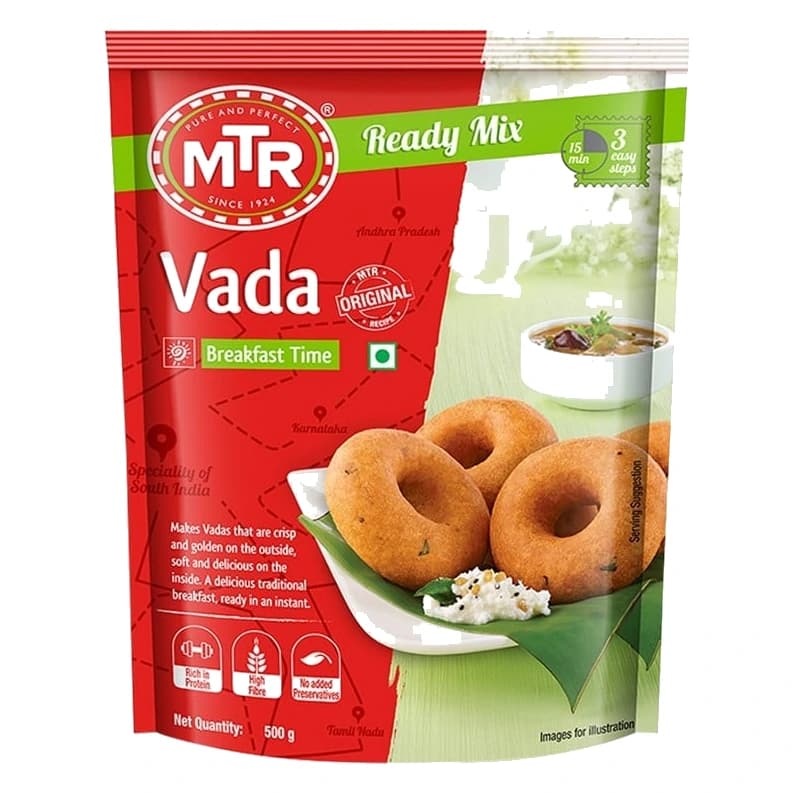
MTR Vada Breakfast Mix
Published
MTR Vada Breakfast Mix is a dry ready mix, mostly black gram, for making South Indian vadas at home. It scores CA4: nutrition is middling on useful protein and fibre, ingredients are short and clean with almost no additives, and risk is high because of the salt. Fine occasionally, with unsalted sides and a light hand on the frying oil.
Ingredients, decoded
10 listed- Black gram (82%)
- Refined wheat flour (Maida)
- Interesterified vegetable fat
- Rice
- Iodised salt
- Bengal gram
- Raising agent [INS 500(ii)]
- Acidity regulator (INS 296)
- Asafoetida
- Anti caking agent (INS 551)
<½ teaspoon of sugar in every 100 g · 0.8 g total sugar, 5 g a teaspoon
| Energy | 354 kcal |
|---|---|
| Protein | 20 g |
| Carbohydrates | 50 g |
| Total sugars | 0.8 g |
| Added sugars | 0 g |
| Dietary fibre | 10 g |
| Total fat | 6 g |
| Saturated fat | 2.7 g |
| Trans fat | 0 g |
| Cholesterol | 0 mg |
| Sodium | 1200 mg |
Think this score is wrong?
What to know about MTR Vada Breakfast Mix
A black gram vada mix with a salty catch
MTR Vada Breakfast Mix is a 500 g pack of dry batter mix for making vadas. It is built on black gram (82%), with refined wheat flour (maida), interesterified vegetable fat, rice, iodised salt and Bengal gram behind it. It is bought by people who want a traditional South Indian breakfast in about 15 minutes without grinding and soaking lentils.
Per 100 g of dry mix you get 354 kcal, 20 g protein, 10 g fibre, 6 g fat of which 2.7 g is saturated, 0.8 g sugar (none added) and 1,200 mg sodium. A typical 35 g serve of mix, as printed on the pack, is about 124 kcal, 7 g protein, 3.5 g fibre and 420 mg sodium. The pack says it makes around 30 vadas and serves 14 to 16.
The pack promises protein, fibre and no added preservatives, and the list backs all three up. What the front does not mention is the salt: 1,200 mg sodium per 100 g is the number that holds the score back. CleanPlate scores it CA4.
Why MTR Vada Breakfast Mix scores CA4
Nutrition is a C on 20 g protein and 10 g fibre per 100 g. Ingredients are an A on a short list led by black gram. Risk is a 4, driven by 1,200 mg sodium per 100 g.
Adequate nutrient density
- Protein
- 20 g
- Fibre
- 10 g
- Vitamins and minerals
- None declared
- Energy
- 354 kcal
01 Nutrition density: why C
Protein is 20 g per 100 g, mostly from black gram (82% of the mix at about 22 g protein per 100 g gives about 18 g). Fibre is 10 g per 100 g. In a 35 g serve that is 7 g protein and 3.5 g fibre.
No vitamins or minerals are declared, so the grade rests on protein and fibre alone, and it stays at C.
Scored on protein, fibre and twelve vitamins and minerals, against the Codex and FSSAI "source" and "high" levels, per 100 g and per 100 kcal. Protein also has to supply at least 12.5% of the calories to count, and 25% for full credit.
Clean, minimally processed
- Base
- Black gram
- Main fat
- Interesterified vegetab...
- Sweeteners
- None added
- Additives
- 3
- Flagged
- Maida
02 Ingredient integrity: why A
The list is short and led by a legume: black gram at 82%, then refined wheat flour, interesterified vegetable fat, rice, iodised salt and Bengal gram. No sweetener, dye, flavouring or hydrogenated fat is listed, and the pack makes no promise the list contradicts.
Only one additive costs ingredient points, and only a little: the anti-caking agent (INS 551). The raising agent (INS 500(ii)) and the acidity regulator (INS 296, malic acid) cost none. Only black gram has a declared percentage.
Scored on how processed the ingredients are, which additives are used and why, and whether the label keeps its promises.
High risk
- Added sugar
- 0 g
- Sodium
- 1200 mg
- Saturated fat
- 2.7 g
- Trans fat
- 0 g
03 Load risk: why 4
Sodium is almost all of the risk number: 1,200 mg per 100 g, or 420 mg in a 35 g serve of dry mix. Saturated fat is 2.7 g per 100 g, under the 5 g high line, so the fat plays a small part.
Energy is 354 kcal per 100 g and adds a little. Added sugar is 0 g and trans fat is 0 g, so neither moves the grade.
Scored on free sugar, sodium, saturated fat and trans fat, each weighed by how strong the evidence of harm is.
Red flags
- −Red flag: High sodium (1200mg per 100g)
- −Red flag: Refined flour (maida) base
Green flags
- +Green flag: Source of protein (20g)
- +Green flag: High fibre (10g)
- +Green flag: No added sugar
Does MTR Vada Breakfast Mix live up to its claims?
Rich in protein, high fibre and no added preservatives all hold on the label numbers. Protein is 20 g and fibre 10 g per 100 g, and no preservative is listed.
- On the packHolds
“Rich in Protein”
The mix has 20 g protein per 100 g, about 23% of its calories, so a 35 g serve gives about 7 g.
- On the packHolds
“High Fibre”
Fibre is 10 g per 100 g, about 3.5 g in a 35 g serve, from black gram and Bengal gram.
- On the packHolds
“No added Preservatives”
No preservative is listed. The raising agent, acidity regulator and anti-caking agent are additives, but not preservatives.
- Product nameHolds
“Vada”
Black gram, the lentil used for vadas, is 82% of the mix.
What's in MTR Vada Breakfast Mix?
Black gram leads at 82%, followed by refined wheat flour, an interesterified fat, rice and salt. The salt level is the one thing to watch.
The ingredient list, read for you
Black gram leads at 82%, so the mix is mostly ground lentil. Refined wheat flour (maida) and rice add body, and Bengal gram adds more lentil. The interesterified vegetable fat is there for richness, and iodised salt and asafoetida season it.
A raising agent (INS 500(ii)), an acidity regulator (INS 296) and an anti-caking agent (INS 551) are the only additives. Only black gram has a declared percentage.
Ingredients to watch
- SodiumConcern
1,200 mg per 100 g of dry mix, 420 mg in a 35 g serve, before any chutney or sambar.
- Refined wheat flour and interesterified fatWorth watching
Both follow the black gram on the list. Fat is 6 g per 100 g with 2.7 g saturated, and no hydrogenated fat is listed.
- Anti-caking agent (INS 551)Worth watching
Silicon dioxide costs a small number of ingredient points. The other two additives cost none.
- Black gramFine
82% of the mix, giving 20 g protein and 10 g fibre per 100 g.
- Added sugarFine
0 g added sugar and 0.8 g total sugar per 100 g.
What it doesn’t have
- No vitamins or minerals are declared on the panel.
- Percentages are given only for black gram, not for the other ingredients.
Who should eat MTR Vada Breakfast Mix?
An occasional breakfast for most adults and children, and rarely for anyone watching blood pressure, since a 35 g serve of mix has 420 mg sodium.
- Most adultsOccasionally
A 35 g serve of mix has 420 mg sodium before the sides.
- ChildrenOccasionally
7 g protein per serve, but 1,200 mg sodium per 100 g of mix.
- High blood pressureRarely
Sodium is 1,200 mg per 100 g, and chutney and sambar add more.
- Weight managementOccasionally
About 124 kcal per 35 g serve before frying oil, with 3.5 g fibre.
Recipes with MTR Vada Breakfast Mix
Serve the vadas with coconut chutney and sambar as the pack suggests, and keep salt low in the sides, since the mix already has 420 mg sodium per serve.
Vada with coconut chutney and sambar
The pack's own suggestion; the mix already has 420 mg sodium per 35 g, so keep the sides lightly salted.
Sambar with vegetables
Serve the vadas with a vegetable-rich sambar, so the meal gets more than the 3.5 g fibre in a serve of mix.
Smaller vada plate
Make fewer, smaller vadas per person, since the 354 kcal per 100 g of dry mix grows with the frying oil.
MTR Vada Breakfast Mix: common questions
What is the CleanPlate score of MTR Vada Breakfast Mix?
MTR Vada Breakfast Mix is a dry ready mix, mostly black gram, for making South Indian vadas at home. It scores CA4: nutrition is middling on useful protein and fibre, ingredients are short and clean with almost no additives, and risk is high because of the salt. Fine occasionally, with unsalted sides and a light hand on the frying oil. Nutrition C, ingredients A, load risk 4; nutrition and ingredients run A to E, risk runs 1 to 5, and A and 1 are best.
How many calories and how much protein are in MTR Vada Breakfast Mix?
Per 100 g, MTR Vada Breakfast Mix has 354 kcal, 20 g protein, 50 g carbohydrate, 6 g fat and 2.7 g saturated fat. One serve (35 g of mix, as sold) has 124 kcal and 7 g protein.
What are the ingredients in MTR Vada Breakfast Mix?
10 ingredients, in label order: Black gram (82%), Refined wheat flour (Maida), Interesterified vegetable fat, Rice, Iodised salt, Bengal gram, Raising agent [INS 500(ii)], Acidity regulator (INS 296), Asafoetida, Anti caking agent (INS 551). Flagged: Maida (low concern).
Does MTR Vada Breakfast Mix live up to its claims?
4 claims checked: 4 hold.
Who should limit MTR Vada Breakfast Mix?
Most adults: occasionally. A 35 g serve of mix has 420 mg sodium before the sides. Children: occasionally. 7 g protein per serve, but 1,200 mg sodium per 100 g of mix. High blood pressure: rarely. Sodium is 1,200 mg per 100 g, and chutney and sambar add more.
How much sugar, salt and saturated fat does MTR Vada Breakfast Mix have?
Per 100 g, MTR Vada Breakfast Mix has 0 g added sugar, 1200 mg sodium (about 3 g salt) and 2.7 g saturated fat. The FSSAI and UK FSA "high" lines are 10 g added sugar, 600 mg sodium and 5 g saturated fat per 100 g. It is high in salt.
Last reviewed October 28, 2026. Scored with the CleanPlate method from the published label. Spotted a mistake? .
Better Batters & Ready Mixes
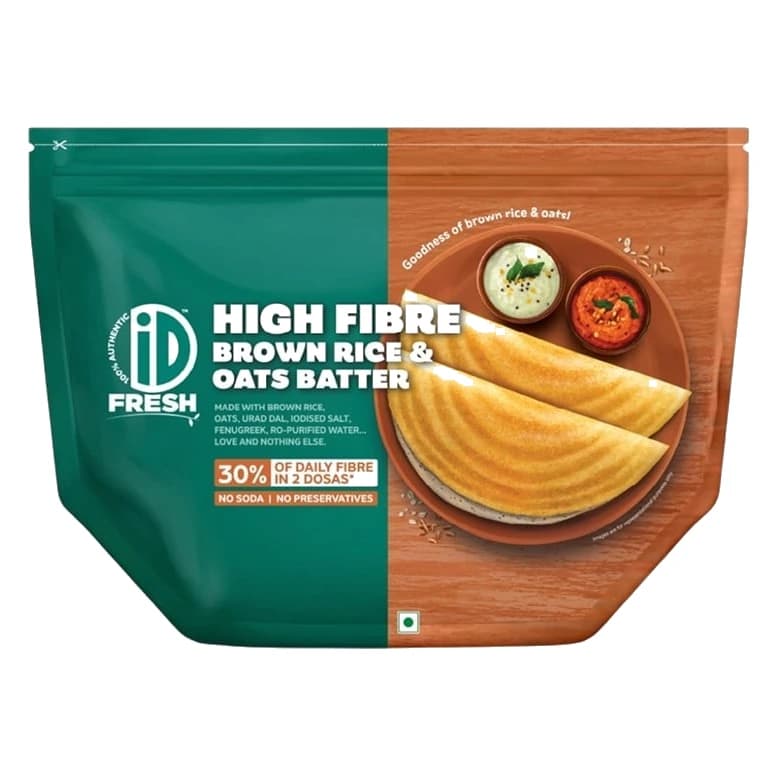
All Batters & Ready Mixes →- iD Fresh High Fibre Brown Rice & Oats Dosa Batter
- +Green flag: High fibre (9.4g)
- +Green flag: No added sugar
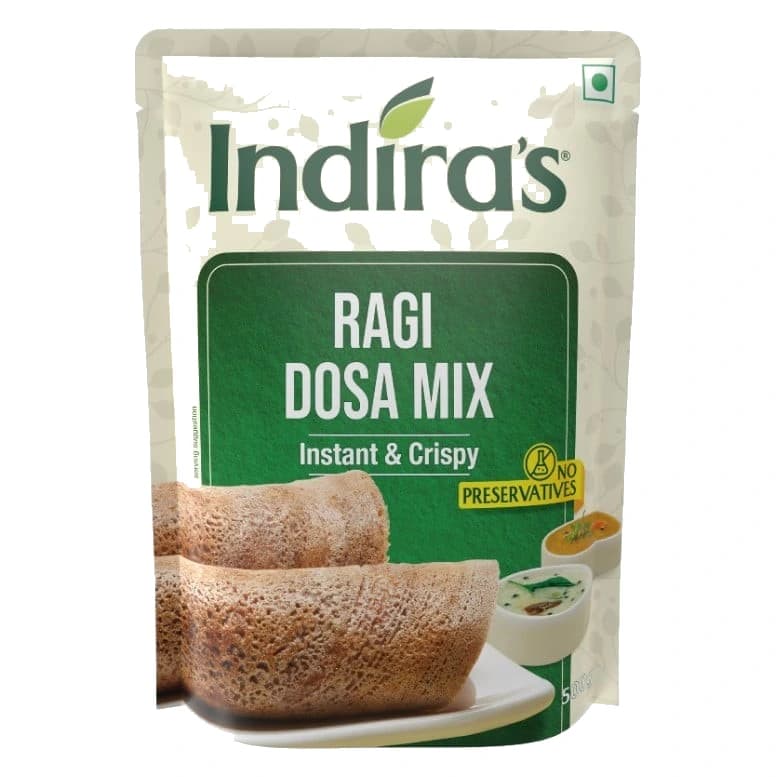
- Indira's Ragi Dosa Mix
- −Red flag: High sodium (990mg per 100g)
- +Green flag: Source of protein (12g)
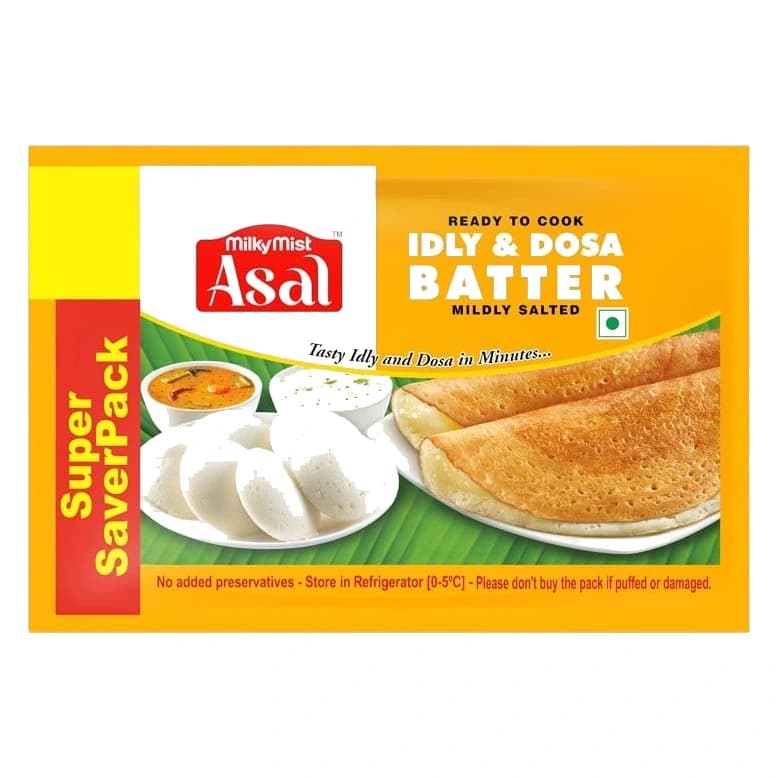
- Asal Idly & Dosa Batter
- −Red flag: High sugar (25.8g per 100g)
- +Green flag: Source of fibre
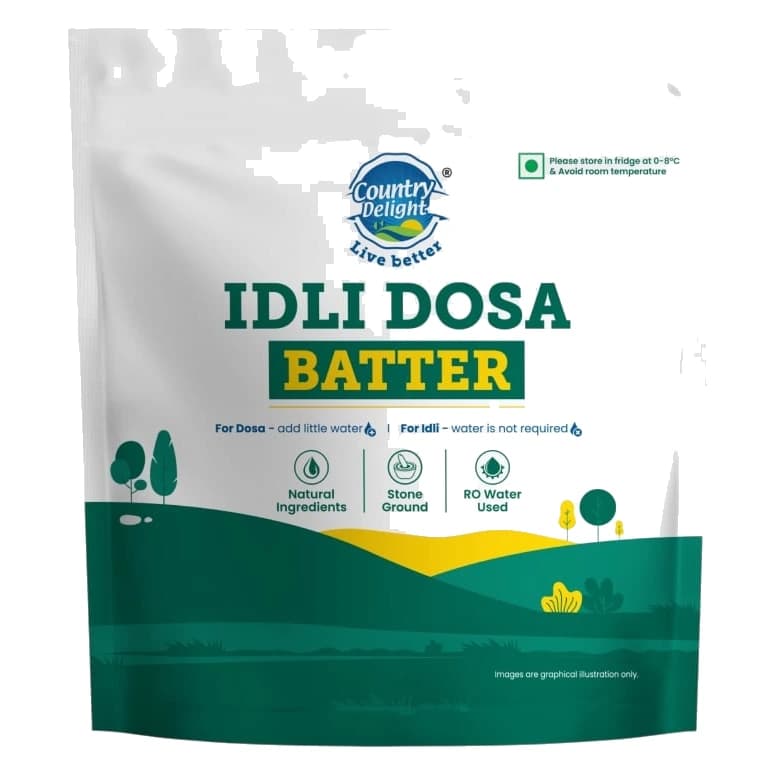
- Country Delight Idli Dosa Batter
- +Green flag: Source of fibre
- +Green flag: No added sugar