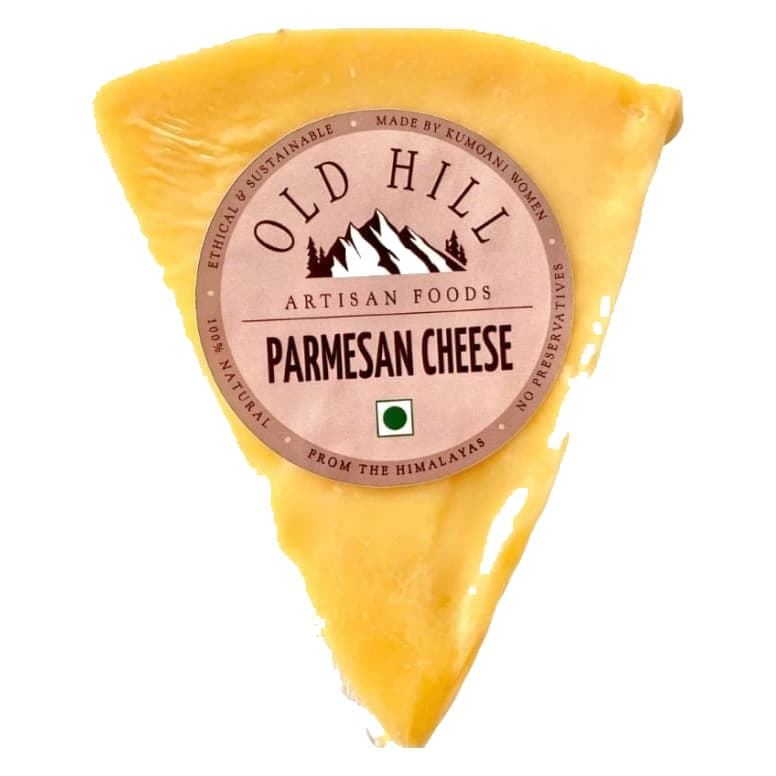
Old Hill Parmesan Cheese Block
Published
Old Hill Parmesan Cheese Block is a hard, Italian-style cheese made from just milk, salt and microbial rennet, sold for grating. It scores CA4: nutrition is middling despite plenty of protein, ingredients are very clean, and risk is high because of the saturated fat. A little goes a long way, so use it as a flavouring rather than a daily staple.
Ingredients, decoded
3 listed- Pasteurized Milk
- Edible Common Salt
- Microbial Rennet
0 teaspoon of sugar in every 100 g · 0 g total sugar, 5 g a teaspoon
| Energy | 390 kcal |
|---|---|
| Protein | 30 g |
| Carbohydrates | 16.4 g |
| Total sugars | 0 g |
| Added sugars | 0 g |
| Total fat | 30 g |
| Saturated fat | 21 g |
| Trans fat | 0 g |
| Cholesterol | 79.2 mg |
| Sodium | 166.4 mg |
Think this score is wrong?
What to know about Old Hill Parmesan Cheese Block
Three clean ingredients, 21 g of saturated fat
A block of hard, crumbly Italian-style cheese made in the Himalayas from pasteurized milk, edible common salt and microbial rennet. It is sold as an artisan cheese for grating over pasta, salads and cold dishes, or for serving with drinks. The pack lists five 20 g servings.
What you get is concentrated: 390 kcal, 30 g protein and 30 g fat per 100 g. In one 20 g serve that is about 78 kcal and 6 g of protein. What it costs is saturated fat, at 21 g per 100 g or about 4.2 g per serve. Added sugar is 0 g, and sodium is 166 mg per 100 g, about 33 mg per serve.
The pack promises natural, preservative-free, hand-made cheese, and the three-item ingredient list backs that up. Claims about grass-fed cows and small batches are about how it is made, and the list cannot confirm them. CleanPlate scores it CA4.
Why Old Hill Parmesan Cheese Block scores CA4
Nutrition is a C on 30 g protein per 100 g with no vitamins or minerals declared. Ingredients are an A with only milk, salt and rennet. Risk is a 4 on 21 g saturated fat per 100 g.
Adequate nutrient density
- Protein
- 30 g
- Fibre
- Not declared
- Vitamins and minerals
- None declared
- Energy
- 390 kcal
01 Nutrition density: why C
Protein is 30 g per 100 g, so a 20 g serve gives about 6 g. That is the main thing in its favour, and the protein comes from milk.
No vitamins or minerals are declared on the label, so nothing else adds to the grade, and the 390 kcal per 100 g is dense.
Scored on protein, fibre and twelve vitamins and minerals, against the Codex and FSSAI "source" and "high" levels, per 100 g and per 100 kcal. Protein also has to supply at least 12.5% of the calories to count, and 25% for full credit.
Clean, minimally processed
- Base
- Pasteurized Milk
- Sweeteners
- None added
- Additives
- 1
- Flagged
- None
02 Ingredient integrity: why A
Three ingredients: pasteurized milk, edible common salt and microbial rennet. Nothing is hydrogenated, no dye or sweetener is listed, and no claim on the pack is hollow.
The enzyme costs a single small ingredient point. The rest of the list keeps the grade at the top.
Scored on how processed the ingredients are, which additives are used and why, and whether the label keeps its promises.
High risk
- Added sugar
- 0 g
- Sodium
- 166.4 mg
- Saturated fat
- 21 g
- Trans fat
- 0 g
03 Load risk: why 4
Saturated fat is the driver: 21 g per 100 g, more than four times the 5 g high line, and about 4.2 g in a 20 g serve.
Energy adds to it at 390 kcal per 100 g, or about 78 kcal per serve. Sodium is modest at 166 mg per 100 g, about 33 mg per serve. Added sugar is 0 g, and trans fat is printed as below the limit of measurement.
Scored on free sugar, sodium, saturated fat and trans fat, each weighed by how strong the evidence of harm is.
Red flags
- −Red flag: High saturated fat (21g)
Green flags
- +Green flag: High protein (30g per 100g)
- +Green flag: No added sugar
Does Old Hill Parmesan Cheese Block live up to its claims?
The natural and no-preservatives claims hold against a three-item list. The grass-fed cows and small-batch claims describe how it is made, which the label cannot confirm.
- Product nameBe careful
“Parmesan Cheese”
The cheese is a hard, crumbly Italian-style type made in the Himalayas from milk, salt and rennet. The name describes the style, not an origin.
- On the packHolds
“100% Natural”
The list is pasteurized milk, edible common salt and microbial rennet. No colour, flavour or sweetener is listed.
- On the packHolds
“No Preservatives”
No preservative additive is listed. The only additive-type item is the enzyme, microbial rennet.
- On the packBe careful
“Milk from Grass Fed Himalayan Cows”
The list says only pasteurized milk. How the cows were fed cannot be checked from the label.
- On the packBe careful
“Made In Small Batches”
This describes the making and does not change the numbers: 21 g saturated fat per 100 g.
What's in Old Hill Parmesan Cheese Block?
Pasteurized milk, salt and microbial rennet are the whole list. The only thing to watch is saturated fat, at 21 g per 100 g.
The ingredient list, read for you
Pasteurized milk leads, followed by edible common salt and microbial rennet. The milk is the base, the salt seasons it, and the rennet is an enzyme that sets the curd. No percentages are declared, and nothing else is added.
Ingredients to watch
- Saturated fatConcern
21 g per 100 g, more than four times the 5 g high line. A 20 g serve has about 4.2 g.
- EnergyWorth watching
390 kcal per 100 g, about 78 kcal in a 20 g serve. It is dense, so portion size matters.
- CholesterolWorth watching
79.2 mg per 100 g, about 16 mg in a 20 g serve.
- Short ingredient listFine
Milk, salt and microbial rennet, with no hydrogenated fat, dye, sweetener or added sugar.
- ProteinFine
30 g per 100 g from milk, about 6 g in a 20 g serve.
What it doesn’t have
- No vitamins or minerals are declared, and no calcium figure is given.
Who should eat Old Hill Parmesan Cheese Block?
An occasional cheese for most adults, used in small amounts. Those watching heart health should take the least, since a 20 g serve has about 4.2 g saturated fat.
- Most adultsOccasionally
A 20 g serve has about 4.2 g saturated fat and 78 kcal.
- ChildrenOccasionally
Clean ingredients, but 21 g saturated fat per 100 g, so small amounts only.
- Heart healthRarely
Saturated fat is more than four times the high line, at 21 g per 100 g.
- Lactose intoleranceCheck with your doctor
Milk is the base and the label gives no lactose figure.
Recipes with Old Hill Parmesan Cheese Block
Grate a 20 g serve over pasta, soup or salad for flavour at about 78 kcal. A little of this cheese goes a long way.
Pasta finished with grated parmesan
Grate a 20 g serve over a plate of pasta for about 6 g protein and 78 kcal of added flavour.
Salad with shaved parmesan
A few shavings, around 20 g, lift a plain salad, with about 4.2 g saturated fat.
Soup topper
Stir a spoonful of grated cheese into hot soup. It is salty enough at 166 mg sodium per 100 g to need little extra salt.
Old Hill Parmesan Cheese Block: common questions
What is the CleanPlate score of Old Hill Parmesan Cheese Block?
Old Hill Parmesan Cheese Block is a hard, Italian-style cheese made from just milk, salt and microbial rennet, sold for grating. It scores CA4: nutrition is middling despite plenty of protein, ingredients are very clean, and risk is high because of the saturated fat. A little goes a long way, so use it as a flavouring rather than a daily staple. Nutrition C, ingredients A, load risk 4; nutrition and ingredients run A to E, risk runs 1 to 5, and A and 1 are best.
How many calories and how much protein are in Old Hill Parmesan Cheese Block?
Per 100 g, Old Hill Parmesan Cheese Block has 390 kcal, 30 g protein, 16.4 g carbohydrate, 30 g fat and 21 g saturated fat. One serve (20 g serve, 5 per pack) has 78 kcal and 6 g protein.
What are the ingredients in Old Hill Parmesan Cheese Block?
3 ingredients, in label order: Pasteurized Milk, Edible Common Salt, Microbial Rennet.
Does Old Hill Parmesan Cheese Block live up to its claims?
5 claims checked: 2 hold, 3 need care. "Parmesan Cheese" needs care: The cheese is a hard, crumbly Italian-style type made in the Himalayas from milk, salt and rennet. The name describes the style, not an origin. "Milk from Grass Fed Himalayan Cows" needs care: The list says only pasteurized milk. How the cows were fed cannot be checked from the label.
Who should limit Old Hill Parmesan Cheese Block?
Most adults: occasionally. A 20 g serve has about 4.2 g saturated fat and 78 kcal. Children: occasionally. Clean ingredients, but 21 g saturated fat per 100 g, so small amounts only. Heart health: rarely. Saturated fat is more than four times the high line, at 21 g per 100 g.
How much sugar, salt and saturated fat does Old Hill Parmesan Cheese Block have?
Per 100 g, Old Hill Parmesan Cheese Block has 0 g added sugar, 166 mg sodium (about 0.4 g salt) and 21 g saturated fat. The FSSAI and UK FSA "high" lines are 10 g added sugar, 600 mg sodium and 5 g saturated fat per 100 g. It is high in saturated fat.
Last reviewed October 27, 2026. Scored with the CleanPlate method from the published label. Spotted a mistake? .
Better Cheese & Paneer
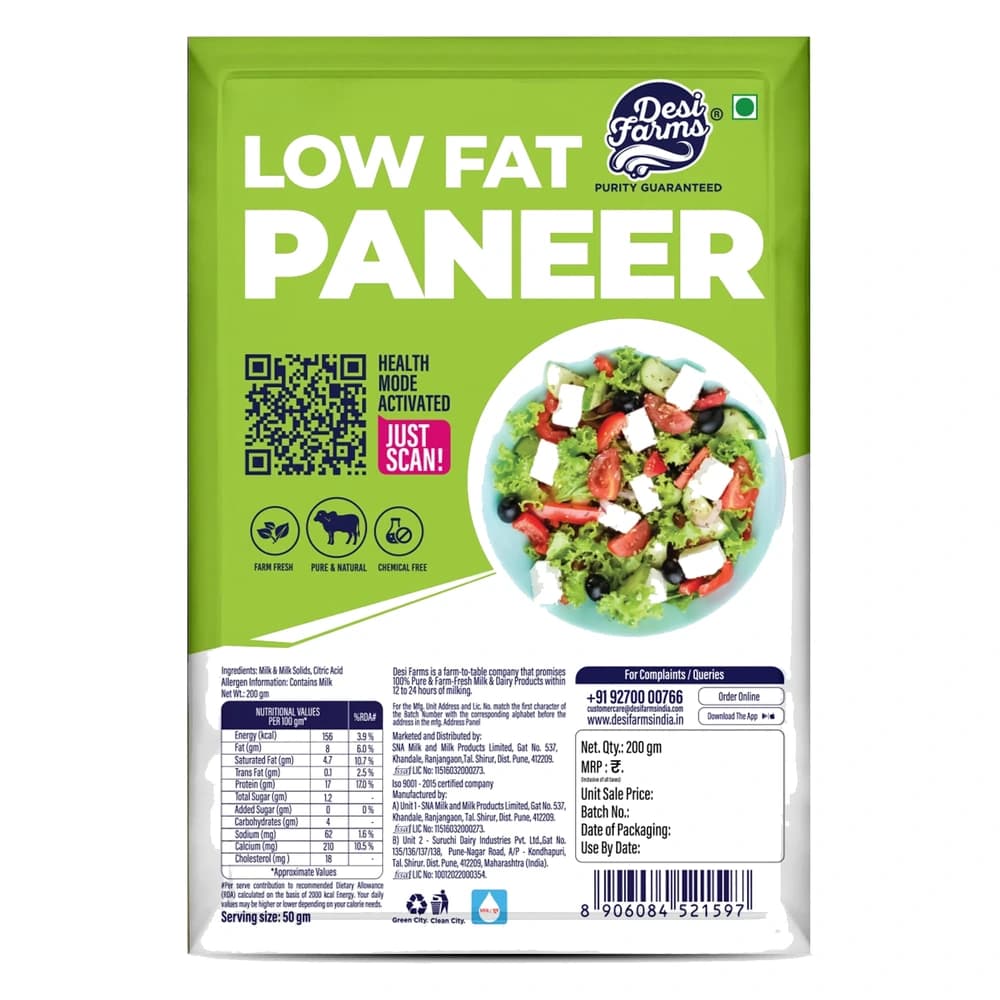
All Cheese & Paneer →- Desi Farms Low Fat Paneer
- +Green flag: High protein (17g per 100g)
- +Green flag: No added sugar
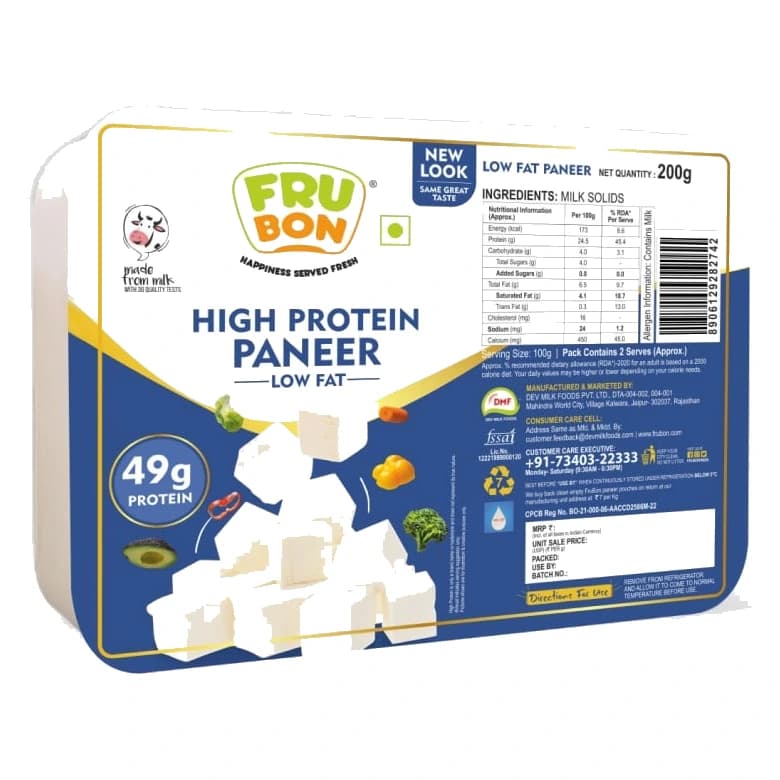
- FruBon Low Fat High Protein Paneer
- −Red flag: Contains trans fat (0.3g)
- +Green flag: High protein (24.5g per 100g)
- Morinaga Silken Extra Firm Tofu
- +Green flag: Source of protein (8.2g)
- +Green flag: No added sugar
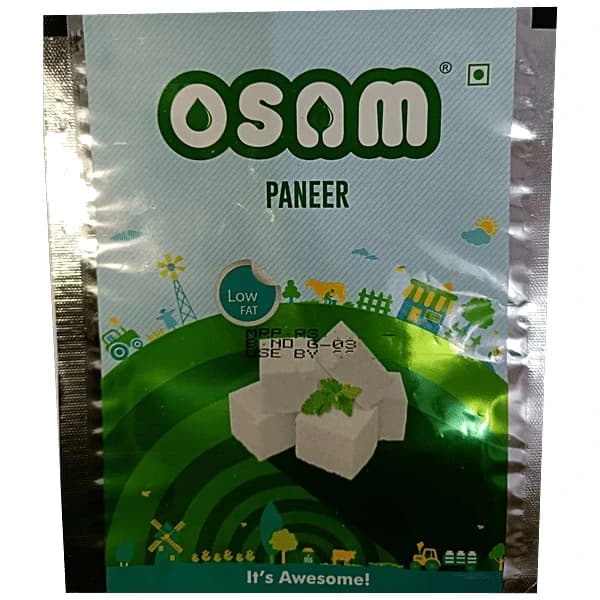
- OSAM Low Fat Paneer
- +Green flag: High protein (31g per 100g)
- +Green flag: No added sugar