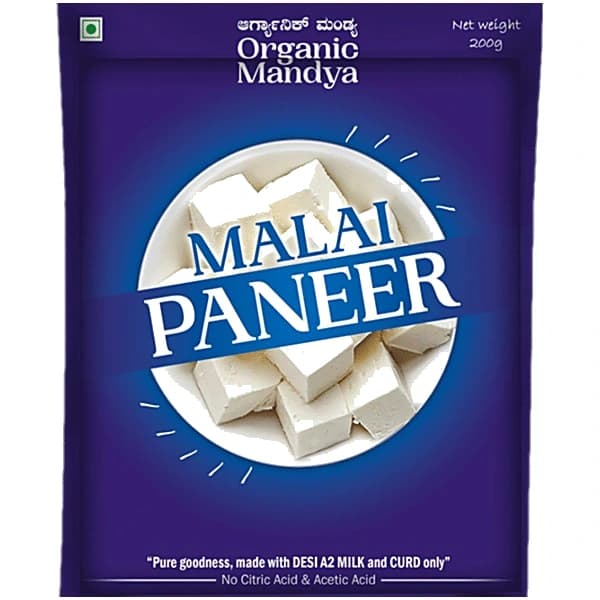
Organic Mandya Malai Paneer
Published
Organic Mandya Malai Paneer is fresh paneer made only from A2 milk and curd. It scores CA2: middling on nutrition because protein comes with a lot of fat, top marks on ingredients for a two-item list, and a low risk grade with no sugar to count. Suits regular cooking in sensible portions.
Ingredients, decoded
2 listed- Desi A2 Milk
- Curds
The label gives no sugar figure, so there is nothing to count in teaspoons.
| Energy | 265 kcal |
|---|---|
| Protein | 18 g |
| Carbohydrates | 1 g |
| Total fat | 21 g |
Think this score is wrong?
What to know about Organic Mandya Malai Paneer
Two-ingredient paneer: 18 g protein, 21 g fat
A 200 g block of fresh paneer made from Desi A2 Milk and curds, with no percentages declared for either. It is sold as a malai paneer for home cooking, kept chilled at 2 to 4°C with a best-before of 30 days from packing, and bought by people who want paneer with a short list and no added acid.
Per 100 g it has 265 kcal, 18 g protein, 1 g carbohydrate and 21 g fat. The panel prints no saturated fat, sodium or sugar line. A typical 50 g serve gives about 9 g protein and 10.5 g fat for around 133 kcal. The whole 200 g block holds about 36 g protein and 530 kcal.
The pack says made with desi A2 milk and curd only, and the ingredient list agrees. It also says no citric acid or acetic acid, and neither is listed. The name's word malai suggests richness, and the 21 g of fat per 100 g fits that. CleanPlate scores it CA2.
Why Organic Mandya Malai Paneer scores CA2
Nutrition is a C because 18 g protein per 100 g comes with 21 g fat and no fibre. Ingredients are an A on a two-item list. Risk is a 2, set by energy, since no sugar is present.
Adequate nutrient density
- Protein
- 18 g
- Fibre
- Not declared
- Vitamins and minerals
- None declared
- Energy
- 265 kcal
01 Nutrition density: why C
Protein is 18 g per 100 g, almost all from the milk, and total fat is 21 g. Fat gives about 71% of the 265 kcal and protein about 27%, so the protein is real but not lean.
No fibre, vitamins or minerals are declared, so nothing adds to the grade beyond protein.
Scored on protein, fibre and twelve vitamins and minerals, against the Codex and FSSAI "source" and "high" levels, per 100 g and per 100 kcal. Protein also has to supply at least 12.5% of the calories to count, and 25% for full credit.
Clean, minimally processed
- Base
- Desi A2 Milk
- Sweeteners
- None added
- Additives
- 0
- Flagged
- None
02 Ingredient integrity: why A
The list is Desi A2 Milk and curds, with no additive, no flavouring, no added fat and no sweetener. That earns the top ingredient grade.
No label promise is hollow: the pack's claims of milk and curd only and no citric or acetic acid match the list. Nothing costs ingredient points.
Scored on how processed the ingredients are, which additives are used and why, and whether the label keeps its promises.
Low risk
03 Load risk: why 2
No free sugar is listed and none is counted. The panel prints no saturated fat, sodium or trans fat line, so those add nothing to the number.
Energy is what sets the grade: 265 kcal per 100 g puts the risk at a 2, the floor for a food this calorie-dense.
Scored on free sugar, sodium, saturated fat and trans fat, each weighed by how strong the evidence of harm is.
Red flags
No major red flags on the label.
Green flags
- +Green flag: High protein (18g per 100g)
- +Green flag: No additives
Does Organic Mandya Malai Paneer live up to its claims?
The only-milk-and-curd claim and the no-citric-acid claim both hold against the list. The malai in the name is framed as richness: no cream is listed, but fat is 21 g per 100 g.
- Product nameBe careful
“Malai Paneer”
No cream is listed, only A2 milk and curds. The richness the word suggests shows up as 21 g fat per 100 g, 265 kcal.
- On the packHolds
“Made with DESI A2 MILK and CURD only”
The ingredient list is Desi A2 Milk and Curds, with no additive. No percentages are given for either.
- On the packHolds
“No Citric Acid & Acetic Acid”
Neither acid is on the list. Curds are the only other ingredient beside the milk.
What's in Organic Mandya Malai Paneer?
Desi A2 Milk and curds are the whole list, with no additives. The things to watch are the fat and the missing saturated fat and sodium lines.
The ingredient list, read for you
Desi A2 Milk comes first and curds second, with no percentages given. The milk is the base of the paneer, and the curds are the second ingredient in place of an added acid. Nothing else is listed: no salt, stabiliser, preservative or flavour.
Ingredients to watch
- Fat and caloriesWorth watching
21 g fat and 265 kcal per 100 g. A 50 g serve has 10.5 g fat and about 133 kcal.
- Saturated fat and sodium not printedWorth watching
The panel shows only energy, protein, carbohydrate and fat, so saturated fat and salt cannot be checked.
- Short ingredient listFine
Only Desi A2 Milk and curds, with no additives and no added acid.
- ProteinFine
18 g per 100 g from milk, about 9 g in a 50 g serve.
- CarbohydrateFine
1 g per 100 g, and no free sugar is listed.
What it doesn’t have
- The panel gives no saturated fat, sodium or sugar line, and no vitamins or minerals.
- No percentages are given for the milk and the curds.
Who should eat Organic Mandya Malai Paneer?
Fine for most adults and children in modest portions. A few times a week suits heart health, and anyone with lactose intolerance should check with their doctor.
- Most adultsEveryday
18 g protein per 100 g with no additives, but 265 kcal, so keep portions to about 50 to 100 g.
- ChildrenEveryday
Milk protein with nothing added, 9 g in a 50 g serve.
- Heart healthA few times a week
21 g fat per 100 g, and saturated fat is not printed on the pack.
- Lactose intoleranceCheck with your doctor
Made from milk and curds, and lactose is not declared.
Myths about Organic Mandya Malai Paneer
Paneer is a protein food, but not a lean one. This block has 21 g fat against 18 g protein per 100 g, so fat gives most of the calories.
Myth: Is paneer a lean protein?
No. This paneer has 18 g protein but 21 g fat per 100 g, so fat gives about 71% of its 265 kcal and protein about 27%. It is a useful protein food, but a rich one.
Recipes with Organic Mandya Malai Paneer
Paneer suits curries, bhurji and grills. Each 100 g adds 18 g protein and 265 kcal, so portion size decides how rich the dish gets.
Paneer bhurji
Crumble 100 g into a pan with onion and tomato for 18 g protein and 265 kcal from the paneer, with little else added to the carbohydrate.
Paneer tikka cubes
Soak the block in boiling water for 10 minutes as the pack advises, cut into cubes and grill them with peppers. A 50 g serve has about 9 g protein.
Palak paneer
Simmer cubes in a spinach puree and use little oil or cream, since the paneer already brings 21 g fat per 100 g.
Organic Mandya Malai Paneer: common questions
What is the CleanPlate score of Organic Mandya Malai Paneer?
Organic Mandya Malai Paneer is fresh paneer made only from A2 milk and curd. It scores CA2: middling on nutrition because protein comes with a lot of fat, top marks on ingredients for a two-item list, and a low risk grade with no sugar to count. Suits regular cooking in sensible portions. Nutrition C, ingredients A, load risk 2; nutrition and ingredients run A to E, risk runs 1 to 5, and A and 1 are best.
How many calories and how much protein are in Organic Mandya Malai Paneer?
Per 100 g, Organic Mandya Malai Paneer has 265 kcal, 18 g protein, 1 g carbohydrate and 21 g fat. One serve (50 g, typical serve) has 133 kcal and 9 g protein.
What are the ingredients in Organic Mandya Malai Paneer?
2 ingredients, in label order: Desi A2 Milk, Curds.
Does Organic Mandya Malai Paneer live up to its claims?
3 claims checked: 2 hold, 1 needs care. "Malai Paneer" needs care: No cream is listed, only A2 milk and curds. The richness the word suggests shows up as 21 g fat per 100 g, 265 kcal.
Who should limit Organic Mandya Malai Paneer?
Most adults: everyday. 18 g protein per 100 g with no additives, but 265 kcal, so keep portions to about 50 to 100 g. Children: everyday. Milk protein with nothing added, 9 g in a 50 g serve. Heart health: a few times a week. 21 g fat per 100 g, and saturated fat is not printed on the pack.
What does the CA2 score mean for Organic Mandya Malai Paneer?
The first letter (C) grades nutrition density on A to E, the second (A) grades ingredient integrity on A to E, and the number (2) grades load risk on 1 to 5. A and 1 are best. Nutrition: Protein is 18 g per 100 g, almost all from the milk, and total fat is 21 g. Fat gives about 71% of the 265 kcal and protein about 27%, so the protein is real but not lean. Ingredients: The list is Desi A2 Milk and curds, with no additive, no flavouring, no added fat and no sweetener. That earns the top ingredient grade. Load risk: No free sugar is listed and none is counted. The panel prints no saturated fat, sodium or trans fat line, so those add nothing to the number.
Last reviewed October 28, 2026. Scored with the CleanPlate method from the published label. Spotted a mistake? .
Better Cheese & Paneer
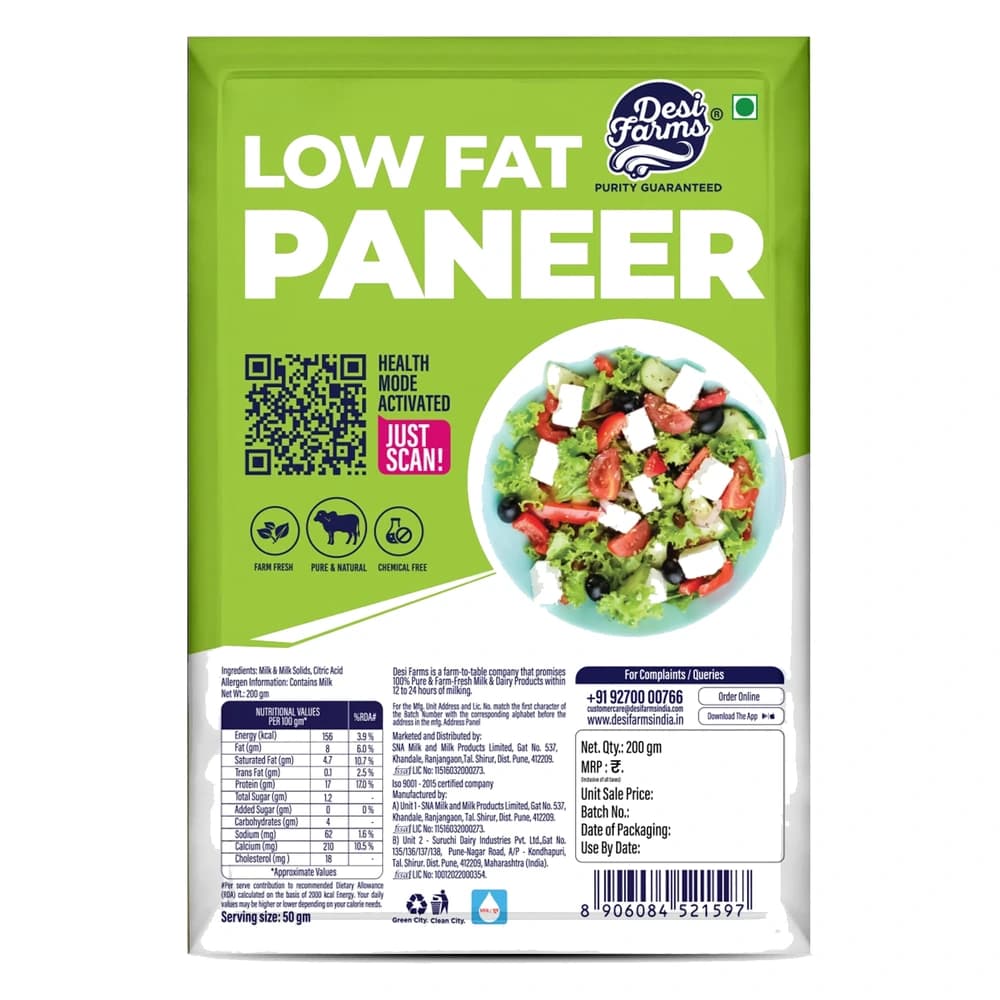
All Cheese & Paneer →- Desi Farms Low Fat Paneer
- +Green flag: High protein (17g per 100g)
- +Green flag: No added sugar
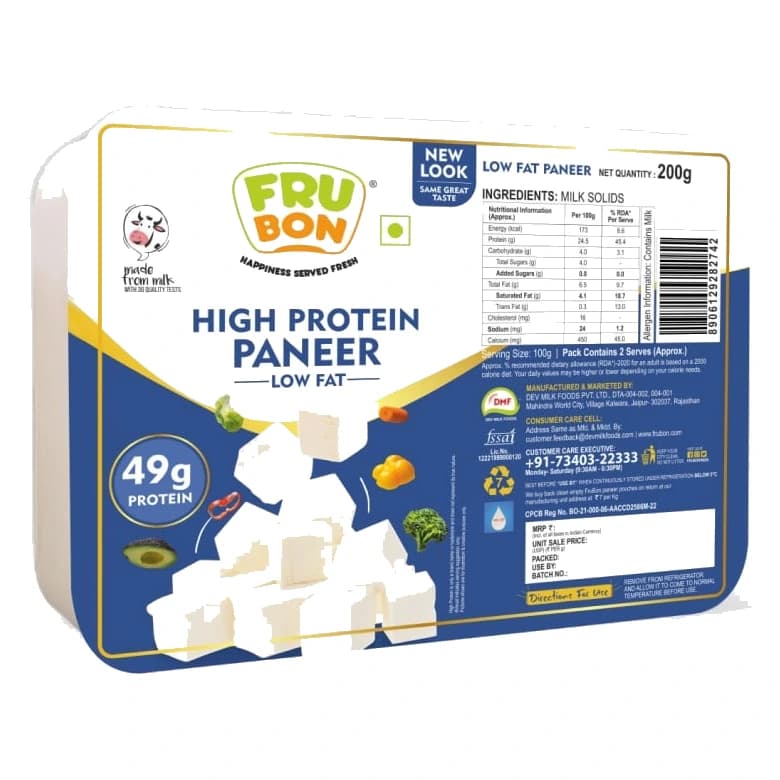
- FruBon Low Fat High Protein Paneer
- −Red flag: Contains trans fat (0.3g)
- +Green flag: High protein (24.5g per 100g)
- Morinaga Silken Extra Firm Tofu
- +Green flag: Source of protein (8.2g)
- +Green flag: No added sugar
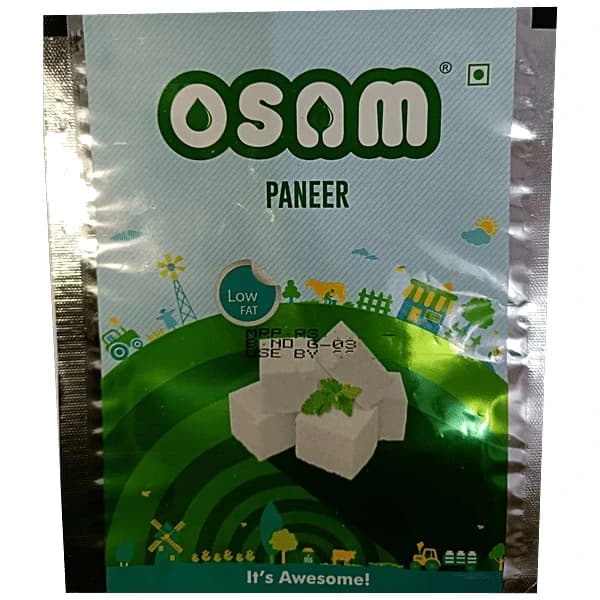
- OSAM Low Fat Paneer
- +Green flag: High protein (31g per 100g)
- +Green flag: No added sugar