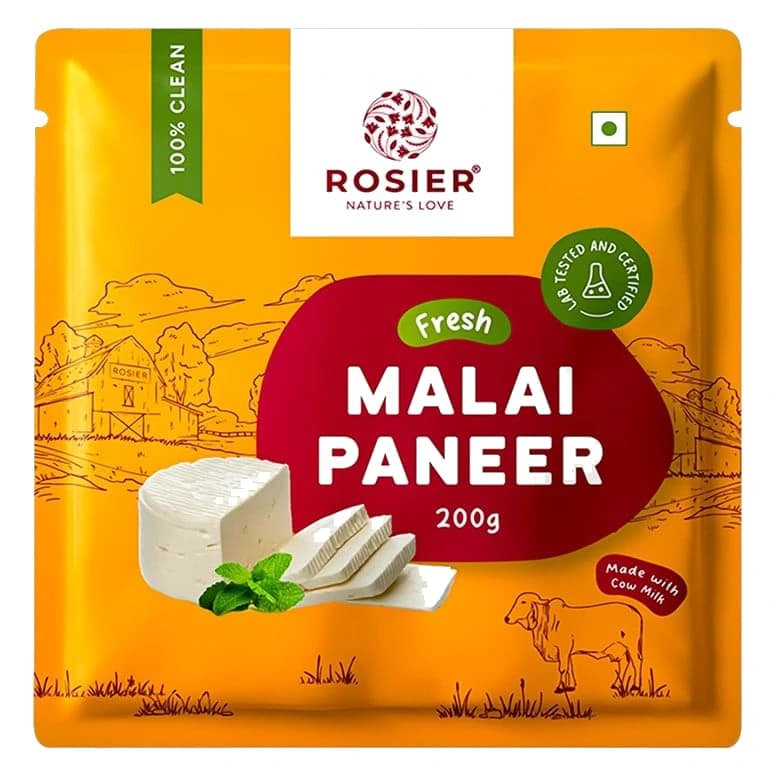
Rosier Malai Paneer
Red flags
No major red flags on the label.
Green flags
- +Green flag: High protein (18.1g per 100g)
- +Green flag: No added sugar
- +Green flag: Low sodium
Ingredients, decoded
1 listed- Desi Cow Milk and Citric Acid
Our take
CleanPlate reviewClean list, but the saturated fat figure looks wrong
Rosier Malai Paneer lists desi cow milk and citric acid in one clause. The pack is 200 g and the panel is printed per 100 g, with a 50 g serve column.
CleanPlate scores it BA3. The B for nutrition reflects 18.1 g protein and natural calcium per 100 g. The A for ingredients reflects whole or lightly processed ingredients (led by desi cow milk), and almost no additives. The 3 for risk is a floor, not a measurement: the printed saturated fat (2.65 g per 100 g) looks too low for the fat, so the grade is held at 3 until the maker confirms.
Claims vs reality
What the pack says, checked against the ingredient list and nutrition panel.
- Product namePartly true
“Malai Paneer”
Malai means cream. No cream is listed: the list is cow milk and citric acid, and the panel shows 15 g of fat per 100 g.
- On the packBe careful
“No Additives, Fillers or Preservatives”
Citric acid (INS 330) is a permitted food additive; the pack itself says it is used to set the milk.
- On the packBe careful
“2.65 g saturated fat per 100 g”
This is 18% of the 14.97 g of fat. Cow milk fat would give about 9 to 10 g, so CleanPlate keeps the risk grade at 3 and marks the score provisional.
- On the packBe careful
“100% Clean”
"Clean" has no label definition; the list shows two items.
How BA3 breaks down
Each grade is scored on its own. Here are the label numbers behind each one, per 100 g.
Good nutrient density
- Protein
- 18.1 g
- Fibre
- Not declared
- Vitamins and minerals
- Calcium
- Energy
- 214 kcal
Scored on protein, fibre and twelve vitamins and minerals, against the Codex and FSSAI "source" and "high" levels, per 100 g and per 100 kcal.
Clean, minimally processed
- Base
- Desi Cow Milk and Citric Acid
- Sweeteners
- None added
- Additives
- 1
- Flagged
- None
Scored on how processed the ingredients are, which additives are used and why, and whether the label keeps its promises.
Moderate risk
- Added sugar
- 0 g
- Sodium
- 26.5 mg
- Saturated fat
- 2.6 g
- Trans fat
- 0 g
Scored on free sugar, sodium, saturated fat and trans fat, each weighed by how strong the evidence of harm is.
A closer look
Does the label add up?
Desi cow milk and citric acid, printed as a single clause.
Per 100 g: 214 kcal, 15 g fat of which 2.65 g saturated, 0 g sugar of which 0 g added, 18.1 g protein, 26.5 mg sodium. Energy 213.65 kcal matches the Atwater sum exactly. The saturated fat figure is far below what the fat should hold, so it is not trusted and costs 2 label points.
Ingredients to watch
- Saturated fat figureConcern
Printed as 2.65 g per 100 g; milk fat of this amount would normally hold about 9 to 10 g, so the risk grade is held at 3 until the maker confirms.
- FatWorth watching
14.97 g per 100 g, so about 135 of the 214 kcal come from fat.
- Protein and calciumFine
18.11 g of protein and 478.63 mg of calcium per 100 g.
- IngredientsFine
Milk and a citric acid coagulant, nothing else.
Common misconceptions
Myth: "Paneer from a farm is light on fat"
Farm sourcing does not set the fat; this pack prints 14.97 g per 100 g.
Myth: "Lab-tested means every number is right"
The pack points to lab reports by QR code, but the printed saturated fat still looks too low for the fat.
How often, and how
- Healthy adultsMost days
- ChildrenMost days
- Diabetes or prediabetesFine in moderation
Smarter ways to eat it
Check the lab report
Use the QR code on the pack to look for the report behind the panel.
Pair with vegetables
Add it to a vegetable dish rather than a rich gravy.
Common questions
Is Rosier Malai Paneer healthy?
Rosier Malai Paneer scores BA3 (Good) on CleanPlate, which makes it a reasonable choice with a trade-off or two worth knowing about. We found no major red flags on its label. On the plus side: High protein (18.1g per 100g); No added sugar; Low sodium.
What does the BA3 score mean?
The first letter (B) grades nutritional value: good nutrient density. The second letter (A) grades ingredient and label integrity: clean, minimally processed. The number (3) grades risk nutrients (sugar, sodium, saturated fat): moderate risk.
Last reviewed October 15, 2026. Scored with the CleanPlate method from the published label.
Better Cheese & Paneer
All 16 →- FruBon Low Fat High Protein Paneer
- −Red flag: Contains trans fat (0.3g)
- +Green flag: High protein (24.5g per 100g)
- Morinaga Silken Extra Firm Tofu
- +Green flag: Source of protein (8.2g)
- +Green flag: No added sugar
- Pro Plant Premium Tofu
- +Green flag: High protein (18g per 100g)
- +Green flag: No additives
- Epigamia High Protein Paneer
- −Red flag: High saturated fat (8.4g)
- −Red flag: Contains trans fat (0.4g)