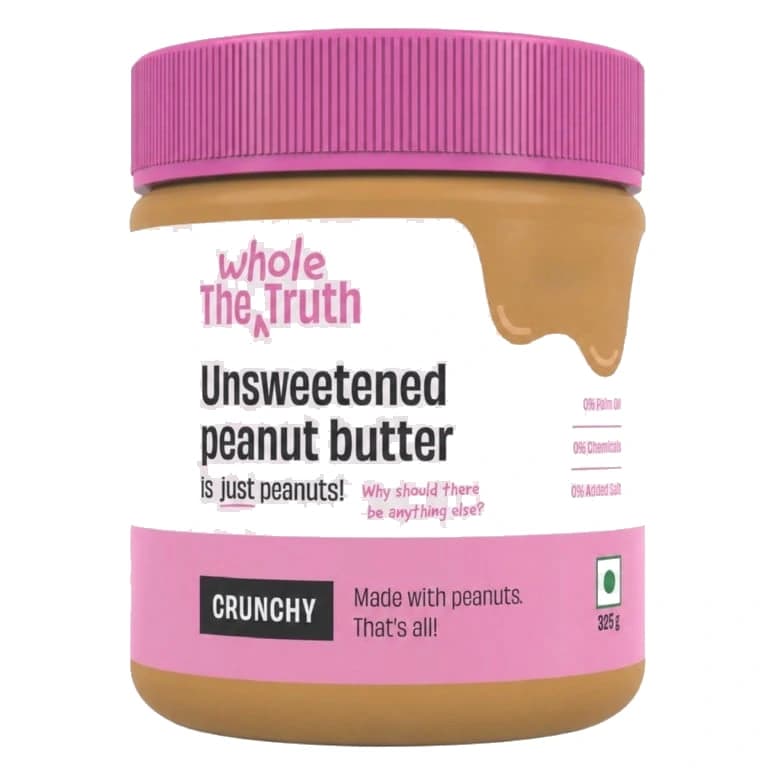
The Whole Truth Crunchy Unsweetened Peanut Butter
Red flags
- −Red flag: High saturated fat (5.2g)
Green flags
- +Green flag: High protein (25g per 100g)
- +Green flag: High fibre (8.7g)
- +Green flag: No added sugar
Ingredients, decoded
1 listed- peanuts
Our take
CleanPlate reviewOne-ingredient crunchy peanut butter, unsweetened
The Whole Truth Crunchy Unsweetened Peanut Butter is a 325 g jar made from peanuts only. The panel is printed per 100 g with a 35 g serve.
CleanPlate scores it CA3. The C for nutrition is middling: 25 g protein and 8.7 g fibre per 100 g. The A for ingredients reflects whole or lightly processed ingredients (led by peanuts), and almost no additives. The 3 for risk comes mainly from calories (651 kcal per 100 g) and saturated fat (5.2 g per 100 g).
Claims vs reality
What the pack says, checked against the ingredient list and nutrition panel.
- Product nameHolds
“Unsweetened”
Added sugar is 0 g and peanuts are the only ingredient.
- On the packHolds
“is just peanuts!”
The list is peanuts (100%).
- On the packHolds
“Made with peanuts. That's all.”
No other ingredient is listed.
How CA3 breaks down
Each grade is scored on its own. Here are the label numbers behind each one, per 100 g.
Adequate nutrient density
- Protein
- 25 g
- Fibre
- 8.7 g
- Vitamins and minerals
- None declared
- Energy
- 651 kcal
Scored on protein, fibre and twelve vitamins and minerals, against the Codex and FSSAI "source" and "high" levels, per 100 g and per 100 kcal.
Clean, minimally processed
- Base
- peanuts
- Sweeteners
- None added
- Additives
- 0
- Flagged
- None
Scored on how processed the ingredients are, which additives are used and why, and whether the label keeps its promises.
Moderate risk
- Added sugar
- 0 g
- Sodium
- 25.9 mg
- Saturated fat
- 5.2 g
- Trans fat
- 0 g
Scored on free sugar, sodium, saturated fat and trans fat, each weighed by how strong the evidence of harm is.
A closer look
Does the label add up?
Peanuts (100%).
Per 100 g: 651 kcal, 53.4 g fat of which 5.2 g saturated, 3.4 g sugar of which 0 g added, 8.7 g fibre, 25 g protein, 25.9 mg sodium. The side panel prints a per 100 g column; MUFA and PUFA are printed only as a combined 48.2 g, so they are not stored. Peanuts are a standard food, so fibre and micronutrients not printed are estimated from the lowest reference values and shown as estimated.
Ingredients to watch
- Energy and fatWorth watching
651 kcal and 53.4 g fat per 100 g; a 35 g serve is about 228 kcal.
- Protein and fibreFine
25 g protein and 8.7 g fibre per 100 g.
- IngredientsFine
Peanuts only, no sugar, salt or oil.
Common misconceptions
Myth: "Natural peanut butter is a low-calorie food"
It is 651 kcal per 100 g.
Myth: "Oil on top means it has gone off"
The pack says oil separation is natural; stir it back in.
How often, and how
- Healthy adultsA tablespoon a day at most
- ChildrenA teaspoon or two
- Diabetes or prediabetesA tablespoon at most
Smarter ways to eat it
Measure the spoon
A level tablespoon (16 g) is about 104 kcal.
Pair with fruit
A banana or apple slices balance it.
Common questions
Is The Whole Truth Crunchy Unsweetened Peanut Butter healthy?
The Whole Truth Crunchy Unsweetened Peanut Butter scores CA3 (Good) on CleanPlate, which makes it a reasonable choice with a trade-off or two worth knowing about. The main concerns are: High saturated fat (5.2g). On the plus side: High protein (25g per 100g); High fibre (8.7g); No added sugar.
What does the CA3 score mean?
The first letter (C) grades nutritional value: adequate nutrient density. The second letter (A) grades ingredient and label integrity: clean, minimally processed. The number (3) grades risk nutrients (sugar, sodium, saturated fat): moderate risk.
Last reviewed October 19, 2026. Scored with the CleanPlate method from the published label.
More Nut Butters
All 11 →- Pintola All Natural Creamy Peanut Butter (Unsweetened)
- −Red flag: High saturated fat (7g)
- +Green flag: High protein (30g per 100g)
- Pintola All Natural Crunchy Peanut Butter
- −Red flag: High saturated fat (7g)
- +Green flag: High protein (30g per 100g)
- Disano Chocolate Crunchy Peanut Butter
- −Red flag: High saturated fat (11g)
- +Green flag: High protein (23g per 100g)
- MyFitness High Protein Chocolate Crunchy Peanut Butter Spread
- −Red flag: High saturated fat (14.3g)
- +Green flag: High protein (26.8g per 100g)