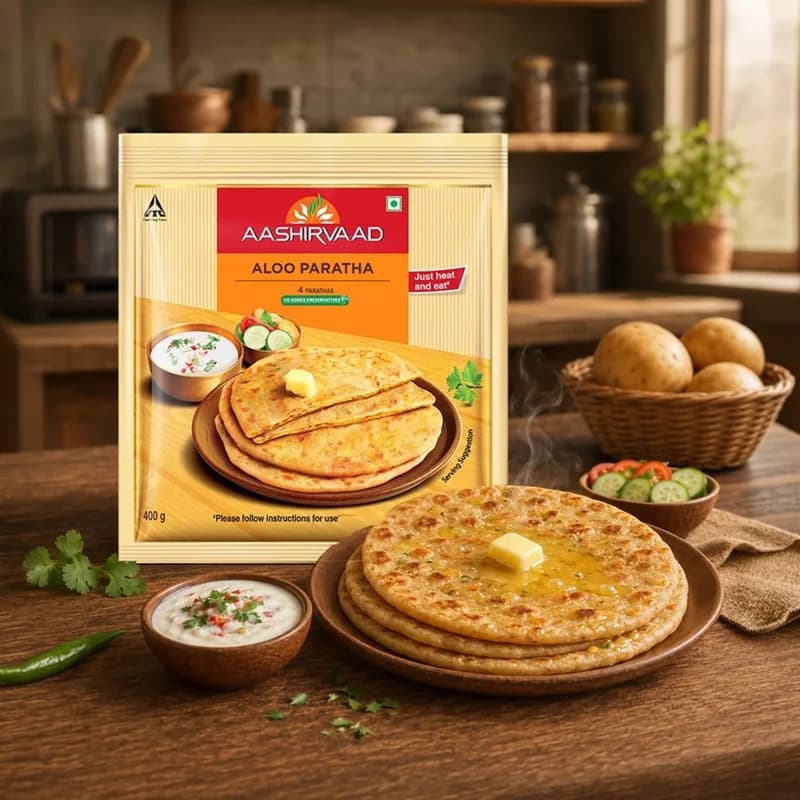
Aashirvaad Aloo Paratha (Heat & Eat)
Red flags
- −Red flag: High sodium (610mg per 100g)
- −Red flag: Palm oil listed
Green flags
- +Green flag: Source of protein (5.4g)
Ingredients, decoded
11 listed- Vegetables (potato (25.2%), Onion And Green Chilli)
- Wheat Flour (atta)
- Water
- Refined Corn Oil
- Chat Masala (rock Salt, black Salt, Dried Mango, Cumin, Pomegranate Seed, Black Pepper, Dried Ginger, Red Chilli, Dried Mint, Nutmeg, Ajowan, Asafoetida)
- Coriander Leaves (1.2%)
- Iodized Salt
- Dehydrated Potato (0.4%)
- Sugar
- Wheat Gluten
- Emulsifier (mono- and Di-glycerides of Fatty Acids (from Palm Oil))
EA3
Our take
CleanPlate reviewSimple paratha, but the panel is thin
Aashirvaad Aloo Paratha (Heat & Eat) is a frozen paratha of atta dough filled with potato (25.2%), onion, green chilli and chat masala, made with refined corn oil and one emulsifier (mono- and diglycerides). The pack is 400 g for four parathas.
CleanPlate scores it EA3. The E for nutrition is low: almost no credited protein, fibre or micronutrients per 100 g. The A for ingredients reflects whole or lightly processed ingredients (led by potato, onion and green chilli and wheat flour), with additives that cost points: mono- and diglycerides of fatty acids. The 3 for risk comes mainly from sodium (610 mg per 100 g) and saturated fat (2.5 g per 100 g).
Claims vs reality
What the pack says, checked against the ingredient list and nutrition panel.
- On the packHolds
“No added preservatives”
No preservative is listed; the paratha is kept frozen at -18 C.
- Product nameHolds
“Aloo Paratha”
Potato is the first filling ingredient at 25.2%, with 0.4% dehydrated potato.
How EA3 breaks down
Each grade is scored on its own. Here are the label numbers behind each one, per 100 g.
Very low nutrient density
- Protein
- 5.4 g
- Fibre
- Not declared
- Vitamins and minerals
- None declared
- Energy
- 230 kcal
Scored on protein, fibre and twelve vitamins and minerals, against the Codex and FSSAI "source" and "high" levels, per 100 g and per 100 kcal.
Clean, minimally processed
- Base
- Vegetables, Onion And Green C...
- Main fat
- Refined Corn Oil
- Sweeteners
- Sugar
- Additives
- 1
- Flagged
- Palm oil
Scored on how processed the ingredients are, which additives are used and why, and whether the label keeps its promises.
Moderate risk
- Added sugar
- 0.3 g
- Sodium
- 610 mg
- Saturated fat
- 2.5 g
- Trans fat
- 0.1 g
Scored on free sugar, sodium, saturated fat and trans fat, each weighed by how strong the evidence of harm is.
A closer look
Does the label add up?
Potato (25.2%), onion and green chilli, wheat flour (atta), water, refined corn oil, chat masala, coriander leaves (1.2%), iodised salt, dehydrated potato (0.4%), sugar, wheat gluten and an emulsifier (mono- and diglycerides, from palm oil).
Per 100 g: 230 kcal, 8.7 g fat of which 2.5 g saturated, 2.9 g sugar of which 0.3 g added, 5.4 g protein, 610 mg sodium. The pack panel has no fibre line; the listing's 3 g of fibre is not on the pack.
Ingredients to watch
- SodiumWorth watching
610 mg per 100 g, a 100 g paratha carries about 610 mg.
- No fibre declaredWorth watching
The pack panel prints no fibre line even though it is atta based.
- One emulsifierWorth watching
Mono- and diglycerides (471) cost points on the additive scale.
- Mostly whole ingredientsFine
Potato, atta, corn oil and spices make up almost all of it.
Common misconceptions
Myth: "Frozen parathas are heavily processed"
This one is potato, atta, oil and spices, with one emulsifier.
Myth: "Aloo paratha is a light meal"
At 230 kcal per 100 g a paratha is mostly carbohydrate with little protein and no declared fibre.
How often, and how
- Healthy adultsOccasionally
- ChildrenRarely
- Diabetes or prediabetesLimit
Smarter ways to eat it
Add curd
Serve with plain curd for extra protein and calcium.
Dry-roast
Heat on a dry tawa and skip the extra ghee or butter.
Common questions
Is Aashirvaad Aloo Paratha (Heat & Eat) healthy?
Aashirvaad Aloo Paratha (Heat & Eat) scores EA3 (Poor) on CleanPlate, which makes it best kept as a rare treat rather than a regular buy. The main concerns are: High sodium (610mg per 100g); Palm oil listed. On the plus side: Source of protein (5.4g).
What does the EA3 score mean?
The first letter (E) grades nutritional value: very low nutrient density. The second letter (A) grades ingredient and label integrity: clean, minimally processed. The number (3) grades risk nutrients (sugar, sodium, saturated fat): moderate risk.
Which ingredients in Aashirvaad Aloo Paratha (Heat & Eat) should I watch?
Emulsifier (mono- and Di-glycerides of Fatty Acids (from Palm Oil)) (Palm oil).
Last reviewed October 11, 2026. Scored with the CleanPlate method from the published label.
Better Frozen Ready Meals & Snacks
All 14 →- CA3Haldiram's Corn Cutlet
- −Red flag: High sodium (846.6mg per 100g)
- −Red flag: Refined flour (maida) base
Good - EA1ITC Master Chef Crispy French Fries
- −Red flag: Palm oil listed
- +Green flag: No added sugar
Poor - CB3Amul Margherita Pizza
- −Red flag: High sodium (730mg per 100g)
- −Red flag: Refined flour (maida) base
Good - CC2Blue Tribe Foods Plant Based Nuggets
- −Red flag: Contains TBHQ
- −Red flag: Refined flour (maida) base
Good