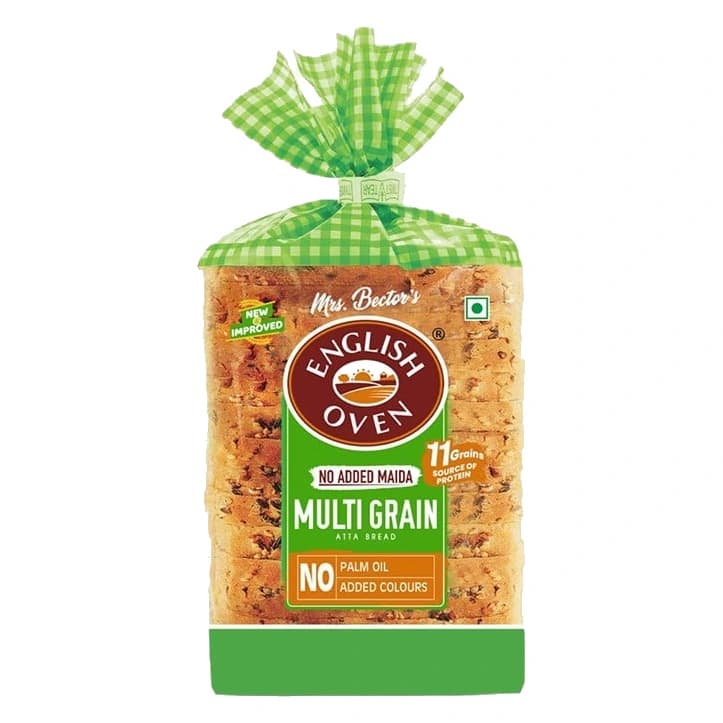
English Oven Zero Maida Multigrain Bread
Red flags
- −Red flag: Contains Calcium Propionate
Green flags
- +Green flag: High protein (11.2g per 100g)
- +Green flag: High fibre (10.3g)
Ingredients, decoded
13 listed- Whole Wheat Flour [Atta (78%)]
- Multi Grain Mix -20% (Oats (5%), Linseed (3.2%), Sunflower Seeds (3%), Soya Grits (2%), Sesame Seeds (1.6%), Bajra (1.2%), Ragi (1.2%), Melon Seeds (1%), Brown Rice Grit (0.8%), Pumpkin Seeds (0.8%), Jowar (0.2%))
- Bread Premix (Broken Wheat, Wheat Bran, Malt Flour, Starch and Soya Flour)
- Yeast
- Wheat Gluten
- Sugar
- Edible Vegetable Oil (Rice Bran)
- Iodized Salt
- Preservative (282)
- Emulsifiers [471, 472e, 481(i)]
- Antioxidants (300,1102)
- Flour Treatment Agents [170(i), 510, 923, 1100]
- Processing Aids (1100(i), Xylanase, 1104)
Our take
CleanPlate reviewZero-maida multigrain bread with nine bread additives
English Oven Zero Maida Multigrain Bread is a 400 g loaf made from whole wheat flour, an 11-grain mix (20%), bread premix, yeast, wheat gluten, sugar, rice bran oil, salt, a preservative, three emulsifiers, antioxidants, flour treatment agents and enzymes. The panel is printed per 100 g with a 55 g serve.
CleanPlate scores it CB2. The C for nutrition is middling: 11.2 g protein and 10.3 g fibre per 100 g. The B for ingredients reflects whole or lightly processed ingredients (led by whole wheat flour, oats and linseed), with additives that cost points: calcium carbonate, mono- and diglycerides of fatty acids, DATEM and sodium stearoyl lactylate. The 2 for risk is low: sodium, free sugar and saturated fat are all modest (sodium 435 mg, free sugar 1.93 g, saturated fat 1.1 g per 100 g).
Claims vs reality
What the pack says, checked against the ingredient list and nutrition panel.
- Product nameHolds
“Zero Maida”
Whole wheat flour is 78% of the flour and no refined flour is listed.
- On the packHolds
“11 Grains”
Eleven grains and seeds are listed in the multigrain mix.
- On the packHolds
“Source of Protein”
11.2 g per 100 g is above the 5.5 g source line.
- On the packHolds
“No Palm Oil”
The oil is rice bran oil.
How CB2 breaks down
Each grade is scored on its own. Here are the label numbers behind each one, per 100 g.
Adequate nutrient density
- Protein
- 11.2 g
- Fibre
- 10.3 g
- Vitamins and minerals
- None declared
- Energy
- 311 kcal
Scored on protein, fibre and twelve vitamins and minerals, against the Codex and FSSAI "source" and "high" levels, per 100 g and per 100 kcal.
Good, few concerning additives
- Base
- Whole Wheat Flour [Atta]
- Main fat
- Edible Vegetable Oil
- Sweeteners
- Sugar
- Additives
- 11
- Flagged
- Calcium Propionate
Scored on how processed the ingredients are, which additives are used and why, and whether the label keeps its promises.
Low risk
- Added sugar
- 1.9 g
- Sodium
- 435 mg
- Saturated fat
- 1.1 g
- Trans fat
- 0 g
Scored on free sugar, sodium, saturated fat and trans fat, each weighed by how strong the evidence of harm is.
A closer look
Does the label add up?
Whole wheat flour (atta 78%), multigrain mix (20%) (oats, linseed, sunflower seeds, soya grits, sesame, bajra, ragi, melon seeds, brown rice grit, pumpkin seeds, jowar), bread premix, yeast, wheat gluten, sugar, rice bran oil, iodised salt, preservative (282), emulsifiers (471, 472e, 481(i)), antioxidants (300, 1102), flour treatment agents (170(i), 510, 923, 1100) and processing aids.
Per 100 g: 311 kcal, 3.09 g fat of which 1.1 g saturated, 4.74 g sugar of which 1.93 g added, 10.3 g fibre, 11.2 g protein, 435 mg sodium. The What's Inside card carries the full list and the per 100 g panel. Enzymes (amylase, glucose oxidase, lipase, xylanase) are counted as enzymes in the additive score. One panel version exists.
Ingredients to watch
- AdditivesConcern
Emulsifiers 471, 472e and 481, ammonium persulphate, ammonium chloride and calcium carbonate cost 2 points each.
- PreservativeWorth watching
Calcium propionate is listed; it costs no points.
- SodiumWorth watching
435 mg per 100 g.
- Fibre and proteinFine
10.3 g fibre and 11.2 g protein per 100 g.
Common misconceptions
Myth: "Zero maida means a clean label"
Nine bread additives are listed.
Myth: "Multigrain means mostly grains"
The grain mix is 20%.
How often, and how
- Healthy adultsMost days
- ChildrenMost days
- Diabetes or prediabetesFine in moderation
Smarter ways to eat it
Compare labels
Choose a loaf with fewer emulsifiers.
Toast it
Pairs with egg or paneer for protein.
Common questions
Is English Oven Zero Maida Multigrain Bread healthy?
English Oven Zero Maida Multigrain Bread scores CB2 (Good) on CleanPlate, which makes it a reasonable choice with a trade-off or two worth knowing about. The main concerns are: Contains Calcium Propionate. On the plus side: High protein (11.2g per 100g); High fibre (10.3g).
What does the CB2 score mean?
The first letter (C) grades nutritional value: adequate nutrient density. The second letter (B) grades ingredient and label integrity: good, few concerning additives. The number (2) grades risk nutrients (sugar, sodium, saturated fat): low risk.
Which ingredients in English Oven Zero Maida Multigrain Bread should I watch?
Preservative (282) (Calcium Propionate).
Last reviewed October 19, 2026. Scored with the CleanPlate method from the published label.
Better Breads & Bakery
All 25 →- Protein Chef Multigrain Double Protein Bread
- +Green flag: High protein (23.7g per 100g)
- +Green flag: High fibre (11.5g)
- The Health Factory Low GI Multigrain Bread
- +Green flag: High protein (13.1g per 100g)
- +Green flag: High fibre (9.7g)
- Baker's Loaf Zero Maida Burger Bun
- +Green flag: Source of protein (8.6g)
- +Green flag: High fibre (6g)
- Baker's Loaf Zero Preservatives Multigrain Bread
- +Green flag: Source of protein (6.6g)
- +Green flag: High fibre (6.3g)