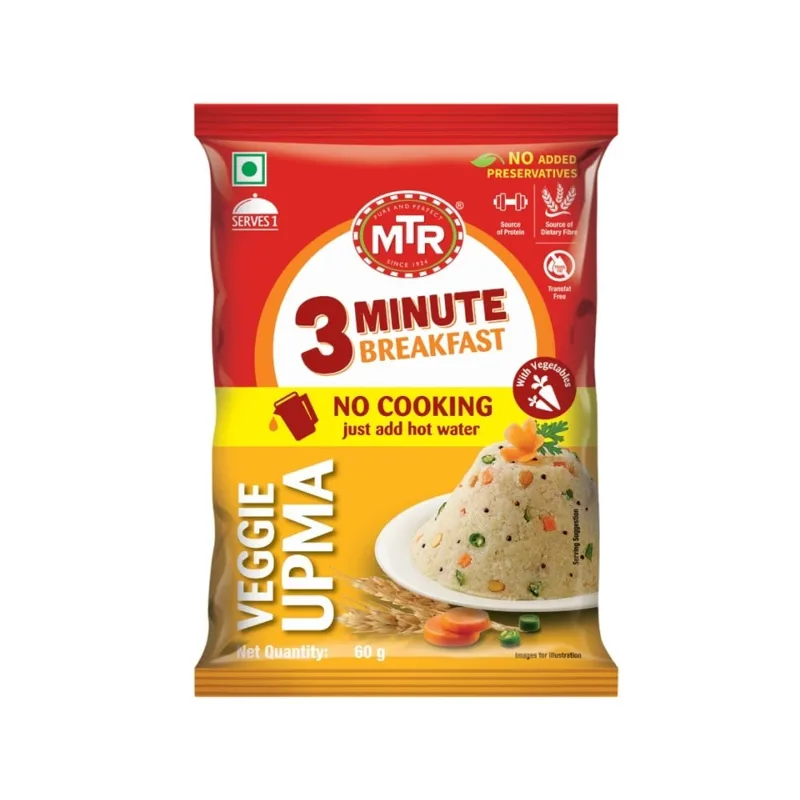
MTR 3 Minute Veggie Upma Breakfast Mix
Red flags
- −Red flag: High sodium (1166.7mg per 100g)
- −Red flag: High saturated fat (6.7g)
- −Red flag: Contains Maltodextrin
Green flags
- +Green flag: Source of protein (8g)
- +Green flag: Source of fibre
Ingredients, decoded
15 listed- Wheat semolina (72%)
- Interesterified vegetable fat
- Iodised salt
- Dehydrated carrot (2.9%)
- Green chilli (2.1%)
- Ginger
- Sugar
- Maltodextrin (Corn)
- Curry leaves
- Mustard
- Bengal gram splits
- Dehydrated onion
- Anticaking agent (INS 551)
- Acidity regulators (INS 330 & 334)
- Natural and nature identical flavouring substance
DB4
Our take
CleanPlate reviewQuick upma where salt outweighs the vegetables
MTR 3 Minute Veggie Upma is an instant breakfast mix of wheat semolina (72%), interesterified vegetable fat, salt, dehydrated carrot (2.9%), green chilli (2.1%), ginger, sugar, maltodextrin and spices, with an anticaking agent and acidity regulators. The pack is 60 g, one serving, and the panel here is converted from the printed per-serve values to per 100 g.
CleanPlate scores it DB4. The D for nutrition is low: only 3.33 g fibre per 100 g and little else credited; its 8 g of protein earns no credit because it is under 2.75 g per 100 kcal. The B for ingredients reflects a mix of whole and refined ingredients (led by wheat semolina, interesterified vegetable fat and dehydrated carrot), with additives that cost points: flavouring and silicon dioxide. The 4 for risk comes mainly from sodium (1167 mg per 100 g) and saturated fat (6.67 g per 100 g).
Claims vs reality
What the pack says, checked against the ingredient list and nutrition panel.
- On the packHolds
“Source of Dietary Fibre”
Fibre is 3.33 g per 100 g, above the 3 g line for a source claim.
- On the packHolds
“Source of Protein”
Protein is 8 g per 100 g, about 14% of the daily protein reference.
- On the packPartly true
“With Vegetables”
Carrot is 2.9% and green chilli 2.1%; onion is a trace.
- On the packHolds
“Transfat Free”
The panel declares 0 g trans fat; the fat is interesterified vegetable fat.
How DB4 breaks down
Each grade is scored on its own. Here are the label numbers behind each one, per 100 g.
Low nutrient density
- Protein
- 8 g
- Fibre
- 3.3 g
- Vitamins and minerals
- None declared
- Energy
- 420 kcal
Scored on protein, fibre and twelve vitamins and minerals, against the Codex and FSSAI "source" and "high" levels, per 100 g and per 100 kcal.
Good, few concerning additives
- Base
- Wheat semolina
- Main fat
- Interesterified vegetab...
- Sweeteners
- Sugar, Maltodextrin
- Additives
- 3
- Flagged
- Maltodextrin
Scored on how processed the ingredients are, which additives are used and why, and whether the label keeps its promises.
High risk
- Added sugar
- 1.5 g
- Sodium
- 1166.7 mg
- Saturated fat
- 6.7 g
- Trans fat
- 0 g
Scored on free sugar, sodium, saturated fat and trans fat, each weighed by how strong the evidence of harm is.
A closer look
Does the label add up?
Wheat semolina (72%), interesterified vegetable fat, iodised salt, dehydrated carrot (2.9%), green chilli (2.1%), ginger, sugar, maltodextrin, curry leaves, mustard, Bengal gram, dehydrated onion, anticaking agent (551), acidity regulators (330, 334) and natural and nature-identical flavouring.
Per 100 g: 420 kcal, 11.3 g fat of which 6.67 g saturated, 4 g sugar of which 1.5 g added, 3.33 g fibre, 8 g protein, 1167 mg sodium.
Ingredients to watch
- SodiumConcern
1167 mg per 100 g, 700 mg in the 60 g pack.
- Interesterified fatWorth watching
Saturated fat is 6.67 g per 100 g from the vegetable fat.
- Flavouring and anticaking agentWorth watching
A flavouring and silicon dioxide (551) cost points on the additive scale.
- No preservativeFine
None is listed.
Common misconceptions
Myth: "Instant upma is as good as homemade"
The mix adds interesterified fat, maltodextrin and 700 mg of sodium per pack; vegetables are 5%.
Myth: "Veggie in the name means a veg-rich meal"
Carrot and green chilli together are 5% of the mix.
How often, and how
- Healthy adultsA few times a week
- ChildrenOccasionally
- Diabetes or prediabetesOccasionally
Smarter ways to eat it
Add your own vegetables
Stir in peas, beans or carrot after adding water for more fibre.
Pair with curd
A bowl of plain curd on the side adds protein and cuts the salty taste.
Common questions
Is MTR 3 Minute Veggie Upma Breakfast Mix healthy?
MTR 3 Minute Veggie Upma Breakfast Mix scores DB4 (Fair) on CleanPlate, which makes it an occasional-use product, where the concerns start to outweigh the positives. The main concerns are: High sodium (1166.7mg per 100g); High saturated fat (6.7g); Contains Maltodextrin. On the plus side: Source of protein (8g); Source of fibre.
What does the DB4 score mean?
The first letter (D) grades nutritional value: low nutrient density. The second letter (B) grades ingredient and label integrity: good, few concerning additives. The number (4) grades risk nutrients (sugar, sodium, saturated fat): high risk.
Which ingredients in MTR 3 Minute Veggie Upma Breakfast Mix should I watch?
Maltodextrin (Corn) (Maltodextrin).
Last reviewed October 11, 2026. Scored with the CleanPlate method from the published label.
Better Batters & Ready Mixes
All 11 →- DA1Gladful Ragi Dosa Mix
- +Green flag: High protein (13g per 100g)
- +Green flag: No added sugar
Fair - CB1iD Protein-Rich Idli Dosa Batter
- +Green flag: High protein (15.2g per 100g)
- +Green flag: No added sugar
Good - EB1iD Idli & Dosa Batter
- +Green flag: Source of protein (5.5g)
- +Green flag: No added sugar
Poor - CB3MTR Instant Rava Idli Mix
- −Red flag: High sodium (710mg per 100g)
- +Green flag: High protein (17g per 100g)
Good