Akshayakalpa Organic Probiotic Pouch Curd
Published
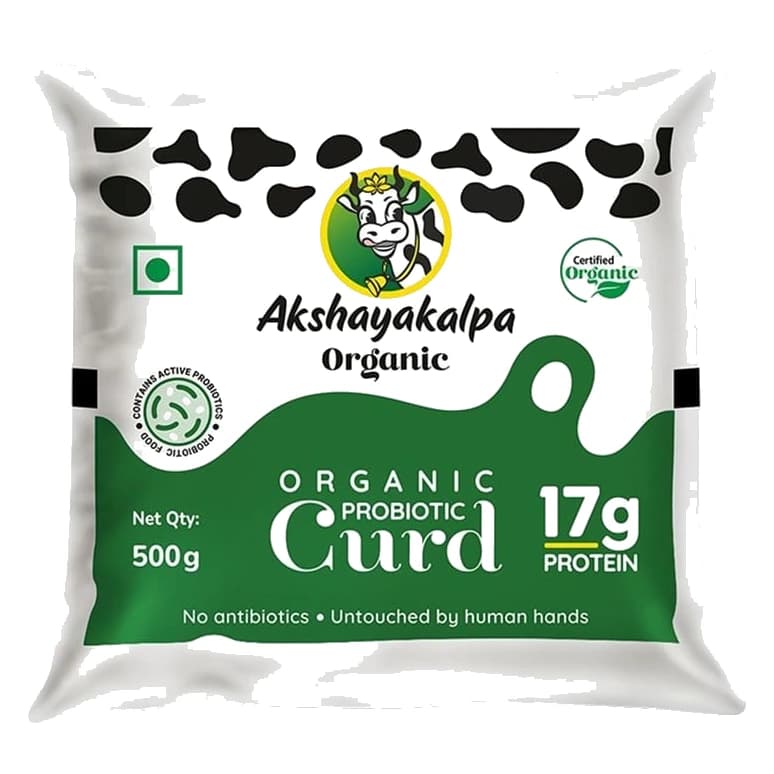
Akshayakalpa Organic Probiotic Pouch Curd is a plain set curd made from organic cow milk and live cultures, with nothing else added. It scores CA1: middling on nutrition because protein and calcium are modest, top marks on ingredients for a short, additive-free list, and low on risk with no added sugar. Suits everyday use as a plain dairy staple.
Ingredients, decoded
2 listed- Milk Solids (Organic Pasteurized Cow Milk)
- Active Culture
1 teaspoon of sugar in every 100 g · 4.3 g total sugar, 5 g a teaspoon
| Energy | 62.8 kcal |
|---|---|
| Protein | 3.4 g |
| Carbohydrates | 4.3 g |
| Total sugars | 4.3 g |
| Added sugars | 0 g |
| Total fat | 3.5 g |
| Saturated fat | 2.5 g |
| Trans fat | 0 g |
| Cholesterol | 6.5 mg |
| Sodium | 45.5 mg |
| Calcium | 127.4 mg |
Think this score is wrong?
What to know about Akshayakalpa Organic Probiotic Pouch Curd
A two-ingredient curd with modest protein
A 500 g pouch of plain curd made from organic pasteurised cow milk and an active culture, with two named probiotic strains, Bifidobacterium animalis subsp. lactis-12 and Lactobacillus acidophilus-5. It is bought by people who want a simple, whole-milk curd for the daily meal, with an organic label. The pack gives no percentages for the ingredients.
Per 100 g it has 62.75 kcal, 3.4 g protein, 4.3 g total sugar, 3.55 g fat and 127.4 mg calcium. Added sugar is 0 g and sodium is 45.5 mg. The pack counts five servings of 100 g, so one serve is about 63 kcal and 2.55 g saturated fat.
The front of the pack says 17g protein, which only matches the whole 500 g pouch, not a serve. The probiotic and organic claims fit the ingredient list. CleanPlate scores it CA1.
Why Akshayakalpa Organic Probiotic Pouch Curd scores CA1
Nutrition is a C on 3.4 g protein and 127.4 mg calcium per 100 g. Ingredients are an A with just milk and culture. Risk is a 1: no added sugar and 2.55 g saturated fat per 100 g.
Adequate nutrient density
- Protein
- 3.4 g
- Fibre
- Not declared
- Vitamins and minerals
- Calcium
- Energy
- 63 kcal
01 Nutrition density: why C
Protein is 3.4 g per 100 g and there is no fibre, so the base score is low. Calcium is the one declared mineral, at 127.4 mg per 100 g, and it adds a bonus that lifts the grade to a C.
Energy is 62.75 kcal per 100 g, so a 100 g serve is light. No other vitamins or minerals are declared.
Scored on protein, fibre and twelve vitamins and minerals, against the Codex and FSSAI "source" and "high" levels, per 100 g and per 100 kcal. Protein also has to supply at least 12.5% of the calories to count, and 25% for full credit.
Clean, minimally processed
- Base
- Milk Solids
- Sweeteners
- None added
- Additives
- 0
- Flagged
- None
02 Ingredient integrity: why A
Only two items are listed: organic pasteurised cow milk and active culture. There are no additives, no sweetener, no thickener and no flavour, so nothing costs ingredient points.
No label promise is hollow: the probiotic strains are named and the organic milk is stated in the list. The one gap is that no ingredient percentages are declared.
Scored on how processed the ingredients are, which additives are used and why, and whether the label keeps its promises.
Clean
- Added sugar
- 0 g
- Sodium
- 45.5 mg
- Saturated fat
- 2.5 g
- Trans fat
- 0 g
03 Load risk: why 1
Saturated fat is the largest part of the risk number: 2.55 g per 100 g, about half the 5 g high line. Sodium adds a little at 45.5 mg per 100 g.
Added sugar is 0 g and trans fat is 0 g, so neither plays a part. The risk grade lands on a 1.
Scored on free sugar, sodium, saturated fat and trans fat, each weighed by how strong the evidence of harm is.
Red flags
No major red flags on the label.
Green flags
- +Green flag: No added sugar
- +Green flag: Low sodium
- +Green flag: No additives
Does Akshayakalpa Organic Probiotic Pouch Curd live up to its claims?
The probiotic and organic claims fit the ingredient list. The 17g protein on the front only matches the whole 500 g pouch, since the table shows 3.4 g per 100 g.
- On the packHolds
“Contains Active Probiotics”
The list names an active culture and two strains, Bifidobacterium animalis subsp. lactis-12 and Lactobacillus acidophilus-5, at 10^8 CFU or more per serving.
- On the packBe careful
“17g Protein”
The table shows 3.4 g protein per 100 g. That adds up to 17 g only across the whole 500 g pouch, not in one 100 g serve.
- On the packHolds
“Certified Organic”
The list states organic pasteurised cow milk, and organic certification marks are printed on the back.
- On the packHolds
“No antibiotics”
The pack says the milk is free from antibiotics. Nothing in the two-item list conflicts with it.
What's in Akshayakalpa Organic Probiotic Pouch Curd?
Organic pasteurised cow milk and active culture are the whole list. The only thing to watch is the saturated fat from the whole milk, at 2.55 g per 100 g.
The ingredient list, read for you
Organic pasteurised cow milk (listed as milk solids) comes first and is the body of the curd. Active culture follows, and the pack names the two strains in it. Nothing else is listed, and no percentages are declared.
Ingredients to watch
- Saturated fatWorth watching
2.55 g per 100 g from whole milk, about half the 5 g high line. It is the main part of the risk number.
- Protein claim on the frontWorth watching
17g protein on the front is for the full 500 g pouch. One 100 g serve has 3.4 g.
- Short ingredient listFine
Organic milk and active culture only, with no additives.
- No added sugarFine
Added sugar is 0 g. The 4.3 g total sugar per 100 g is what the milk brings.
- CalciumFine
127.4 mg per 100 g, which is the one mineral declared.
What it doesn’t have
- No fibre, as expected for a dairy food.
- No ingredient percentages are declared.
Who should eat Akshayakalpa Organic Probiotic Pouch Curd?
A fit for daily meals for most adults and children. Those managing lactose should check with a doctor, since total sugar is 4.3 g per 100 g.
- Most adultsEveryday
62.75 kcal and 2.55 g saturated fat per 100 g, with no added sugar.
- ChildrenEveryday
No sweetener, dye or additive, and 127.4 mg calcium per 100 g.
- Heart healthA few times a week
Whole-milk curd with 2.55 g saturated fat per 100 g, so keep the bowl modest.
- Lactose intoleranceCheck with your doctor
Total sugar is 4.3 g per 100 g, all from the milk.
Recipes with Akshayakalpa Organic Probiotic Pouch Curd
Plain curd works in raita, chaas and marinades, and the 3.4 g protein per 100 g carries over to whatever you build with it.
Cucumber raita
Whisk 100 g of curd with grated cucumber and roasted cumin for a side with 3.4 g protein and no added sugar.
Salted chaas
Blend one 100 g serve with water, salt and mint. The curd adds only 45.5 mg sodium per 100 g, so the salt is yours to set.
Curd rice
Fold curd into cooked rice with a tempering of mustard seeds and curry leaves, using the curd's 127.4 mg calcium per 100 g.
Akshayakalpa Organic Probiotic Pouch Curd: common questions
What is the CleanPlate score of Akshayakalpa Organic Probiotic Pouch Curd?
Akshayakalpa Organic Probiotic Pouch Curd is a plain set curd made from organic cow milk and live cultures, with nothing else added. It scores CA1: middling on nutrition because protein and calcium are modest, top marks on ingredients for a short, additive-free list, and low on risk with no added sugar. Suits everyday use as a plain dairy staple. Nutrition C, ingredients A, load risk 1; nutrition and ingredients run A to E, risk runs 1 to 5, and A and 1 are best.
How many calories and how much protein are in Akshayakalpa Organic Probiotic Pouch Curd?
Per 100 g, Akshayakalpa Organic Probiotic Pouch Curd has 63 kcal, 3.4 g protein, 4.3 g carbohydrate, 3.5 g fat and 2.5 g saturated fat. One serve (100 g, one of five servings in the pouch) has 63 kcal and 3.4 g protein.
What are the ingredients in Akshayakalpa Organic Probiotic Pouch Curd?
2 ingredients, in label order: Milk Solids (Organic Pasteurized Cow Milk), Active Culture.
Does Akshayakalpa Organic Probiotic Pouch Curd live up to its claims?
4 claims checked: 3 hold, 1 needs care. "17g Protein" needs care: The table shows 3.4 g protein per 100 g. That adds up to 17 g only across the whole 500 g pouch, not in one 100 g serve.
Who should limit Akshayakalpa Organic Probiotic Pouch Curd?
Most adults: everyday. 62.75 kcal and 2.55 g saturated fat per 100 g, with no added sugar. Children: everyday. No sweetener, dye or additive, and 127.4 mg calcium per 100 g. Heart health: a few times a week. Whole-milk curd with 2.55 g saturated fat per 100 g, so keep the bowl modest.
How much sugar, salt and saturated fat does Akshayakalpa Organic Probiotic Pouch Curd have?
Per 100 g, Akshayakalpa Organic Probiotic Pouch Curd has 0 g added sugar, 46 mg sodium (about 0.1 g salt) and 2.5 g saturated fat. The FSSAI and UK FSA "high" lines are 10 g added sugar, 600 mg sodium and 5 g saturated fat per 100 g. It is under all three lines.
Last reviewed October 28, 2026. Scored with the CleanPlate method from the published label. Spotted a mistake? .
Better Curd & Yogurt
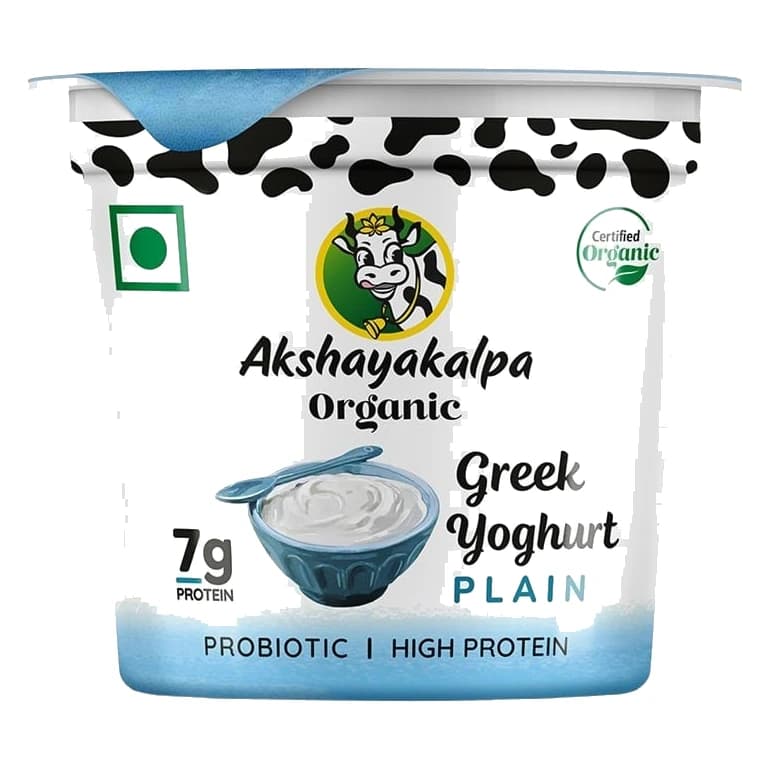
All Curd & Yogurt →- Akshayakalpa Organic Plain Greek Yogurt
- +Green flag: Source of protein (7.8g)
- +Green flag: No added sugar
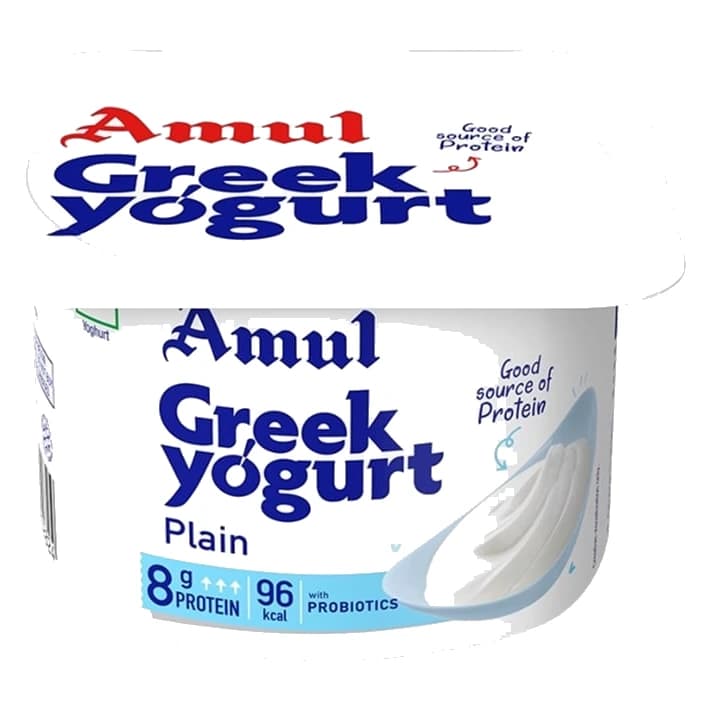
- Amul Greek Yogurt (Plain)
- +Green flag: Source of protein (8g)
- +Green flag: No added sugar
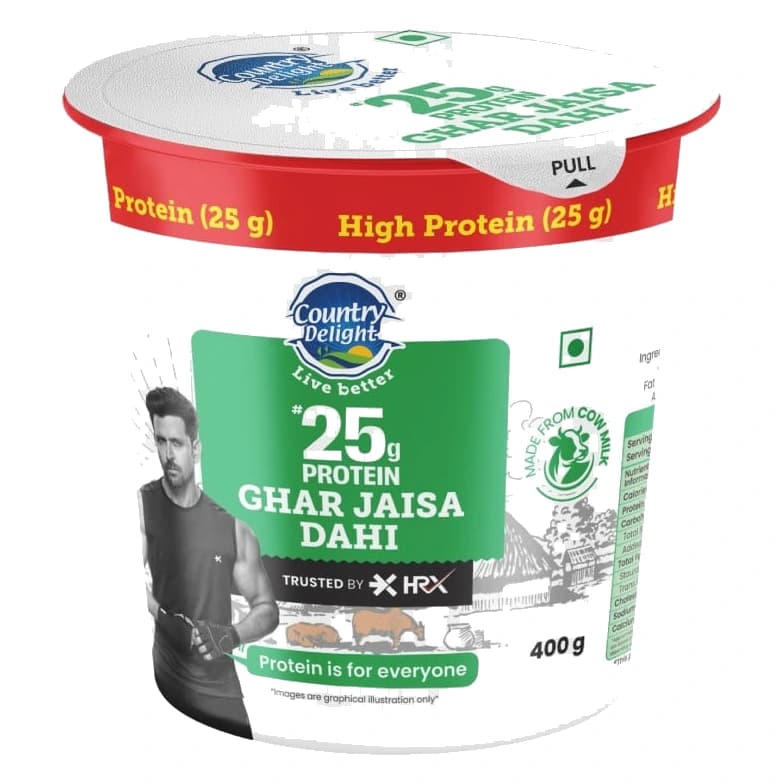
- Country Delight 25 g High Protein Curd (Ghar Jaisa Dahi)
- +Green flag: Source of protein (6.3g)
- +Green flag: No added sugar
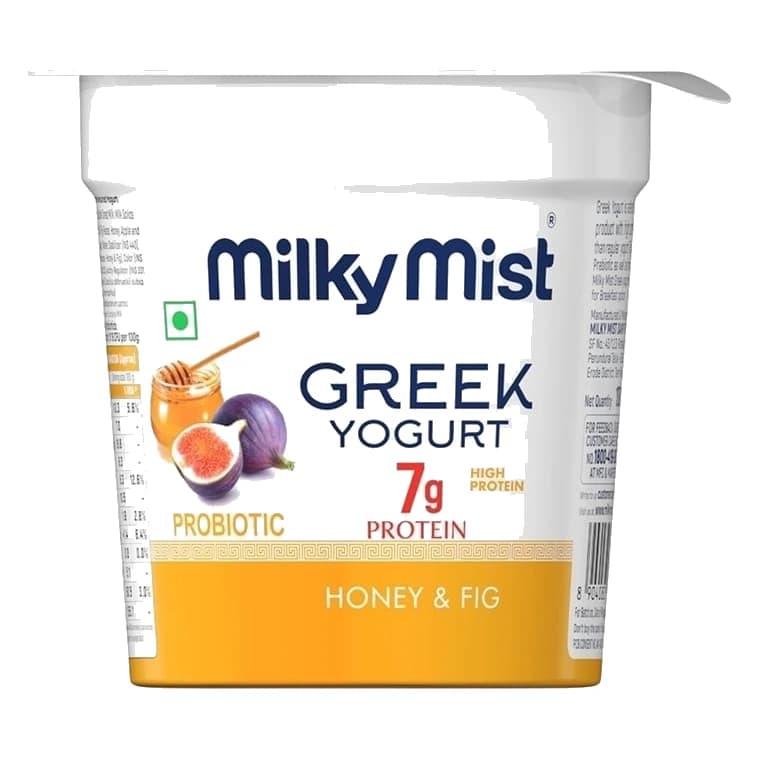
- Milky Mist Honey & Fig Greek Yogurt
- +Green flag: Source of protein (7g)
- +Green flag: High fibre (10.5g)