Epigamia Greek Yogurt Natural
Published
Epigamia Greek Yogurt Natural is a plain Greek yogurt made from milk, milk solids, pectin and live cultures, with no sugar added. It scores BA1: nutrition is solid on protein and calcium, ingredients are short and clean, and risk is minimal because saturated fat and sodium are low. Fine as an everyday tub, eaten plain or topped with fruit at home.
Ingredients, decoded
4 listed- Pasteurized Double Toned Milk
- Milk Solids
- Prebiotic (Pectin)
- Permitted Lactic Acid Cultures
1 teaspoon of sugar in every 100 g · 5 g total sugar, 5 g a teaspoon
| Energy | 65 kcal |
|---|---|
| Protein | 7 g |
| Carbohydrates | 5 g |
| Total sugars | 5 g |
| Added sugars | 0 g |
| Total fat | 2 g |
| Saturated fat | 1.4 g |
| Trans fat | 0 g |
| Cholesterol | 7 mg |
| Sodium | 61 mg |
| Calcium | 198 mg |
Think this score is wrong?
What to know about Epigamia Greek Yogurt Natural
Plain Greek yogurt with 7 g protein and no added sugar
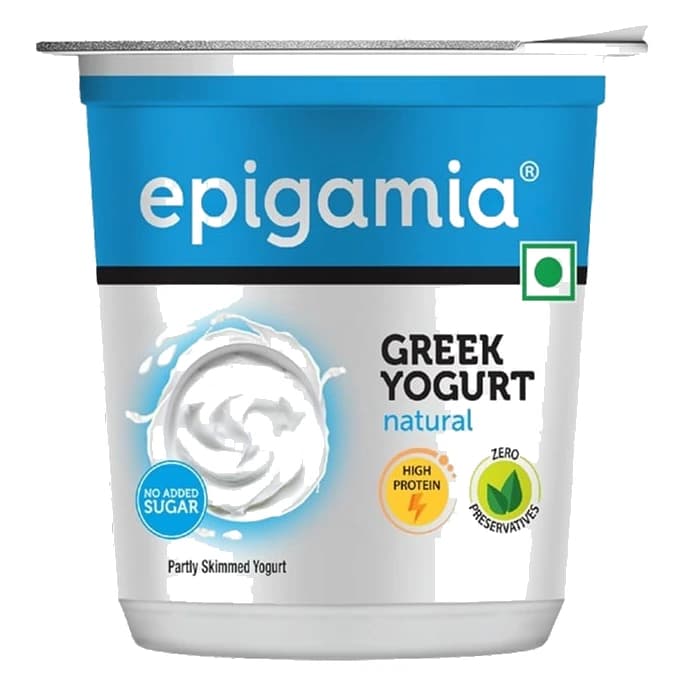
Epigamia Greek Yogurt Natural is a plain, partly skimmed Greek yogurt sold in a 400 g tub. It is built from pasteurized double toned milk, milk solids, pectin as a prebiotic and lactic acid cultures. No percentages are declared. It is bought as a snack, a yogurt bowl base or a smoothie ingredient, by people who want protein without sweetness.
Per 100 g you get 65 kcal, 7 g protein, 5 g sugar (all from the milk, since added sugar is 0 g), 2 g fat of which 1.4 g is saturated, and 61 mg sodium. Calcium is 198 mg, which the pack prints as 20% of the daily need. The pack's serve is 100 g, so one tub is four servings.
The front promises high protein, no added sugar and zero preservatives, and the ingredient list backs all three. The one loose end is a Real Fruit icon on a pack that lists no fruit. CleanPlate scores it BA1.
Why Epigamia Greek Yogurt Natural scores BA1
Nutrition is a B on 7 g protein and 198 mg calcium per 100 g. Ingredients are an A with a short, milk-based list, and risk is a 1 on 1.4 g saturated fat and 61 mg sodium.
Good nutrient density
- Protein
- 7 g
- Fibre
- Not declared
- Vitamins and minerals
- Calcium
- Energy
- 65 kcal
01 Nutrition density: why B
Protein is 7 g per 100 g and calcium is 198 mg, which the pack prints as 20% of the daily need. Energy is a light 65 kcal per 100 g, and most of the protein comes from milk solids.
The grade is held below the top by the modest protein level and by calcium being the only micronutrient declared. No fibre is declared.
Scored on protein, fibre and twelve vitamins and minerals, against the Codex and FSSAI "source" and "high" levels, per 100 g and per 100 kcal. Protein also has to supply at least 12.5% of the calories to count, and 25% for full credit.
Clean, minimally processed
- Base
- Pasteurized Double Toned Milk
- Sweeteners
- None added
- Additives
- 2
- Flagged
- None
02 Ingredient integrity: why A
The list is four items: double toned milk, milk solids, pectin and lactic acid cultures. No flavours, colours, sweeteners or hydrogenated fats appear, and the label claims hold.
Pectin as a prebiotic is the only additive that costs ingredient points, and only a small one. The lack of declared percentages is the other small gap.
Scored on how processed the ingredients are, which additives are used and why, and whether the label keeps its promises.
Clean
- Added sugar
- 0 g
- Sodium
- 61 mg
- Saturated fat
- 1.4 g
- Trans fat
- 0 g
03 Load risk: why 1
Saturated fat is 1.4 g per 100 g, against a high line of 5 g. Sodium is 61 mg per 100 g. Together they make up almost all of the small risk figure.
Added sugar is 0 g and trans fat is 0 g, so neither plays a part. The 5 g of total sugar comes from the milk.
Scored on free sugar, sodium, saturated fat and trans fat, each weighed by how strong the evidence of harm is.
Red flags
No major red flags on the label.
Green flags
- +Green flag: Source of protein (7g)
- +Green flag: No added sugar
- +Green flag: Low sodium
Does Epigamia Greek Yogurt Natural live up to its claims?
High protein, no added sugar and zero preservatives all hold on the numbers and the list. The Real Fruit icon is the odd one, because no fruit is listed.
- On the packHolds
“High Protein”
7 g protein per 100 g, from milk and milk solids, so 7 g in the 100 g serve.
- On the packHolds
“No Added Sugar”
Added sugar is 0 g. The 5 g of sugar per 100 g is natural milk sugar.
- On the packHolds
“Zero Preservatives”
No preservative is listed. Pectin and lactic acid cultures are not preservatives.
- On the packHolds
“Partly Skimmed Yogurt”
Made from double toned milk, with 2 g fat and 1.4 g saturated fat per 100 g.
- On the packBe careful
“Real Fruit”
The pack shows a Real Fruit icon, but the ingredient list has no fruit. For this plain yogurt it has nothing to refer to.
What's in Epigamia Greek Yogurt Natural?
Milk, milk solids, pectin and live cultures make up the whole list. Pectin is the only additive to note, and no percentages are declared.
The ingredient list, read for you
Pasteurized double toned milk leads, followed by milk solids, which add protein. Pectin is listed as a prebiotic and gives body, and the lactic acid cultures turn the milk into yogurt. The pack names them as S. thermophilus and L. bulgaricus. No percentages are declared for any ingredient.
Ingredients to watch
- PectinWorth watching
Listed as a prebiotic. It is the only additive that costs ingredient points, and only a small one.
- No percentages declaredWorth watching
The share of milk solids is not stated, so the protein source cannot be sized from the list.
- ProteinFine
7 g per 100 g, from milk and milk solids.
- Saturated fat and sodiumFine
1.4 g saturated fat and 61 mg sodium per 100 g, both low.
- CalciumFine
198 mg per 100 g, printed on the pack as 20% of the daily need.
What it doesn’t have
- No percentages are given for the milk solids or any other ingredient.
- No fibre or vitamins are declared, only calcium.
Who should eat Epigamia Greek Yogurt Natural?
An everyday food for most adults and children. Anyone who is lactose intolerant should check with their doctor, since it is a milk product with 5 g milk sugar per 100 g.
- Most adultsEveryday
65 kcal, 7 g protein and low saturated fat per 100 g.
- ChildrenEveryday
No added sugar, no sweetener or dye, and 198 mg calcium per 100 g.
- Heart healthEveryday
1.4 g saturated fat and 61 mg sodium per 100 g.
- Lactose intoleranceCheck with your doctor
It is a milk product, with 5 g milk sugar per 100 g.
Recipes with Epigamia Greek Yogurt Natural
Use it in a smoothie bowl, as a dip or dressing base, or as a marinade, as the pack suggests. Each use keeps the 7 g protein per 100 g.
Breakfast smoothie bowl
Blend with fruit and top with seeds, using the 7 g protein per 100 g as the base. The pack suggests this use.
Yogurt dip or dressing
Stir in salt, herbs and lemon for a salad dressing or snack dip. The yogurt itself adds only 61 mg sodium per 100 g.
Yogurt marinade
Mix with spices to marinate vegetables or paneer, as the pack suggests. Only 2 g fat per 100 g comes from the yogurt.
Epigamia Greek Yogurt Natural: common questions
What is the CleanPlate score of Epigamia Greek Yogurt Natural?
Epigamia Greek Yogurt Natural is a plain Greek yogurt made from milk, milk solids, pectin and live cultures, with no sugar added. It scores BA1: nutrition is solid on protein and calcium, ingredients are short and clean, and risk is minimal because saturated fat and sodium are low. Fine as an everyday tub, eaten plain or topped with fruit at home. Nutrition B, ingredients A, load risk 1; nutrition and ingredients run A to E, risk runs 1 to 5, and A and 1 are best.
How many calories and how much protein are in Epigamia Greek Yogurt Natural?
Per 100 g, Epigamia Greek Yogurt Natural has 65 kcal, 7 g protein, 5 g carbohydrate, 2 g fat and 1.4 g saturated fat. One serve (100 g, the pack's serve (a quarter of the tub)) has 65 kcal and 7 g protein.
What are the ingredients in Epigamia Greek Yogurt Natural?
4 ingredients, in label order: Pasteurized Double Toned Milk, Milk Solids, Prebiotic (Pectin), Permitted Lactic Acid Cultures.
Does Epigamia Greek Yogurt Natural live up to its claims?
5 claims checked: 4 hold, 1 needs care. "Real Fruit" needs care: The pack shows a Real Fruit icon, but the ingredient list has no fruit. For this plain yogurt it has nothing to refer to.
Who should limit Epigamia Greek Yogurt Natural?
Most adults: everyday. 65 kcal, 7 g protein and low saturated fat per 100 g. Children: everyday. No added sugar, no sweetener or dye, and 198 mg calcium per 100 g. Heart health: everyday. 1.4 g saturated fat and 61 mg sodium per 100 g.
How much sugar, salt and saturated fat does Epigamia Greek Yogurt Natural have?
Per 100 g, Epigamia Greek Yogurt Natural has 0 g added sugar, 61 mg sodium (about 0.2 g salt) and 1.4 g saturated fat. The FSSAI and UK FSA "high" lines are 10 g added sugar, 600 mg sodium and 5 g saturated fat per 100 g. It is under all three lines.
Last reviewed October 28, 2026. Scored with the CleanPlate method from the published label. Spotted a mistake? .
Better Curd & Yogurt
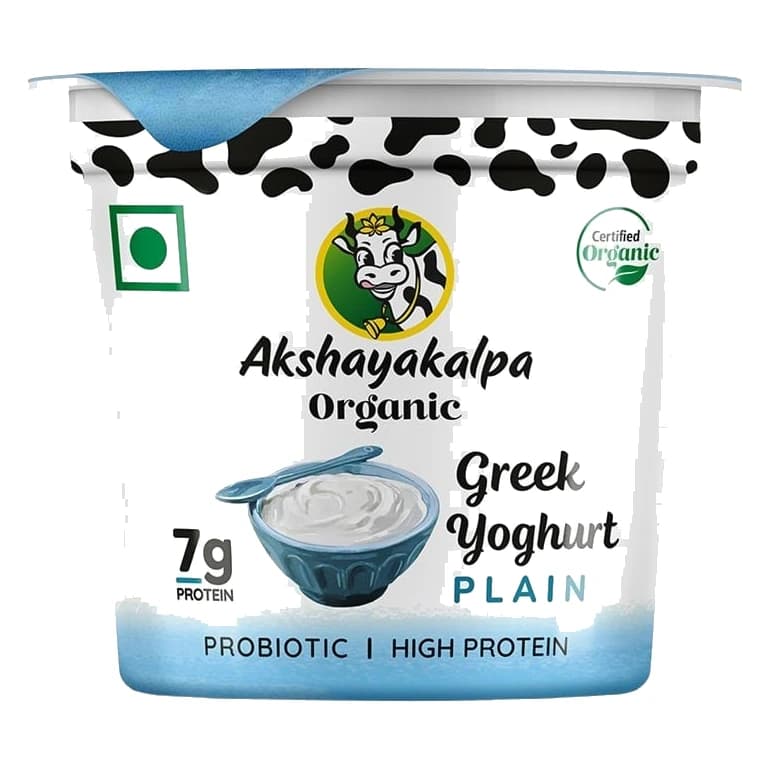
All Curd & Yogurt →- Akshayakalpa Organic Plain Greek Yogurt
- +Green flag: Source of protein (7.8g)
- +Green flag: No added sugar
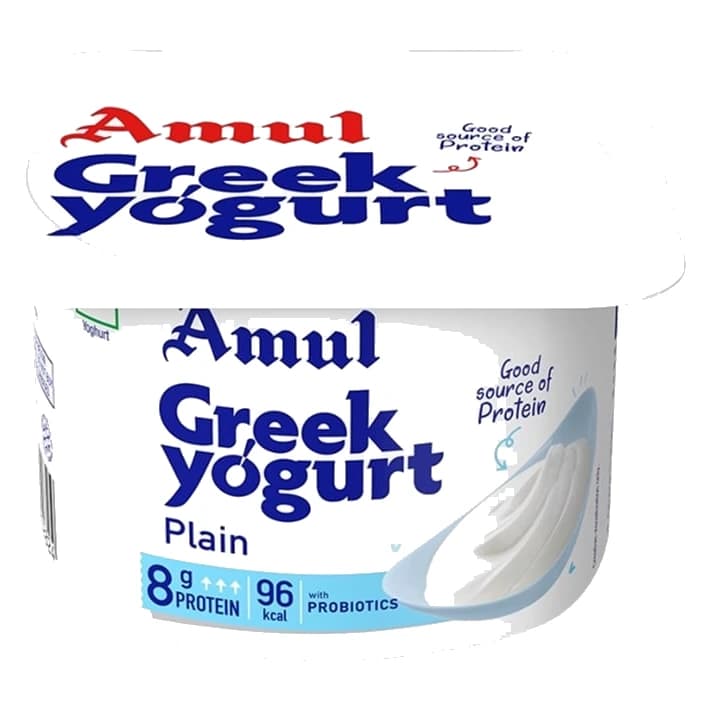
- Amul Greek Yogurt (Plain)
- +Green flag: Source of protein (8g)
- +Green flag: No added sugar
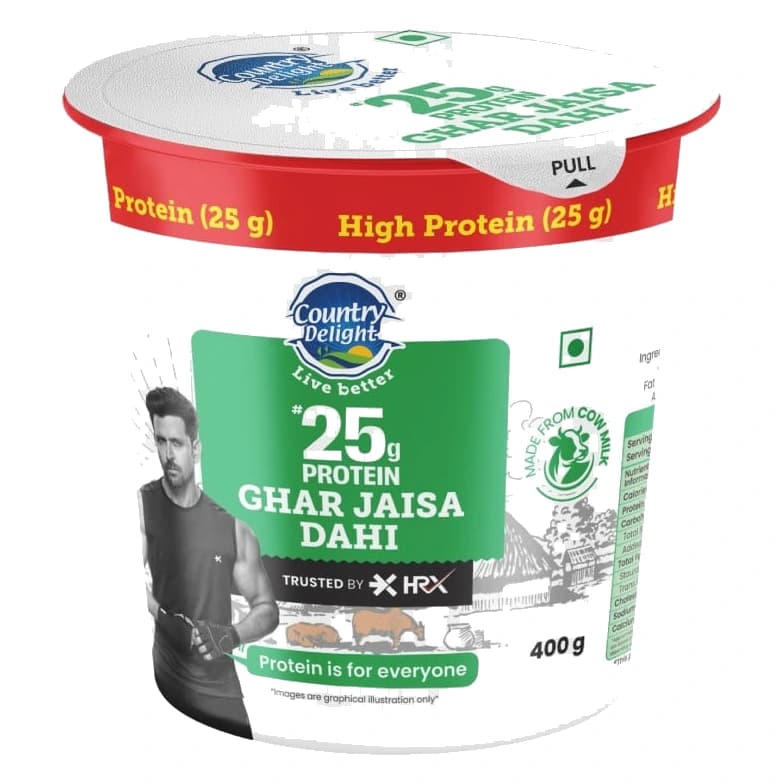
- Country Delight 25 g High Protein Curd (Ghar Jaisa Dahi)
- +Green flag: Source of protein (6.3g)
- +Green flag: No added sugar
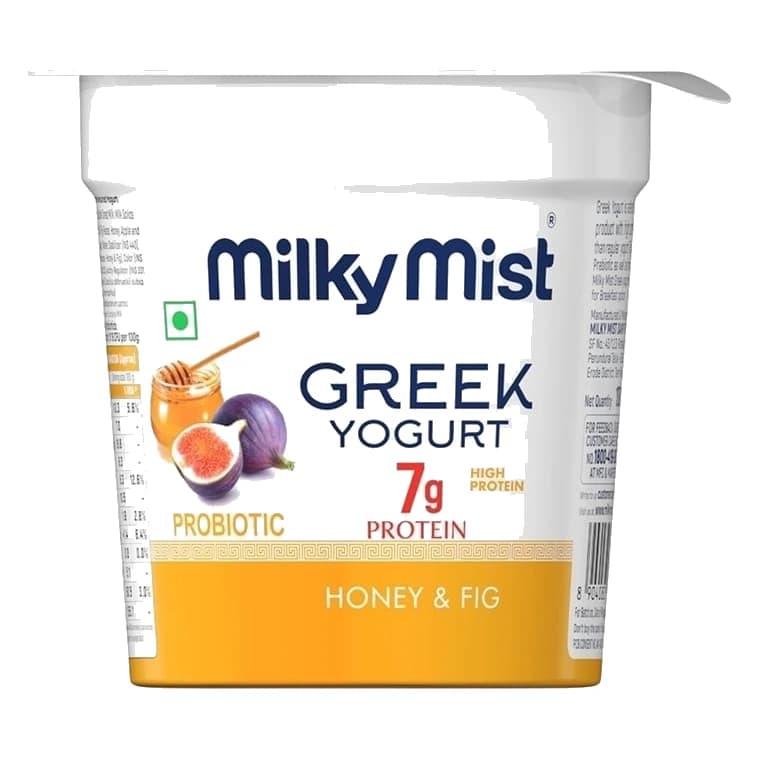
- Milky Mist Honey & Fig Greek Yogurt
- +Green flag: Source of protein (7g)
- +Green flag: High fibre (10.5g)