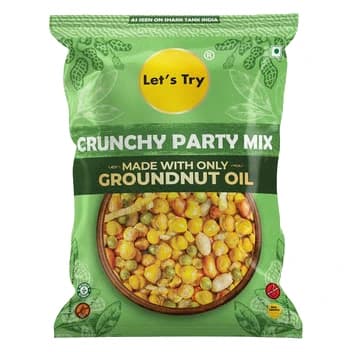
Let's Try Crunchy Party Mix
Red flags
- −Red flag: High sodium (632mg per 100g)
- −Red flag: High saturated fat (7.3g)
Green flags
- +Green flag: High protein (20.6g per 100g)
- +Green flag: High fibre (6.8g)
- +Green flag: No added sugar
Ingredients, decoded
10 listed- Chickpeas (22%)
- Peanuts (22%)
- Potato Flakes (15%)
- Split Chickpeas (Chana) (11%)
- Peas (11%)
- Edible Vegetable Oil (Refined Groundnut Oil)
- Gram Flour (Besan) (4%)
- Arrowroot Powder
- *Spices & Condiments (Iodised Salt, Yellow Chilli Powder, Black Salt, Dry Mango Powder (Amchoor), Cumin (Jeera), Red Chilli Powder, Black Pepper, Mint, Pomegranate Seeds, Asafoetida, Coriander Seeds, Ajwain, Muskmelon Seed, Black Cumin (Black Zeera), White Pepper, Dried Ginger (Sonth), Cassia, Cardamom Amomum, Cloves, Nutmeg, Mace, Caraway, Star Flower, Kachri, Ammonium Chloride (INS 510))
- Acidity Regulator (INS 330)
Our take
CleanPlate reviewFried chickpea and peanut mix with 632 mg sodium
Let's Try Crunchy Party Mix is chickpeas (22%), peanuts (22%), potato flakes (15%), split chickpeas (11%), peas (11%), refined groundnut oil, gram flour (4%), arrowroot powder and a long spice mix with iodised salt. The panel is printed per 100 g with a 10 g serve; net weight is not shown in the photos.
CleanPlate scores it CA4. The C for nutrition is middling: 20.6 g protein and 6.85 g fibre per 100 g. The A for ingredients reflects whole or lightly processed ingredients (led by chickpeas, peanuts and potato flakes), with additives that cost points: ammonium chloride. The 4 for risk comes mainly from sodium (632 mg per 100 g) and calories (543 kcal per 100 g).
Claims vs reality
What the pack says, checked against the ingredient list and nutrition panel.
- On the packHolds
“Made with only groundnut oil”
The list names one added oil, refined groundnut oil, and no other oil is listed.
- On the packBe careful
“As seen on Shark Tank India”
A TV appearance says nothing about the nutrition of the pack.
How CA4 breaks down
Each grade is scored on its own. Here are the label numbers behind each one, per 100 g.
Adequate nutrient density
- Protein
- 20.6 g
- Fibre
- 6.8 g
- Vitamins and minerals
- None declared
- Energy
- 543 kcal
Scored on protein, fibre and twelve vitamins and minerals, against the Codex and FSSAI "source" and "high" levels, per 100 g and per 100 kcal.
Clean, minimally processed
- Base
- Chickpeas
- Main fat
- Edible Vegetable Oil
- Sweeteners
- None added
- Additives
- 2
- Flagged
- None
Scored on how processed the ingredients are, which additives are used and why, and whether the label keeps its promises.
High risk
- Added sugar
- 0 g
- Sodium
- 632 mg
- Saturated fat
- 7.3 g
- Trans fat
- 0 g
Scored on free sugar, sodium, saturated fat and trans fat, each weighed by how strong the evidence of harm is.
A closer look
Does the label add up?
Chickpeas (22%), peanuts (22%), potato flakes (15%), split chickpeas (11%), peas (11%), refined groundnut oil, gram flour (4%), arrowroot powder, spices and condiments (iodised salt and 24 spices), acidity regulator (INS 330). The spice list includes ammonium chloride (INS 510).
Per 100 g: 543 kcal, 32 g fat of which 7.32 g saturated, 5.31 g sugar of which 0 g added, 6.85 g fibre, 20.6 g protein, 632 mg sodium. The panel is per 100 g as printed and matches its 10 g column; the Atwater sum is close to the declared energy. Added sugar and trans fat are both printed as 0. An older capture of this product showed a different panel (525 kcal, 916 mg sodium, no percentages); the pack shown in your photos is the one scored.
Ingredients to watch
- SodiumConcern
632 mg per 100 g, just over the 600 mg high line.
- Saturated fatConcern
7.3 g per 100 g, above the 5 g high line, from the peanuts and the frying oil.
- CaloriesConcern
542.7 kcal per 100 g, about twice the 275 kcal density line.
- FibreFine
6.85 g per 100 g, from the chickpeas, peas and peanuts.
Common misconceptions
Myth: "Made with groundnut oil means it is light"
The oil is groundnut oil, but the mix is still fried: 32 g of fat and 542.7 kcal per 100 g.
Myth: "A chickpea mix is a protein snack"
It has 20.7 g protein per 100 g, but carries 632 mg sodium and 7.3 g saturated fat alongside it.
How often, and how
- Healthy adultsA few times a week, small portion
- ChildrenOccasionally
- Diabetes or prediabetesSmall amounts, watch the sodium
Smarter ways to eat it
Keep to a 10 g serve
A printed 10 g serve is about 54 kcal and 63 mg of sodium.
Mix with plain nuts
Stretch a handful of this mix with unsalted roasted nuts to cut the salt per bite.
Common questions
Is Let's Try Crunchy Party Mix healthy?
Let's Try Crunchy Party Mix scores CA4 (Fair) on CleanPlate, which makes it an occasional-use product, where the concerns start to outweigh the positives. The main concerns are: High sodium (632mg per 100g); High saturated fat (7.3g). On the plus side: High protein (20.6g per 100g); High fibre (6.8g); No added sugar.
What does the CA4 score mean?
The first letter (C) grades nutritional value: adequate nutrient density. The second letter (A) grades ingredient and label integrity: clean, minimally processed. The number (4) grades risk nutrients (sugar, sodium, saturated fat): high risk.
Last reviewed October 19, 2026. Scored with the CleanPlate method from the published label.
Better Nuts & Trail Mixes
All 17 →- Tata Sampann Premium Pumpkin Seeds
- −Red flag: High saturated fat (8.8g)
- +Green flag: High protein (33.9g per 100g)
- Bolas Royal Almonds
- +Green flag: High protein (21.4g per 100g)
- +Green flag: High fibre (9.9g)
- Farmley Classic Delight Date Bites
- −Red flag: High sugar (31.3g per 100g)
- +Green flag: High protein (11.6g per 100g)
- AMAYU Dry Fruits & Seeds Mix
- −Red flag: High saturated fat (6.7g)
- +Green flag: High protein (29.6g per 100g)