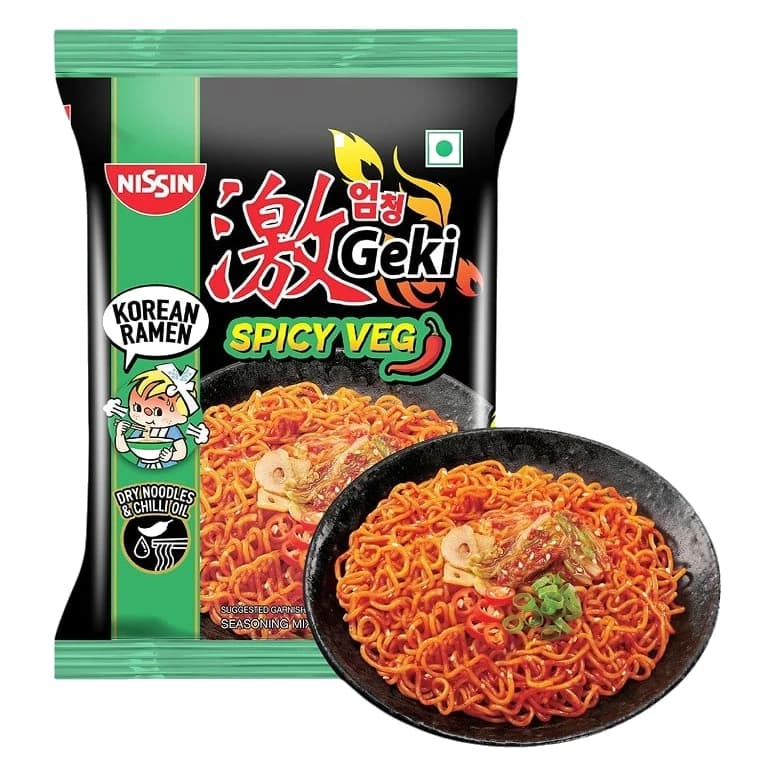
Nissin Geki Spicy Veg Korean Ramen Noodles
Red flags
- −Red flag: Contains TBHQ
- −Red flag: High saturated fat (6.2g)
- −Red flag: Palm oil listed
Green flags
- +Green flag: Source of protein (9g)
Ingredients, decoded
3 listed- Noodles (Refined Wheat Flour (Maida), Edible Vegetable Oil (Palm Oil), Tapioca Starch, Iodised Salt, Acidity Regulators (INS 451(i) & INS 500(i)), Thickener (INS 412), Turmeric Powder, Antioxidant (INS 319))
- Seasoning Mix (Sugar, Hydrolysed Vegetable Protein (Soya), Soya Sauce Powder, Roasted Sesame Seeds, Garlic Powder, Iodised Salt, Flavour Enhancers (INS 631 & INS 627), Mixed Spices 1.43% (Ginger, Black Pepper, Cumin, Turmeric & Coriander), Onion Powder, Oleoresin Capsicum, Acidity Regulator (INS 330), Tomato Powder, Anticaking Agent (INS 551))
- Seasoning Oil (Edible Vegetable Oil (Palmolein Oil, Soya Bean Oil & Chilli Seed Oil), Colour (INS 160c(i)), Oleoresin Rosemary)
Our take
CleanPlate reviewKorean ramen with seasoning oil, no sodium line
Nissin Geki Spicy Veg is an 80 g Korean-style packet: fried noodles (82.5%) with a seasoning mix (10%) and a seasoning oil sachet (7.5%). The panel is printed per 100 g.
CleanPlate scores it EC3. The E for nutrition is low: almost no credited protein, fibre or micronutrients per 100 g; its 9.01 g of protein earns no credit because it is under 2.75 g per 100 kcal. The C for ingredients reflects mostly refined or industrial ingredients (led by noodles, sugar and hydrolysed vegetable protein), with additives that cost points: triphosphates, TBHQ, guar gum and silicon dioxide. The 3 for risk comes mainly from saturated fat (6.22 g per 100 g) and calories (455 kcal per 100 g). The grade is held at 3 because the panel prints no sodium line.
Claims vs reality
What the pack says, checked against the ingredient list and nutrition panel.
- On the packHolds
“Spicy Veg”
A green veg mark is on the front and the seasoning has no animal ingredient.
- On the packHolds
“Dry Noodles & Chilli Oil”
A seasoning oil sachet of 7.5% is in the pack.
- On the packBe careful
“Contains permitted natural colour [160c(i)] & added natural flavour”
The list shows paprika extract colour and hydrolysed soya protein with flavour enhancers.
How EC3 breaks down
Each grade is scored on its own. Here are the label numbers behind each one, per 100 g.
Very low nutrient density
- Protein
- 9 g
- Fibre
- Not declared
- Vitamins and minerals
- None declared
- Energy
- 455 kcal
Scored on protein, fibre and twelve vitamins and minerals, against the Codex and FSSAI "source" and "high" levels, per 100 g and per 100 kcal.
Mixed processing and additives
- Base
- Noodles, Edible Vegetable Oil...
- Main fat
- Noodles, Edible Vegetab...
- Sweeteners
- Seasoning Mix, So...
- Additives
- 7
- Flagged
- TBHQ, Palmolein
Scored on how processed the ingredients are, which additives are used and why, and whether the label keeps its promises.
Moderate risk
- Total sugar
- 6.4 g
- Saturated fat
- 6.2 g
- Trans fat
- 0 g
Scored on free sugar, sodium, saturated fat and trans fat, each weighed by how strong the evidence of harm is.
A closer look
Does the label add up?
Noodles (82.50%): refined wheat flour (maida), edible vegetable oil (palm), tapioca starch, iodised salt, acidity regulators, thickener (412), turmeric powder and antioxidant (319). Seasoning mix (10%): sugar, hydrolysed vegetable protein (soya), soya sauce powder, roasted sesame, garlic powder, salt, flavour enhancers (631, 627), mixed spices 1.43% and more. Seasoning oil (7.5%).
Per 100 g: 455 kcal, 17.1 g fat of which 6.22 g saturated, 6.42 g sugar, 9.01 g protein. The panel prints no sodium line, so sodium is not credited as a risk and the score is provisional. Atwater energy matches the declared 454.6 kcal. The pack prints no added sugar line.
Ingredients to watch
- Sodium not printedWorth watching
No sodium line on the pack, so the risk grade is held at 3.
- AdditivesWorth watching
TBHQ, triphosphates, guar gum, silicon dioxide and flavour enhancers cost points.
- Refined wheatWorth watching
Maida is the main ingredient.
- ProteinWorth watching
9 g per 100 g, but it earns no credit at this energy.
Common misconceptions
Myth: "Korean ramen is a healthier style of noodle"
This one is fried in palm oil like the Indian packs.
Myth: "Veg means light"
455 kcal and 17 g fat per 100 g.
How often, and how
- Healthy adultsOccasionally
- ChildrenRarely
- Diabetes or prediabetesLimit
Smarter ways to eat it
Add vegetables and an egg
Brings fibre and protein the pack does not.
Use half the oil sachet
Saves a few grams of fat.
Common questions
Is Nissin Geki Spicy Veg Korean Ramen Noodles healthy?
Nissin Geki Spicy Veg Korean Ramen Noodles scores EC3 (Poor) on CleanPlate, which makes it best kept as a rare treat rather than a regular buy. The main concerns are: Contains TBHQ; High saturated fat (6.2g); Palm oil listed. On the plus side: Source of protein (9g).
What does the EC3 score mean?
The first letter (E) grades nutritional value: very low nutrient density. The second letter (C) grades ingredient and label integrity: mixed processing and additives. The number (3) grades risk nutrients (sugar, sodium, saturated fat): moderate risk.
Which ingredients in Nissin Geki Spicy Veg Korean Ramen Noodles should I watch?
Noodles (Refined Wheat Flour (Maida), Edible Vegetable Oil (Palm Oil), Tapioca Starch, Iodised Salt, Acidity Regulators (INS 451(i) & INS 500(i)), Thickener (INS 412), Turmeric Powder, Antioxidant (INS 319)) (TBHQ), Seasoning Oil (Edible Vegetable Oil (Palmolein Oil, Soya Bean Oil & Chilli Seed Oil), Colour (INS 160c(i)), Oleoresin Rosemary) (Palmolein).
Last reviewed October 19, 2026. Scored with the CleanPlate method from the published label.
Better Instant Noodles
All 100 →- Slurrp Farm Mild Masala Millet Hakka Noodles
- −Red flag: Contains Maltodextrin
- +Green flag: Source of protein (9.3g)
- Slurrp Farm Mild Masala Millet Noodles
- +Green flag: Source of protein (10.6g)
- +Green flag: High fibre (10.5g)
- Slurrp Farm Classic Masala Foxtail Millet Noodles
- +Green flag: Source of protein (10.6g)
- +Green flag: High fibre (10.5g)
- Slurrp Farm Classic Masala Millet Hakka Noodles
- −Red flag: Contains Maltodextrin
- +Green flag: Source of protein (9.3g)