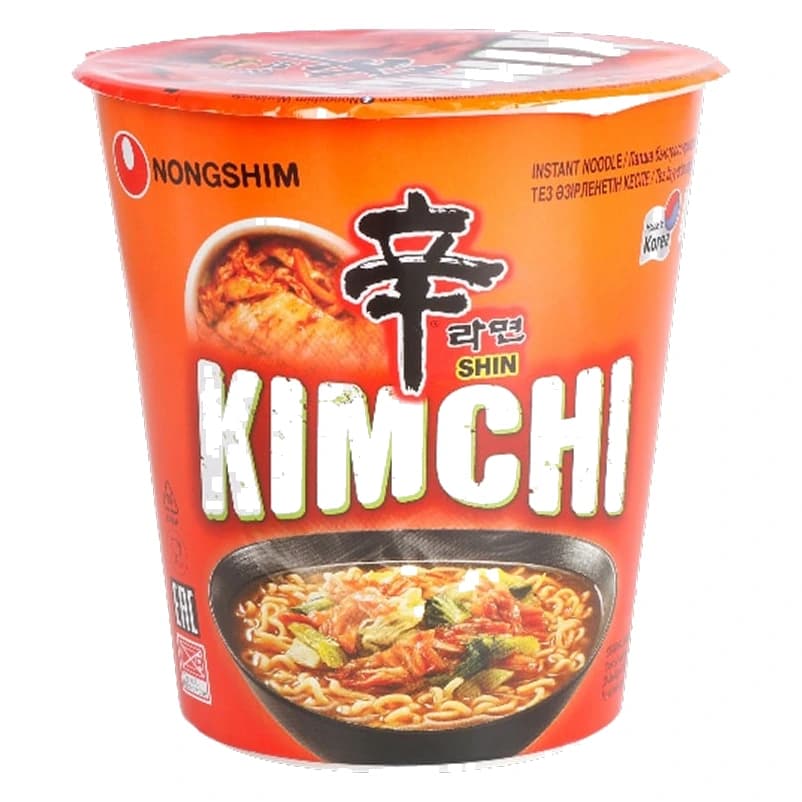
Nongshim Kimchi Shin Noodles
Red flags
- −Red flag: High sodium (2350mg per 100g)
- −Red flag: High saturated fat (7.5g)
- −Red flag: Palm oil listed
- −Red flag: Contains Monosodium Glutamate (MSG)
Green flags
- +Green flag: Source of protein (8.2g)
Ingredients, decoded
3 listed- Noodles (Refined wheat flour, Potato starch, Palm oil, Salt, Mineral salts (INS339(ii), INS452(i), INS500(i), INS501(i)), Colour (INS160a (i)), Green tea extract)
- Soup base (Seasoning (hydrolyzed vegetable protein (soy, wheat), maltodextrin, salt, yeast extract, soybean, refined wheat flour, soy sauce, vegetable oil (soy), garlic, onion), Salt, Sugar, Spices (maltodextrin, garlic, glucose, black pepper, salt, red pepper, corn flour, chili extract, vegetable oil, soy), Flavor enhancers (INS621, INS627, INS631), Thickeners (INS412), Acidifier (INS330), Colour (INS150c))
- Flakes (Dried kimchi flake (Chinese cabbage (40.73%), garlic (2.61%), red pepper (2.61%), ginger (0.27%)), Dried cabbage (37.5%), Dried bok choy (12.5%))
Our take
CleanPlate reviewKimchi-flavoured spicy noodle soup, very high sodium
Nongshim Kimchi Shin Noodles are instant noodles of refined wheat flour, potato starch and palm oil, with a soup base of seasoning, salt and spices and flakes of dried kimchi, cabbage and bok choy.
CleanPlate scores it EC5. The E for nutrition is low: almost no credited protein, fibre or micronutrients per 100 g; its 8.2 g of protein earns no credit because it is under 2.75 g per 100 kcal. The C for ingredients reflects mostly refined or industrial ingredients (led by noodles, seasoning and sugar), with additives that cost points: caramel colour, sodium phosphates, polyphosphates and beta-carotene. The 5 for risk comes mainly from sodium (2350 mg per 100 g) and saturated fat (7.5 g per 100 g).
How EC5 breaks down
Each grade is scored on its own. Here are the label numbers behind each one, per 100 g.
Very low nutrient density
- Protein
- 8.2 g
- Fibre
- Not declared
- Vitamins and minerals
- None declared
- Energy
- 436 kcal
Scored on protein, fibre and twelve vitamins and minerals, against the Codex and FSSAI "source" and "high" levels, per 100 g and per 100 kcal.
Mixed processing and additives
- Base
- Noodles, INS452, INS500, INS5...
- Main fat
- Noodles, INS452, INS500...
- Sweeteners
- Soup base, maltod...
- Additives
- 7
- Flagged
- Palm oil, Monosodium Glutamate (MSG)
Scored on how processed the ingredients are, which additives are used and why, and whether the label keeps its promises.
Very high risk
- Added sugar
- 2.6 g
- Sodium
- 2350 mg
- Saturated fat
- 7.5 g
- Trans fat
- 0 g
Scored on free sugar, sodium, saturated fat and trans fat, each weighed by how strong the evidence of harm is.
A closer look
Does the label add up?
Noodles (refined wheat flour, potato starch, palm oil, salt, mineral salts INS 339(ii), 452(i), 500(i), 501(i), colour INS 160a(i), green tea extract); soup base (seasoning with hydrolyzed vegetable protein, maltodextrin, salt, yeast extract, soybean, wheat flour, soy sauce, vegetable oil, garlic and onion; salt, sugar, spices, flavor enhancers INS 621, 627, 631, thickener INS 412, acidifier INS 330, colour INS 150c); flakes (dried kimchi flake with Chinese cabbage 40.73%, garlic 2.61%, red pepper 2.61% and ginger 0.27%; dried cabbage 37.5%; dried bok choy 12.5%).
Per 100 g: 436 kcal, 15 g fat of which 7.5 g saturated, 4.8 g sugar of which 2.6 g added, 8.2 g protein, 2350 mg sodium. The panel is printed per 100 g (436 kcal, sodium 2,350 mg) and matches an earlier read; an earlier US-style per 75 g panel was replaced. The flake percentages add to 96.2 and are shares of the flakes sachet; about 3% of the pack is assumed for the flakes and about 14% for the soup base, so the score is provisional. Net 75 g is from the earlier record and is not on the photos.
Ingredients to watch
- SodiumConcern
2,350 mg per 100 g, about 88% of the daily reference value per serve on the pack panel.
- Saturated fatConcern
7.5 g per 100 g, mostly from palm oil.
- AdditivesWorth watching
Caramel III, synthetic beta-carotene, two phosphates, guar gum and flavour enhancers cost 18 label points.
- CaloriesWorth watching
436 kcal per 100 g.
Common misconceptions
Myth: "Kimchi noodles are a fermented, gut-friendly food"
The flakes are dried kimchi, a small share of the pack, and most of the pack is noodles with a salty seasoning.
Myth: "The whole soup packet is needed for flavour"
Sodium is 2,350 mg per 100 g, and the soup base is where most of it sits.
How often, and how
- Healthy adultsRarely
- ChildrenRarely
- Diabetes or prediabetesLimit strictly
Smarter ways to eat it
Use half the soup base
It cuts most of the sodium.
Add an egg and vegetables
They add the protein and fibre the pack lacks.
Common questions
Is Nongshim Kimchi Shin Noodles healthy?
Nongshim Kimchi Shin Noodles scores EC5 (Very Poor) on CleanPlate, which makes it one of the weakest products we've rated and worth swapping out. The main concerns are: High sodium (2350mg per 100g); High saturated fat (7.5g); Palm oil listed; Contains Monosodium Glutamate (MSG). On the plus side: Source of protein (8.2g).
What does the EC5 score mean?
The first letter (E) grades nutritional value: very low nutrient density. The second letter (C) grades ingredient and label integrity: mixed processing and additives. The number (5) grades risk nutrients (sugar, sodium, saturated fat): very high risk.
Which ingredients in Nongshim Kimchi Shin Noodles should I watch?
Noodles (Refined wheat flour, Potato starch, Palm oil, Salt, Mineral salts (INS339(ii), INS452(i), INS500(i), INS501(i)), Colour (INS160a (i)), Green tea extract) (Palm oil), Soup base (Seasoning (hydrolyzed vegetable protein (soy, wheat), maltodextrin, salt, yeast extract, soybean, refined wheat flour, soy sauce, vegetable oil (soy), garlic, onion), Salt, Sugar, Spices (maltodextrin, garlic, glucose, black pepper, salt, red pepper, corn flour, chili extract, vegetable oil, soy), Flavor enhancers (INS621, INS627, INS631), Thickeners (INS412), Acidifier (INS330), Colour (INS150c)) (Monosodium Glutamate (MSG)).
Last reviewed October 19, 2026. Scored with the CleanPlate method from the published label.
Better Instant Noodles
All 107 →- Slurrp Farm Mild Masala Millet Hakka Noodles
- −Red flag: Contains Maltodextrin
- +Green flag: Source of protein (9.3g)
- Slurrp Farm Mild Masala Millet Noodles
- +Green flag: Source of protein (10.6g)
- +Green flag: High fibre (10.5g)
- Slurrp Farm Classic Masala Foxtail Millet Noodles
- +Green flag: Source of protein (10.6g)
- +Green flag: High fibre (10.5g)
- Slurrp Farm Classic Masala Millet Hakka Noodles
- −Red flag: Contains Maltodextrin
- +Green flag: Source of protein (9.3g)