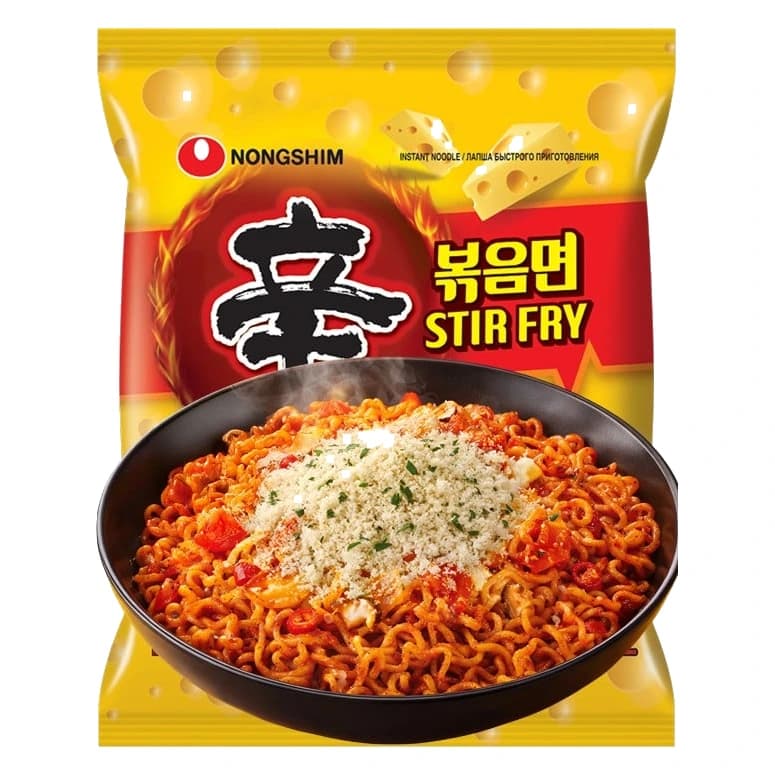
Nongshim Stir Fry Shin Ramyun Noodles with Cheese
Red flags
- −Red flag: High sodium (920mg per 100g)
- −Red flag: High saturated fat (6.6g)
- −Red flag: Refined flour (maida) base
- −Red flag: Palm oil listed
Green flags
- +Green flag: Source of protein (8g)
Ingredients, decoded
21 listed- Noodles: Refined wheat flour
- Potato starch
- Palm oil
- Salt
- Mineral salts (INS 501(i), INS 500(i), INS 339(ii))
- Emulsifier (INS 322 (soy))
- Colour (INS 101)
- Seasoning sauce: Seasoning (Hydrolyzed vegetable protein (soy), Rapeseed oil, Yeast extract, Maltodextrin, Tomato paste, Soy sauce, Sugar, Salt, Mustard)
- Sugar
- Spices (Red chili pepper, Garlic, Onion, Black pepper)
- Glucose
- Salt
- Flavour enhancer (INS 621, INS 631)
- Acid (INS 330)
- Seasoning powder: Seasoning (Skim milk powder, Wheat flour, Dairy cream, Whey powder, Lactose, Sugar, Cheese, Coconut oil, Glucose)
- Sugar
- Flavour enhancer (INS 621)
- Rice flour
- Anticaking agent (INS 551)
- Parsley
- Colour (INS 101)
Our take
CleanPlate reviewStir-fry cheese noodles: 920 mg sodium, cheese unquantified
Nongshim Stir Fry Shin Ramyun with Cheese is a 136 g pack of Korean stir-fry noodles: fried noodles (about 105 g) with a spicy seasoning sauce and a cheese-flavoured seasoning powder. The panel is printed per 100 g of dry product.
CleanPlate scores it EC4. The E for nutrition is low: almost no credited protein, fibre or micronutrients per 100 g; its 8 g of protein earns no credit because it is under 2.75 g per 100 kcal. The C for ingredients reflects mostly refined or industrial ingredients (led by refined wheat flour, potato starch and palm oil), with additives that cost points: sodium phosphates, riboflavin, silicon dioxide and a flavour enhancer. The 4 for risk comes mainly from sodium (920 mg per 100 g) and saturated fat (6.6 g per 100 g).
Claims vs reality
What the pack says, checked against the ingredient list and nutrition panel.
- On the packPartly true
“with CHEESE”
The seasoning powder lists skim milk powder, whey, dairy cream and cheese, with no percentage.
- On the packHolds
“Stir Fry”
A dry, sauce-coated noodle, as the cooking steps describe.
How EC4 breaks down
Each grade is scored on its own. Here are the label numbers behind each one, per 100 g.
Very low nutrient density
- Protein
- 8 g
- Fibre
- Not declared
- Vitamins and minerals
- None declared
- Energy
- 418 kcal
Scored on protein, fibre and twelve vitamins and minerals, against the Codex and FSSAI "source" and "high" levels, per 100 g and per 100 kcal.
Mixed processing and additives
- Base
- Noodles: Refined wheat flour
- Main fat
- Palm oil
- Sweeteners
- 4 types
- Additives
- 6
- Flagged
- 4 ingredients
Scored on how processed the ingredients are, which additives are used and why, and whether the label keeps its promises.
High risk
- Added sugar
- 5.6 g
- Sodium
- 920 mg
- Saturated fat
- 6.6 g
- Trans fat
- 0 g
Scored on free sugar, sodium, saturated fat and trans fat, each weighed by how strong the evidence of harm is.
A closer look
Does the label add up?
Noodles: refined wheat flour, potato starch, palm oil, salt, mineral salts (501(i), 500(i), 339(ii)), emulsifier (322), colour (101). Seasoning sauce: hydrolysed vegetable protein (soy), rapeseed oil, yeast extract, maltodextrin, tomato paste, soy sauce, sugar, salt, mustard, spices, glucose, flavour enhancers (621, 631), acid (330). Seasoning powder: skim milk powder, wheat flour, dairy cream, whey powder, lactose, sugar, cheese, coconut oil, glucose, flavour enhancer (621), rice flour, anticaking agent (551), parsley, colour (101).
Per 100 g: 418 kcal, 14 g fat of which 6.6 g saturated, 6.2 g sugar of which 5.6 g added, 8 g protein, 920 mg sodium. Atwater energy equals the declared 418 kcal. The cheese percentage is not declared, which costs 2 points under FSSAI Regulation 5(2)(g). The pack states added monosodium glutamate; those lines on the back were partly blurred. No veg mark was seen.
Ingredients to watch
- SodiumConcern
920 mg per 100 g, about 1,250 mg a pack.
- Cheese shareWorth watching
Named on the front, no percentage declared.
- AdditivesWorth watching
Sodium phosphate, silicon dioxide, riboflavin and flavour enhancers cost points.
- Saturated fatWorth watching
6.6 g per 100 g.
Common misconceptions
Myth: "With cheese means cheese noodles"
Cheese is one of several dairy items in a small seasoning powder.
Myth: "Stir fry means less oil"
The noodles are fried: 14 g fat per 100 g.
How often, and how
- Healthy adultsOccasionally
- ChildrenRarely
- Diabetes or prediabetesLimit
Smarter ways to eat it
Add an egg and greens
Puts protein and fibre into the bowl.
Use half the sauce
Cuts the sodium most.
Common questions
Is Nongshim Stir Fry Shin Ramyun Noodles with Cheese healthy?
Nongshim Stir Fry Shin Ramyun Noodles with Cheese scores EC4 (Poor) on CleanPlate, which makes it best kept as a rare treat rather than a regular buy. The main concerns are: High sodium (920mg per 100g); High saturated fat (6.6g); Refined flour (maida) base; Palm oil listed. On the plus side: Source of protein (8g).
What does the EC4 score mean?
The first letter (E) grades nutritional value: very low nutrient density. The second letter (C) grades ingredient and label integrity: mixed processing and additives. The number (4) grades risk nutrients (sugar, sodium, saturated fat): high risk.
Which ingredients in Nongshim Stir Fry Shin Ramyun Noodles with Cheese should I watch?
Noodles: Refined wheat flour (Refined Wheat Flour (Maida)), Palm oil (Palm oil), Seasoning sauce: Seasoning (Hydrolyzed vegetable protein (soy), Rapeseed oil, Yeast extract, Maltodextrin, Tomato paste, Soy sauce, Sugar, Salt, Mustard) (Maltodextrin), Flavour enhancer (INS 621, INS 631) (Monosodium Glutamate (MSG)), Flavour enhancer (INS 621) (Monosodium Glutamate (MSG)).
Last reviewed October 19, 2026. Scored with the CleanPlate method from the published label.
Better Instant Noodles
All 100 →- Slurrp Farm Mild Masala Millet Hakka Noodles
- −Red flag: Contains Maltodextrin
- +Green flag: Source of protein (9.3g)
- Slurrp Farm Mild Masala Millet Noodles
- +Green flag: Source of protein (10.6g)
- +Green flag: High fibre (10.5g)
- Slurrp Farm Classic Masala Foxtail Millet Noodles
- +Green flag: Source of protein (10.6g)
- +Green flag: High fibre (10.5g)
- Slurrp Farm Classic Masala Millet Hakka Noodles
- −Red flag: Contains Maltodextrin
- +Green flag: Source of protein (9.3g)