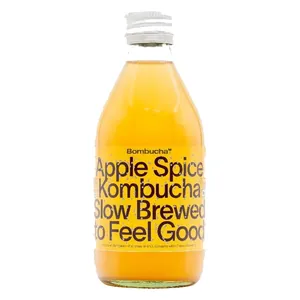
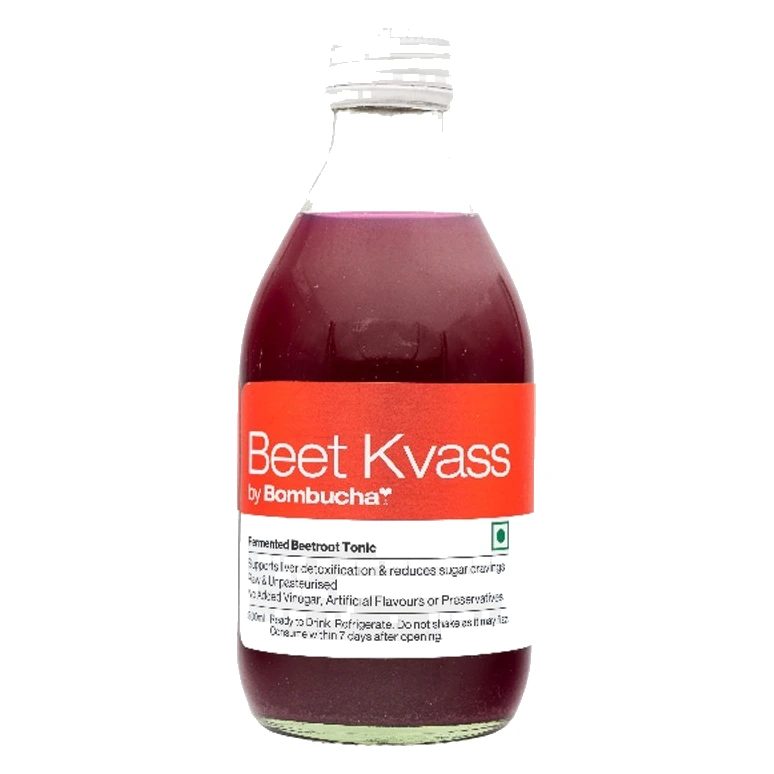
Bombucha Beet Kvass Drink
Published · Last updated
A realistic serve of Bombucha Beet Kvass Drink (100 ml, one of 3 servings per bottle) has 7 kcal, 0.3 g protein, 1.3 g carbohydrate, 0.1 g fat, 0 g added sugar and 137 mg sodium. Per 100 ml it has 7 kcal, 0.26 g protein, 1.3 g carbohydrate, 0.1 g fat, 0 g added sugar and 137 mg sodium.
Bombucha Beet Kvass is a fermented beetroot drink, brewed with vegetables, spices and salt and sold as a tonic. It scores EA2: nutrition is low because it carries almost no protein, ingredients are clean with no additives, and risk is low, with salt the main factor. A small glass suits most people, but the detox promises go beyond the label.
Ingredients, decoded
19 listed- Water
- Sugar*
- Beetroot
- Carrot
- Ginger
- Garlic
- Onion
- Cabbage
- Juniper Berries
- Mustard Seeds
- Sea Salt
- Dill Leaves
- Cloves
- Black Pepper
- Cumin
- Coriander Seeds
- Fenugreek Seeds
- Red Chillies
- Bay Leaf
<½ teaspoon of sugar in every 100 ml · 1.1 g total sugar, 5 g a teaspoon
Score and nutrition facts for Bombucha Beet Kvass Drink:
| Energy | 7.1 kcal |
|---|---|
| Protein | 0.26 g |
| Carbohydrates | 1.3 g |
| Total sugars | 1.1 g |
| Added sugars | 0 g |
| Total fat | 0.1 g |
| Sodium | 136.9 mg |
Think this score is wrong?
Why Bombucha Beet Kvass Drink scores EA2
Nutrition is an E because 100 ml has 0.26 g protein and no declared vitamins or minerals. Ingredients are an A with no additives, and risk is a 2, driven mostly by 136.9 mg sodium per 100 ml.
Very low nutrient density
- Protein
- 0.26 g
- Fibre
- Not declared
- Vitamins and minerals
- None declared
- Energy
- 7 kcal
01 Nutrition density: why E
Protein is 0.26 g per 100 ml and energy is 7.1 kcal, so there is almost nothing for the nutrition grade to count. The biggest protein contributor is carrot, at a very small amount.
No vitamins, minerals or fibre are declared on the panel, so nothing else adds to the grade. A drink this light cannot earn much on this axis.
Scored on protein, fibre and twelve vitamins and minerals, against the Codex and FSSAI "source" and "high" levels, per 100 g and per 100 kcal. Protein also has to supply at least 12.5% of the calories to count, and 25% for full credit.
Clean, minimally processed
- Base
- Water
- Sweeteners
- Sugar*
- Additives
- 0
- Flagged
- None
02 Ingredient integrity: why A
The list is water, sugar, beetroot, carrot, ginger, garlic, onion, cabbage and a set of whole spices. No additive, sweetener, colour, flavour or preservative is listed, so nothing costs ingredient points.
No label promise is hollow, so no label points are lost. Ingredient percentages are not declared, which is the one gap in an otherwise clean list.
Scored on how processed the ingredients are, which additives are used and why, and whether the label keeps its promises.
Low risk
- Added sugar
- 0 g
- Sodium
- 136.9 mg
03 Load risk: why 2
Sodium is the main driver: 136.9 mg per 100 ml, which is more than half of the risk number. A full 300 ml bottle has about 411 mg.
Sugar adds a smaller part. The panel prints 0 g added sugar, but sugar is on the ingredient list, so the 1.07 g of total sugar is counted. Saturated fat and energy play no part at 7.1 kcal per 100 ml.
Scored on free sugar, sodium, saturated fat and trans fat, each weighed by how strong the evidence of harm is.
Red flags
No major red flags on the label.
Green flags
- +Green flag: No added sugar
- +Green flag: No additives
Does Bombucha Beet Kvass Drink live up to its claims?
The low-sugar and no-preservative claims hold, at 1.07 g sugar per 100 ml. The liver detox and sugar-craving promises have nothing on the panel behind them.
- On the packBe careful
“Supports liver detoxification & reduces sugar cravings”
The panel shows 7.1 kcal, 0.26 g protein and no declared vitamins or minerals per 100 ml, nothing that explains either promise. Treat it as wording, not a measured effect.
- On the packHolds
“Low on Sugar”
1.07 g sugar per 100 ml, with 0 g added sugar declared. The sugar on the list is consumed during fermentation, according to the pack.
- On the packHolds
“No Added Vinegar, Artificial Flavours or Preservatives”
None of these is in the ingredient list, which is whole vegetables, spices, sugar, salt and water.
- Product namePartly true
“Beet Kvass”
Beetroot is the third ingredient, after water and sugar, and no percentage is declared. Carrot, ginger, garlic and spices make up the rest of the flavour.
- Retail listingBe careful
“Himalayan pink salt”
The retailer page describes Himalayan pink salt, while the pack lists sea salt. Sodium is 136.9 mg per 100 ml either way.
What's in Bombucha Beet Kvass Drink?
Water, sugar, beetroot and carrot lead a list of vegetables and spices with no additives. Watch the salt, and note that ingredient percentages are not declared.
19 ingredients listed. None of them is an additive or watched ingredient in our research.
The ingredient list, read for you
Water leads, then sugar, which feeds the fermentation, then beetroot and carrot. Ginger, garlic, onion and cabbage follow, with whole spices (juniper berries, mustard seeds, dill, cloves, black pepper, cumin, coriander, fenugreek, red chilli and bay leaf) giving the savoury, tangy flavour. Sea salt supplies the sodium. No percentages are declared, so the share of beetroot is not known.
Ingredients to watch
- Almost no nutrientsConcern
0.26 g protein per 100 ml and no declared vitamins or minerals, which holds the nutrition grade at the bottom.
- SodiumWorth watching
136.9 mg per 100 ml, about 411 mg in the 300 ml bottle. This is the largest part of the risk number.
- Detox and craving claimsWorth watching
Nothing on the panel supports liver detoxification or fewer sugar cravings.
- Clean ingredient listFine
Vegetables, spices, sugar, salt and water, with no additive, sweetener or preservative listed.
- Sugar and energyFine
1.07 g sugar and 7.1 kcal per 100 ml, about 3.2 g sugar and 21 kcal in the bottle.
What it doesn’t have
- No vitamins, minerals or fibre are declared on the panel.
- No ingredient percentages are given, so the beetroot share is unknown.
What to know about Bombucha Beet Kvass Drink
A 7 kcal beet tonic with big detox claims
Bombucha Beet Kvass is a 300 ml bottle of fermented beetroot drink. The list starts with water, sugar and beetroot, then carrot, ginger, garlic, onion, cabbage and a long run of spices from juniper berries and mustard seeds to bay leaf, with sea salt in the middle. It is bought as a daily tonic by people who like fermented foods and want something savoury instead of a sweet drink.
What you get is very little energy: 7.1 kcal, 0.26 g protein and 1.07 g sugar per 100 ml, about 21 kcal and 3.2 g sugar in the whole bottle. The sugar in the list is there to feed the ferment, and the pack says it is consumed by yeast and bacteria. What it costs is salt: 136.9 mg sodium per 100 ml, about 411 mg in a full bottle. No ingredient percentages are declared.
The name and the vegetable list are straightforward, and no additive, preservative or artificial flavour is listed. The front also claims liver detoxification and fewer sugar cravings, and nothing on the panel backs that up. CleanPlate scores it EA2.
Who should eat Bombucha Beet Kvass Drink?
Fine for most adults as a small daily glass. Pregnancy needs a check because the drink is raw and unpasteurised, and sodium suits a lighter hand for heart conditions.
- Most adultsEveryday
A 100 ml glass has 7.1 kcal and 136.9 mg sodium.
- Children and teensA few times a week
Light in sugar, but it adds salt and no nutrients.
- PregnancyCheck with your doctor
The pack says raw and unpasteurised.
- Heart conditionsA few times a week
A full bottle has about 411 mg sodium.
Bombucha Beet Kvass Drink: common questions
Is Bombucha Beet Kvass Drink healthy?
Bombucha Beet Kvass Drink is not high in sugar, salt or saturated fat, so it can be a regular part of your diet.
How many calories and how much protein are in Bombucha Beet Kvass Drink?
Per 100 ml, Bombucha Beet Kvass Drink has 7 kcal, 0.26 g protein, 1.3 g carbohydrate, 0.1 g fat and 0 g added sugar. One serve (100 ml, one of 3 servings per bottle) has 7 kcal and 0.3 g protein.
What are the ingredients in Bombucha Beet Kvass Drink?
19 ingredients, in label order: Water, Sugar*, Beetroot, Carrot, Ginger, Garlic, Onion, Cabbage, Juniper Berries, Mustard Seeds, Sea Salt, Dill Leaves, Cloves, Black Pepper, Cumin, Coriander Seeds, Fenugreek Seeds, Red Chillies, Bay Leaf.
Does Bombucha Beet Kvass Drink live up to its claims?
5 claims checked: 2 hold, 1 is partly true, 2 need care. "Supports liver detoxification & reduces sugar cravings" needs care: The panel shows 7.1 kcal, 0.26 g protein and no declared vitamins or minerals per 100 ml, nothing that explains either promise. Treat it as wording, not a measured effect. "Beet Kvass" is partly true: Beetroot is the third ingredient, after water and sugar, and no percentage is declared. Carrot, ginger, garlic and spices make up the rest of the flavour.
Who should limit Bombucha Beet Kvass Drink?
Most adults: everyday. A 100 ml glass has 7.1 kcal and 136.9 mg sodium. Children and teens: a few times a week. Light in sugar, but it adds salt and no nutrients. Pregnancy: check with your doctor. The pack says raw and unpasteurised.
How much sugar, salt and saturated fat does Bombucha Beet Kvass Drink have?
Per 100 ml, Bombucha Beet Kvass Drink has 0 g added sugar and 137 mg sodium (about 0.3 g salt). The FSSAI and UK FSA "high" lines are 5 g added sugar, 300 mg sodium and 2.5 g saturated fat per 100 ml. It is under all three lines.
What does the EA2 score mean for Bombucha Beet Kvass Drink?
The first letter (E) grades nutrition density on A to E, the second (A) grades ingredient integrity on A to E, and the number (2) grades load risk on 1 to 5. A and 1 are best. Nutrition: Protein is 0.26 g per 100 ml and energy is 7.1 kcal, so there is almost nothing for the nutrition grade to count. The biggest protein contributor is carrot, at a very small amount. Ingredients: The list is water, sugar, beetroot, carrot, ginger, garlic, onion, cabbage and a set of whole spices. No additive, sweetener, colour, flavour or preservative is listed, so nothing costs ingredient points. Load risk: Sodium is the main driver: 136.9 mg per 100 ml, which is more than half of the risk number. A full 300 ml bottle has about 411 mg.
Last reviewed October 31, 2026. Scored with the CleanPlate method from the published label. Spotted a mistake? .
Reference values: FSSAI labelling regulations, Codex Alimentarius, ICMR-NIN and the UK front of pack guidance. Where our label data comes from.
Label read on 31 October 2026, from photos of the pack. If the pack has changed since, tell us.
Score history (1)
| Date | Score | Method | Why |
|---|---|---|---|
| 31 October 2026 | EA2 | v5.0 | First scored |
Every change to this score is logged. See corrections and the method changelog.