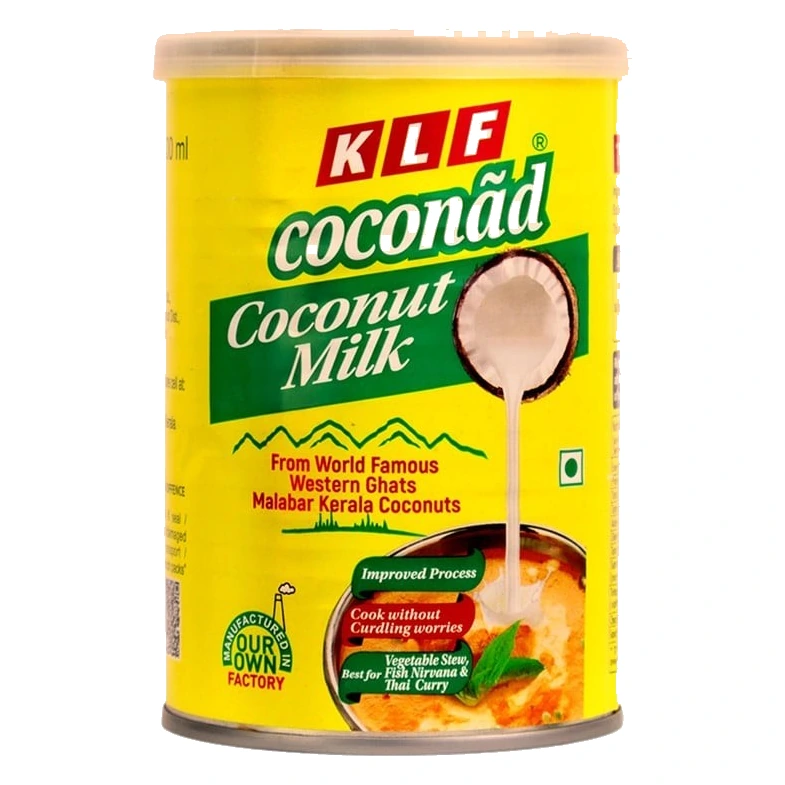
KLF Coconad Coconut Milk
Published
KLF Coconad Coconut Milk is a cooking coconut milk of coconut extract and water, with a few stabilisers. It scores EA4: low on nutrition with almost no protein or fibre, strong on ingredients for a short list, and weighed down on risk by saturated fat. Best used in small amounts in curries and stews.
Ingredients, decoded
6 listed- Real Coconut milk extract
- Water
- Stabilizer: E466
- Acidity Regulator: E 330
- Thickener & Emulsifier : E 415, E 407
- Edible Salt
0 teaspoon of sugar in every 100 ml · 0 g total sugar, 5 g a teaspoon
| Energy | 173 kcal |
|---|---|
| Protein | 1 g |
| Carbohydrates | 4 g |
| Total sugars | 0 g |
| Added sugars | 0 g |
| Dietary fibre | 0 g |
| Total fat | 17 g |
| Saturated fat | 16 g |
| Trans fat | 0 g |
| Cholesterol | 0 mg |
| Sodium | 12 mg |
Think this score is wrong?
What to know about KLF Coconad Coconut Milk
A short ingredient list, but 16 g saturated fat
KLF Coconad Coconut Milk is a 400 ml pack of pourable cooking coconut milk. It is made from coconut milk extract and water, with a stabiliser (E466), an acidity regulator (E330), thickeners and emulsifiers (E415, E407) and salt. No percentages are declared. It is bought for Kerala stews, fish curries and Thai curries, where it gives a thick, creamy sauce.
Per 100 ml it has 173 kcal, 17 g fat, 16 g of that saturated, 1 g protein, 4 g carbohydrate, no sugar and 12 mg sodium. The pack's serve is 50 ml, which gives about 87 kcal and 8 g saturated fat, and one pack holds eight of them. There is no fibre, and no vitamins or minerals are declared.
The pack promises pure coconut, plant-based and lactose-free, and the ingredient list backs that up: no dairy and no sugar are listed. What the name does not show is how much of it is saturated fat. CleanPlate scores it EA4.
Why KLF Coconad Coconut Milk scores EA4
Nutrition is an E: 1 g protein, no fibre and no vitamins or minerals declared. Ingredients are an A for a short list, and risk is a 4 because of 16 g saturated fat per 100 ml.
Very low nutrient density
- Protein
- 1 g
- Fibre
- 0 g
- Vitamins and minerals
- None declared
- Energy
- 173 kcal
01 Nutrition density: why E
Protein is 1 g per 100 ml and fibre is 0 g, so there is little to earn credit. The energy of 173 kcal comes almost entirely from 17 g of fat.
No vitamins or minerals are declared, so nothing else lifts the grade.
Scored on protein, fibre and twelve vitamins and minerals, against the Codex and FSSAI "source" and "high" levels, per 100 g and per 100 kcal. Protein also has to supply at least 12.5% of the calories to count, and 25% for full credit.
Clean, minimally processed
- Base
- Real Coconut milk extract
- Sweeteners
- None added
- Additives
- 4
- Flagged
- Carrageenan
02 Ingredient integrity: why A
The list is short and led by coconut milk extract and water, which is what the pack claims. No label promise is hollow, so nothing costs label points on that front.
Carboxymethyl cellulose (E466) and carrageenan (E407) cost ingredient points, and xanthan gum (E415) costs a smaller amount. Citric acid (E330) costs nothing. Percentages are not declared, so the coconut share is unknown.
Scored on how processed the ingredients are, which additives are used and why, and whether the label keeps its promises.
High risk
- Added sugar
- 0 g
- Sodium
- 12 mg
- Saturated fat
- 16 g
- Trans fat
- 0 g
03 Load risk: why 4
Saturated fat is the driver: 16 g per 100 ml, more than three times the 5 g high line. A 50 ml serve has about 8 g.
Energy (173 kcal per 100 ml) adds to it. Sugar is 0 g, trans fat is 0 g and sodium is only 12 mg per 100 ml, so they play almost no part.
Scored on free sugar, sodium, saturated fat and trans fat, each weighed by how strong the evidence of harm is.
Red flags
- −Red flag: High saturated fat (16g)
- −Red flag: Contains Carrageenan
Green flags
- +Green flag: No added sugar
- +Green flag: Low sodium
Does KLF Coconad Coconut Milk live up to its claims?
The lactose-free, plant-based and 17% coconut fat claims hold. The vitamins and minerals claim has no support on the panel, and the curdling claim cannot be checked from the label.
- On the packHolds
“17% Natural Coconut Fat”
The panel shows 17 g total fat per 100 ml, which matches. Most of it, 16 g, is saturated.
- On the packHolds
“Lactose-free”
No dairy ingredient is listed, and the panel shows no cholesterol. Coconut milk is plant-based.
- On the packHolds
“100% plant-based”
Every listed ingredient is plant-derived or a mineral-type additive. No animal ingredient is listed.
- On the packBe careful
“Cook without Curdling worries”
The stabiliser E466 and the thickeners E415 and E407 are in the list, which fits the claim. The label cannot show how it behaves in the pan.
- Retail listingBe careful
“Rich Sources of Vitamins & Minerals”
The retailer page shows a rich source of vitamins and minerals, the pack shows none declared. Sodium is 12 mg per 100 ml.
What's in KLF Coconad Coconut Milk?
Coconut milk extract and water lead a short list. The three stabilisers and thickeners (E466, E407, E415) are what to know, and the saturated fat is the main number.
The ingredient list, read for you
Real coconut milk extract and water lead, so the base is coconut and water, with no percentage given for either. A stabiliser (E466), two thickeners and emulsifiers (E415, E407) keep it smooth and thick, citric acid (E330) adjusts acidity, and a little salt finishes it.
Ingredients to watch
- Saturated fatConcern
16 g per 100 ml, from the coconut itself. A 50 ml serve has about 8 g.
- Carboxymethyl cellulose (E466) and carrageenan (E407)Worth watching
Both are stabiliser or thickener additives and each costs ingredient points. Xanthan gum (E415) costs a smaller amount.
- EnergyWorth watching
173 kcal per 100 ml, about 87 kcal in a 50 ml serve, almost all from fat.
- Sugar and sodiumFine
No sugar and only 12 mg sodium per 100 ml. No trans fat is declared.
What it doesn’t have
- No vitamins or minerals are declared on the panel.
- No fibre, and very little protein.
Who should eat KLF Coconad Coconut Milk?
An occasional ingredient for most adults and children, and rarely for anyone watching heart health, since 50 ml has about 8 g saturated fat.
- Most adultsOccasionally
A 50 ml serve has about 8 g saturated fat.
- ChildrenOccasionally
16 g saturated fat per 100 ml, with almost no protein or fibre.
- Heart healthRarely
16 g saturated fat per 100 ml is over three times the high line.
- Lactose intoleranceOccasionally
No dairy is listed, but the saturated fat still limits how often.
Recipes with KLF Coconad Coconut Milk
Use a few spoonfuls rather than a full serve in stews and curries, and thin with water or stock, to keep the 16 g saturated fat per 100 ml in check.
Kerala vegetable stew
Use a small pour, as one 50 ml serve already adds about 87 kcal, and let the vegetables fill the pot.
Fish curry
Thin the coconut milk with water or stock so each plate gets a smaller share of the 16 g saturated fat per 100 ml.
Thai-style curry
Pair it with plenty of vegetables or pulses, since the milk itself brings only 1 g protein per 100 ml.
KLF Coconad Coconut Milk: common questions
What is the CleanPlate score of KLF Coconad Coconut Milk?
KLF Coconad Coconut Milk is a cooking coconut milk of coconut extract and water, with a few stabilisers. It scores EA4: low on nutrition with almost no protein or fibre, strong on ingredients for a short list, and weighed down on risk by saturated fat. Best used in small amounts in curries and stews. Nutrition E, ingredients A, load risk 4; nutrition and ingredients run A to E, risk runs 1 to 5, and A and 1 are best.
How many calories and how much protein are in KLF Coconad Coconut Milk?
Per 100 ml, KLF Coconad Coconut Milk has 173 kcal, 1 g protein, 4 g carbohydrate, 17 g fat and 16 g saturated fat. One serve (50 ml serve, as printed) has 87 kcal and 0.5 g protein.
What are the ingredients in KLF Coconad Coconut Milk?
6 ingredients, in label order: Real Coconut milk extract, Water, Stabilizer: E466, Acidity Regulator: E 330, Thickener & Emulsifier : E 415, E 407, Edible Salt. Flagged: Carrageenan (low concern).
Does KLF Coconad Coconut Milk live up to its claims?
5 claims checked: 3 hold, 2 need care. "Cook without Curdling worries" needs care: The stabiliser E466 and the thickeners E415 and E407 are in the list, which fits the claim. The label cannot show how it behaves in the pan. "Rich Sources of Vitamins & Minerals" needs care: The retailer page shows a rich source of vitamins and minerals, the pack shows none declared. Sodium is 12 mg per 100 ml.
Who should limit KLF Coconad Coconut Milk?
Most adults: occasionally. A 50 ml serve has about 8 g saturated fat. Children: occasionally. 16 g saturated fat per 100 ml, with almost no protein or fibre. Heart health: rarely. 16 g saturated fat per 100 ml is over three times the high line.
How much sugar, salt and saturated fat does KLF Coconad Coconut Milk have?
Per 100 ml, KLF Coconad Coconut Milk has 0 g added sugar, 12 mg sodium (about 0 g salt) and 16 g saturated fat. The FSSAI and UK FSA "high" lines are 5 g added sugar, 300 mg sodium and 2.5 g saturated fat per 100 ml. It is high in saturated fat.
Last reviewed October 29, 2026. Scored with the CleanPlate method from the published label. Spotted a mistake? .
Label read on 29 October 2026, from photos of the pack. If the pack has changed since, tell us.
Score history (1)
| Date | Score | Method | Why |
|---|---|---|---|
| 29 October 2026 | EA4 | v5.0 | First scored |
Every change to this score is logged. See corrections and the method changelog.
Better Plant-Based Milks
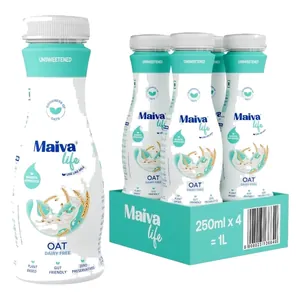
All Plant-Based Milks →- Maiva Life Oat Milk Unsweetened
- +Green flag: No added sugar
- +Green flag: Low sodium
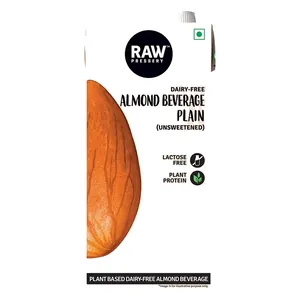
- Raw Pressery Plain & Unsweetened Almond BeverageFortified
- +Green flag: No added sugar
- +Green flag: Low sodium
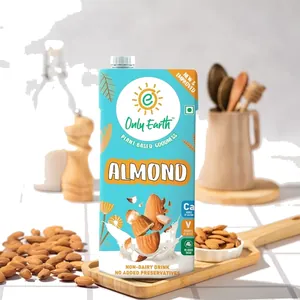
- Only Earth Unsweetened Plant Based Almond BeverageFortified
- +Green flag: No added sugar
- +Green flag: Low sodium
- Only Earth Unsweetened Plant Based Oat BeverageFortified
- +Green flag: No added sugar
- +Green flag: Low sodium