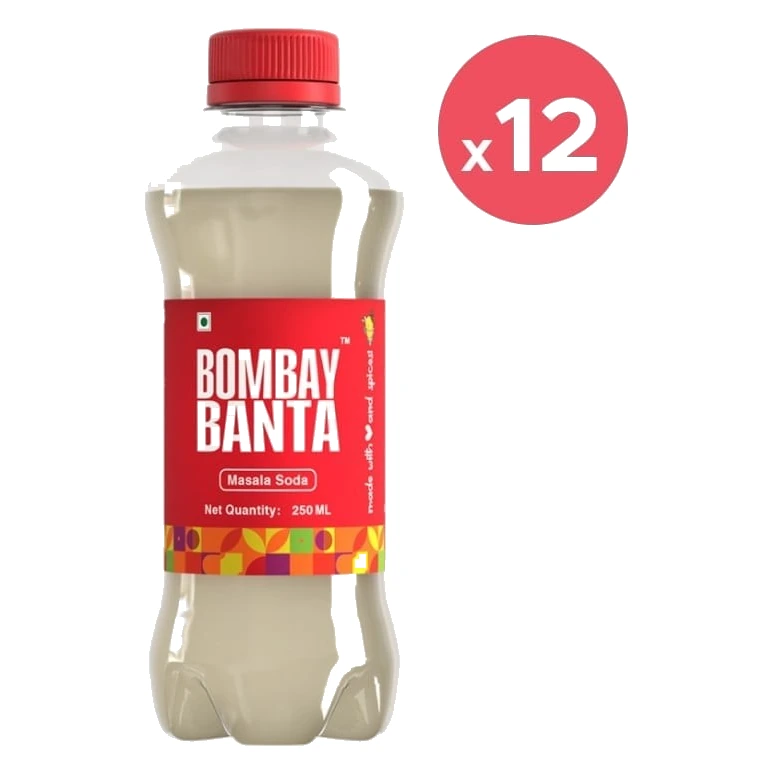
Bombay Banta Masala Soda
Published · Last updated
A realistic serve of Bombay Banta Masala Soda (125 ml, half a 250 ml bottle) has 53 kcal, 0 g protein, 13.3 g carbohydrate, 0 g fat, 13.3 g added sugar and 138 mg sodium. Per 100 ml it has 42 kcal, 0 g protein, 10.6 g carbohydrate, 0 g fat, 10.6 g added sugar and 110 mg sodium.
Bombay Banta Masala Soda is a sweetened, salted lemon soda with cumin and black pepper, sold as a spiced drink. It scores EA4: nutrition is at the bottom because it offers only sugar and calories, ingredients hold up because the list is short, and risk is high because of the sugar. Best kept as an occasional drink, shared rather than finished alone.
Ingredients, decoded
10 listed- Carbonated Water
- Sugar
- Lemon Juice concentrate (2.1%)
- Acidity Regulators (INS 330)
- Salt
- Black Salt
- Cumin Powder
- Black Pepper Powder
- Preservative (INS 211)
- Contains permitted natural color (150D) and added lemon flavours (natural and nature identical flavouring substances)
2 teaspoons of sugar in every 100 ml · 11 g total sugar, 5 g a teaspoon
Score and nutrition facts for Bombay Banta Masala Soda:
| Energy | 42 kcal |
|---|---|
| Protein | 0 g |
| Carbohydrates | 10.6 g |
| Total sugars | 11 g |
| Added sugars | 10.6 g |
| Total fat | 0 g |
| Sodium | 110 mg |
Think this score is wrong?
Why Bombay Banta Masala Soda scores EA4
Nutrition is an E because the drink has no protein, fibre or vitamins, only 42 kcal of sugar per 100 ml. Ingredients are an A on a short list, and risk is a 4 on 10.6 g sugar.
Very low nutrient density
- Protein
- 0 g
- Fibre
- Not declared
- Vitamins and minerals
- None declared
- Energy
- 42 kcal
01 Nutrition density: why E
Protein is 0 g and fat is 0 g, so the 42 kcal per 100 ml come almost entirely from 10.6 g of sugar. No fibre is declared and no protein source is identified, so nothing earns credit.
No vitamins or minerals are declared. The grade sits at the bottom because the drink adds calories and nothing else.
Scored on protein, fibre and twelve vitamins and minerals, against the Codex and FSSAI "source" and "high" levels, per 100 g and per 100 kcal. Protein also has to supply at least 12.5% of the calories to count, and 25% for full credit.
Clean, minimally processed
- Base
- Carbonated Water
- Sweeteners
- Sugar
- Additives
- 2
- Flagged
- Sodium Benzoate, Caramel Colour (Class IV)
02 Ingredient integrity: why A
The list is short and mostly plain: carbonated water, sugar, lemon juice concentrate, citric acid, salt and three spices. There is no hydrogenated fat and no artificial sweetener, and no label promise is hollow, so the grade stays high.
Nature-identical lemon flavouring and the caramel colour 150d (sulphite ammonia caramel) cost ingredient points. Sodium benzoate and citric acid cost none.
Scored on how processed the ingredients are, which additives are used and why, and whether the label keeps its promises.
High risk
- Added sugar
- 10.6 g
- Sodium
- 110 mg
03 Load risk: why 4
Sugar is almost all of the risk: 10.6 g of added sugar per 100 ml, which is 26.5 g in a 250 ml bottle. Sodium adds a smaller share at 110 mg per 100 ml, about 275 mg per bottle.
Saturated fat, trans fat and energy density play no part. The risk number of 4 is a sugar story.
Scored on free sugar, sodium, saturated fat and trans fat, each weighed by how strong the evidence of harm is.
Red flags
- −Red flag: High added sugar (10.6g per 100ml)
- −Red flag: Contains Sodium Benzoate
- −Red flag: Contains Caramel Colour (Class IV)
Green flags
- +Green flag: Low sodium
Does Bombay Banta Masala Soda live up to its claims?
The lemon juice and masala spices are real but small: 2.1% concentrate, and spices with no declared amounts. The natural colour claim is true as framed, but it is caramel colour 150d.
- Product namePartly true
“Masala Soda”
Cumin powder and black pepper powder are listed, along with salt and black salt, but no amounts are declared. Sugar and carbonated water make up most of the drink.
- On the packPartly true
“Carbonated beverage with fruit juice”
Lemon juice concentrate is 2.1% of the drink, which the pack says is equivalent to 7% real lemon juice. It is real but a small share.
- On the packBe careful
“Contains permitted natural colour (150D)”
The colour is caramel IV (150d), a permitted colour made by the sulphite ammonia process. It is declared openly, and it costs ingredient points.
- On the packHolds
“Per serve added sugar 21.2% RDA”
One 125 ml serve has about 13.3 g of added sugar, and the bottle holds two serves, so a whole bottle is about 42% of the allowance.
What's in Bombay Banta Masala Soda?
Carbonated water and sugar lead the list, with lemon concentrate, salt and spices after. The sugar, the caramel colour and the flavourings are what to watch.
10 ingredients listed. Additives and watched ingredients we rate: 2 low concern. 1 more entry looks like an additive we have not researched yet.
The ingredient list, read for you
Carbonated water and sugar lead, so this is a sweetened soda first. Lemon juice concentrate is the only ingredient with a declared share, at 2.1%. Citric acid adds sourness, salt and black salt give the savoury edge, and cumin and black pepper add the masala taste, with no amounts given. Sodium benzoate preserves it, and caramel colour and lemon flavours finish the list.
What the additives do
Sodium Benzoate (low concern): preservative for acidic foods. A preservative for acidic foods and drinks. With vitamin C it can form small amounts of benzene under heat and light. More on Sodium Benzoate.
Caramel Colour (Class IV) (low concern): dark brown colour. Sulphite ammonia caramel, the brown colour in colas and sauces. It can contain 4-MEI, a by-product IARC lists as possibly carcinogenic. More on Caramel Colour (Class IV).
Not in our additive research yet: Acidity Regulators (INS 330).
Ingredients to watch
- Added sugarConcern
10.6 g per 100 ml, about 13.3 g per 125 ml serve and 26.5 g per 250 ml bottle. It is the main driver of the risk grade.
- Caramel colour 150dWorth watching
Declared as a permitted natural colour, but it is sulphite ammonia caramel and costs ingredient points.
- Lemon flavouringsWorth watching
Natural and nature-identical flavouring substances are added on top of the 2.1% lemon juice concentrate, and they cost ingredient points.
- SodiumWorth watching
110 mg per 100 ml, about 275 mg in a full bottle, from salt and black salt.
- Preservative and acidFine
Sodium benzoate (211) and citric acid (330) are listed, and neither costs ingredient points.
What it doesn’t have
- No vitamins, minerals, protein or fibre are declared.
- The spices have no declared amounts, only the lemon juice concentrate does.
What to know about Bombay Banta Masala Soda
A spiced lemon soda that is mostly sugar water
Bombay Banta Masala Soda is a carbonated drink of water, sugar, lemon juice concentrate (2.1%), citric acid, salt, black salt, cumin powder and black pepper powder. It also has sodium benzoate as a preservative, caramel colour (150d) and added lemon flavours. It is sold as a 250 ml bottle, in packs of 12, for people who want a spiced, salty-sour soda.
Per 100 ml it has 42 kcal, 10.6 g added sugar and 110 mg sodium, with no protein or fat. The pack counts two servings of 125 ml, so one serve is about 53 kcal and 13.3 g added sugar, and the whole bottle is about 105 kcal and 26.5 g. The pack prints the serve's added sugar as 21.2% of the daily allowance.
The name promises masala, and the spices are in the list, but they come after the salt and no amount is given. The back of the pack says the juice is equivalent to 7% real lemon juice, from 2.1% concentrate. CleanPlate scores it EA4.
Who should eat Bombay Banta Masala Soda?
An occasional drink for most adults, and rarely for children and teens or anyone with a heart condition, because one bottle holds about 26.5 g of added sugar.
- Most adultsOccasionally
26.5 g added sugar in a 250 ml bottle, with no nutrients alongside.
- Children and teensRarely
A full bottle is about 42% of the pack's added sugar allowance, and it has a caramel colour.
- PregnancyOccasionally
No caffeine is listed, but 10.6 g sugar per 100 ml adds up quickly.
- Heart conditionsRarely
10.6 g sugar and 110 mg sodium per 100 ml, with no benefit to offset them.
Bombay Banta Masala Soda: common questions
Is Bombay Banta Masala Soda healthy?
Bombay Banta Masala Soda is high in sugar, so occasional and moderate intake is fine and won't affect your health in any major way, but it shouldn't be a frequent treat.
How many calories and how much protein are in Bombay Banta Masala Soda?
Per 100 ml, Bombay Banta Masala Soda has 42 kcal, 0 g protein, 10.6 g carbohydrate, 0 g fat and 10.6 g added sugar. One serve (125 ml, half a 250 ml bottle) has 53 kcal and 0 g protein.
What are the ingredients in Bombay Banta Masala Soda?
10 ingredients, in label order: Carbonated Water, Sugar, Lemon Juice concentrate (2.1%), Acidity Regulators (INS 330), Salt, Black Salt, Cumin Powder, Black Pepper Powder, Preservative (INS 211), Contains permitted natural color (150D) and added lemon flavours (natural and nature identical flavouring substances). Flagged: Sodium Benzoate (low concern), Caramel Colour (Class IV) (low concern).
Does Bombay Banta Masala Soda live up to its claims?
4 claims checked: 1 holds, 2 are partly true, 1 needs care. "Masala Soda" is partly true: Cumin powder and black pepper powder are listed, along with salt and black salt, but no amounts are declared. Sugar and carbonated water make up most of the drink. "Carbonated beverage with fruit juice" is partly true: Lemon juice concentrate is 2.1% of the drink, which the pack says is equivalent to 7% real lemon juice. It is real but a small share.
Who should limit Bombay Banta Masala Soda?
Most adults: occasionally. 26.5 g added sugar in a 250 ml bottle, with no nutrients alongside. Children and teens: rarely. A full bottle is about 42% of the pack's added sugar allowance, and it has a caramel colour. Pregnancy: occasionally. No caffeine is listed, but 10.6 g sugar per 100 ml adds up quickly.
How much sugar, salt and saturated fat does Bombay Banta Masala Soda have?
Per 100 ml, Bombay Banta Masala Soda has 10.6 g added sugar and 110 mg sodium (about 0.3 g salt). The FSSAI and UK FSA "high" lines are 5 g added sugar, 300 mg sodium and 2.5 g saturated fat per 100 ml. It is high in sugar.
What does the EA4 score mean for Bombay Banta Masala Soda?
The first letter (E) grades nutrition density on A to E, the second (A) grades ingredient integrity on A to E, and the number (4) grades load risk on 1 to 5. A and 1 are best. Nutrition: Protein is 0 g and fat is 0 g, so the 42 kcal per 100 ml come almost entirely from 10.6 g of sugar. No fibre is declared and no protein source is identified, so nothing earns credit. Ingredients: The list is short and mostly plain: carbonated water, sugar, lemon juice concentrate, citric acid, salt and three spices. There is no hydrogenated fat and no artificial sweetener, and no label promise is hollow, so the grade stays high. Load risk: Sugar is almost all of the risk: 10.6 g of added sugar per 100 ml, which is 26.5 g in a 250 ml bottle. Sodium adds a smaller share at 110 mg per 100 ml, about 275 mg per bottle.
Last reviewed October 31, 2026. Scored with the CleanPlate method from the published label. Spotted a mistake? .
Reference values: FSSAI labelling regulations, Codex Alimentarius, ICMR-NIN and the UK front of pack guidance. Where our label data comes from.
Label read on 31 October 2026, from photos of the pack. If the pack has changed since, tell us.
Score history (1)
| Date | Score | Method | Why |
|---|---|---|---|
| 31 October 2026 | EA4 | v5.0 | First scored |
Every change to this score is logged. See corrections and the method changelog.
Better Carbonated Beverages
All Carbonated Beverages →- Tipsy Tiger Fresh Lime Soda Sparkling Lemonade
- −Red flag: High added sugar (5.9g per 100ml)
- −Red flag: Contains Sodium Benzoate
- Bevrock Classic Malt Non-Alcoholic Beer
- −Red flag: Contains Sodium Benzoate
- +Green flag: Low sodium
- Fanta Orange Zero Sugar Soft Drink
- −Red flag: Contains Aspartame
- −Red flag: Contains Acesulfame Potassium
- Zyro by Karan Aujla Zero Sugar Masala Cola Soft Drink
- −Red flag: Contains Caramel Colour (Class IV)
- −Red flag: Contains Sodium Benzoate
More from Bombay Banta
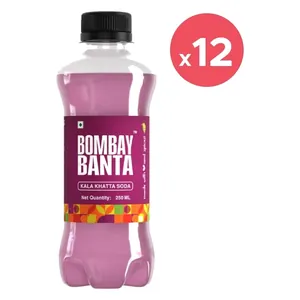
All Bombay Banta →- Bombay Banta Kala Khatta Soda
- −Red flag: High added sugar (10.5g per 100ml)
- −Red flag: Contains Sodium Benzoate
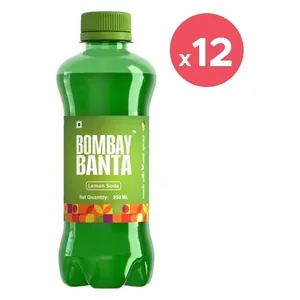
- Bombay Banta Lemon Masala Soda
- −Red flag: High added sugar (10.5g per 100ml)
- −Red flag: Contains Sodium Benzoate
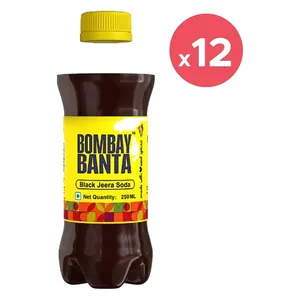
- Bombay Banta Black Jeera Masala Soda
- −Red flag: High added sugar (7.3g per 100ml)
- −Red flag: Contains Sodium Benzoate
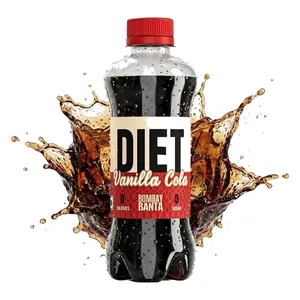
- Bombay Banta Diets & Lights Vanilla Cola
- −Red flag: Contains Caramel Colour (Class IV)
- −Red flag: Contains Sodium Benzoate