Chikki Veerabhadra
Published
Veerabhadra Chikki is a peanut sweet set in jaggery and refined sugar, sold as a crunchy snack. It scores DA4: nutrition is low even with the peanut protein, ingredients are top-marked because the list is just three plain items with no additives, and risk is high because of the sugar. Best as a small piece now and then.
Ingredients, decoded
3 listed- Peanuts
- Jaggery
- Refined sugar
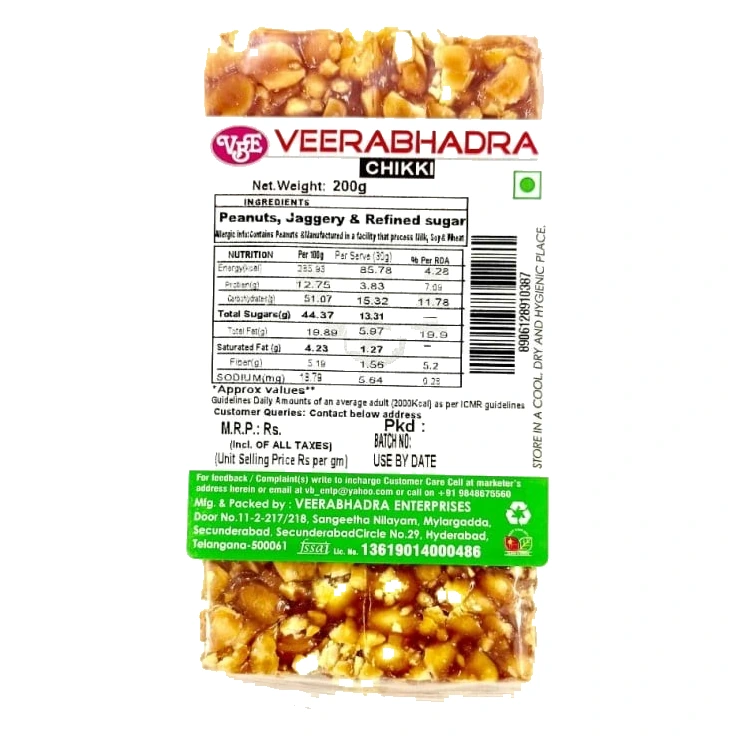
9 teaspoons of sugar in every 100 g · 44.4 g total sugar, 5 g a teaspoon
| Energy | 285.9 kcal |
|---|---|
| Protein | 12.8 g |
| Carbohydrates | 51.1 g |
| Total sugars | 44.4 g |
| Dietary fibre | 5.2 g |
| Total fat | 19.9 g |
| Saturated fat | 4.2 g |
| Sodium | 18.8 mg |
Think this score is wrong?
What to know about Chikki Veerabhadra
Real peanuts, but sugar is the main load
Veerabhadra Chikki is a 200 g pack of peanut chikki made from three ingredients: peanuts, jaggery and refined sugar. No percentages are declared for any of them. It is bought as a crunchy sweet snack, and the retailer page pitches it as a favourite for kids and a companion to tea or coffee.
Per 100 g the panel shows 12.75 g protein, 5.19 g fibre, 19.89 g fat and 44.37 g sugar. In a 30 g serve that is about 3.8 g protein, 1.6 g fibre and 13.3 g sugar. The protein and fibre come from the peanuts, and the sugar comes from the jaggery and the refined sugar together.
The name Chikki is plain and accurate for what is in the pack. The list has no additives, no hydrogenated fat and no colour, which is why ingredients score so well. The sugar load is what holds the rest back. CleanPlate scores it DA4.
Why Chikki Veerabhadra scores DA4
Nutrition is a D, ingredients an A and risk a 4. Peanuts give 12.75 g protein per 100 g, the list has no additives, and 44.4 g sugar per 100 g drives the risk.
Low nutrient density
- Protein
- 12.8 g
- Fibre
- 5.2 g
- Vitamins and minerals
- None declared
- Energy
- 286 kcal
01 Nutrition density: why D
Protein is 12.75 g per 100 g, mostly from peanuts, and fibre is 5.19 g. In a 30 g serve that is about 3.8 g protein and 1.6 g fibre. This is real credit, but it is not enough to lift the grade above a D.
No vitamins or minerals are declared, so nothing else adds to the grade.
Scored on protein, fibre and twelve vitamins and minerals, against the Codex and FSSAI "source" and "high" levels, per 100 g and per 100 kcal. Protein also has to supply at least 12.5% of the calories to count, and 25% for full credit.
Clean, minimally processed
- Base
- Peanuts
- Sweeteners
- Jaggery, Refined sugar
- Additives
- 0
- Flagged
- None
02 Ingredient integrity: why A
Three plain ingredients make up the whole list: peanuts, jaggery and refined sugar. There are no additives, no hydrogenated fat, no flavours and no colours, so nothing costs ingredient points.
No hollow label promise is made either. The one small gap is that no percentages are declared for the three ingredients.
Scored on how processed the ingredients are, which additives are used and why, and whether the label keeps its promises.
High risk
- Total sugar
- 44.4 g
- Sodium
- 18.8 mg
- Saturated fat
- 4.2 g
03 Load risk: why 4
Sugar is the main driver. Free sugar is 44.37 g per 100 g, since jaggery and refined sugar both count, and a 30 g serve has about 13.3 g. It makes up most of the risk number, which lands on a 4.
Energy adds some, using about 424 kcal per 100 g from the protein, carbs and fat on the panel. Saturated fat at 4.23 g per 100 g is under the 5 g high line, and sodium at 18.79 mg per 100 g adds almost nothing.
Scored on free sugar, sodium, saturated fat and trans fat, each weighed by how strong the evidence of harm is.
Red flags
- −Red flag: High sugar (44.4g per 100g)
Green flags
- +Green flag: Source of protein (12.8g)
- +Green flag: Source of fibre
- +Green flag: Low sodium
Does Chikki Veerabhadra live up to its claims?
The name holds, since the list is only peanuts, jaggery and refined sugar. The retailer page calls it savory and spicy, which does not match the pack, and the declared energy looks low.
- Product nameHolds
“Chikki”
The list is peanuts, jaggery and refined sugar, with nothing else added. That matches what the name suggests.
- Retail listingBe careful
“Savory snack, all crunch and spice”
The retailer page shows a savory, spicy snack, but the pack shows only peanuts, jaggery and refined sugar, with no spice listed. Sugar is 44.37 g per 100 g.
- On the packBe careful
“286 kcal per 100 g”
The panel prints 286 kcal per 100 g, but its protein, carbs and fat add up to about 424 kcal. The energy part of the risk grade uses the higher figure.
What's in Chikki Veerabhadra?
Peanuts come first, then jaggery and refined sugar, with no percentages declared. The sugar is the thing to watch, and the list is otherwise very short.
The ingredient list, read for you
Peanuts come first, so they are the largest ingredient, followed by jaggery and then refined sugar. Together the jaggery and refined sugar bind the peanuts into a brittle sweet. No percentages are declared, so the split between nuts and sugar is only visible in the panel.
Ingredients to watch
- SugarConcern
44.37 g per 100 g, from jaggery and refined sugar together. A 30 g serve has about 13.3 g, and this is the main reason risk is a 4.
- Peanut allergenWorth watching
Contains peanuts, and is made in a facility that also processes milk, soy and wheat.
- Declared energyWorth watching
The panel prints 286 kcal per 100 g, but the macros add up to about 424 kcal, so the real energy is likely higher than printed.
- PeanutsFine
The first ingredient, giving 12.75 g protein and 5.19 g fibre per 100 g.
- SodiumFine
18.79 mg per 100 g, which is very low.
What it doesn’t have
- No vitamins or minerals are declared on the panel.
- No percentages are given for the peanuts, jaggery or refined sugar.
Who should eat Chikki Veerabhadra?
An occasional treat for most adults and children, and rarely for anyone managing diabetes, since 30 g carries about 13.3 g sugar.
- Most adultsOccasionally
A 30 g serve has about 13.3 g sugar.
- ChildrenOccasionally
13.3 g sugar in a small piece, and it contains peanuts.
- Diabetes or prediabetesRarely
44.4 g sugar per 100 g, with 51.07 g carbs.
- Weight managementOccasionally
Sugar is high at 44.4 g per 100 g, with 19.89 g fat in the peanuts.
Chikki Veerabhadra: common questions
What is the CleanPlate score of Chikki Veerabhadra?
Veerabhadra Chikki is a peanut sweet set in jaggery and refined sugar, sold as a crunchy snack. It scores DA4: nutrition is low even with the peanut protein, ingredients are top-marked because the list is just three plain items with no additives, and risk is high because of the sugar. Best as a small piece now and then. Nutrition D, ingredients A, load risk 4; nutrition and ingredients run A to E, risk runs 1 to 5, and A and 1 are best.
How many calories and how much protein are in Chikki Veerabhadra?
Per 100 g, Chikki Veerabhadra has 286 kcal, 12.8 g protein, 51.1 g carbohydrate, 19.9 g fat and 4.2 g saturated fat. One serve (30 g serve) has 86 kcal and 3.8 g protein.
What are the ingredients in Chikki Veerabhadra?
3 ingredients, in label order: Peanuts, Jaggery, Refined sugar.
Does Chikki Veerabhadra live up to its claims?
3 claims checked: 1 holds, 2 need care. "Savory snack, all crunch and spice" needs care: The retailer page shows a savory, spicy snack, but the pack shows only peanuts, jaggery and refined sugar, with no spice listed. Sugar is 44.37 g per 100 g. "286 kcal per 100 g" needs care: The panel prints 286 kcal per 100 g, but its protein, carbs and fat add up to about 424 kcal. The energy part of the risk grade uses the higher figure.
Who should limit Chikki Veerabhadra?
Most adults: occasionally. A 30 g serve has about 13.3 g sugar. Children: occasionally. 13.3 g sugar in a small piece, and it contains peanuts. Diabetes or prediabetes: rarely. 44.4 g sugar per 100 g, with 51.07 g carbs.
How much sugar, salt and saturated fat does Chikki Veerabhadra have?
Per 100 g, Chikki Veerabhadra has 44.4 g sugar, 19 mg sodium (about 0 g salt) and 4.2 g saturated fat. The FSSAI and UK FSA "high" lines are 10 g added sugar, 600 mg sodium and 5 g saturated fat per 100 g. It is high in sugar.
Last reviewed October 30, 2026. Scored with the CleanPlate method from the published label. Spotted a mistake? .
Label read on 30 October 2026, from photos of the pack. If the pack has changed since, tell us.
Score history (1)
| Date | Score | Method | Why |
|---|---|---|---|
| 30 October 2026 | DA4 | v5.0 | First scored |
Every change to this score is logged. See corrections and the method changelog.
Better Indian Sweets
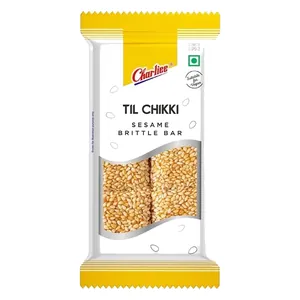
All Indian Sweets →- Til Chikki by Charliee
- −Red flag: High added sugar (33.3g per 100g)
- +Green flag: Source of protein (17.3g)
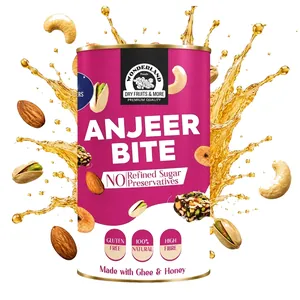
- Wonderland Foods Vrat Anjeer Bites
- −Red flag: High added sugar (15.8g per 100g)
- −Red flag: High saturated fat (18.1g)
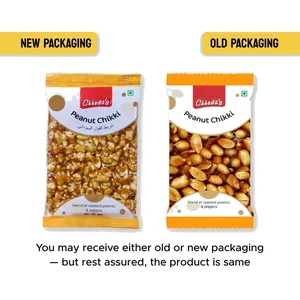
- Chheda's Peanut Chikki
- −Red flag: High sugar (40g per 100g)
- +Green flag: Source of protein (20g)
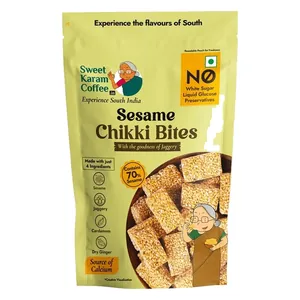
- Sweet Karam Coffee Sesame Chikki Bites
- −Red flag: High added sugar (29g per 100g)
- +Green flag: Low sodium