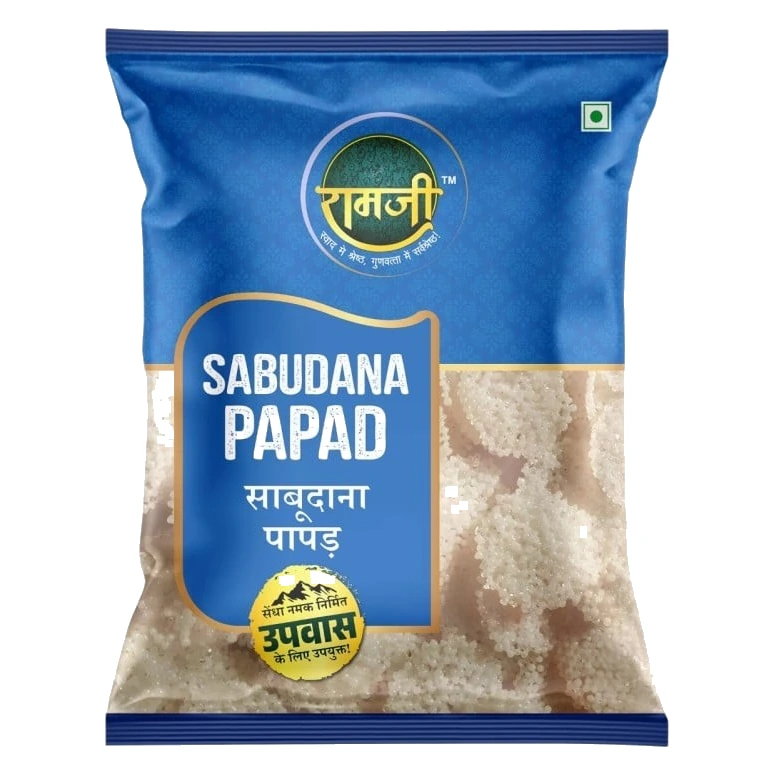
Ramji Sago/ Sabudana Papad
Published
Ramji Sago Papad is a dry fasting snack of tapioca pearls, starch and rock salt, seasoned with herbs and spices and fried at home into crisp coins. It scores EB4: nutrition is low because it is nearly all starch with almost no protein, ingredients are short and simple, and risk is high because of the salt. Best as a small occasional crunch.
Ingredients, decoded
4 listed- Sabudana (Tapioca)
- Sabudana Starch
- Rock Salt
- Flavouring Herbs & Spices Jeera, Red Chilli, Green Chilli, Ajwain, Mint, Pudina (Based On Product Type)
<½ teaspoon of sugar in every 100 g · 0.5 g total sugar, 5 g a teaspoon
| Energy | 342.7 kcal |
|---|---|
| Protein | 0.1 g |
| Carbohydrates | 77 g |
| Total sugars | 0.5 g |
| Added sugars | 0.49 g |
| Total fat | 2.5 g |
| Saturated fat | 1.9 g |
| Trans fat | 0 g |
| Sodium | 1308.7 mg |
Think this score is wrong?
What to know about Ramji Sago/ Sabudana Papad
Simple tapioca coins, with a lot of salt
Ramji Sago/Sabudana Papad is a 150 g pack of dry papad coins made from sabudana (tapioca), sabudana starch and rock salt, with a seasoning of jeera, red chilli, green chilli, ajwain, mint and pudina. The pack calls it suitable for fasting and sells it as a light, crispy snack that you fry at home. No ingredient percentages are declared.
A 25 g serve, which is six per pack, gives about 86 kcal, 0.03 g protein and about 327 mg sodium. Per 100 g the dry coins carry 342.7 kcal, 76.96 g carbohydrate and 1,308.68 mg sodium, which is about 3.3 g of salt. Sugar is low at 0.49 g per 100 g, and saturated fat is 1.94 g.
The name and the fasting claim match the list: sabudana, starch, rock salt and spices, with no preservative listed. The pack also says natural ingredients, but the flavouring is listed without a class, and that costs ingredient points. CleanPlate scores it EB4.
Why Ramji Sago/ Sabudana Papad scores EB4
Nutrition is an E because the coins are nearly all starch, with 0.1 g protein per 100 g. Ingredients are a B on a short list, and risk is a 4 on 1,308.68 mg sodium per 100 g.
Very low nutrient density
- Protein
- 0.1 g
- Fibre
- Not declared
- Vitamins and minerals
- None declared
- Energy
- 343 kcal
01 Nutrition density: why E
Protein is 0.1 g per 100 g, so there is no protein credit, and no fibre or vitamins and minerals are declared. The 342.7 kcal per 100 g come almost entirely from 76.96 g of carbohydrate, mostly tapioca starch.
With nothing to add to the grade, nutrition sits at the bottom.
Scored on protein, fibre and twelve vitamins and minerals, against the Codex and FSSAI "source" and "high" levels, per 100 g and per 100 kcal. Protein also has to supply at least 12.5% of the calories to count, and 25% for full credit.
Good, few concerning additives
- Base
- Sabudana
- Sweeteners
- None added
- Additives
- 0
- Flagged
- None
02 Ingredient integrity: why B
The list is short and plain: sabudana, sabudana starch, rock salt and a herb and spice seasoning. No preservative, colour, sweetener or hydrogenated fat is listed, and the declared trans fat of 0 g is accepted.
The flavouring is listed without saying whether it is natural, which costs ingredient points. No ingredient percentages are declared, which holds the grade back a little. No hollow promise is found, so there is no [L].
Scored on how processed the ingredients are, which additives are used and why, and whether the label keeps its promises.
High risk
- Added sugar
- 0.49 g
- Sodium
- 1308.7 mg
- Saturated fat
- 1.9 g
- Trans fat
- 0 g
03 Load risk: why 4
Sodium is almost all of the risk: 1,308.68 mg per 100 g, about 327 mg in a 25 g serve. That is the main reason the risk number is a 4.
Energy adds a little at 342.7 kcal per 100 g. Saturated fat is 1.94 g per 100 g, under the 5 g high line, and added sugar is 0.49 g, so neither plays much part.
Scored on free sugar, sodium, saturated fat and trans fat, each weighed by how strong the evidence of harm is.
Red flags
- −Red flag: High sodium (1308.7mg per 100g)
Green flags
Nothing stands out in its favour.
Does Ramji Sago/ Sabudana Papad live up to its claims?
The fasting, rock salt, no preservatives and gluten free claims hold against the list. Natural ingredients and wholesome are framed more kindly than the numbers, with 0.1 g protein and an unclassed flavouring.
- On the packHolds
“Suitable for fasting”
The list is sabudana, sabudana starch, rock salt and spices, with no grain flour listed.
- On the packHolds
“Made with rock salt”
Rock salt is on the list. It is still salt: sodium is 1,308.68 mg per 100 g.
- On the packHolds
“No Preservatives”
No preservative appears in the ingredient list.
- On the packHolds
“Gluten Free”
No wheat or other gluten-containing ingredient is listed. Tapioca and its starch are the base.
- On the packBe careful
“Natural Ingredients”
The base is natural, but the flavouring is listed without a class, and that costs ingredient points.
- On the packBe careful
“Light • Crispy • Wholesome”
Crispy fits a fried papad coin. Wholesome is generous for a starch snack with 0.1 g protein per 100 g.
What's in Ramji Sago/ Sabudana Papad?
Tapioca pearls, starch and rock salt lead a four-item list with a herb and spice seasoning. The salt level and the unnamed flavouring class are what to watch.
The ingredient list, read for you
Sabudana (tapioca) leads, then sabudana starch, so the coins are tapioca pearls and starch pressed thin. Rock salt seasons them, and a blend of jeera, red chilli, green chilli, ajwain, mint and pudina gives the flavour. No percentages are declared for any of it.
The flavouring is listed without a class, so it is unclear whether it is natural only.
Ingredients to watch
- SodiumConcern
1,308.68 mg per 100 g, about 3.3 g of salt. One 25 g serve has about 327 mg.
- Almost no proteinConcern
0.1 g per 100 g and no fibre or micronutrients declared, so the coins are nearly all starch.
- Flavouring, class not statedWorth watching
It is not shown as natural only, and it costs ingredient points.
- Frying oilWorth watching
The figures are for the dry coins. The pack says to fry them for 8 to 12 seconds, and that oil adds fat.
- Short, clean listFine
Four items, with no preservative, dye, sweetener or hydrogenated fat, and added sugar is 0.49 g per 100 g.
What it doesn’t have
- No protein, fibre, vitamins or minerals to speak of.
- No ingredient percentages are declared.
Who should eat Ramji Sago/ Sabudana Papad?
An occasional snack for most adults, and rarely for anyone watching blood pressure, since one 25 g serve has about 327 mg sodium.
- Most adultsOccasionally
About 327 mg sodium per 25 g serve, and little else of nutritional value.
- ChildrenOccasionally
Salty starch snack with almost no protein, and an unclassed flavouring.
- High blood pressureRarely
1,308.68 mg sodium per 100 g is a high load for a light snack.
- Weight managementOccasionally
About 86 kcal per 25 g serve before frying oil, with no protein to fill you up.
Recipes with Ramji Sago/ Sabudana Papad
Fry the coins briefly as the pack directs, then pair them with curd or a vegetable dish so the plate has the protein the papad lacks.
Quick-fried sabudana coins
Fry on a low flame for 8 to 12 seconds as the pack directs, then drain well, since the 2.54 g fat per 100 g is for the dry coins.
Papad with curd and cucumber
Serve a few coins with curd and cucumber to add protein to a snack that has 0.1 g per 100 g.
Crumbled over a fasting chaat
Break one or two coins over a bowl of fruit or vegetables for crunch, and go easy on added salt since the coins already carry about 327 mg sodium per serve.
Ramji Sago/ Sabudana Papad: common questions
What is the CleanPlate score of Ramji Sago/ Sabudana Papad?
Ramji Sago Papad is a dry fasting snack of tapioca pearls, starch and rock salt, seasoned with herbs and spices and fried at home into crisp coins. It scores EB4: nutrition is low because it is nearly all starch with almost no protein, ingredients are short and simple, and risk is high because of the salt. Best as a small occasional crunch. Nutrition E, ingredients B, load risk 4; nutrition and ingredients run A to E, risk runs 1 to 5, and A and 1 are best.
How many calories and how much protein are in Ramji Sago/ Sabudana Papad?
Per 100 g, Ramji Sago/ Sabudana Papad has 343 kcal, 0.1 g protein, 77 g carbohydrate, 2.5 g fat and 1.9 g saturated fat. One serve (25 g, about one-sixth of the pack) has 86 kcal and 0 g protein.
What are the ingredients in Ramji Sago/ Sabudana Papad?
4 ingredients, in label order: Sabudana (Tapioca), Sabudana Starch, Rock Salt, Flavouring Herbs & Spices Jeera, Red Chilli, Green Chilli, Ajwain, Mint, Pudina (Based On Product Type).
Does Ramji Sago/ Sabudana Papad live up to its claims?
6 claims checked: 4 hold, 2 need care. "Natural Ingredients" needs care: The base is natural, but the flavouring is listed without a class, and that costs ingredient points. "Light • Crispy • Wholesome" needs care: Crispy fits a fried papad coin. Wholesome is generous for a starch snack with 0.1 g protein per 100 g.
Who should limit Ramji Sago/ Sabudana Papad?
Most adults: occasionally. About 327 mg sodium per 25 g serve, and little else of nutritional value. Children: occasionally. Salty starch snack with almost no protein, and an unclassed flavouring. High blood pressure: rarely. 1,308.68 mg sodium per 100 g is a high load for a light snack.
How much sugar, salt and saturated fat does Ramji Sago/ Sabudana Papad have?
Per 100 g, Ramji Sago/ Sabudana Papad has 0.49 g added sugar, 1309 mg sodium (about 3.3 g salt) and 1.9 g saturated fat. The FSSAI and UK FSA "high" lines are 10 g added sugar, 600 mg sodium and 5 g saturated fat per 100 g. It is high in salt.
Last reviewed October 30, 2026. Scored with the CleanPlate method from the published label. Spotted a mistake? .
Label read on 30 October 2026, from photos of the pack. If the pack has changed since, tell us.
Score history (1)
| Date | Score | Method | Why |
|---|---|---|---|
| 30 October 2026 | EB4 | v5.0 | First scored |
Every change to this score is logged. See corrections and the method changelog.
Better Khakhra & Papad
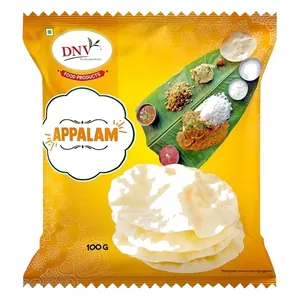
All Khakhra & Papad →- DNV Appalam Papad
- +Green flag: Source of protein (18.5g)
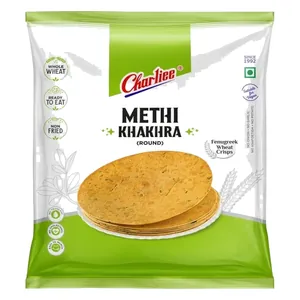
- Charliee Methi Khakhra
- −Red flag: High sodium (803.5mg per 100g)
- −Red flag: High saturated fat (9.5g)
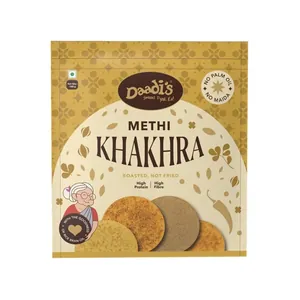
- Daadi's Methi Khakhra
- −Red flag: High sodium (761mg per 100g)
- +Green flag: High fibre (10.6g)
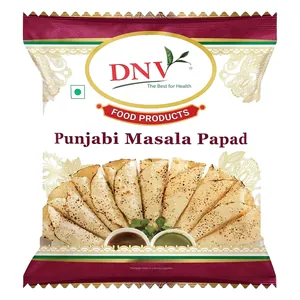
- DNV Punjabi Masala Papad
- −Red flag: High sodium (1390mg per 100g)
- +Green flag: High protein (20.9g per 100g)