Veerabhadra Salto Rice Papad
Published
Veerabhadra Salto Rice Papad is a thin, crisp rice flour papad seasoned with cumin, salt and papad khara. It scores EB2: nutrition is low because it is almost all starch with little fibre, ingredients are short and clean with no additives, and risk is modest, with salt the main part. A fine crunchy side, best kept to a sensible handful.
Ingredients, decoded
4 listed- Rice Flour
- Cumin
- salt
- Papad Khara

<½ teaspoon of sugar in every 100 g · 0.2 g total sugar, 5 g a teaspoon
| Energy | 368.1 kcal |
|---|---|
| Protein | 8.7 g |
| Carbohydrates | 76.7 g |
| Total sugars | 0.21 g |
| Dietary fibre | 0.84 g |
| Total fat | 2.2 g |
| Saturated fat | 0.31 g |
| Sodium | 370.1 mg |
Think this score is wrong?
What to know about Veerabhadra Salto Rice Papad
A four-ingredient rice papad where salt is the catch
Veerabhadra Salto Rice Papad is a 200 g pack of thin rice papad made from four ingredients: rice flour, cumin, salt and papad khara. No percentages are declared. It is bought as a crunchy side for a meal or a snack with tea or coffee, and the retailer page calls it an all time favourite for kids.
Per 100 g it has 368 kcal, 8.74 g protein, 76.69 g carbohydrate, 0.21 g sugar, 0.84 g fibre and 2.24 g fat, of which 0.31 g is saturated. The pack prints a 30 g serve, which is 110 kcal, 2.6 g protein and 111 mg sodium. Salt is the number to watch: 370 mg sodium per 100 g.
The name promises a rice papad, and the list delivers exactly that, with rice flour first and nothing added to stretch it. There are no preservatives, colours or flavour enhancers. What it lacks is fibre and any declared vitamins or minerals. CleanPlate scores it EB2.
Why Veerabhadra Salto Rice Papad scores EB2
Nutrition is an E because the papad is mostly starch, with 0.84 g fibre per 100 g. Ingredients are a B for a short, additive-free list, and risk is a 2, driven mainly by 370 mg sodium per 100 g.
Very low nutrient density
- Protein
- 8.7 g
- Fibre
- 0.84 g
- Vitamins and minerals
- None declared
- Energy
- 368 kcal
01 Nutrition density: why E
Protein is 8.74 g per 100 g, but it comes from rice flour, a starchy grain, and fibre is only 0.84 g. Carbohydrate is 76.69 g per 100 g, so nearly all of the 368 kcal is starch.
No vitamins or minerals are declared, so nothing adds to the grade. A 30 g serve gives 110 kcal and 2.6 g protein.
Scored on protein, fibre and twelve vitamins and minerals, against the Codex and FSSAI "source" and "high" levels, per 100 g and per 100 kcal. Protein also has to supply at least 12.5% of the calories to count, and 25% for full credit.
Good, few concerning additives
- Base
- Rice Flour
- Sweeteners
- None added
- Additives
- 0
- Flagged
- None
02 Ingredient integrity: why B
The list is four items: rice flour, cumin, salt and papad khara. There are no additives, no hydrogenated fat, no sweeteners and no colours, so no ingredient points are lost for them.
What holds the grade back from the top is that no percentages are given, so the reader cannot see how much cumin or salt is in it.
Scored on how processed the ingredients are, which additives are used and why, and whether the label keeps its promises.
Low risk
- Total sugar
- 0.21 g
- Sodium
- 370.1 mg
- Saturated fat
- 0.31 g
03 Load risk: why 2
Sodium is the biggest part of the risk number: 370 mg per 100 g, or 111 mg in a 30 g serve. Energy, at 368 kcal per 100 g, is the next contributor.
Sugar is 0.21 g per 100 g and no free sugar is listed, and saturated fat is only 0.31 g per 100 g, so neither adds to the risk.
Scored on free sugar, sodium, saturated fat and trans fat, each weighed by how strong the evidence of harm is.
Red flags
No major red flags on the label.
Green flags
- +Green flag: No additives
Does Veerabhadra Salto Rice Papad live up to its claims?
The rice papad name holds, since rice flour leads a four-item list. The kids' favourite line is a marketing claim, and one serve carries 111 mg sodium with little fibre.
- Product nameHolds
“Salto Rice Papad”
Rice flour is the first ingredient, in a list of four. Nothing else is used to bulk it out.
- Retail listingBe careful
“An all time favorite for kids”
This is a taste claim, not a nutrition one. A 30 g serve has 111 mg sodium and under 1 g fibre, so a small portion suits children best.
- Retail listingBe careful
“Perfect companion to tea or coffee”
It is a light, crisp snack at 110 kcal per 30 g, but it is mostly starch and salt, so it adds little beyond crunch.
What's in Veerabhadra Salto Rice Papad?
Rice flour, cumin, salt and papad khara make up the whole list, with no additives. Salt and the missing percentages are what to note.
The ingredient list, read for you
Rice flour leads the list and is the base of the papad. Cumin gives flavour, salt seasons it, and papad khara is the traditional papad ingredient listed last. No percentages are declared, so the split between them is not known. The pack also notes it is made in a facility that processes nuts, milk, soy and wheat.
Ingredients to watch
- SodiumConcern
370 mg per 100 g, and 111 mg in a 30 g serve. It is the largest part of the risk grade, and it climbs with a second or third papad.
- Low fibre, mostly starchWorth watching
0.84 g fibre and 76.69 g carbohydrate per 100 g, so it fills little and adds little.
- No percentages declaredWorth watching
The list gives no shares for rice flour, cumin, salt or papad khara, which costs a small label point.
- Short ingredient listFine
Four ingredients, with no additives, preservatives, colours or hydrogenated fat.
- Sugar and saturated fatFine
0.21 g sugar and 0.31 g saturated fat per 100 g, both very low.
What it doesn’t have
- No vitamins or minerals are declared on the panel.
- No percentages are given for any ingredient.
Who should eat Veerabhadra Salto Rice Papad?
Fine for most adults as a side. Children and anyone watching salt or calories should keep to one or two papads, since sodium and energy add up.
- Most adultsEveryday
110 kcal and 111 mg sodium in a 30 g serve, with a clean ingredient list.
- ChildrenA few times a week
No additives, but 111 mg sodium per serve and little fibre or protein.
- High blood pressureOccasionally
370 mg sodium per 100 g, and it is easy to eat more than one serve.
- Weight managementA few times a week
110 kcal per 30 g is light, but it is mostly starch and does not fill.
Recipes with Veerabhadra Salto Rice Papad
Roast it to keep fat at the printed 2.24 g per 100 g, then use it as a crunchy side, a masala topping or a crumble over rice dishes.
Roasted papad with dal and rice
Roast it dry as a crisp side, so fat stays at the printed 2.24 g per 100 g and a serve is 110 kcal.
Masala papad
Top a roasted papad with chopped onion, tomato and coriander to add the fibre that the papad lacks at 0.84 g per 100 g.
Crumbled papad over khichdi
Break a papad over khichdi or curd rice for crunch, and go easy on added salt since the papad already brings 111 mg sodium per serve.
Veerabhadra Salto Rice Papad: common questions
What is the CleanPlate score of Veerabhadra Salto Rice Papad?
Veerabhadra Salto Rice Papad is a thin, crisp rice flour papad seasoned with cumin, salt and papad khara. It scores EB2: nutrition is low because it is almost all starch with little fibre, ingredients are short and clean with no additives, and risk is modest, with salt the main part. A fine crunchy side, best kept to a sensible handful. Nutrition E, ingredients B, load risk 2; nutrition and ingredients run A to E, risk runs 1 to 5, and A and 1 are best.
How many calories and how much protein are in Veerabhadra Salto Rice Papad?
Per 100 g, Veerabhadra Salto Rice Papad has 368 kcal, 8.7 g protein, 76.7 g carbohydrate, 2.2 g fat and 0.31 g saturated fat. One serve (30 g serve, as printed on the pack) has 110 kcal and 2.6 g protein.
What are the ingredients in Veerabhadra Salto Rice Papad?
4 ingredients, in label order: Rice Flour, Cumin, salt, Papad Khara.
Does Veerabhadra Salto Rice Papad live up to its claims?
3 claims checked: 1 holds, 2 need care. "An all time favorite for kids" needs care: This is a taste claim, not a nutrition one. A 30 g serve has 111 mg sodium and under 1 g fibre, so a small portion suits children best. "Perfect companion to tea or coffee" needs care: It is a light, crisp snack at 110 kcal per 30 g, but it is mostly starch and salt, so it adds little beyond crunch.
Who should limit Veerabhadra Salto Rice Papad?
Most adults: everyday. 110 kcal and 111 mg sodium in a 30 g serve, with a clean ingredient list. Children: a few times a week. No additives, but 111 mg sodium per serve and little fibre or protein. High blood pressure: occasionally. 370 mg sodium per 100 g, and it is easy to eat more than one serve.
How much sugar, salt and saturated fat does Veerabhadra Salto Rice Papad have?
Per 100 g, Veerabhadra Salto Rice Papad has 0.21 g sugar, 370 mg sodium (about 0.9 g salt) and 0.31 g saturated fat. The FSSAI and UK FSA "high" lines are 10 g added sugar, 600 mg sodium and 5 g saturated fat per 100 g. It is under all three lines.
Last reviewed October 29, 2026. Scored with the CleanPlate method from the published label. Spotted a mistake? .
Label read on 29 October 2026, from photos of the pack. If the pack has changed since, tell us.
Score history (1)
| Date | Score | Method | Why |
|---|---|---|---|
| 29 October 2026 | EB2 | v5.0 | History starts here |
Every change to this score is logged. See corrections and the method changelog.
Better Khakhra & Papad
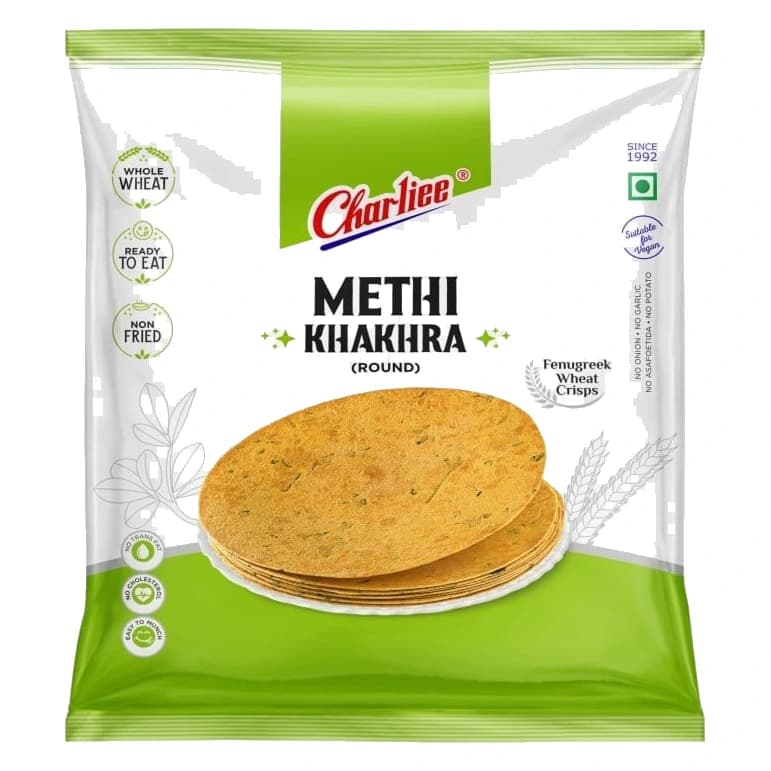
All Khakhra & Papad →- Charliee Methi Khakhra
- −Red flag: High sodium (803.5mg per 100g)
- −Red flag: High saturated fat (9.5g)
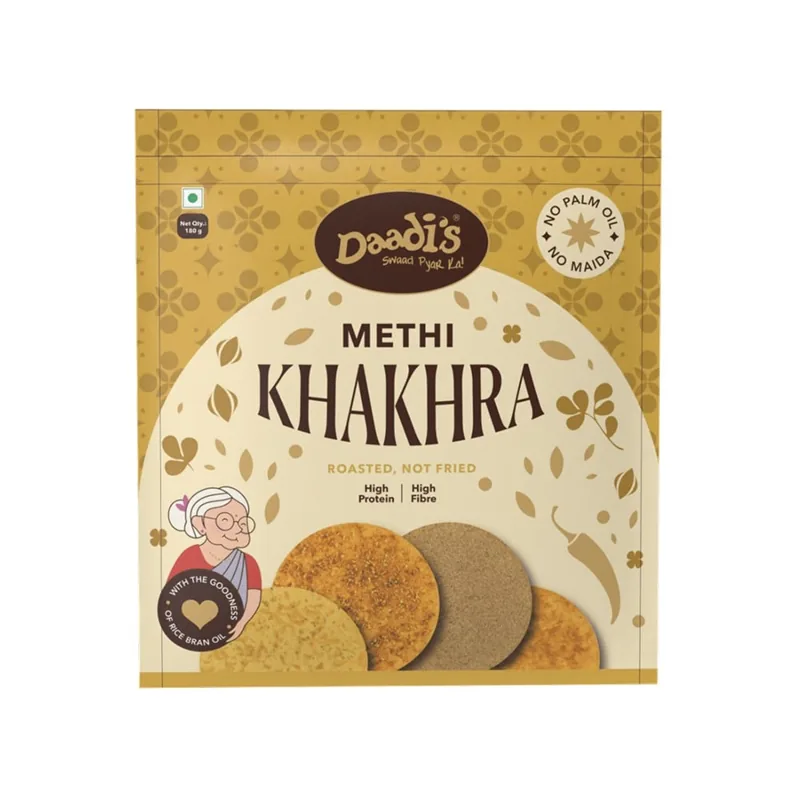
- Daadi's Methi Khakhra
- −Red flag: High sodium (761mg per 100g)
- +Green flag: High fibre (10.6g)
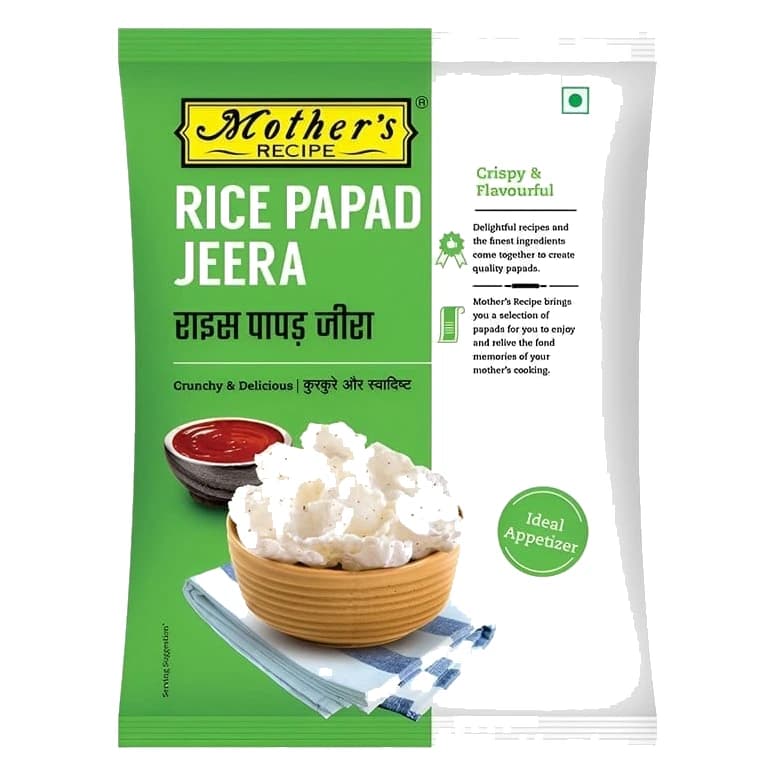
- Mother's Recipe Rice Papad - Jeera
- −Red flag: Refined flour (maida) base
- Prolicious High Protein & Fiber Thin Khakhra - Assorted Flavours
- −Red flag: High sodium (717mg per 100g)
- +Green flag: Source of protein (22.2g)