Cardamom Soan Papdi
Published
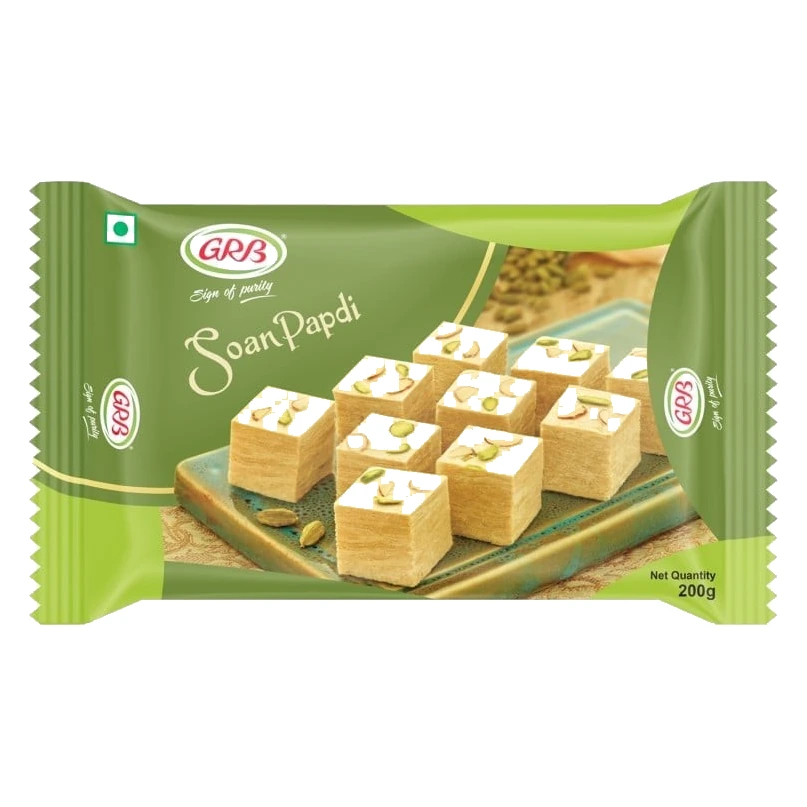
GRB Cardamom Soan Papdi is a flaky Indian sweet made from sugar, gram flour, wheat flour and fat, with cardamom, almond and pistachio. It scores EB5: very low on nutrition because it is mostly sugar and fat, a fairly clean ingredient list with no additives, and the highest risk grade for sugar and saturated fat. Best as a rare treat in small pieces.
Ingredients, decoded
8 listed- Sugar
- Bengal gram flour
- Refined Wheat Flour
- Refined Palmolein Oil
- Hydrogenated Vegetable Oil (Vanaspati)
- Liquid Glucose
- Cardamom
- Almond & Pistachio
10 teaspoons of sugar in every 100 g · 50 g total sugar, 5 g a teaspoon
| Energy | 526.4 kcal |
|---|---|
| Protein | 4.8 g |
| Carbohydrates | 68.3 g |
| Total sugars | 50 g |
| Added sugars | 47 g |
| Total fat | 26 g |
| Saturated fat | 15 g |
| Trans fat | 0 g |
| Cholesterol | 0 mg |
| Sodium | 11 mg |
Think this score is wrong?
What to know about Cardamom Soan Papdi
A cardamom sweet that is nearly half sugar
A 200 g box of soan papdi, the thread-like flaky sweet made by pulling sugar syrup and a gram-flour dough into fine strands. Here the list runs sugar, Bengal gram flour, refined wheat flour, refined palmolein oil, vanaspati, liquid glucose, cardamom, and almond and pistachio. It is bought as a festival and gifting sweet, with cardamom as the flavour. No ingredient percentages are declared.
Per 100 g it has 526 kcal, 47 g added sugar, 26 g fat of which 15 g is saturated, and 4.8 g protein. The pack prints a 17 g serve, about 90 kcal, 8 g added sugar and 2.6 g saturated fat, and the box holds 12 serves. Sodium is tiny at 11 mg per 100 g, and no fibre is declared.
The name promises cardamom and the list does include it, though far down and with no share declared. The pack also says that Sign of Purity is only a brand name. Vanaspati is listed without a partly or fully qualifier, so it is scored as hydrogenated. CleanPlate scores it EB5.
Why Cardamom Soan Papdi scores EB5
Nutrition is an E because there is no fibre or micronutrient credit and protein is only 4.8 g per 100 g. Ingredients are a B, and risk is a 5 on 47 g added sugar and 15 g saturated fat.
Very low nutrient density
- Protein
- 4.8 g
- Fibre
- Not declared
- Vitamins and minerals
- None declared
- Energy
- 526 kcal
01 Nutrition density: why E
Protein is 4.8 g per 100 g, mostly from the gram flour, and no fibre is declared. A 17 g piece gives under 1 g protein.
No vitamins or minerals are declared, so nothing adds to the grade. The calories come from sugar and fat: 526 kcal per 100 g.
Scored on protein, fibre and twelve vitamins and minerals, against the Codex and FSSAI "source" and "high" levels, per 100 g and per 100 kcal. Protein also has to supply at least 12.5% of the calories to count, and 25% for full credit.
Good, few concerning additives
- Base
- Sugar
- Main fat
- Refined Palmolein Oil
- Sweeteners
- Sugar, Liquid Glucose
- Additives
- 0
- Flagged
- 3 ingredients
02 Ingredient integrity: why B
The list is short and has no added colours, preservatives or flavour additives, which helps. Sugar comes first, then gram flour, refined wheat flour, two fats and liquid glucose. Cardamom and the nuts are last, with no percentages declared.
Vanaspati has no partly or fully qualifier on the label, so the declared 0 g trans fat is not accepted and the fat is scored as hydrogenated. That costs ingredient points.
Scored on how processed the ingredients are, which additives are used and why, and whether the label keeps its promises.
Very high risk
- Added sugar
- 47 g
- Sodium
- 11 mg
- Saturated fat
- 15 g
- Trans fat
- 0 g
03 Load risk: why 5
Sugar and saturated fat drive the risk grade. Added sugar is 47 g per 100 g, and saturated fat is 15 g, three times the 5 g high line. One 17 g piece has 8 g added sugar and 2.6 g saturated fat.
Energy at 526 kcal per 100 g adds to it. Sodium is 11 mg per 100 g and plays almost no part. Trans fat is declared as 0 g.
Scored on free sugar, sodium, saturated fat and trans fat, each weighed by how strong the evidence of harm is.
Red flags
- −Red flag: Contains Hydrogenated Vegetable Oil
- −Red flag: High added sugar (47g per 100g)
- −Red flag: High saturated fat (15g)
- −Red flag: Refined flour (maida) base
Green flags
- +Green flag: Low sodium
Does Cardamom Soan Papdi live up to its claims?
Cardamom, almonds and pistachio are all real ingredients but undeclared in share. Sign of Purity is, in the pack's own words, only a brand name.
- On the packBe careful
“Sign of purity”
The back of the pack says this is only a brand name and does not describe the product. It is 47 g added sugar and 15 g saturated fat per 100 g, with vanaspati in the list.
- Product nameHolds
“Soan Papdi”
A gram flour and wheat flour base with sugar and fat is what the name describes.
- Product namePartly true
“Cardamom”
Cardamom is listed as a real ingredient, but it sits near the end of the list with no share declared.
- On the packPartly true
“Almond and pistachio pieces”
Almond and pistachio are the last item on the list, with no share declared, so they are a garnish rather than a main ingredient.
What's in Cardamom Soan Papdi?
Sugar leads the list, followed by gram flour, wheat flour and two fats, one of them vanaspati. The sugar and the hydrogenated fat are what to watch.
The ingredient list, read for you
Sugar leads, so this is a sweet first. Bengal gram flour and refined wheat flour form the strands, refined palmolein oil and vanaspati give the richness and flake, and liquid glucose keeps the syrup from crystallising. Cardamom flavours it, and almond and pistachio finish it. No percentages are declared.
Ingredients to watch
- Vanaspati (type not stated)Concern
Listed with no partly or fully qualifier, so it is scored as hydrogenated even though trans fat is declared as 0 g. It costs ingredient points.
- Added sugarConcern
47 g per 100 g, about 8 g in one 17 g piece, and about 94 g in the whole 200 g box.
- Saturated fatConcern
15 g per 100 g from palmolein oil and vanaspati, three times the 5 g high line. One piece has about 2.6 g.
- EnergyWorth watching
526 kcal per 100 g, about 90 kcal per piece, and the pieces are easy to eat in quantity.
- SodiumFine
11 mg per 100 g, close to none.
What it doesn’t have
- No fibre is declared on the panel.
- No vitamins or minerals are declared, and no ingredient percentages are given.
Who should eat Cardamom Soan Papdi?
A rare treat for most adults. Children, and anyone managing blood sugar or weight, should have even less, given 8 g added sugar in one 17 g piece.
- Most adultsRarely
47 g added sugar and 15 g saturated fat per 100 g.
- ChildrenAvoid
Hydrogenated fat and about 8 g added sugar in one 17 g piece.
- Diabetes or prediabetesCheck with your doctor
47 g added sugar per 100 g, plus refined flour and liquid glucose.
- Weight managementRarely
About 90 kcal per small piece, and it is easy to eat several.
Cardamom Soan Papdi: common questions
What is the CleanPlate score of Cardamom Soan Papdi?
GRB Cardamom Soan Papdi is a flaky Indian sweet made from sugar, gram flour, wheat flour and fat, with cardamom, almond and pistachio. It scores EB5: very low on nutrition because it is mostly sugar and fat, a fairly clean ingredient list with no additives, and the highest risk grade for sugar and saturated fat. Best as a rare treat in small pieces. Nutrition E, ingredients B, load risk 5; nutrition and ingredients run A to E, risk runs 1 to 5, and A and 1 are best.
How many calories and how much protein are in Cardamom Soan Papdi?
Per 100 g, Cardamom Soan Papdi has 526 kcal, 4.8 g protein, 68.3 g carbohydrate, 26 g fat and 15 g saturated fat. One serve (1 piece, 17 g) has 89 kcal and 0.8 g protein.
What are the ingredients in Cardamom Soan Papdi?
8 ingredients, in label order: Sugar, Bengal gram flour, Refined Wheat Flour, Refined Palmolein Oil, Hydrogenated Vegetable Oil (Vanaspati), Liquid Glucose, Cardamom, Almond & Pistachio. Flagged: Refined Wheat Flour (Maida) (low concern), Palmolein (low concern), Hydrogenated Vegetable Oil (moderate concern).
Does Cardamom Soan Papdi live up to its claims?
4 claims checked: 1 holds, 2 are partly true, 1 needs care. "Sign of purity" needs care: The back of the pack says this is only a brand name and does not describe the product. It is 47 g added sugar and 15 g saturated fat per 100 g, with vanaspati in the list. "Cardamom" is partly true: Cardamom is listed as a real ingredient, but it sits near the end of the list with no share declared.
Who should limit Cardamom Soan Papdi?
Most adults: rarely. 47 g added sugar and 15 g saturated fat per 100 g. Children: avoid. Hydrogenated fat and about 8 g added sugar in one 17 g piece. Diabetes or prediabetes: check with your doctor. 47 g added sugar per 100 g, plus refined flour and liquid glucose.
How much sugar, salt and saturated fat does Cardamom Soan Papdi have?
Per 100 g, Cardamom Soan Papdi has 47 g added sugar, 11 mg sodium (about 0 g salt) and 15 g saturated fat. The FSSAI and UK FSA "high" lines are 10 g added sugar, 600 mg sodium and 5 g saturated fat per 100 g. It is high in sugar and saturated fat.
Last reviewed October 30, 2026. Scored with the CleanPlate method from the published label. Spotted a mistake? .
Label read on 30 October 2026, from photos of the pack. If the pack has changed since, tell us.
Score history (1)
| Date | Score | Method | Why |
|---|---|---|---|
| 30 October 2026 | EB5 | v5.0 | First scored |
Every change to this score is logged. See corrections and the method changelog.
Better Indian Sweets
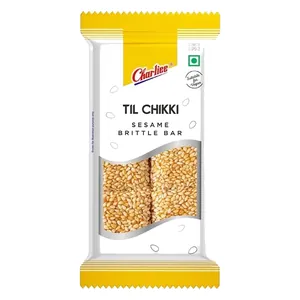
All Indian Sweets →- Til Chikki by Charliee
- −Red flag: High added sugar (33.3g per 100g)
- +Green flag: Source of protein (17.3g)
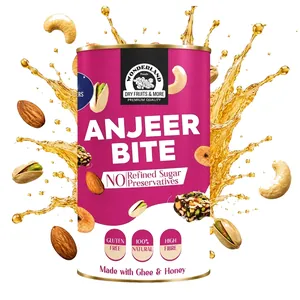
- Wonderland Foods Vrat Anjeer Bites
- −Red flag: High added sugar (15.8g per 100g)
- −Red flag: High saturated fat (18.1g)
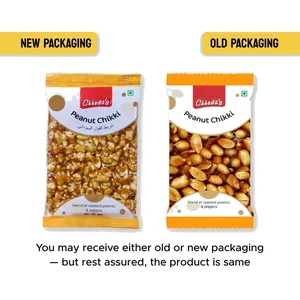
- Chheda's Peanut Chikki
- −Red flag: High sugar (40g per 100g)
- +Green flag: Source of protein (20g)
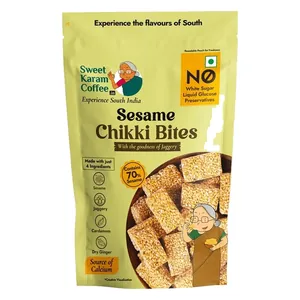
- Sweet Karam Coffee Sesame Chikki Bites
- −Red flag: High added sugar (29g per 100g)
- +Green flag: Low sodium