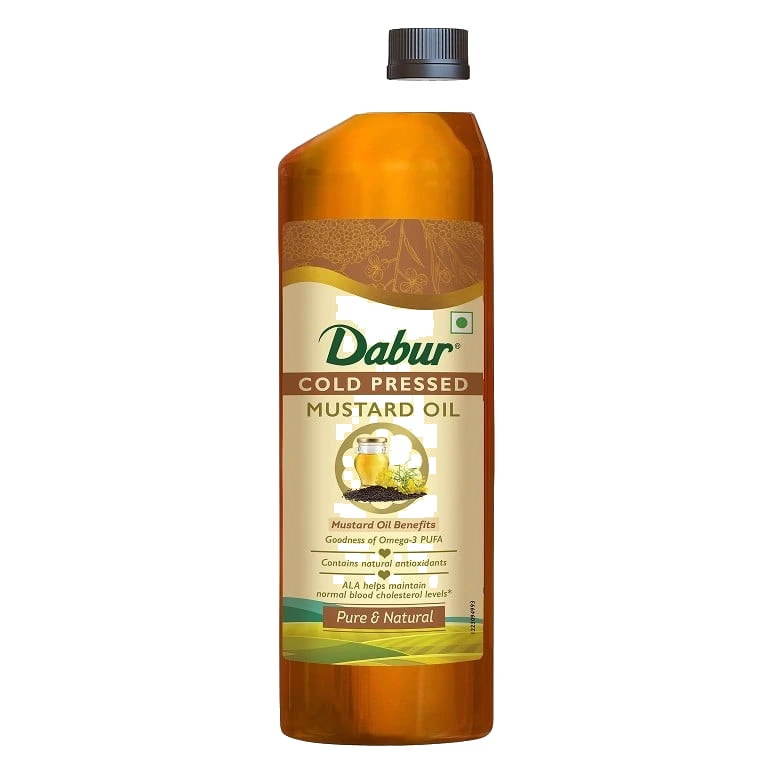
Dabur Cold Pressed Mustard Oil
Published · Last updated
A realistic serve of Dabur Cold Pressed Mustard Oil (2 tsp, 9.1 g (10 ml)) has 82 kcal, 0 g protein, 0 g carbohydrate, 9.1 g fat, 0 g added sugar and 0 mg sodium. Per 100 g it has 898 kcal, 0 g protein, 0 g carbohydrate, 99.8 g fat, 8 g saturated fat, 0 g added sugar and 0 mg sodium.
Dabur Cold Pressed Mustard Oil is a single-ingredient cooking oil pressed from mustard seed, sold on its omega fats and natural antioxidants. It scores EB4: nutrition is lowest because an oil gives no protein or fibre, ingredients are clean with nothing added, and risk is high because of the energy density and saturated fat. Use it by the spoonful, not the splash.
Ingredients, decoded
1 listed- Mustard Seed Oil
0 teaspoon of sugar in every 100 g · 0 g total sugar, 5 g a teaspoon
Score and nutrition facts for Dabur Cold Pressed Mustard Oil:
| Energy | 898 kcal |
|---|---|
| Protein | 0 g |
| Carbohydrates | 0 g |
| Total sugars | 0 g |
| Added sugars | 0 g |
| Total fat | 99.8 g |
| Saturated fat | 8 g |
| Trans fat | 0 g |
| Cholesterol | 0 mg |
| Sodium | 0 mg |
| Vitamin E | 23 mg |
Think this score is wrong?
Why Dabur Cold Pressed Mustard Oil scores EB4
Nutrition is an E because an oil has no protein or fibre. Ingredients are a B for a single clean ingredient, and risk is a 4, driven by 898 kcal and 8 g saturated fat per 100 g.
Very low nutrient density
- Protein
- 0 g
- Fibre
- Not declared
- Vitamins and minerals
- Vitamin E
- Energy
- 898 kcal
01 Nutrition density: why E
Protein is 0 g and carbohydrate is 0 g per 100 g, so there is no protein or fibre to earn credit. The grade rests on vitamin E, 23 mg per 100 g, and it does not lift the score.
An oil is all fat by nature, so the lowest nutrition grade says more about the food type than about this brand.
Scored on protein, fibre and twelve vitamins and minerals, against the Codex and FSSAI "source" and "high" levels, per 100 g and per 100 kcal. Protein also has to supply at least 12.5% of the calories to count, and 25% for full credit.
Good, few concerning additives
- Base
- Mustard Seed Oil
- Main fat
- Mustard Seed Oil
- Sweeteners
- None added
- Additives
- 0
- Flagged
- None
02 Ingredient integrity: why B
The list is a single ingredient, mustard seed oil, with no additive, no flavouring and no refined flour. Nothing costs ingredient points, and no label promise is hollow.
The grade stops at a B because no percentage or origin detail is declared for the oil.
Scored on how processed the ingredients are, which additives are used and why, and whether the label keeps its promises.
High risk
- Added sugar
- 0 g
- Sodium
- 0 mg
- Saturated fat
- 8 g
- Trans fat
- 0 g
03 Load risk: why 4
Energy is the biggest driver: 898 kcal per 100 g, which is about 82 kcal in a 2 tsp serve. Saturated fat adds to it at 8 g per 100 g, above the 5 g high line, about 0.7 g per serve.
Sugar, sodium and trans fat are all 0 g, so they play no part. The risk grade reflects how concentrated the energy is, not any one harmful ingredient.
Scored on free sugar, sodium, saturated fat and trans fat, each weighed by how strong the evidence of harm is.
Red flags
- −Red flag: High saturated fat (8g)
Green flags
- +Green flag: No added sugar
- +Green flag: Low sodium
- +Green flag: No additives
Does Dabur Cold Pressed Mustard Oil live up to its claims?
The omega-3 and antioxidant claims hold on the panel. The cholesterol claim needs 2 g of ALA a day, about 19 g of this oil, and the saturated fat figure differs between panels.
- On the packHolds
“Goodness of Omega-3 PUFA”
The panel shows 10.6 g omega-3 ALA per 100 g, within 26.8 g of polyunsaturated fat. A 2 tsp serve has about 1 g ALA.
- On the packBe careful
“ALA helps maintain normal blood cholesterol levels”
The pack's footnote says the effect needs 2 g of ALA a day. At 10.6 g per 100 g that is about 19 g of oil, around 4 tsp and 170 kcal, so one serve gives about half.
- On the packHolds
“Contains natural antioxidants”
The panel declares 23 mg vitamin E per 100 g, about 2.1 mg in a 2 tsp serve.
- On the packHolds
“Pure & Natural”
The ingredient list has one item, mustard seed oil, with no additive or flavouring.
- Retail listingBe careful
“Saturated fat 5.7 g per 100 g”
The retailer page shows 5.7 g saturated fat per 100 g, the pack shows 8 g. The pack figure is used for the score.
What's in Dabur Cold Pressed Mustard Oil?
The list is one item, mustard seed oil, with no additive to watch. The numbers to know are 898 kcal and 8 g saturated fat per 100 g.
1 ingredient listed. None of them is an additive or watched ingredient in our research.
The ingredient list, read for you
Mustard seed oil is the only ingredient. There is no blend, no added flavour and no preservative, so there is no additive to read. No percentage is printed because nothing else is in the bottle.
The label numbers, read for you
The panel is per 100 g: 898 kcal and 99.8 g fat, of which 8 g is saturated, 65 g monounsaturated and 26.8 g polyunsaturated (10.6 g omega-3 ALA, 14.2 g omega-6). Trans fat, cholesterol, sugar, carbohydrate and sodium are all 0. The saturated fat and energy decide the risk grade.
In the pack's serve of 2 tsp (about 9.1 g, 10 ml) that is about 82 kcal, 0.7 g saturated fat and 2.1 mg vitamin E. Protein and fibre are 0 g, and vitamin E is the only vitamin declared.
What to know about Dabur Cold Pressed Mustard Oil
A single-ingredient oil that is all fat and energy
Dabur Cold Pressed Mustard Oil is a 1 L bottle (about 910 g) of mustard seed oil, and nothing else is on the ingredient list. It is bought for cooking, tempering and everyday Indian dishes where the pungent flavour and aroma of mustard are wanted. No percentage is declared, as the list has a single item.
The panel is the profile of a pure oil: 898 kcal and 99.8 g fat per 100 g, with no protein, carbohydrate, sugar or sodium. Of that fat, 8 g is saturated, 65 g is monounsaturated and 26.8 g is polyunsaturated, including 10.6 g omega-3 ALA and 14.2 g omega-6. A serve of 2 tsp (about 9.1 g) gives about 82 kcal, 0.7 g saturated fat and 2.1 mg vitamin E.
The pack leans on omega-3, antioxidants and an ALA and cholesterol statement. The omega-3 and the vitamin E are real, but the ALA benefit needs a daily intake of 2 g, which is more oil than a normal serve. CleanPlate scores it EB4.
Who should eat Dabur Cold Pressed Mustard Oil?
An occasional cooking fat for most adults, measured by the spoon. Its 82 kcal per 2 tsp is the number that matters for children and weight management.
- Most adultsOccasionally
898 kcal per 100 g and 8 g saturated fat, so measure it by the spoon.
- ChildrenOccasionally
No sugar or additives, but 82 kcal in a 2 tsp serve with no protein or fibre.
- Diabetes or prediabetesOccasionally
0 g carbohydrate and sugar, but energy-dense at 82 kcal per 2 tsp.
- Weight managementOccasionally
All fat at 898 kcal per 100 g, so small measured spoons matter.
Recipes with Dabur Cold Pressed Mustard Oil
Use it by the teaspoon, about 41 kcal each, for tempering dal, cooking sabzi or marinating, so the flavour comes through without extra oil.
Dal tadka
Temper the dal with one teaspoon of oil, about 41 kcal, so the mustard flavour comes through with a small amount of fat.
Simple vegetable sabzi
Measure two teaspoons for a pan of vegetables, about 82 kcal in total, rather than pouring freely from a bottle that is all fat.
Mustard marinade
Coat fish, paneer or vegetables with a spoonful of oil and spices, so the flavour comes from the oil, which has 0 g sugar and 0 mg sodium.
Dabur Cold Pressed Mustard Oil: common questions
Is Dabur Cold Pressed Mustard Oil healthy?
Dabur Cold Pressed Mustard Oil is high in saturated fat and calories, so occasional and moderate intake is fine and won't affect your health in any major way, but it shouldn't be a frequent treat.
How many calories and how much protein are in Dabur Cold Pressed Mustard Oil?
Per 100 g, Dabur Cold Pressed Mustard Oil has 898 kcal, 0 g protein, 0 g carbohydrate, 99.8 g fat and 8 g saturated fat. One serve (2 tsp, 9.1 g (10 ml)) has 82 kcal and 0 g protein.
What are the ingredients in Dabur Cold Pressed Mustard Oil?
1 ingredient, in label order: Mustard Seed Oil.
Does Dabur Cold Pressed Mustard Oil live up to its claims?
5 claims checked: 3 hold, 2 need care. "ALA helps maintain normal blood cholesterol levels" needs care: The pack's footnote says the effect needs 2 g of ALA a day. At 10.6 g per 100 g that is about 19 g of oil, around 4 tsp and 170 kcal, so one serve gives about half. "Saturated fat 5.7 g per 100 g" needs care: The retailer page shows 5.7 g saturated fat per 100 g, the pack shows 8 g. The pack figure is used for the score.
Who should limit Dabur Cold Pressed Mustard Oil?
Most adults: occasionally. 898 kcal per 100 g and 8 g saturated fat, so measure it by the spoon. Children: occasionally. No sugar or additives, but 82 kcal in a 2 tsp serve with no protein or fibre. Diabetes or prediabetes: occasionally. 0 g carbohydrate and sugar, but energy-dense at 82 kcal per 2 tsp.
How much sugar, salt and saturated fat does Dabur Cold Pressed Mustard Oil have?
Per 100 g, Dabur Cold Pressed Mustard Oil has 0 g added sugar, 0 mg sodium (about 0 g salt) and 8 g saturated fat. The FSSAI and UK FSA "high" lines are 10 g added sugar, 600 mg sodium and 5 g saturated fat per 100 g. It is high in saturated fat.
What does the EB4 score mean for Dabur Cold Pressed Mustard Oil?
The first letter (E) grades nutrition density on A to E, the second (B) grades ingredient integrity on A to E, and the number (4) grades load risk on 1 to 5. A and 1 are best. Nutrition: Protein is 0 g and carbohydrate is 0 g per 100 g, so there is no protein or fibre to earn credit. The grade rests on vitamin E, 23 mg per 100 g, and it does not lift the score. Ingredients: The list is a single ingredient, mustard seed oil, with no additive, no flavouring and no refined flour. Nothing costs ingredient points, and no label promise is hollow. Load risk: Energy is the biggest driver: 898 kcal per 100 g, which is about 82 kcal in a 2 tsp serve. Saturated fat adds to it at 8 g per 100 g, above the 5 g high line, about 0.7 g per serve.
Last reviewed November 3, 2026. Scored with the CleanPlate method from the published label. Spotted a mistake? .
Reference values: FSSAI labelling regulations, Codex Alimentarius, ICMR-NIN and the UK front of pack guidance. Where our label data comes from.
Label read on 3 November 2026, from photos of the pack. If the pack has changed since, tell us.
Score history (1)
| Date | Score | Method | Why |
|---|---|---|---|
| 3 November 2026 | EB4 | v5.0 | First scored |
Every change to this score is logged. See corrections and the method changelog.
Better Cooking Oils
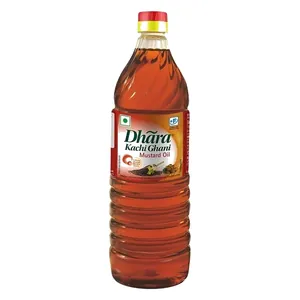
All Cooking Oils →- Dhara Kachi Ghani Mustard OilFortified
- −Red flag: High saturated fat (5.7g)
- +Green flag: No added sugar
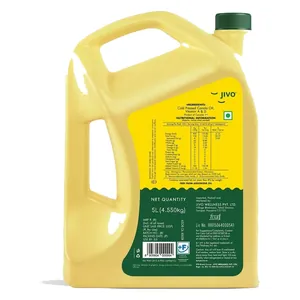
- Jivo Cold Pressed Canola Oil
- −Red flag: High saturated fat (8g)
- +Green flag: No added sugar
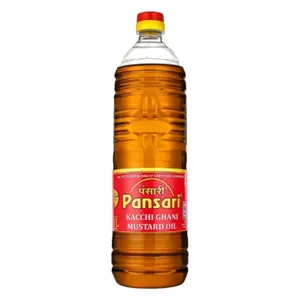
- Pansari Kacchi Ghani Mustard OilFortified
- −Red flag: High saturated fat (12g)
- +Green flag: No added sugar
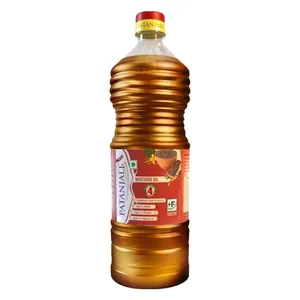
- Patanjali Mustard Oil Kachi Ghani (Cold Pressed)Fortified
- −Red flag: High saturated fat (5.5g)
- +Green flag: No added sugar