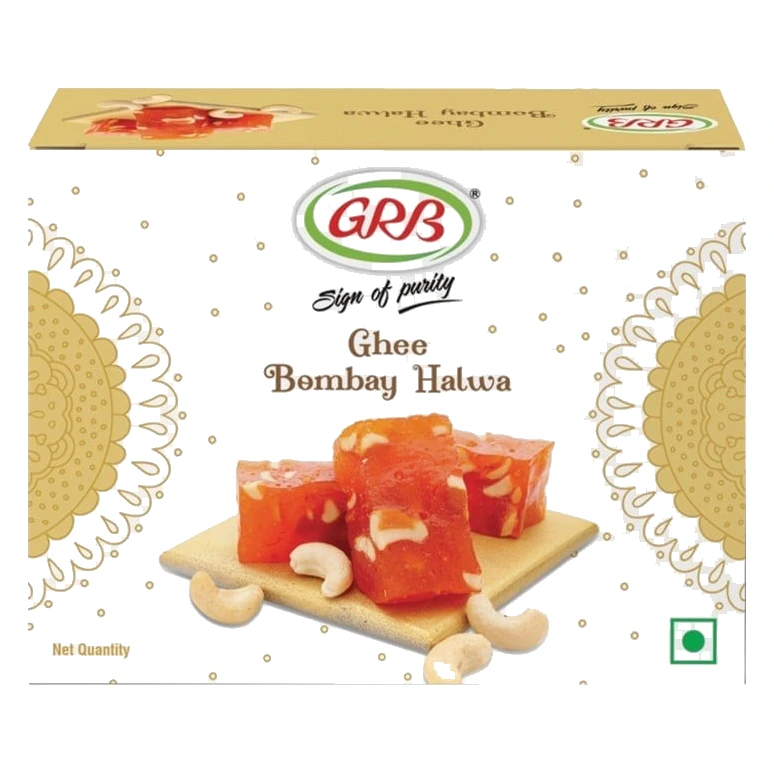
Ghee Bombay Halwa
Published · Updated
GRB Ghee Bombay Halwa is a starch-and-sugar sweet finished with a little ghee and cashew. It scores EB5: nutrition is lowest because sugar and starch carry almost everything and protein is tiny, ingredients hold up fairly well on a short list though a synthetic dye and flavouring cost points, and risk is highest because of the sugar. A rare treat in small pieces.
Ingredients, decoded
7 listed- Sugar
- Corn Starch
- Ghee (6%)
- Cashew Nuts
- Citric Acid (INS 330)
- Synthetic Food Colours (INS 110)
- Natural Orange Flavour (Antioxidant INS 306)
13½ teaspoons of sugar in every 100 g · 67.5 g total sugar, 5 g a teaspoon
| Energy | 422 kcal |
|---|---|
| Protein | 1.3 g |
| Carbohydrates | 78 g |
| Total sugars | 67.5 g |
| Added sugars | 67.5 g |
| Total fat | 11.6 g |
| Saturated fat | 7 g |
| Trans fat | 0 g |
| Cholesterol | 25 mg |
| Sodium | 0 mg |
Think this score is wrong?
What to know about Ghee Bombay Halwa
A ghee halwa that is mostly sugar and starch
GRB Ghee Bombay Halwa is a chewy, starch-set Indian sweet made from sugar, corn starch, ghee (6%) and cashew nuts, coloured and flavoured with citric acid, a synthetic orange colour (INS 110) and natural orange flavour. It is bought as a festival or gifting sweet, in a 200 g pack.
Per 100 g it has 422 kcal, 78 g carbohydrate, of which 67.5 g is added sugar, 11.6 g fat with 7 g saturated, and only 1.3 g protein. The pack prints a 40 g serve, which works out to about 169 kcal, 27 g sugar and 2.8 g saturated fat. A 200 g pack holds five such serves.
The name puts ghee up front, but sugar and corn starch come first on the list and ghee is 6%. The front line Sign of purity is a brand trademark, which the back of the pack says itself. CleanPlate scores it EB5.
Why Ghee Bombay Halwa scores EB5
Nutrition is an E on 1.3 g protein per 100 g with no fibre declared. Ingredients are a B on a short list, held back by a synthetic dye and flavouring. Risk is a 5, driven by 67.5 g sugar per 100 g.
Very low nutrient density
- Protein
- 1.3 g
- Fibre
- Not declared
- Vitamins and minerals
- None declared
- Energy
- 422 kcal
01 Nutrition density: why E
Protein is 1.3 g per 100 g and no fibre is declared, so the grade has almost nothing to build on. The biggest protein source is the cashew, and it adds under 2 g per 100 g.
No vitamins or minerals are declared. Sugar and starch supply nearly all of the 422 kcal.
Scored on protein, fibre and twelve vitamins and minerals, against the Codex and FSSAI "source" and "high" levels, per 100 g and per 100 kcal. Protein also has to supply at least 12.5% of the calories to count, and 25% for full credit.
Good, few concerning additives
- Base
- Sugar
- Main fat
- Ghee
- Sweeteners
- Sugar
- Additives
- 2
- Flagged
- Sunset Yellow FCF
02 Ingredient integrity: why B
The list is short, with seven entries, and the main ingredients are simple: sugar, corn starch, ghee and cashew. That keeps the grade at a B.
Synthetic colour INS 110 (Sunset Yellow FCF) costs ingredient points, and so does the flavouring. Citric acid and the tocopherol antioxidant cost nothing. Only ghee has a declared percentage, and the cashew share is not stated, which costs a small label point.
Scored on how processed the ingredients are, which additives are used and why, and whether the label keeps its promises.
Very high risk
- Added sugar
- 67.5 g
- Sodium
- 0 mg
- Saturated fat
- 7 g
- Trans fat
- 0 g
03 Load risk: why 5
Sugar is the main driver: 67.5 g of added sugar per 100 g, which is 27 g in a 40 g serve. It makes up most of the risk number.
Saturated fat is 7 g per 100 g, above the 5 g high line, and energy is 422 kcal per 100 g. Sodium is declared as 0 mg and trans fat as 0 g, so they add nothing.
Scored on free sugar, sodium, saturated fat and trans fat, each weighed by how strong the evidence of harm is.
Red flags
- −Red flag: Contains Sunset Yellow FCF
- −Red flag: High added sugar (67.5g per 100g)
- −Red flag: High saturated fat (7g)
Green flags
- +Green flag: Low sodium
Does Ghee Bombay Halwa live up to its claims?
The ghee and starch-based claims hold in part or in full, but ghee is only 6%. Sign of purity is a brand trademark, not a statement about the food.
- Product namePartly true
“Ghee Bombay Halwa”
Ghee is real and named, but it is only 6% of the halwa. Sugar and corn starch come first.
- On the packHolds
“Starch Based Sweets”
Corn starch is the second ingredient, after sugar, and sets the texture.
- On the packBe careful
“Sign of purity”
The back of the pack says it is only a brand name or trademark. It says nothing about the food, which has 67.5 g sugar per 100 g and a synthetic colour.
What's in Ghee Bombay Halwa?
Sugar and corn starch lead the list, then a little ghee and cashew. The sugar and the synthetic colour are what to watch.
The ingredient list, read for you
Sugar comes first, then corn starch, so the halwa is mostly sweetener and starch. Ghee at 6% adds flavour and richness, and cashew nuts add bite, with no percentage given. Citric acid adds tartness, INS 110 is a synthetic orange colour, and natural orange flavour carries a tocopherol antioxidant (INS 306).
Ingredients to watch
- Added sugarConcern
67.5 g per 100 g, about 27 g in a 40 g serve. It is the main reason risk is the highest grade.
- Synthetic colour INS 110Concern
Sunset Yellow FCF is a synthetic dye. It costs ingredient points and adds nothing to the food.
- Saturated fatWorth watching
7 g per 100 g from the ghee, about 2.8 g per 40 g serve.
- FlavouringWorth watching
Natural orange flavour costs ingredient points as a flavouring, though its antioxidant (INS 306) and citric acid (INS 330) cost none.
- Short, simple baseFine
Seven ingredients, no hydrogenated fat, no sodium declared and trans fat declared as 0 g.
What it doesn’t have
- No fibre, vitamins or minerals are declared on the panel.
- The cashew share is not stated, only the ghee at 6%.
Who should eat Ghee Bombay Halwa?
A rare sweet for most adults, and best avoided for children or anyone managing blood sugar, since a 40 g serve has about 27 g sugar.
- Most adultsRarely
A 40 g serve has about 27 g sugar and 169 kcal.
- ChildrenAvoid
Heavy in sugar and carries a synthetic dye.
- Diabetes or prediabetesAvoid
67.5 g sugar per 100 g, with little protein or fibre to slow it.
- Weight managementRarely
422 kcal per 100 g, almost all from sugar and starch.
Ghee Bombay Halwa: common questions
What is the CleanPlate score of Ghee Bombay Halwa?
GRB Ghee Bombay Halwa is a starch-and-sugar sweet finished with a little ghee and cashew. It scores EB5: nutrition is lowest because sugar and starch carry almost everything and protein is tiny, ingredients hold up fairly well on a short list though a synthetic dye and flavouring cost points, and risk is highest because of the sugar. A rare treat in small pieces. Nutrition E, ingredients B, load risk 5; nutrition and ingredients run A to E, risk runs 1 to 5, and A and 1 are best.
How many calories and how much protein are in Ghee Bombay Halwa?
Per 100 g, Ghee Bombay Halwa has 422 kcal, 1.3 g protein, 78 g carbohydrate, 11.6 g fat and 7 g saturated fat. One serve (40 g serve, as printed on the pack) has 169 kcal and 0.5 g protein.
What are the ingredients in Ghee Bombay Halwa?
7 ingredients, in label order: Sugar, Corn Starch, Ghee (6%), Cashew Nuts, Citric Acid (INS 330), Synthetic Food Colours (INS 110), Natural Orange Flavour (Antioxidant INS 306). Flagged: Sunset Yellow FCF (moderate concern).
Does Ghee Bombay Halwa live up to its claims?
3 claims checked: 1 holds, 1 is partly true, 1 needs care. "Ghee Bombay Halwa" is partly true: Ghee is real and named, but it is only 6% of the halwa. Sugar and corn starch come first. "Sign of purity" needs care: The back of the pack says it is only a brand name or trademark. It says nothing about the food, which has 67.5 g sugar per 100 g and a synthetic colour.
Who should limit Ghee Bombay Halwa?
Most adults: rarely. A 40 g serve has about 27 g sugar and 169 kcal. Children: avoid. Heavy in sugar and carries a synthetic dye. Diabetes or prediabetes: avoid. 67.5 g sugar per 100 g, with little protein or fibre to slow it.
How much sugar, salt and saturated fat does Ghee Bombay Halwa have?
Per 100 g, Ghee Bombay Halwa has 67.5 g added sugar, 0 mg sodium (about 0 g salt) and 7 g saturated fat. The FSSAI and UK FSA "high" lines are 10 g added sugar, 600 mg sodium and 5 g saturated fat per 100 g. It is high in sugar and saturated fat.
Last reviewed October 31, 2026. Scored with the CleanPlate method from the published label. Spotted a mistake? .
Label read on 31 October 2026, from photos of the pack. If the pack has changed since, tell us.
Score history (1)
| Date | Score | Method | Why |
|---|---|---|---|
| 31 October 2026 | EB5 | v5.0 | First scored |
Every change to this score is logged. See corrections and the method changelog.
Better Indian Sweets
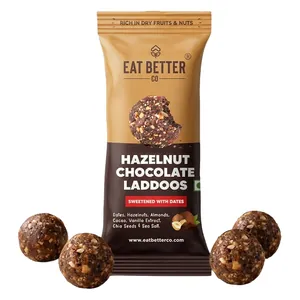
All Indian Sweets →- Hazelnut Chocolate Laddoos
- −Red flag: High sugar (32.2g per 100g)
- +Green flag: High fibre (9.3g)
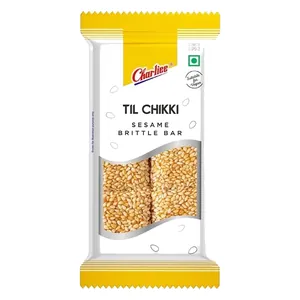
- Til Chikki by Charliee
- −Red flag: High added sugar (33.3g per 100g)
- +Green flag: Source of protein (17.3g)
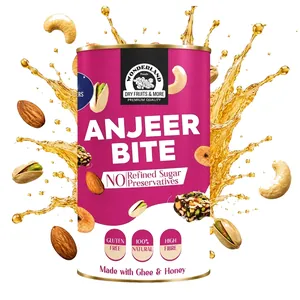
- Wonderland Foods Vrat Anjeer Bites
- −Red flag: High added sugar (15.8g per 100g)
- −Red flag: High saturated fat (18.1g)
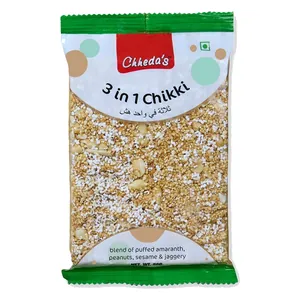
- 3 in 1 Chikki
- −Red flag: High sugar (28.6g per 100g)
- +Green flag: High fibre (7.1g)