Good Monk Plant Protein for Rotis
Published · Last updated
A realistic serve of Good Monk Plant Protein for Rotis (1 scoop, 13.11 g) has 54 kcal, 11 g protein, 0.6 g carbohydrate, 0.8 g fat, 0 g added sugar and 92 mg sodium. Per 100 g it has 415 kcal, 83.9 g protein, 4.5 g carbohydrate, 6.1 g fat, 1.6 g saturated fat, 0 g added sugar, 3 g fibre and 703 mg sodium.
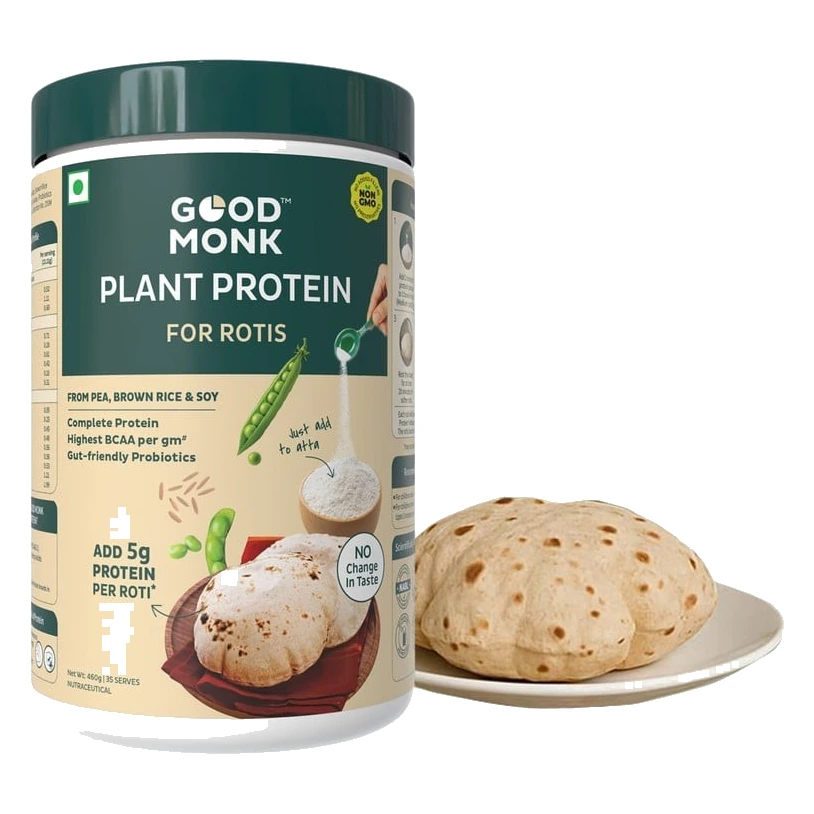
Good Monk Plant Protein for Rotis is a powder of pea, soy and brown rice protein isolates with probiotics, made for kneading into atta. It scores CC3: middling on nutrition because little but protein comes with it, middling on ingredients because the short list is all isolates, and moderate on risk from sodium. A handy roti booster, not a replacement for whole foods.
Ingredients, decoded
4 listed- Pea Protein Isolate
- Soy Protein Isolate
- Brown Rice Protein Isolate
- Probiotics (Bacillus Coagulans)
<½ teaspoon of sugar in every 100 g · 0.1 g total sugar, 5 g a teaspoon
Score and nutrition facts for Good Monk Plant Protein for Rotis:
| Energy | 415 kcal |
|---|---|
| Protein | 83.9 g |
| Carbohydrates | 4.5 g |
| Total sugars | 0.1 g |
| Added sugars | 0 g |
| Dietary fibre | 3 g |
| Total fat | 6.1 g |
| Saturated fat | 1.6 g |
| Trans fat | 0.1 g |
| Sodium | 702.9 mg |
Think this score is wrong?
Why Good Monk Plant Protein for Rotis scores CC3
Nutrition is a C because protein is high at 83.9 g per 100 g but little else comes with it. Ingredients are a C for a short but all-isolate list. Risk is a 3, mainly from 702.9 mg sodium per 100 g.
Adequate nutrient density
- Protein
- 83.9 g
- Fibre
- 3 g
- Vitamins and minerals
- None declared
- Energy
- 415 kcal
01 Nutrition density: why C
Protein is 83.9 g per 100 g, so 11.0 g in a 13.11 g scoop, and most of it comes from pea protein isolate. The protein credit is scaled down a little, because the protein is isolated rather than part of a whole food.
Fibre is 3.0 g per 100 g (0.4 g a scoop), and no vitamins or minerals are declared, so protein carries the grade alone.
Scored on protein, fibre and twelve vitamins and minerals, against the Codex and FSSAI "source" and "high" levels, per 100 g and per 100 kcal. Protein also has to supply at least 12.5% of the calories to count, and 25% for full credit.
Mixed processing and additives
- Base
- Pea Protein Isolate
- Sweeteners
- None added
- Additives
- 0
- Flagged
- None
02 Ingredient integrity: why C
Only four items are listed: three protein isolates and a probiotic. There are no additives, no sweeteners and no label-integrity penalties, which keeps the grade from falling lower.
What holds it at a C is that every ingredient is a refined isolate, and the label gives no percentages for any of them.
Scored on how processed the ingredients are, which additives are used and why, and whether the label keeps its promises.
Moderate risk
- Added sugar
- 0 g
- Sodium
- 702.9 mg
- Saturated fat
- 1.6 g
- Trans fat
- 0.1 g
03 Load risk: why 3
Sodium is the biggest part of the risk number: 702.9 mg per 100 g, or 92.1 mg per scoop. No salt is listed, so it comes with the protein ingredients themselves.
Saturated fat is small at 1.6 g per 100 g, energy is 415 kcal per 100 g (54 kcal a scoop), and sugar is 0 g, so they add little. Trans fat is 0.1 g per 100 g and no hydrogenated fat is listed.
Scored on free sugar, sodium, saturated fat and trans fat, each weighed by how strong the evidence of harm is.
Red flags
- −Red flag: High sodium (702.9mg per 100g)
Green flags
- +Green flag: High protein (83.9g per 100g)
- +Green flag: Source of fibre
- +Green flag: No added sugar
Does Good Monk Plant Protein for Rotis live up to its claims?
The 5 g protein per roti and no added sugar claims hold. Complete protein, highest BCAA and gut-friendly are stated on the pack but cannot be fully checked from the label.
- On the packHolds
“Add 5g Protein Per Roti”
Two scoops give about 22 g of protein, shared across the 4 to 5 rotis the pack suggests, so about 4.4 to 5.5 g each.
- Retail listingHolds
“No Added Sugar, Sweeteners, Fillers”
The list has four items, all protein isolates or a probiotic. Added sugar is 0 g.
- On the packBe careful
“Complete Protein, PDCAAS 1”
The blend of pea, soy and rice protein is a sensible way to cover the amino acids. The label gives 4.56 g essential amino acids per scoop but no score that can be checked.
- On the packBe careful
“Highest BCAA per gm*”
The panel states 2.23 g BCAA per 13.11 g scoop, but the comparison it is set against is not shown.
- On the packBe careful
“Gut-friendly Probiotics”
The probiotic is real and listed: 1.3 billion CFU of Bacillus coagulans per scoop. The label does not show a gut effect, and fibre is only 0.4 g a scoop.
What's in Good Monk Plant Protein for Rotis?
Pea, soy and brown rice protein isolates plus a probiotic, with nothing else added. There are no additives to watch, and the sodium is the number to know.
4 ingredients listed. None of them is an additive or watched ingredient in our research.
The ingredient list, read for you
Pea protein isolate, soy protein isolate and brown rice protein isolate make up the powder, in that order, with Bacillus coagulans as the probiotic. The three proteins are blended to cover each other's amino acid gaps. No percentages are declared, so the exact split is not known.
The label numbers, read for you
Protein is the number that matters: 83.9 g per 100 g, or 11.0 g in a 13.11 g scoop. Sodium is 702.9 mg per 100 g, 92.1 mg a scoop, and the pack's two-scoop dose brings about 184 mg.
Carbs are 4.5 g and sugar 0.1 g per 100 g, with no added sugar. Fibre is low at 3.0 g per 100 g. No vitamins or minerals are declared, and the probiotic is 9.9 billion CFU per 100 g.
What it doesn’t have
- No vitamins or minerals are declared on the panel.
- No percentages are given for the three protein isolates.
What to know about Good Monk Plant Protein for Rotis
A roti booster with 11 g protein per scoop
Good Monk Plant Protein for Rotis is a 460 g tub of plant protein powder built from three isolates: pea, soy and brown rice, plus a probiotic (Bacillus coagulans). No percentages are declared, but pea protein isolate leads. It is bought by families who want more protein in daily rotis, parathas and theplas without changing how they cook.
A 13.11 g scoop gives 11.0 g protein, 54 kcal, 0.4 g fibre, 0.8 g fat and no sugar, with 1.3 billion CFU of probiotic. The pack says two scoops go into about 80 g of atta, enough for 4 to 5 rotis. Per 100 g the powder has 83.9 g protein and 702.9 mg sodium, which comes to 92.1 mg in a scoop.
The pack promises protein, no added sugar and no change in taste, and the short ingredient list backs the first two. Some of the wider claims, such as the highest BCAA per gram and a gut benefit, cannot be checked from the label. CleanPlate scores it CC3.
Who should eat Good Monk Plant Protein for Rotis?
A few times a week suits most adults and active people. Anyone with kidney disease or who is pregnant should check with a doctor first, given the concentrated protein.
- Most adultsA few times a week
11.0 g protein per scoop, with 92.1 mg sodium that adds up over daily use.
- Active peopleA few times a week
Useful top-up at 11.0 g per scoop, but it is not a full protein meal.
- Kidney diseaseCheck with your doctor
At 83.9 g protein per 100 g, it is a concentrated protein source.
- PregnancyCheck with your doctor
A concentrated protein supplement with added probiotics, so ask before adding it.
Recipes with Good Monk Plant Protein for Rotis
Two scoops go into 80 g of atta, giving about 22 g of protein across 4 to 5 rotis. Parathas, theplas and pooris work the same way.
Protein roti
Knead two scoops into 80 g of atta with a little extra water, for about 22 g of protein across 4 to 5 rotis.
Thepla with extra protein
Use the same two scoops per 80 g of atta in thepla dough, adding about 5 g of protein per piece for 108 kcal in total.
Paratha dough
Mix the powder into the atta before kneading and rest the dough for 20 minutes, as the pack suggests, so parathas stay soft.
Good Monk Plant Protein for Rotis: common questions
Is Good Monk Plant Protein for Rotis healthy?
Good Monk Plant Protein for Rotis is high in salt and calories, so a few servings a week is fine.
How many calories and how much protein are in Good Monk Plant Protein for Rotis?
Per 100 g, Good Monk Plant Protein for Rotis has 415 kcal, 83.9 g protein, 4.5 g carbohydrate, 6.1 g fat and 1.6 g saturated fat. One serve (1 scoop, 13.11 g) has 54 kcal and 11 g protein.
What are the ingredients in Good Monk Plant Protein for Rotis?
4 ingredients, in label order: Pea Protein Isolate, Soy Protein Isolate, Brown Rice Protein Isolate, Probiotics (Bacillus Coagulans).
Does Good Monk Plant Protein for Rotis live up to its claims?
5 claims checked: 2 hold, 3 need care. "Complete Protein, PDCAAS 1" needs care: The blend of pea, soy and rice protein is a sensible way to cover the amino acids. The label gives 4.56 g essential amino acids per scoop but no score that can be checked. "Highest BCAA per gm*" needs care: The panel states 2.23 g BCAA per 13.11 g scoop, but the comparison it is set against is not shown.
Who should limit Good Monk Plant Protein for Rotis?
Most adults: a few times a week. 11.0 g protein per scoop, with 92.1 mg sodium that adds up over daily use. Active people: a few times a week. Useful top-up at 11.0 g per scoop, but it is not a full protein meal. Kidney disease: check with your doctor. At 83.9 g protein per 100 g, it is a concentrated protein source.
How much sugar, salt and saturated fat does Good Monk Plant Protein for Rotis have?
Per 100 g, Good Monk Plant Protein for Rotis has 0 g added sugar, 703 mg sodium (about 1.8 g salt) and 1.6 g saturated fat. The FSSAI and UK FSA "high" lines are 10 g added sugar, 600 mg sodium and 5 g saturated fat per 100 g. It is high in salt.
What does the CC3 score mean for Good Monk Plant Protein for Rotis?
The first letter (C) grades nutrition density on A to E, the second (C) grades ingredient integrity on A to E, and the number (3) grades load risk on 1 to 5. A and 1 are best. Nutrition: Protein is 83.9 g per 100 g, so 11.0 g in a 13.11 g scoop, and most of it comes from pea protein isolate. The protein credit is scaled down a little, because the protein is isolated rather than part of a whole food. Ingredients: Only four items are listed: three protein isolates and a probiotic. There are no additives, no sweeteners and no label-integrity penalties, which keeps the grade from falling lower. Load risk: Sodium is the biggest part of the risk number: 702.9 mg per 100 g, or 92.1 mg per scoop. No salt is listed, so it comes with the protein ingredients themselves.
Last reviewed November 3, 2026. Scored with the CleanPlate method from the published label. Spotted a mistake? .
Reference values: FSSAI labelling regulations, Codex Alimentarius, ICMR-NIN and the UK front of pack guidance. Where our label data comes from.
Label read on 3 November 2026, from photos of the pack. If the pack has changed since, tell us.
Score history (1)
| Date | Score | Method | Why |
|---|---|---|---|
| 3 November 2026 | CC3 | v5.0 | First scored |
Every change to this score is logged. See corrections and the method changelog.
Better Protein Powders
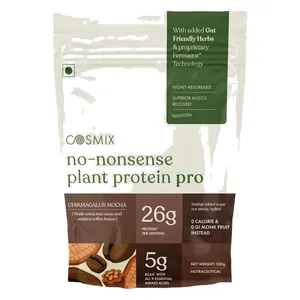
All Protein Powders →- Cosmix No-Nonsense Pro Plant Protein (Chikmagalur Mocha)
- +Green flag: High protein (64.3g per 100g)
- +Green flag: High fibre (9.7g)
- Cosmix No-Nonsense Pro Plant Protein (Indonesian Cacao)
- +Green flag: High protein (64.4g per 100g)
- +Green flag: High fibre (9.7g)
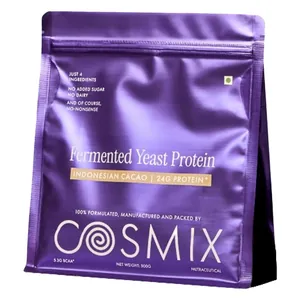
- Cosmix Fermented Yeast Protein (Indonesian Cacao)
- +Green flag: High protein (62.5g per 100g)
- +Green flag: High fibre (8.3g)
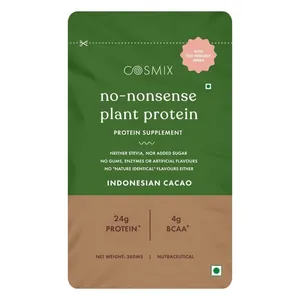
- Cosmix No-Nonsense Plant Protein (Indonesian Cacao)
- +Green flag: High protein (61.7g per 100g)
- +Green flag: High fibre (9.6g)