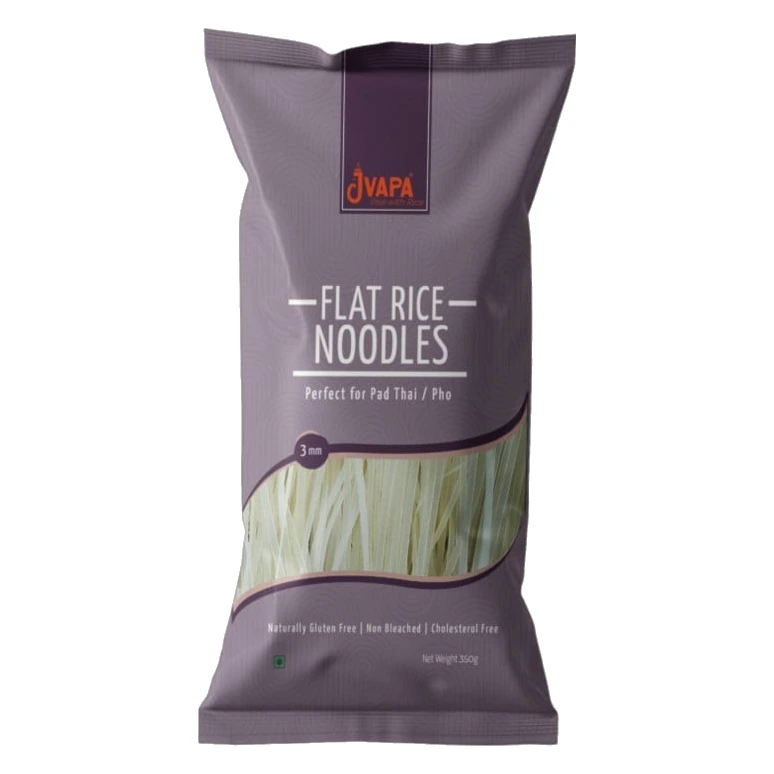
Jvapa Flat Rice Noodles (3 mm)
Published · Last updated
A realistic serve of Jvapa Flat Rice Noodles (70 g dry, typical serve) has 249 kcal, 2.4 g protein, 60.3 g carbohydrate, 0.3 g fat and 4 mg sodium. Per 100 g it has 356 kcal, 3.4 g protein, 86.2 g carbohydrate, 0.36 g fat, 2 g fibre and 6 mg sodium.
Jvapa Flat Rice Noodles are dry rice ribbons made from just rice and water, meant for pad thai and pho. It scores EB2: nutrition is lowest because they are nearly all starch, ingredients do well with no additives, and risk is low. Best used as a base under vegetables and protein, not as a meal alone.
Ingredients, decoded
2 listed- Rice
- Water
The label gives no sugar figure, so there is nothing to count in teaspoons.
Score and nutrition facts for Jvapa Flat Rice Noodles (3 mm):
| Energy | 356 kcal |
|---|---|
| Protein | 3.4 g |
| Carbohydrates | 86.2 g |
| Dietary fibre | 2 g |
| Total fat | 0.36 g |
| Sodium | 5.6 mg |
| Iron | 1.1 mg |
| Calcium | 24.2 mg |
| Potassium | 18.4 mg |
Think this score is wrong?
Why Jvapa Flat Rice Noodles scores EB2
Nutrition is an E because 3.4 g protein and 2 g fibre per 100 g earn no credit. Ingredients are a B with no additives, and risk is a 2, driven only by 356 kcal per 100 g.
Very low nutrient density
- Protein
- 3.4 g
- Fibre
- 2 g
- Vitamins and minerals
- Iron, Calcium, Potassium
- Energy
- 356 kcal
01 Nutrition density: why E
Protein is 3.4 g per 100 g and fibre is 2 g, so neither earns credit in the nutrition grade. Energy is 356 kcal per 100 g, almost all from 86.16 g of carbohydrate.
The small iron, calcium and potassium amounts are not enough to add a micronutrient bonus. With nothing to lift it, the grade stays at the bottom.
Scored on protein, fibre and twelve vitamins and minerals, against the Codex and FSSAI "source" and "high" levels, per 100 g and per 100 kcal. Protein also has to supply at least 12.5% of the calories to count, and 25% for full credit.
Good, few concerning additives
- Base
- Rice
- Sweeteners
- None added
- Additives
- 0
- Flagged
- None
02 Ingredient integrity: why B
The list is rice and water. No additives are present and nothing costs ingredient points. The pack has no label-integrity problems either.
The base is a single starchy ingredient with little protein, which limits how far the ingredient grade climbs.
Scored on how processed the ingredients are, which additives are used and why, and whether the label keeps its promises.
Low risk
- Sodium
- 5.6 mg
03 Load risk: why 2
Risk is a 2 and comes almost entirely from energy: 356 kcal per 100 g of dry noodles. Sugar and saturated fat are 0 g in the calculation.
Sodium is 5.6 mg per 100 g, a negligible part of the risk. Without the energy figure, the product would sit lower still.
Scored on free sugar, sodium, saturated fat and trans fat, each weighed by how strong the evidence of harm is.
Red flags
No major red flags on the label.
Green flags
- +Green flag: Low sodium
- +Green flag: No additives
Does Jvapa Flat Rice Noodles live up to its claims?
Made with just rice and water holds, and so does the gluten-free claim. Cholesterol free is true but says little for a rice product, and the pack shows two different net weights.
- Product nameHolds
“Flat Rice Noodles”
Rice is the first ingredient, and the only one apart from water.
- On the packHolds
“Made with just Rice & Water”
The ingredient list reads rice, water, and no additive is listed.
- On the packHolds
“Naturally Gluten Free”
Neither rice nor water contains gluten, and no gluten-containing ingredient is listed. No allergen statement is printed.
- On the packBe careful
“Cholesterol Free”
True, since the noodles hold only 0.36 g fat per 100 g and no animal ingredient. But any plain rice product could say the same, and it says nothing about the 86.16 g carbohydrate.
- On the packBe careful
“Net weight 350 g”
The front says 350 g and the back says 250 g. The nutrition values are per 100 g, so they are unaffected.
What's in Jvapa Flat Rice Noodles?
Rice and water are the whole list. There are no additives to watch, and the noodles are nearly all starch.
2 ingredients listed. None of them is an additive or watched ingredient in our research.
The ingredient list, read for you
Rice leads the list and water follows. That is the whole ingredient list: no added salt, oil, flavour, colour or preservative. The noodles are simply rice made into a flat ribbon.
The label numbers, read for you
Per 100 g of dry noodles, carbohydrate is 86.16 g and energy is 356 kcal, and these decide the score. Protein is 3.4 g and fibre is 2 g, both small. A typical 70 g dry serve gives about 249 kcal, 2.4 g protein and 1.4 g fibre.
Fat is 0.36 g and sodium is 5.6 mg per 100 g, so the noodles add almost no fat or salt before cooking. Iron, calcium and potassium are declared in small amounts. No sugar is listed and no serving weight is printed.
What it doesn’t have
- No serving weight is printed, so the per-serve column repeats the per-100 g figures.
- Protein and fibre are low, so the noodles need other ingredients to make a balanced meal.
What to know about Jvapa Flat Rice Noodles
Rice and water, and almost nothing else
Jvapa Flat Rice Noodles (3 mm) are dry flat noodles with a two-item ingredient list: rice and water. They are sold for Thai and Vietnamese cooking, with pad thai and pho named on the front, and they suit buyers who want a gluten-free noodle with nothing added.
Per 100 g of dry noodles you get 356 kcal, 86.16 g carbohydrate, 3.4 g protein, 2 g fibre and 0.36 g fat. Sodium is 5.6 mg, which is close to nothing. Iron (1.06 mg), calcium (24.24 mg) and potassium (18.35 mg) are declared, but in small amounts.
The pack's promise of just rice and water is exactly what the list shows. The weak side is nutritional: the noodles are almost pure starch. The front says 350 g and the back says 250 g, so the pack size is unclear. CleanPlate scores it EB2.
Who should eat Jvapa Flat Rice Noodles?
Fine as an everyday staple for most adults when paired with protein and vegetables. People managing blood sugar should watch the portion, since the noodles are 86.16 g carbohydrate per 100 g.
- Most adultsEveryday
Rice and water only, with 356 kcal per 100 g dry and little salt.
- ChildrenEveryday
No additives and 5.6 mg sodium per 100 g, but protein is only 3.4 g.
- Diabetes or prediabetesA few times a week
86.16 g carbohydrate per 100 g with only 2 g fibre, so keep portions small and add protein.
- Active peopleEveryday
A simple carbohydrate base, but protein must come from the toppings.
Recipes with Jvapa Flat Rice Noodles
Pad thai, pho and a vegetable stir-fry suit these noodles. Add protein and vegetables, because the noodles bring only 3.4 g protein per 100 g.
Pad thai
Toss soaked noodles with egg, tofu or prawns, since the noodles bring only 3.4 g protein per 100 g.
Pho-style noodle soup
Add the noodles to a hot broth with herbs and lean meat. The noodles hold just 5.6 mg sodium per 100 g, so the broth sets the salt.
Vegetable stir-fried noodles
Stir-fry with plenty of vegetables to add the fibre the noodles lack, at 2 g per 100 g.
Jvapa Flat Rice Noodles: common questions
Is Jvapa Flat Rice Noodles (3 mm) healthy?
Jvapa Flat Rice Noodles is not high in sugar, salt or saturated fat, so it can be a regular part of your diet.
How many calories and how much protein are in Jvapa Flat Rice Noodles (3 mm)?
Per 100 g, Jvapa Flat Rice Noodles (3 mm) has 356 kcal, 3.4 g protein, 86.2 g carbohydrate, 0.36 g fat and 2 g fibre. One serve (70 g dry, typical serve) has 249 kcal and 2.4 g protein.
What are the ingredients in Jvapa Flat Rice Noodles (3 mm)?
2 ingredients, in label order: Rice, Water.
Does Jvapa Flat Rice Noodles (3 mm) live up to its claims?
5 claims checked: 3 hold, 2 need care. "Cholesterol Free" needs care: True, since the noodles hold only 0.36 g fat per 100 g and no animal ingredient. But any plain rice product could say the same, and it says nothing about the 86.16 g carbohydrate. "Net weight 350 g" needs care: The front says 350 g and the back says 250 g. The nutrition values are per 100 g, so they are unaffected.
Who should limit Jvapa Flat Rice Noodles (3 mm)?
Most adults: everyday. Rice and water only, with 356 kcal per 100 g dry and little salt. Children: everyday. No additives and 5.6 mg sodium per 100 g, but protein is only 3.4 g. Diabetes or prediabetes: a few times a week. 86.16 g carbohydrate per 100 g with only 2 g fibre, so keep portions small and add protein.
How much sugar, salt and saturated fat does Jvapa Flat Rice Noodles (3 mm) have?
Per 100 g, Jvapa Flat Rice Noodles (3 mm) has 6 mg sodium (about 0 g salt). The FSSAI and UK FSA "high" lines are 10 g added sugar, 600 mg sodium and 5 g saturated fat per 100 g. It is under all three lines.
What does the EB2 score mean for Jvapa Flat Rice Noodles (3 mm)?
The first letter (E) grades nutrition density on A to E, the second (B) grades ingredient integrity on A to E, and the number (2) grades load risk on 1 to 5. A and 1 are best. Nutrition: Protein is 3.4 g per 100 g and fibre is 2 g, so neither earns credit in the nutrition grade. Energy is 356 kcal per 100 g, almost all from 86.16 g of carbohydrate. Ingredients: The list is rice and water. No additives are present and nothing costs ingredient points. The pack has no label-integrity problems either. Load risk: Risk is a 2 and comes almost entirely from energy: 356 kcal per 100 g of dry noodles. Sugar and saturated fat are 0 g in the calculation.
Last reviewed November 3, 2026. Scored with the CleanPlate method from the published label. Spotted a mistake? .
Reference values: FSSAI labelling regulations, Codex Alimentarius, ICMR-NIN and the UK front of pack guidance. Where our label data comes from.
Label read on 3 November 2026, from photos of the pack. If the pack has changed since, tell us.
Score history (1)
| Date | Score | Method | Why |
|---|---|---|---|
| 3 November 2026 | EB2 | v5.0 | First scored |
Every change to this score is logged. See corrections and the method changelog.
Better Pasta
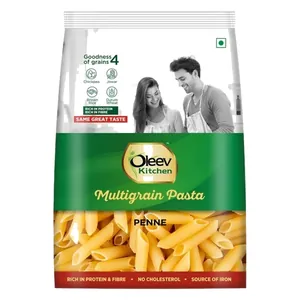
All Pasta →- Oleev Kitchen Multigrain Pasta Penne
- +Green flag: Source of protein (15g)
- +Green flag: High fibre (10g)
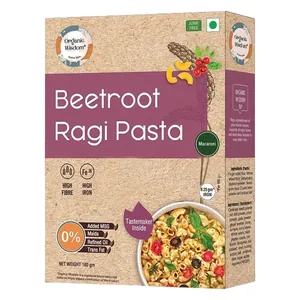
- Organic Wisdom Beetroot Ragi Macaroni Pasta
- +Green flag: Source of protein (11.8g)
- +Green flag: High fibre (12.4g)
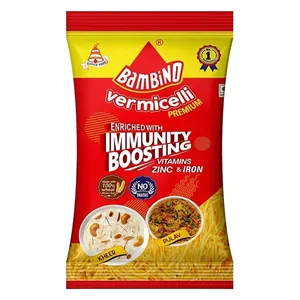
- Bambino Premium Regular VermicelliFortified
- +Green flag: Low sodium
- +Green flag: No additives
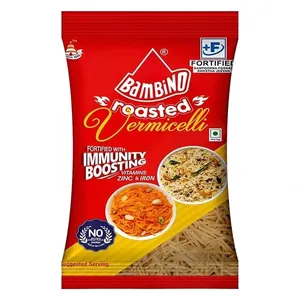
- Bambino Roasted VermicelliFortified
- +Green flag: Low sodium
- +Green flag: No additives