Kaju Katri
Published · Updated
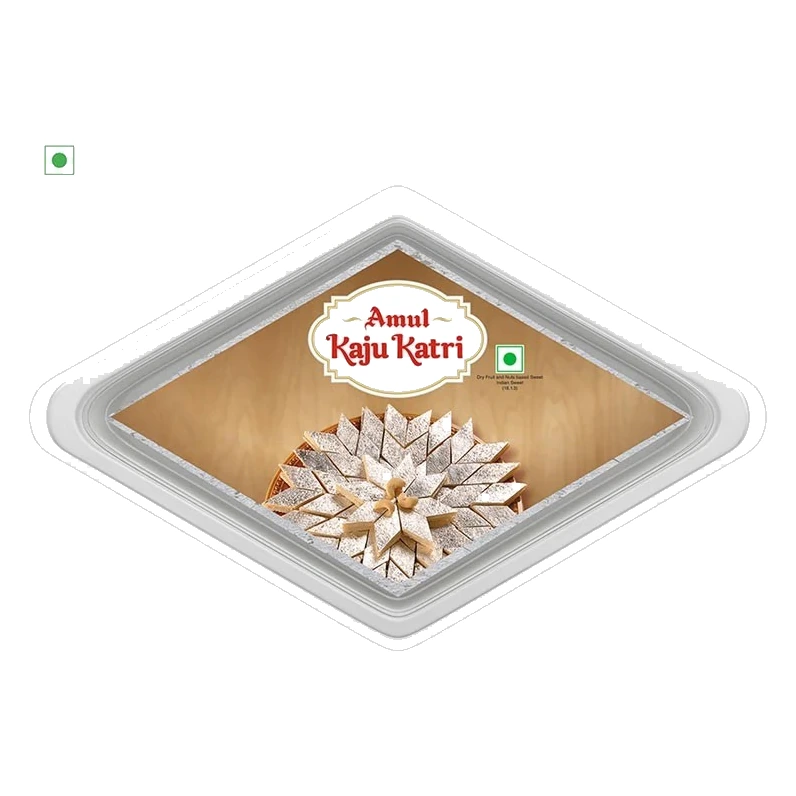
Amul Kaju Katri is a cashew-based Indian sweet, sold for festivals and gifting and made mostly of cashew nuts and sugar. It scores EA4: nutrition is low because sugar and calories outweigh the protein, ingredients are a short, plain list, and risk is high because of the added sugar. Best kept for celebrations, in small pieces.
Ingredients, decoded
4 listed- Cashew nuts
- sugar
- preservatives (202, 210)
- silver leaf
11 teaspoons of sugar in every 100 g · 56 g total sugar, 5 g a teaspoon
| Energy | 491 kcal |
|---|---|
| Protein | 12 g |
| Carbohydrates | 58 g |
| Total sugars | 56 g |
| Added sugars | 45 g |
| Total fat | 23 g |
| Saturated fat | 4.3 g |
| Trans fat | 0 g |
| Cholesterol | 0 mg |
| Sodium | 6 mg |
Think this score is wrong?
What to know about Kaju Katri
Mostly cashew, but 45 g added sugar per 100 g
Amul Kaju Katri is a 500 g pack of the cashew fudge sweet more often spelled kaju katli. It is built from cashew nuts (54%) and sugar, with two preservatives (202, 210) and silver leaf. It is bought for festivals, auspicious days and gifting.
Per 100 g it gives 491 kcal, 12 g protein, 23 g fat and 56 g total sugar, of which 45 g is added sugar. The pack prints a 24 g serve and about 21 servings per container. One serve is about 118 kcal, 2.9 g protein and 10.8 g added sugar.
The front calls it a dry fruit and nuts based sweet, and the list backs that up: cashew leads and is the largest part. The catch is that sugar is the other main ingredient, and it sets the nutrition and risk grades. CleanPlate scores it EA4.
Why Kaju Katri scores EA4
Nutrition is an E because sugar and energy outweigh the 12 g protein per 100 g. Ingredients are an A for a short list led by cashew, and risk is a 4 on 45 g added sugar per 100 g.
Very low nutrient density
- Protein
- 12 g
- Fibre
- Not declared
- Vitamins and minerals
- None declared
- Energy
- 491 kcal
01 Nutrition density: why E
Protein is 12 g per 100 g, mostly from cashew, which is the largest protein contributor. Against that, energy is 491 kcal and total sugar is 56 g per 100 g, and no fibre, vitamins or minerals are declared, so nothing else adds to the grade.
In one 24 g serve that is about 2.9 g protein for 118 kcal, so the protein is real but small for the calories.
Scored on protein, fibre and twelve vitamins and minerals, against the Codex and FSSAI "source" and "high" levels, per 100 g and per 100 kcal. Protein also has to supply at least 12.5% of the calories to count, and 25% for full credit.
Clean, minimally processed
- Base
- Cashew nuts
- Sweeteners
- sugar
- Additives
- 2
- Flagged
- None
02 Ingredient integrity: why A
The list is four items: cashew nuts (54%), sugar, preservatives (202, 210) and silver leaf. There is no hydrogenated fat, no dye and no vague flavouring, and the cashew is declared with a percentage and leads the list.
The two preservatives, potassium sorbate (202) and benzoic acid (210), are on the label but carry no ingredient points here. No promise on the pack is hollow, so nothing is lost for label integrity.
Scored on how processed the ingredients are, which additives are used and why, and whether the label keeps its promises.
High risk
- Added sugar
- 45 g
- Sodium
- 6 mg
- Saturated fat
- 4.3 g
- Trans fat
- 0 g
03 Load risk: why 4
Sugar drives the risk grade. Added sugar is 45 g per 100 g, about 10.8 g per 24 g serve, and it makes up most of the risk number. Energy at 491 kcal per 100 g adds more.
Saturated fat is 4.3 g per 100 g, just under the 5 g high line, and sodium is only 6 mg. Trans fat is declared as 0 g and no hydrogenated fat is listed, so neither adds to the risk.
Scored on free sugar, sodium, saturated fat and trans fat, each weighed by how strong the evidence of harm is.
Red flags
- −Red flag: High added sugar (45g per 100g)
Green flags
- +Green flag: Low sodium
Does Kaju Katri live up to its claims?
The nuts-based claim holds, with cashew at 54%. The highest-quality cashew claim cannot be checked, and the retailer page shows different numbers from the pack.
- On the packHolds
“Dry Fruit and Nuts Based Sweet”
Cashew nuts are the first ingredient at 54%, so the sweet is genuinely nut-based. Sugar is the only other main ingredient.
- Retail listingBe careful
“Contains the highest quality premium cashew”
The pack gives no cashew grade, only the 54% share, so the quality part cannot be checked from the label.
- Retail listingBe careful
“Made using premium ingredients”
The list is short and plain, with cashew leading. Sugar is the second ingredient and brings 45 g added sugar per 100 g.
- Retail listingBe careful
“Nutrition values per 100 g”
The retailer page shows 363 kcal and 19.1 g saturated fat per 100 g, the pack shows 491 kcal and 4.3 g. The pack's numbers are used here.
What's in Kaju Katri?
Cashew nuts (54%) and sugar lead a very short list. The added sugar is what to watch; the two preservatives and silver leaf are minor.
The ingredient list, read for you
Cashew nuts lead at 54%, and they are the source of the protein and fat. Sugar is next and gives the sweetness and the set texture of the sweet. Potassium sorbate (202) and benzoic acid (210) are preservatives, and silver leaf is the decorative coating.
Ingredients to watch
- Added sugarConcern
45 g per 100 g, about 10.8 g in a 24 g serve. It is the main driver of the risk grade and holds the nutrition grade down.
- EnergyWorth watching
491 kcal per 100 g, about 118 kcal per 24 g serve. Small pieces add up quickly.
- Preservatives 202 and 210Worth watching
Potassium sorbate and benzoic acid keep the sweet through its shelf life. They are worth knowing about but carry no ingredient points here.
- Cashew nutsFine
54% of the sweet and first on the list, giving 12 g protein per 100 g.
- Saturated fat and sodiumFine
Saturated fat is 4.3 g per 100 g, under the 5 g high line, and sodium is 6 mg. Trans fat is 0 g.
What it doesn’t have
- No fibre, vitamins or minerals are declared on the panel.
Who should eat Kaju Katri?
An occasional treat for most adults and children, and rarely for anyone managing diabetes or weight, because 10.8 g added sugar sits in each 24 g serve.
- Most adultsOccasionally
10.8 g added sugar in a 24 g serve, and 45 g per 100 g.
- ChildrenOccasionally
A small piece is a treat, but each serve carries 10.8 g added sugar.
- Diabetes or prediabetesRarely
45 g added sugar per 100 g, from a sweet that is mostly sugar and cashew.
- Weight managementRarely
491 kcal per 100 g, about 118 kcal in each small 24 g serve.
Kaju Katri: common questions
What is the CleanPlate score of Kaju Katri?
Amul Kaju Katri is a cashew-based Indian sweet, sold for festivals and gifting and made mostly of cashew nuts and sugar. It scores EA4: nutrition is low because sugar and calories outweigh the protein, ingredients are a short, plain list, and risk is high because of the added sugar. Best kept for celebrations, in small pieces. Nutrition E, ingredients A, load risk 4; nutrition and ingredients run A to E, risk runs 1 to 5, and A and 1 are best.
How many calories and how much protein are in Kaju Katri?
Per 100 g, Kaju Katri has 491 kcal, 12 g protein, 58 g carbohydrate, 23 g fat and 4.3 g saturated fat. One serve (1 serve, 24 g) has 118 kcal and 2.9 g protein.
What are the ingredients in Kaju Katri?
4 ingredients, in label order: Cashew nuts, sugar, preservatives (202, 210), silver leaf.
Does Kaju Katri live up to its claims?
4 claims checked: 1 holds, 3 need care. "Contains the highest quality premium cashew" needs care: The pack gives no cashew grade, only the 54% share, so the quality part cannot be checked from the label. "Made using premium ingredients" needs care: The list is short and plain, with cashew leading. Sugar is the second ingredient and brings 45 g added sugar per 100 g.
Who should limit Kaju Katri?
Most adults: occasionally. 10.8 g added sugar in a 24 g serve, and 45 g per 100 g. Children: occasionally. A small piece is a treat, but each serve carries 10.8 g added sugar. Diabetes or prediabetes: rarely. 45 g added sugar per 100 g, from a sweet that is mostly sugar and cashew.
How much sugar, salt and saturated fat does Kaju Katri have?
Per 100 g, Kaju Katri has 45 g added sugar, 6 mg sodium (about 0 g salt) and 4.3 g saturated fat. The FSSAI and UK FSA "high" lines are 10 g added sugar, 600 mg sodium and 5 g saturated fat per 100 g. It is high in sugar.
Last reviewed October 31, 2026. Scored with the CleanPlate method from the published label. Spotted a mistake? .
Label read on 31 October 2026, from photos of the pack. If the pack has changed since, tell us.
Score history (1)
| Date | Score | Method | Why |
|---|---|---|---|
| 31 October 2026 | EA4 | v5.0 | First scored |
Every change to this score is logged. See corrections and the method changelog.
Better Indian Sweets
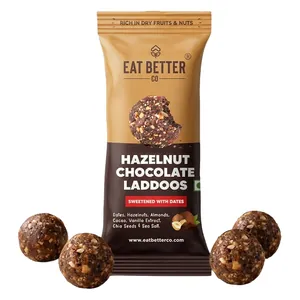
All Indian Sweets →- Hazelnut Chocolate Laddoos
- −Red flag: High sugar (32.2g per 100g)
- +Green flag: High fibre (9.3g)
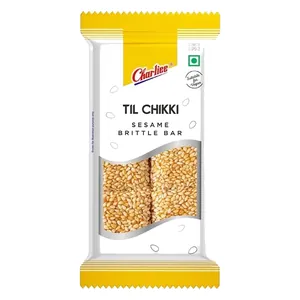
- Til Chikki by Charliee
- −Red flag: High added sugar (33.3g per 100g)
- +Green flag: Source of protein (17.3g)
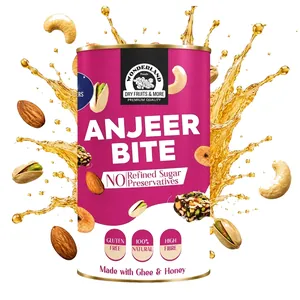
- Wonderland Foods Vrat Anjeer Bites
- −Red flag: High added sugar (15.8g per 100g)
- −Red flag: High saturated fat (18.1g)
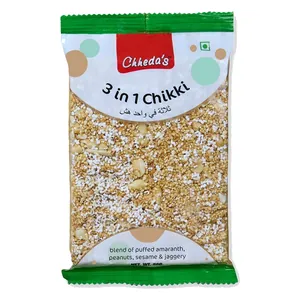
- 3 in 1 Chikki
- −Red flag: High sugar (28.6g per 100g)
- +Green flag: High fibre (7.1g)