KLF Cocodaily Blended Cooking Oil
Published · Last updated
A realistic serve of KLF Cocodaily Blended Cooking Oil (1 tbsp, 15 ml) has 113 kcal, 0 g protein, 0 g carbohydrate, 12.5 g fat, 0 g added sugar and 0 mg sodium. Per 100 g it has 823 kcal, 0 g protein, 0 g carbohydrate, 91.4 g fat, 23.2 g saturated fat, 0 g added sugar, 0 g fibre and 0 mg sodium.
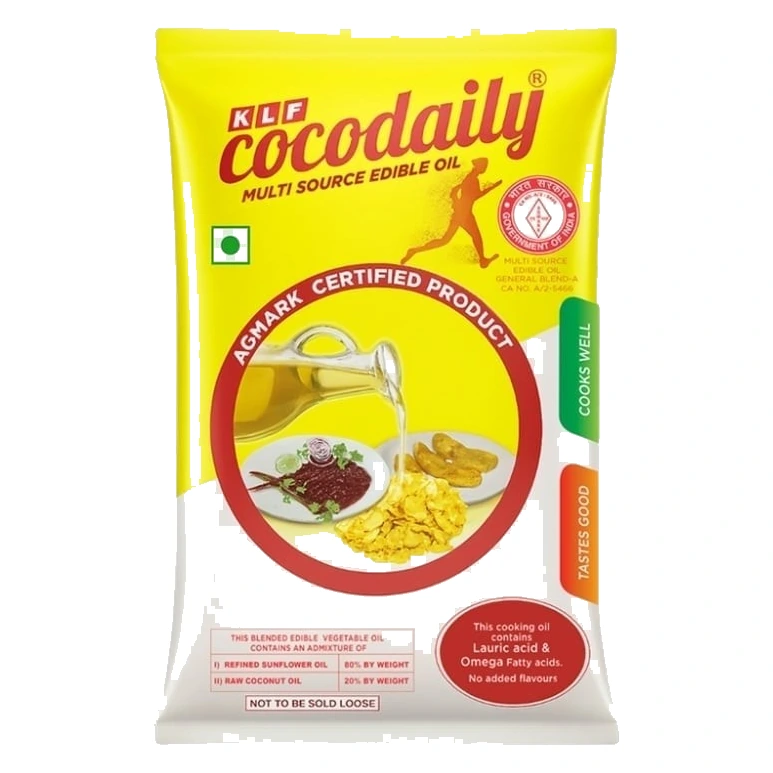
KLF Cocodaily Blended Cooking Oil is a cooking oil that blends refined sunflower oil with raw coconut oil. It scores EC5: lowest on nutrition because oil is pure fat with no protein, fibre or declared vitamins, held back on ingredients by the TBHQ antioxidant, and at the top of the risk scale because of its energy and saturated fat. Best measured by the spoon, not poured freely.
Ingredients, decoded
3 listed- Refined Sunflower Oil
- Raw Coconut Oil
- Antioxidant [INS 319]
0 teaspoon of sugar in every 100 g · 0 g total sugar, 5 g a teaspoon
Score and nutrition facts for KLF Cocodaily Blended Cooking Oil:
| Energy | 822.6 kcal |
|---|---|
| Protein | 0 g |
| Carbohydrates | 0 g |
| Total sugars | 0 g |
| Added sugars | 0 g |
| Dietary fibre | 0 g |
| Total fat | 91.4 g |
| Saturated fat | 23.2 g |
| Trans fat | 0 g |
| Cholesterol | 0 mg |
| Sodium | 0 mg |
Think this score is wrong?
Why KLF Cocodaily Blended Cooking Oil scores EC5
Nutrition is an E because oil is pure fat with no protein, fibre or declared vitamins. Ingredients are a C, held back by the TBHQ antioxidant, and risk is a 5 on 822.6 kcal and 23.2 g saturated fat per 100 ml.
Very low nutrient density
- Protein
- 0 g
- Fibre
- 0 g
- Vitamins and minerals
- None declared
- Energy
- 823 kcal
01 Nutrition density: why E
Oil has no protein, no carbohydrate and no fibre, so there is nothing to earn credit with. No protein source was identified, and the nutrition grade sits at the bottom.
No vitamins or minerals are declared on the panel. The back of the pack mentions vitamins A, D and E, but without amounts nothing counts toward the grade.
Scored on protein, fibre and twelve vitamins and minerals, against the Codex and FSSAI "source" and "high" levels, per 100 g and per 100 kcal. Protein also has to supply at least 12.5% of the calories to count, and 25% for full credit.
Mixed processing and additives
- Base
- Refined Sunflower Oil
- Main fat
- Refined Sunflower Oil
- Sweeteners
- None added
- Additives
- 1
- Flagged
- TBHQ
02 Ingredient integrity: why C
The list is short and simple: refined sunflower oil, raw coconut oil and an antioxidant. The blend percentages appear on the front but not in the ingredient list, which is a small gap.
The antioxidant INS 319 is TBHQ, and it costs ingredient points. No hydrogenated fat is listed, so the declared 0 g trans fat is accepted, and no flavours are added.
Scored on how processed the ingredients are, which additives are used and why, and whether the label keeps its promises.
Very high risk
- Added sugar
- 0 g
- Sodium
- 0 mg
- Saturated fat
- 23.2 g
- Trans fat
- 0 g
03 Load risk: why 5
Energy is the largest part of the risk number: 822.6 kcal per 100 ml. Saturated fat adds to it at 23.2 g per 100 ml, well over the 5 g high line, and one tablespoon has 3.5 g.
Sugar, sodium and trans fat are all 0 g, so they play no part. The grade of 5 comes from how much energy and saturated fat the oil packs into every spoonful.
Scored on free sugar, sodium, saturated fat and trans fat, each weighed by how strong the evidence of harm is.
Red flags
- −Red flag: High saturated fat (23.2g)
- −Red flag: Contains TBHQ
Green flags
- +Green flag: No added sugar
- +Green flag: Low sodium
Does KLF Cocodaily Blended Cooking Oil live up to its claims?
The 80:20 blend and the no-added-flavours claim hold. The vitamin and omega promises have no declared amounts, and the freezing point differs between the retailer page and the pack.
- On the packHolds
“Refined sunflower oil 80%, raw coconut oil 20%”
The front states the 80:20 blend by weight, and the ingredient list names both oils in that order.
- On the packBe careful
“Contains Lauric acid & Omega Fatty acids”
The pack ties lauric acid to the coconut oil, but gives no amounts of lauric or omega acids. The blend carries 23.2 g saturated fat per 100 ml.
- On the packBe careful
“Rich in Vitamins A, D and E”
The back says the sunflower oil is rich in these vitamins, but the nutrition panel declares no vitamins at all.
- On the packHolds
“No added flavours”
No flavour appears in the ingredient list, which names only the two oils and an antioxidant.
- Retail listingBe careful
“Freezing point”
The retailer page shows freezing only below 16°C, while the pack shows solidification starting at 13°C.
What's in KLF Cocodaily Blended Cooking Oil?
Refined sunflower oil leads, then raw coconut oil, then the TBHQ antioxidant. The saturated fat and the additive are what to watch.
3 ingredients listed. Additives and watched ingredients we rate: 1 low concern.
The ingredient list, read for you
Refined sunflower oil comes first and makes up most of the bottle, with raw coconut oil second. The front gives the split as 80% and 20% by weight. The only other item is INS 319, an antioxidant (TBHQ) added to slow the oil going off.
What the additives do
TBHQ (low concern): stops oils going rancid. A synthetic antioxidant that stops oils from going rancid. Permitted within limits, but common in heavily processed, oil-rich foods. More on TBHQ.
Ingredients to watch
- Saturated fatConcern
23.2 g per 100 ml, from the coconut oil and the sunflower oil together. One tablespoon has 3.5 g.
- Energy densityConcern
822.6 kcal per 100 ml and about 123 kcal per tablespoon. It is the biggest part of the risk grade.
- TBHQ antioxidant (INS 319)Worth watching
Added to protect the oil, and it costs ingredient points.
- Trans fat, sugar and sodiumFine
All declared as 0 g, and no hydrogenated fat is listed.
What it doesn’t have
- No amounts are given for vitamins A, D or E, although the back of the pack mentions them.
- No amounts are printed for lauric acid or omega fatty acids.
What to know about KLF Cocodaily Blended Cooking Oil
A sunflower-coconut blend at 123 kcal a spoon
KLF Cocodaily Blended Cooking Oil is a 1 litre (915 g) bottle of edible oil made from refined sunflower oil and raw coconut oil, with an antioxidant (INS 319, also called TBHQ). The front states the blend as 80% sunflower oil and 20% coconut oil by weight. It is sold to home cooks, particularly for frying, who want a lighter oil with some coconut character.
Like any oil it is all fat. Per 100 ml there are 822.6 kcal, 91.4 g total fat and 23.2 g saturated fat, with no protein, carbohydrate, sugar, fibre or sodium. One 15 ml tablespoon gives about 123 kcal, 13.7 g fat and 3.5 g saturated fat, and the bottle holds 67 such servings.
The pack leans on lauric acid, omega fatty acids and vitamins from the blend, but it prints no amounts for any of them and the panel declares no vitamins. The blend ratio and the no-added-flavours claim are both straightforward. CleanPlate scores it EC5.
Who should eat KLF Cocodaily Blended Cooking Oil?
A rarely-and-measured choice at this risk grade for adults and children, and a tablespoon is 123 kcal for anyone watching weight.
- Most adultsRarely
3.5 g saturated fat and 123 kcal in each tablespoon, so measure it.
- ChildrenRarely
23.2 g saturated fat per 100 ml and nothing else of nutritional value.
- Diabetes or prediabetesRarely
No sugar or carbohydrate, but the saturated fat is high at 23.2 g per 100 ml.
- Weight managementRarely
123 kcal per tablespoon adds up fast if poured.
Recipes with KLF Cocodaily Blended Cooking Oil
Use a measured tablespoon or less in the pan. A teaspoon is about 41 kcal, so small amounts for tempering and shallow frying keep the fat down.
Measured stir-fry
Use one 15 ml tablespoon, about 123 kcal, for a pan of vegetables rather than pouring by eye.
Tempering for dals and curries
A teaspoon is about 41 kcal and is enough to pop mustard seeds and curry leaves.
Shallow-fried fish
Brush the pan with a tablespoon and spread it. The pack notes frothing when frying, which is natural for the oil.
KLF Cocodaily Blended Cooking Oil: common questions
Is KLF Cocodaily Blended Cooking Oil healthy?
KLF Cocodaily Blended Cooking Oil is high in saturated fat and calories, so it is best kept as a rare treat.
How many calories and how much protein are in KLF Cocodaily Blended Cooking Oil?
Per 100 g, KLF Cocodaily Blended Cooking Oil has 823 kcal, 0 g protein, 0 g carbohydrate, 91.4 g fat and 23.2 g saturated fat. One serve (1 tbsp, 15 ml) has 113 kcal and 0 g protein.
What are the ingredients in KLF Cocodaily Blended Cooking Oil?
3 ingredients, in label order: Refined Sunflower Oil, Raw Coconut Oil, Antioxidant [INS 319]. Flagged: TBHQ (low concern).
Does KLF Cocodaily Blended Cooking Oil live up to its claims?
5 claims checked: 2 hold, 3 need care. "Contains Lauric acid & Omega Fatty acids" needs care: The pack ties lauric acid to the coconut oil, but gives no amounts of lauric or omega acids. The blend carries 23.2 g saturated fat per 100 ml. "Rich in Vitamins A, D and E" needs care: The back says the sunflower oil is rich in these vitamins, but the nutrition panel declares no vitamins at all.
Who should limit KLF Cocodaily Blended Cooking Oil?
Most adults: rarely. 3.5 g saturated fat and 123 kcal in each tablespoon, so measure it. Children: rarely. 23.2 g saturated fat per 100 ml and nothing else of nutritional value. Diabetes or prediabetes: rarely. No sugar or carbohydrate, but the saturated fat is high at 23.2 g per 100 ml.
How much sugar, salt and saturated fat does KLF Cocodaily Blended Cooking Oil have?
Per 100 g, KLF Cocodaily Blended Cooking Oil has 0 g added sugar, 0 mg sodium (about 0 g salt) and 23.2 g saturated fat. The FSSAI and UK FSA "high" lines are 10 g added sugar, 600 mg sodium and 5 g saturated fat per 100 g. It is high in saturated fat.
What does the EC5 score mean for KLF Cocodaily Blended Cooking Oil?
The first letter (E) grades nutrition density on A to E, the second (C) grades ingredient integrity on A to E, and the number (5) grades load risk on 1 to 5. A and 1 are best. Nutrition: Oil has no protein, no carbohydrate and no fibre, so there is nothing to earn credit with. No protein source was identified, and the nutrition grade sits at the bottom. Ingredients: The list is short and simple: refined sunflower oil, raw coconut oil and an antioxidant. The blend percentages appear on the front but not in the ingredient list, which is a small gap. Load risk: Energy is the largest part of the risk number: 822.6 kcal per 100 ml. Saturated fat adds to it at 23.2 g per 100 ml, well over the 5 g high line, and one tablespoon has 3.5 g.
Last reviewed October 31, 2026. Scored with the CleanPlate method from the published label. Spotted a mistake? .
Reference values: FSSAI labelling regulations, Codex Alimentarius, ICMR-NIN and the UK front of pack guidance. Where our label data comes from.
Label read on 31 October 2026, from photos of the pack. If the pack has changed since, tell us.
Score history (1)
| Date | Score | Method | Why |
|---|---|---|---|
| 31 October 2026 | EC5 | v5.0 | First scored |
Every change to this score is logged. See corrections and the method changelog.
Better Cooking Oils
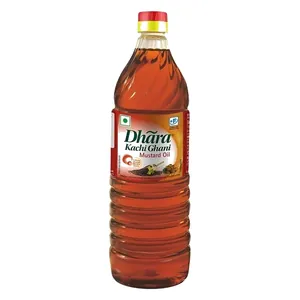
All Cooking Oils →- Dhara Kachi Ghani Mustard OilFortified
- −Red flag: High saturated fat (5.7g)
- +Green flag: No added sugar
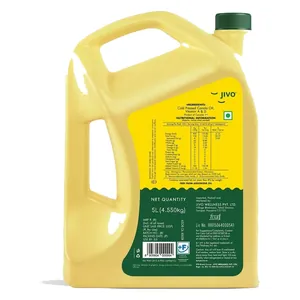
- Jivo Cold Pressed Canola Oil
- −Red flag: High saturated fat (8g)
- +Green flag: No added sugar
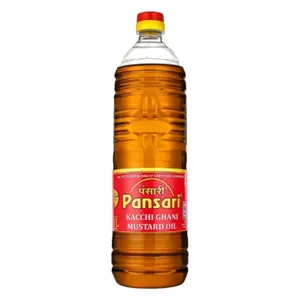
- Pansari Kacchi Ghani Mustard OilFortified
- −Red flag: High saturated fat (12g)
- +Green flag: No added sugar
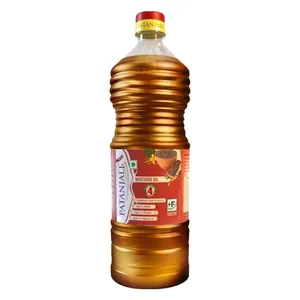
- Patanjali Mustard Oil Kachi Ghani (Cold Pressed)Fortified
- −Red flag: High saturated fat (5.5g)
- +Green flag: No added sugar