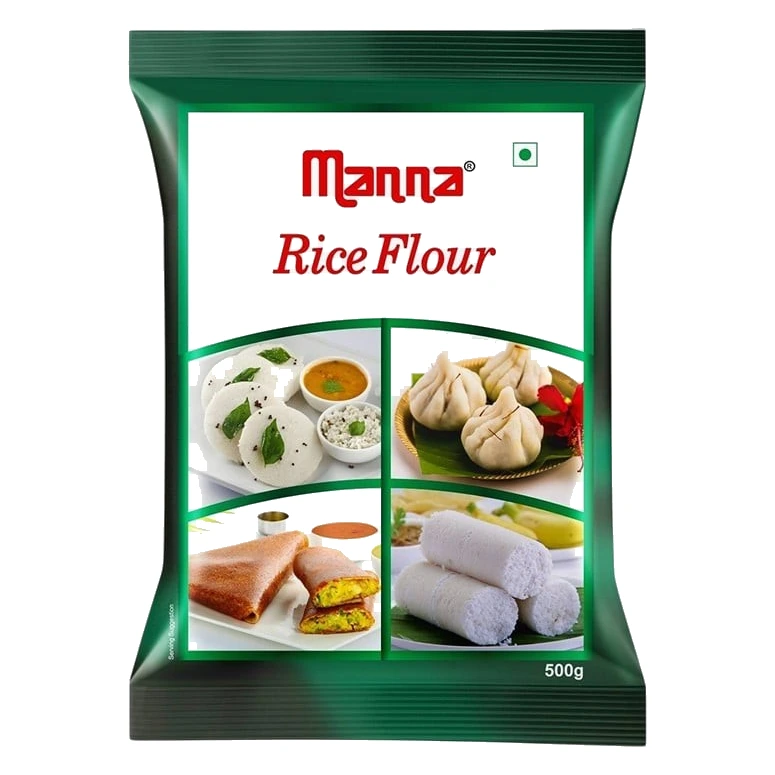
Manna Rice Flour
Published
Manna Rice Flour is a single-ingredient flour of finely ground rice, used for dosa, idli, puttu and thickening gravies. It scores EB2: low on nutrition because it is a starchy milled grain with little fibre, clean on ingredients because nothing is added, and low on risk with no sugar and almost no salt. A fine everyday staple, best paired with protein and vegetables.
Ingredients, decoded
1 listed- Rice
0 teaspoon of sugar in every 100 g · 0 g total sugar, 5 g a teaspoon
| Energy | 361.2 kcal |
|---|---|
| Protein | 7.2 g |
| Carbohydrates | 80.4 g |
| Total sugars | 0 g |
| Added sugars | 0 g |
| Dietary fibre | 1.6 g |
| Total fat | 1.6 g |
| Saturated fat | 0.4 g |
| Trans fat | 0 g |
| Cholesterol | 0 mg |
| Sodium | 6.8 mg |
Think this score is wrong?
What to know about Manna Rice Flour
A single-ingredient flour that is mostly starch
Manna Rice Flour is a 500 g pack of finely ground rice with nothing else in the ingredient list. It is bought as a ready base for dosa, idli, puttu, porridge, bajji and noodles, and to thicken gravies, so there is no soaking, roasting or grinding at home.
Per 100 g it has 361.2 kcal, 7.2 g protein, 80.4 g carbohydrate, 1.6 g fibre and 1.6 g fat. Sugar is 0 g, saturated fat is 0.4 g and sodium is 6.8 mg. The pack prints its table per 50 g serve, which gives 180.6 kcal, 3.6 g protein and 0.8 g fibre, with 10 servings in the pack.
The name is plain and accurate: it is rice flour. The listing's fibre and wheat-flour framing is harder to support, because the fibre figure is low. CleanPlate scores it EB2.
Why Manna Rice Flour scores EB2
Nutrition is an E because protein is 7.2 g and fibre 1.6 g per 100 g, with no vitamins or minerals declared. Ingredients are a B on a single ingredient, and risk is a 2, set by energy alone.
Very low nutrient density
- Protein
- 7.2 g
- Fibre
- 1.6 g
- Vitamins and minerals
- None declared
- Energy
- 361 kcal
01 Nutrition density: why E
Protein is 7.2 g per 100 g and fibre is 1.6 g, against 80.4 g carbohydrate. In a 50 g serve that is 3.6 g protein and 0.8 g fibre, and all of the protein comes from rice itself.
No vitamins or minerals are declared, so nothing adds to the grade. It is a starchy base with little else, which is why nutrition sits at the bottom.
Scored on protein, fibre and twelve vitamins and minerals, against the Codex and FSSAI "source" and "high" levels, per 100 g and per 100 kcal. Protein also has to supply at least 12.5% of the calories to count, and 25% for full credit.
Good, few concerning additives
- Base
- Rice
- Sweeteners
- None added
- Additives
- 0
- Flagged
- None
02 Ingredient integrity: why B
Rice is the only ingredient. No additives are listed, no sugar is added, and no label promise loses points, so nothing costs ingredient points.
That gives a clean list. The grade reflects a single plain flour rather than a food with added fibre, whole grains or other nutrient-giving ingredients.
Scored on how processed the ingredients are, which additives are used and why, and whether the label keeps its promises.
Low risk
- Added sugar
- 0 g
- Sodium
- 6.8 mg
- Saturated fat
- 0.4 g
- Trans fat
- 0 g
03 Load risk: why 2
Energy is the only real driver: 361.2 kcal per 100 g sets the risk number at 2. Sugar is 0 g, saturated fat is 0.4 g and sodium is 6.8 mg per 100 g, and trans fat is 0 g.
One 50 g serve has 180.6 kcal, 0.2 g saturated fat and 3.4 mg sodium.
Scored on free sugar, sodium, saturated fat and trans fat, each weighed by how strong the evidence of harm is.
Red flags
No major red flags on the label.
Green flags
- +Green flag: No added sugar
- +Green flag: Low sodium
- +Green flag: No additives
Does Manna Rice Flour live up to its claims?
The natural and finely ground rice claims hold. The listing's rich source of fibre is not backed by the pack, which shows 1.6 g fibre per 100 g.
- On the packHolds
“100% NATURAL”
Rice is the only ingredient. No additive, colour, flavour or preservative is listed.
- Retail listingHolds
“Made from finely ground rice”
The ingredient list is rice and nothing else.
- Retail listingBe careful
“Rich source of dietary fibre”
The retailer page says rich source of fibre, but the pack shows 0.8 g per 50 g serve, which is 1.6 g per 100 g. That is a small amount.
- Retail listingBe careful
“Substitute for wheat flour”
The retailer page presents it as a better choice than wheat flour. The pack shows 7.2 g protein and 1.6 g fibre per 100 g, which does not by itself support that framing.
What's in Manna Rice Flour?
Rice is the only ingredient, so there are no additives, sugar or salt to watch. The thing to know is that it is a starchy, low-fibre base.
The ingredient list, read for you
Rice is the single ingredient, so the flour is simply milled rice. There are no declared percentages because there is nothing else to declare, and nothing is added for sweetness, colour, texture or shelf life.
Ingredients to watch
- Low fibreWorth watching
1.6 g per 100 g, 0.8 g per 50 g serve. It is not a rich source of fibre.
- Starch and energyWorth watching
80.4 g carbohydrate and 361.2 kcal per 100 g. A 50 g serve has 40.2 g carbohydrate and 180.6 kcal.
- Single ingredientFine
Rice only, with no additives, preservatives or added sugar.
- Sugar and sodiumFine
0 g sugar and 6.8 mg sodium per 100 g, so the flour adds almost no salt to a dish.
What it doesn’t have
- No vitamins or minerals are declared on the panel.
- Little fibre, at 1.6 g per 100 g.
Who should eat Manna Rice Flour?
An everyday staple for most adults and children. People watching blood sugar should keep portions measured, since 50 g carries 40.2 g carbohydrate.
- Most adultsEveryday
Plain rice flour with 0 g sugar and 180.6 kcal per 50 g serve.
- ChildrenEveryday
One ingredient, no sugar or additives, though fibre is only 0.8 g per serve.
- Diabetes or prediabetesA few times a week
40.2 g carbohydrate per 50 g serve with just 0.8 g fibre.
- Active peopleEveryday
Carbohydrate fuel at 40.2 g per serve, with only 3.6 g protein, so add a protein side.
Recipes with Manna Rice Flour
Dosa, idli, puttu and porridge all work from this flour, and a spoonful thickens gravy. A 50 g serve is 180.6 kcal before oil or sides.
Rice flour dosa
A 50 g serve of flour brings 180.6 kcal before any oil, so go light on the pan and add a vegetable filling.
Idli or puttu with dal
The flour gives 3.6 g protein per 50 g, so serve with sambar or dal to lift the protein.
Rice flour porridge
Cook it with milk or water and stir in fruit. The flour has 0 g sugar, so any sweetness is what you add.
Gravy thickener
A spoonful thickens a gravy with almost no sodium, at 6.8 mg per 100 g of flour.
Manna Rice Flour: common questions
What is the CleanPlate score of Manna Rice Flour?
Manna Rice Flour is a single-ingredient flour of finely ground rice, used for dosa, idli, puttu and thickening gravies. It scores EB2: low on nutrition because it is a starchy milled grain with little fibre, clean on ingredients because nothing is added, and low on risk with no sugar and almost no salt. A fine everyday staple, best paired with protein and vegetables. Nutrition E, ingredients B, load risk 2; nutrition and ingredients run A to E, risk runs 1 to 5, and A and 1 are best.
How many calories and how much protein are in Manna Rice Flour?
Per 100 g, Manna Rice Flour has 361 kcal, 7.2 g protein, 80.4 g carbohydrate, 1.6 g fat and 0.4 g saturated fat. One serve (50 g serve, as printed on the pack) has 181 kcal and 3.6 g protein.
What are the ingredients in Manna Rice Flour?
1 ingredient, in label order: Rice.
Does Manna Rice Flour live up to its claims?
4 claims checked: 2 hold, 2 need care. "Rich source of dietary fibre" needs care: The retailer page says rich source of fibre, but the pack shows 0.8 g per 50 g serve, which is 1.6 g per 100 g. That is a small amount. "Substitute for wheat flour" needs care: The retailer page presents it as a better choice than wheat flour. The pack shows 7.2 g protein and 1.6 g fibre per 100 g, which does not by itself support that framing.
Who should limit Manna Rice Flour?
Most adults: everyday. Plain rice flour with 0 g sugar and 180.6 kcal per 50 g serve. Children: everyday. One ingredient, no sugar or additives, though fibre is only 0.8 g per serve. Diabetes or prediabetes: a few times a week. 40.2 g carbohydrate per 50 g serve with just 0.8 g fibre.
How much sugar, salt and saturated fat does Manna Rice Flour have?
Per 100 g, Manna Rice Flour has 0 g added sugar, 7 mg sodium (about 0 g salt) and 0.4 g saturated fat. The FSSAI and UK FSA "high" lines are 10 g added sugar, 600 mg sodium and 5 g saturated fat per 100 g. It is under all three lines.
Last reviewed October 29, 2026. Scored with the CleanPlate method from the published label. Spotted a mistake? .
Label read on 29 October 2026, from photos of the pack. If the pack has changed since, tell us.
Score history (1)
| Date | Score | Method | Why |
|---|---|---|---|
| 29 October 2026 | EB2 | v5.0 | First scored |
Every change to this score is logged. See corrections and the method changelog.
Better Atta & Flours
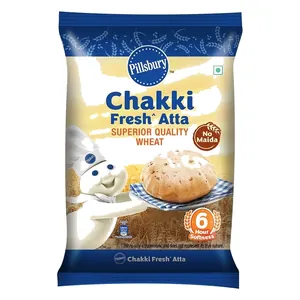
All Atta & Flours →- Pillsbury Fresh Superior-Quality Chakki Atta
- +Green flag: High fibre (10g)
- +Green flag: No added sugar
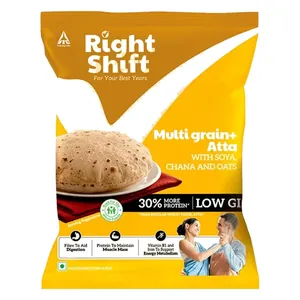
- Right Shift Multigrain Atta (High Protein, Low GI)
- +Green flag: Source of protein (14.7g)
- +Green flag: High fibre (13.6g)
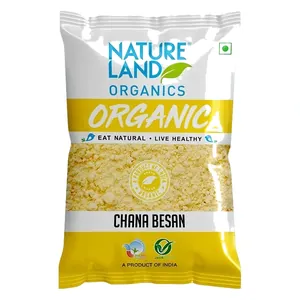
- Natureland Organics Chana Organic Besan
- +Green flag: Source of protein (21g)
- +Green flag: High fibre (10.6g)
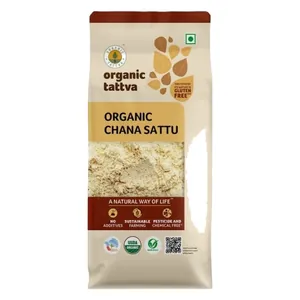
- Organic Tattva Organic Chana Sattu
- +Green flag: Source of protein (21.5g)
- +Green flag: High fibre (9.8g)