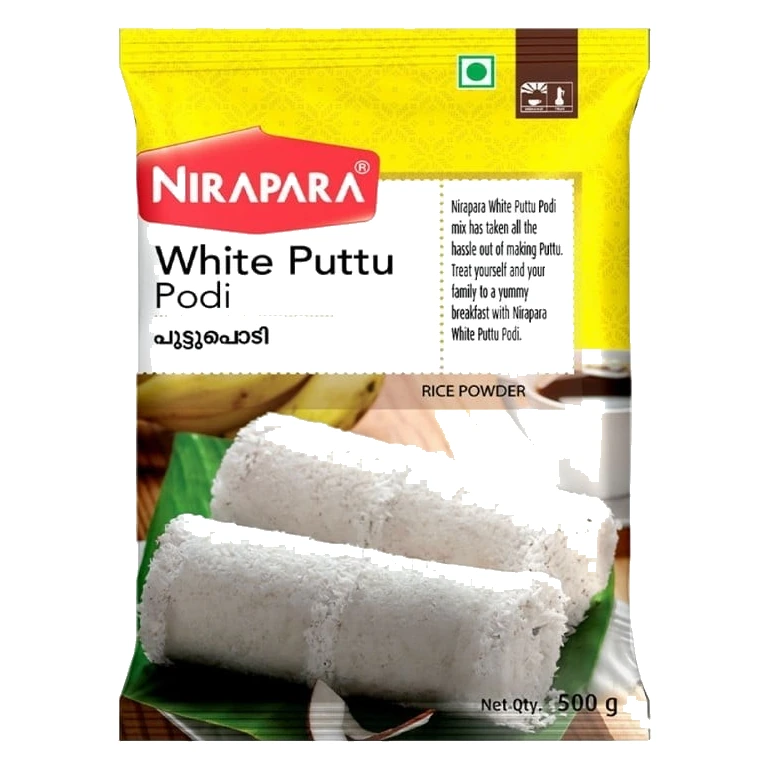
Nirapara White Puttu Podi Rice Flour
Published · Updated
Nirapara White Puttu Podi is plain raw rice flour, ground for steaming into puttu, the Kerala breakfast. It scores EB2: low on nutrition because it is a starchy flour with little protein, fibre or vitamins, strong on ingredients because rice is the only item, and low on risk with almost no sugar, fat or salt. Pair it with coconut and a pulse curry.
Ingredients, decoded
1 listed- Raw Rice Flour
<½ teaspoon of sugar in every 100 g · 0.7 g total sugar, 5 g a teaspoon
| Energy | 363 kcal |
|---|---|
| Protein | 6.9 g |
| Carbohydrates | 83.5 g |
| Total sugars | 0.7 g |
| Added sugars | 0 g |
| Dietary fibre | 2.4 g |
| Total fat | 0.2 g |
| Saturated fat | 0 g |
| Trans fat | 0 g |
| Cholesterol | 0 mg |
| Sodium | 20 mg |
Think this score is wrong?
What to know about Nirapara White Puttu Podi Rice Flour
Plain rice flour: one ingredient, mostly starch
Nirapara White Puttu Podi is raw rice flour and nothing else, ground to the coarse texture used for puttu. The pack does not declare a percentage because there is only one ingredient. It is bought by Kerala households that steam puttu for breakfast and want a ready flour.
A 28 g serve gives 102 kcal, 1.9 g protein, 0.7 g fibre and 5.6 mg sodium. Per 100 g that is 363 kcal, 6.9 g protein, 83.5 g carbohydrate, 2.4 g fibre, 0.2 g fat and 0.7 g sugars, with no added sugar and no saturated fat. The pack says it makes about 35 servings.
The pack promises an easy breakfast and a Kerala favourite, and a single-ingredient flour fits that plainly. It carries no additives, no preservatives and no colour. The nutrition is that of a starch with modest protein, and the pack declares no vitamins or minerals. CleanPlate scores it EB2.
Why Nirapara White Puttu Podi Rice Flour scores EB2
Nutrition is an E because 83.5 g carbohydrate, 6.9 g protein and 2.4 g fibre per 100 g earn no credit. Ingredients are a B for a single plain ingredient, and risk is a 2, driven only by calories.
Very low nutrient density
- Protein
- 6.9 g
- Fibre
- 2.4 g
- Vitamins and minerals
- None declared
- Energy
- 363 kcal
01 Nutrition density: why E
Protein is 6.9 g per 100 g and fibre is 2.4 g, with 83.5 g of carbohydrate making up most of the weight. The protein all comes from the rice itself, and the grade applies a protein factor of 0.65 to it.
No vitamins or minerals are declared, so nothing else adds to the grade. Rice flour is a plain starch, and it scores at the bottom for nutrition.
Scored on protein, fibre and twelve vitamins and minerals, against the Codex and FSSAI "source" and "high" levels, per 100 g and per 100 kcal. Protein also has to supply at least 12.5% of the calories to count, and 25% for full credit.
Good, few concerning additives
- Base
- Raw Rice Flour
- Sweeteners
- None added
- Additives
- 0
- Flagged
- None
02 Ingredient integrity: why B
The list is one item, raw rice flour, with no additives, no preservatives and no hydrogenated fat. Nothing costs ingredient points.
The pack does not declare a percentage, which is only a small gap for a single-ingredient food. No label promise is hollow, so there is no [L] flag.
Scored on how processed the ingredients are, which additives are used and why, and whether the label keeps its promises.
Low risk
- Added sugar
- 0 g
- Sodium
- 20 mg
- Saturated fat
- 0 g
- Trans fat
- 0 g
03 Load risk: why 2
Risk is a 2, set by energy: 363 kcal per 100 g is the only part that registers. Sugar is 0 g added, saturated fat is 0 g and trans fat is 0 g.
Sodium is 20 mg per 100 g, 5.6 mg in a 28 g serve, which is almost nothing.
Scored on free sugar, sodium, saturated fat and trans fat, each weighed by how strong the evidence of harm is.
Red flags
No major red flags on the label.
Green flags
- +Green flag: No added sugar
- +Green flag: Low sodium
- +Green flag: No additives
Does Nirapara White Puttu Podi Rice Flour live up to its claims?
The pack's claims are mild: a Kerala favourite and an easy breakfast. The single-ingredient list is clean, but the pack size is printed as 500 g on the artwork and 1 kg in the back text.
- On the packBe careful
“Kerala's favourite breakfast”
Puttu is a traditional Kerala breakfast and the flour is made for it. The claim is about popularity, not nutrition, and the flour is 83.5 g carbohydrate per 100 g.
- On the packHolds
“Easy & simple to prepare”
The flour is a single ingredient, ready to use with no premix or additives to deal with.
- On the packBe careful
“Net quantity 500 g or 1 kg”
The front and back artwork show 500 g, while the back text and promo card say 1 kg. Check the weight on the pack in hand.
What's in Nirapara White Puttu Podi Rice Flour?
Raw rice flour is the only ingredient, so there are no additives to watch. What matters is the starch load and what you serve with it.
The ingredient list, read for you
Raw rice flour is the only ingredient. It is the starch that steams into puttu, and no percentage is declared because nothing else is in the pack.
Ingredients to watch
- Starch loadWorth watching
83.5 g carbohydrate per 100 g and 23.4 g in a 28 g serve. Almost all of the calories come from starch.
- Low protein and fibreWorth watching
6.9 g protein and 2.4 g fibre per 100 g. Pair the puttu with a pulse curry or vegetables.
- Single ingredientFine
Raw rice flour only, with no additives, preservatives or colours.
- Sugar, fat and sodiumFine
0 g added sugar, 0.2 g fat, 0 g saturated fat and 20 mg sodium per 100 g.
What it doesn’t have
- No vitamins or minerals are declared on the panel.
Who should eat Nirapara White Puttu Podi Rice Flour?
Suitable as an everyday staple for most adults and children. The 83.5 g carbohydrate per 100 g calls for a word with a doctor if you manage blood sugar.
- Most adultsEveryday
A plain flour with 102 kcal per 28 g serve and almost no sodium.
- ChildrenEveryday
No additives or added sugar; serve with a protein-rich curry.
- Diabetes or prediabetesCheck with your doctor
83.5 g carbohydrate per 100 g, with only 2.4 g fibre to slow it.
- Active peopleEveryday
Starch is a useful fuel, but 6.9 g protein per 100 g needs a partner.
Recipes with Nirapara White Puttu Podi Rice Flour
Puttu is the main use, steamed with grated coconut, and it pairs well with a pulse curry or banana to add protein.
Classic puttu with coconut
Layer the moistened flour with grated coconut and steam it; the flour itself has only 0.2 g fat per 100 g, so the coconut sets the richness.
Puttu with kadala curry
Black chickpea curry adds protein and fibre to a flour with 6.9 g protein and 2.4 g fibre per 100 g.
Puttu with banana
Mashed banana sweetens the puttu with no sugar added, since the flour has 0 g added sugar.
Nirapara White Puttu Podi Rice Flour: common questions
What is the CleanPlate score of Nirapara White Puttu Podi Rice Flour?
Nirapara White Puttu Podi is plain raw rice flour, ground for steaming into puttu, the Kerala breakfast. It scores EB2: low on nutrition because it is a starchy flour with little protein, fibre or vitamins, strong on ingredients because rice is the only item, and low on risk with almost no sugar, fat or salt. Pair it with coconut and a pulse curry. Nutrition E, ingredients B, load risk 2; nutrition and ingredients run A to E, risk runs 1 to 5, and A and 1 are best.
How many calories and how much protein are in Nirapara White Puttu Podi Rice Flour?
Per 100 g, Nirapara White Puttu Podi Rice Flour has 363 kcal, 6.9 g protein, 83.5 g carbohydrate, 0.2 g fat and 0 g saturated fat. One serve (28 g, one serve) has 102 kcal and 1.9 g protein.
What are the ingredients in Nirapara White Puttu Podi Rice Flour?
1 ingredient, in label order: Raw Rice Flour.
Does Nirapara White Puttu Podi Rice Flour live up to its claims?
3 claims checked: 1 holds, 2 need care. "Kerala's favourite breakfast" needs care: Puttu is a traditional Kerala breakfast and the flour is made for it. The claim is about popularity, not nutrition, and the flour is 83.5 g carbohydrate per 100 g. "Net quantity 500 g or 1 kg" needs care: The front and back artwork show 500 g, while the back text and promo card say 1 kg. Check the weight on the pack in hand.
Who should limit Nirapara White Puttu Podi Rice Flour?
Most adults: everyday. A plain flour with 102 kcal per 28 g serve and almost no sodium. Children: everyday. No additives or added sugar; serve with a protein-rich curry. Diabetes or prediabetes: check with your doctor. 83.5 g carbohydrate per 100 g, with only 2.4 g fibre to slow it.
How much sugar, salt and saturated fat does Nirapara White Puttu Podi Rice Flour have?
Per 100 g, Nirapara White Puttu Podi Rice Flour has 0 g added sugar, 20 mg sodium (about 0.1 g salt) and 0 g saturated fat. The FSSAI and UK FSA "high" lines are 10 g added sugar, 600 mg sodium and 5 g saturated fat per 100 g. It is under all three lines.
Last reviewed October 31, 2026. Scored with the CleanPlate method from the published label. Spotted a mistake? .
Label read on 31 October 2026, from photos of the pack. If the pack has changed since, tell us.
Score history (1)
| Date | Score | Method | Why |
|---|---|---|---|
| 31 October 2026 | EB2 | v5.0 | First scored |
Every change to this score is logged. See corrections and the method changelog.
Better Atta & Flours
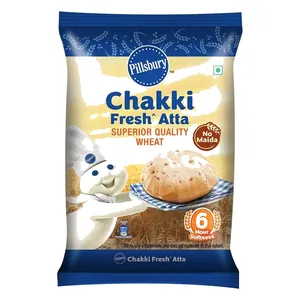
All Atta & Flours →- Pillsbury Fresh Superior-Quality Chakki Atta
- +Green flag: High fibre (10g)
- +Green flag: No added sugar
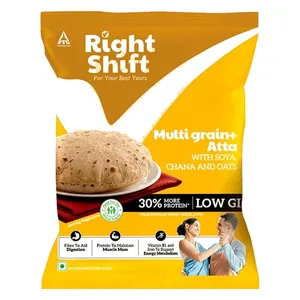
- Right Shift Multigrain Atta (High Protein, Low GI)
- +Green flag: Source of protein (14.7g)
- +Green flag: High fibre (13.6g)
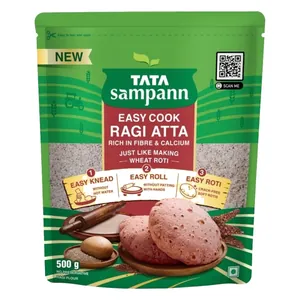
- Tata Sampann Easy Cook Ragi Atta
- +Green flag: High fibre (13.3g)
- +Green flag: No added sugar
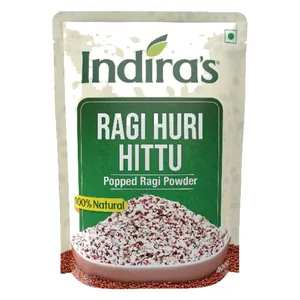
- Indira's Ragi Huri Hittu (Popped Ragi Powder)
- +Green flag: Source of fibre
- +Green flag: No added sugar